
Complete Guide to Candid Wedding Photography

Updated: Dec 3, 2025

Over 60 percent of british couples now prefer candid wedding photography over traditional posed portraits. This shift reveals a growing demand for images that showcase real emotions and genuine moments rather than staged smiles. For anyone planning a wedding, understanding the true nature of candid photography can prevent misunderstandings and help you choose the right visual storyteller. Discover how skilled photographers balance artistry, emotion, and subtlety to preserve memories you will truly treasure.
Table of Contents
Key Takeaways
Point | Details |
Candid Photography Focus | Emphasises authentic moments and emotional connections over posed imagery during weddings. |
Photographer’s Role | Photographers act as unobtrusive storytellers, capturing genuine interactions without disruption. |
Essential Techniques | Successful candid photography relies on strategic positioning, anticipation of moments, and a deep understanding of human emotions. |
Common Pitfalls | Avoid overly intrusive behaviour and inadequate preparation to ensure meaningful documentation of the wedding day. |
Candid Wedding Photography Defined and Debunked
Candid wedding photography represents an authentic approach to capturing matrimonial celebrations that prioritises genuine, unscripted moments over traditional posed imagery. Unlike conventional wedding photography that relies on rigid positioning and artificial smiles, this style aims to document the raw, emotional landscape of your wedding day as it naturally unfolds.
The essence of candid wedding moments lies in capturing spontaneous interactions, subtle glances, and unguarded emotions. Photographers skilled in this technique operate almost like invisible storytellers, blending into the background while documenting genuine human connections. By embracing a documentary-style approach, they preserve the true narrative of your wedding day without interrupting or staging emotional experiences.
While many couples mistakenly believe candid photography means completely random shots, professional practitioners actually employ strategic techniques. They understand lighting, anticipate moments, and position themselves carefully to capture split-second expressions and interactions. The goal isn’t just to take pictures, but to create a visual narrative that reflects the authentic emotional journey of your wedding celebration. Professional candid photographers balance technical expertise with an intuitive understanding of human emotions, transforming fleeting moments into timeless memories that tell your unique love story.
Key characteristics of exceptional candid wedding photography include:
Minimal intervention from the photographer
Natural, unposed emotional captures
Storytelling approach that reveals genuine relationships
Emphasis on genuine interactions over staged perfection
Ability to document subtle, meaningful moments
Main Styles and Techniques Used
Candid wedding photography employs multiple sophisticated techniques that transform ordinary moments into extraordinary visual narratives. Effective photographic approaches demand more than just pointing a camera - they require an intricate understanding of human dynamics, technical expertise, and remarkable anticipatory skills.
Professional photographers utilise several core techniques to capture genuine moments. Blending techniques include strategic positioning where photographers remain unobtrusive yet perfectly placed to capture spontaneous interactions. They often use longer focal length lenses, allowing them to document emotional moments from a distance without disrupting the natural flow of events. These professionals understand light, composition, and timing, enabling them to create images that feel both intimate and unmanufactured.

Wedding photography techniques typically involve multiple stylistic approaches. Reportage or documentary-style methods prioritise storytelling, capturing sequences of events that reveal the wedding’s emotional progression. Photojournalistic techniques focus on capturing candid moments as they happen, often using quick shutter speeds and multiple frame captures to ensure no significant moment is missed. Some photographers also employ a hybrid approach, blending candid shots with minimal, carefully considered posed moments that feel natural and unforced.
Key techniques for capturing exceptional candid wedding photographs include:
Maintaining constant peripheral awareness
Using silent camera modes to remain unobtrusive
Selecting appropriate camera settings for low-light environments
Understanding wedding day rhythms and emotional peaks
Anticipating interactions before they fully develop
Positioning strategically without interrupting natural moments
Key Features: Unobtrusive Storytelling Approach
Unobtrusive storytelling represents the pinnacle of candid wedding photography, transforming the photographer’s role from a staged director to an invisible narrative curator. Wedding photography techniques fundamentally revolve around capturing genuine moments without disrupting the natural emotional flow of the wedding day.
The art of being unobtrusive requires extraordinary skill and psychological awareness. Professional photographers develop almost chameleon-like abilities to blend into wedding environments, using specialised equipment and techniques that allow them to capture intimate moments without becoming an intrusive presence. This involves selecting silent camera mechanisms, choosing strategic positioning that provides optimal angles without drawing attention, and developing an intuitive sense of when to capture a moment and when to step back.
Storytelling through photography is more than simply recording events - it’s about creating a visual narrative that communicates the emotional landscape of the wedding day. Choosing the right wedding photographer means finding someone who can weave together a coherent visual story through seemingly disconnected moments. These photographers understand that true storytelling emerges from capturing subtle interactions, fleeting expressions, and the unscripted emotional exchanges that define human connection.
Key principles of unobtrusive storytelling in wedding photography include:
Minimal intervention in wedding day events
Prioritising authentic emotional moments
Using professional equipment that enables discreet shooting
Developing advanced anticipation skills
Creating a narrative through sequential, interconnected images
Respecting the privacy and intimacy of wedding celebrations
Role of the Photographer on the Day
Documentary wedding photography transforms the photographer from a mere image-taker to a visual storyteller responsible for capturing the intricate emotional landscape of your wedding day. Wedding venue photography requires exceptional skills that go far beyond technical proficiency - it demands psychological insight, emotional intelligence, and an almost intuitive understanding of human interactions.
On the wedding day, the photographer assumes multiple critical roles simultaneously. They are part documentarian, part storyteller, and part silent guardian of memories. This means navigating complex social dynamics with remarkable sensitivity, anticipating moments before they unfold, and creating a visual narrative that authentically represents the couple’s unique emotional journey. Professional photographers must remain simultaneously invisible and omnipresent - blending into the background while maintaining an acute awareness of potential photographic moments.
The technical responsibilities extend well beyond simply taking photographs. Photographers must manage complex lighting conditions, understand venue logistics, coordinate with other wedding professionals, and create a comfortable atmosphere that allows genuine emotions to emerge naturally. They must possess the ability to read social cues, understand family dynamics, and position themselves strategically to capture spontaneous interactions without disrupting the wedding’s natural rhythm. Wedding videography techniques further emphasise the importance of capturing emotional nuance and storytelling through visual mediums.
Key responsibilities of a wedding day photographer include:
Capturing genuine emotional moments
Managing complex technical photography requirements
Maintaining an unobtrusive presence
Coordinating with wedding party and other vendors
Creating a comfortable and relaxed environment
Documenting the day’s narrative through strategic image selection
Candid Photography Versus Traditional Posing
Traditional wedding photography and candid approaches represent two fundamentally different philosophies of capturing matrimonial celebrations. Where traditional methods rely on staged, meticulously arranged photographs, wedding photography techniques championing candid styles prioritise authentic emotional experiences over perfectly choreographed scenes.
Traditional posing typically involves precise positioning, forced smiles, and carefully managed group arrangements that can feel artificial and staged. Couples are instructed to stand in specific ways, adjust their positioning repeatedly, and maintain uncomfortable, unnatural poses that interrupt the wedding day’s natural flow. Candid photography, by contrast, embraces spontaneity, capturing genuine interactions, subtle glances, and unscripted moments that reveal the true emotional essence of the celebration. Choosing the right wedding photographer means understanding these fundamental differences and selecting an approach that resonates with your personal narrative.
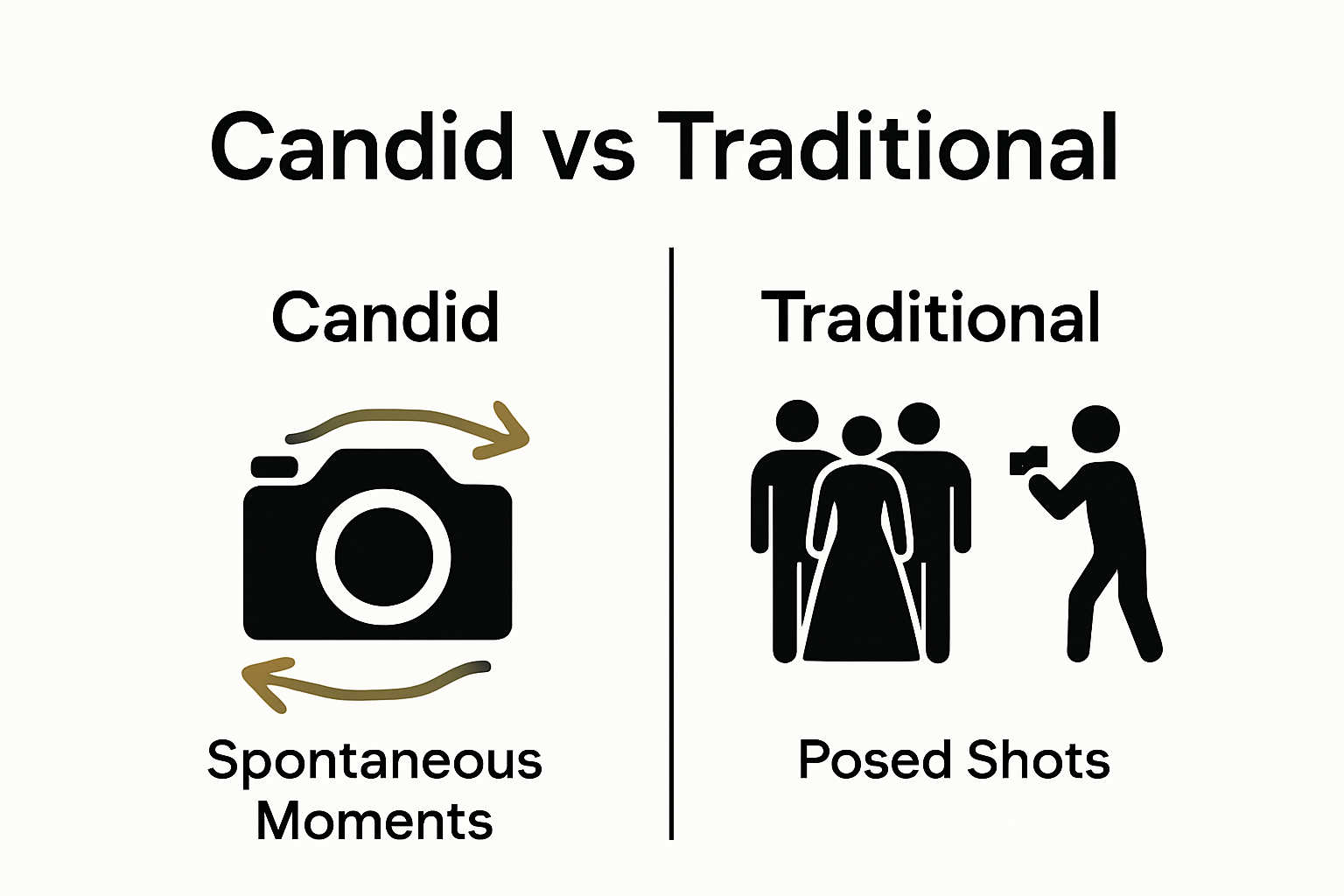
The technical and emotional distinctions between these styles are profound. Traditional photographers often use formulaic shot lists, moving subjects like mannequins to create technically perfect but emotionally sterile images. Candid photographers, however, operate more like visual anthropologists - observing, anticipating, and capturing moments of genuine human connection without interruption. They understand that true beauty emerges not from perfectly aligned bodies, but from authentic emotional expressions, spontaneous interactions, and the raw, unscripted energy of a wedding day.
Key differences between candid and traditional wedding photography include:
Emotional authenticity versus technical perfection
Spontaneous moments versus staged arrangements
Minimal photographer intervention
Storytelling approach versus formulaic image collection
Natural lighting and movement
Capturing genuine interactions and emotions
Common Mistakes and How to Avoid Them
Candid wedding photography requires nuanced skill and strategic approach, with numerous potential pitfalls that can compromise the quality of your wedding memories. Wedding photography techniques demand careful navigation to ensure authentic, meaningful documentation of your special day.
Choosing the right wedding photographer involves understanding common mistakes that can derail the candid photography experience. Many photographers fail to properly anticipate key moments, resulting in missed emotional interactions or poorly timed captures. Professional candid photographers must develop an almost prescient ability to predict and position themselves for spontaneous moments, understanding that true storytelling emerges from subtle, unscripted interactions rather than forced or manufactured scenes.
Technical limitations and lack of preparation can significantly undermine candid wedding photography efforts. Photographers who arrive without comprehensive understanding of venue lighting, fail to scout locations beforehand, or use inappropriate equipment will struggle to capture genuine moments. The most successful practitioners invest considerable time in preparation, familiarising themselves with wedding day logistics, understanding family dynamics, and developing an intuitive sense of emotional flow that allows them to seamlessly blend into the background while capturing profound, intimate moments.
Common mistakes to avoid in candid wedding photography include:
Overly intrusive photographer behaviour
Insufficient preparation and venue reconnaissance
Inadequate equipment for varied lighting conditions
Failing to understand wedding day emotional rhythms
Neglecting to build rapport with wedding party
Relying too heavily on technical perfection over emotional authenticity
Interrupting natural moments with excessive direction
Not having backup equipment and multiple lens options
Capture Your Wedding Story with Authentic Candid Photography
Experiencing the challenge of finding a photographer who truly understands the essence of candid wedding photography need not be overwhelming. The article highlights the importance of unobtrusive storytelling and emotional authenticity on your special day while avoiding forced poses and artificial smiles. You want a photographer who blends seamlessly into your celebration capturing raw moments and genuine emotions with expert anticipation and technical skill.
At Wedding Film Photography we specialise in documentary-style coverage that brings your unique love story to life through natural and relaxed images. Our approach respects the flow of your wedding day and ensures no precious moment goes unnoticed. Discover how we combine professional expertise with a personalized touch by exploring our packages and planning details as well as helpful tips for choosing the perfect wedding photographer. Don’t miss the opportunity to secure a team renowned for unobtrusive storytelling and emotional depth. Contact us now to start creating timeless memories of your wedding day.
Frequently Asked Questions
What is candid wedding photography?
Candid wedding photography focuses on capturing authentic, unscripted moments during a wedding rather than relying on posed shots. It aims to document emotional interactions and spontaneous moments as they naturally unfold.
How do candid wedding photographers ensure they capture important moments?
Candid photographers employ strategic positioning, anticipate emotional peaks, and maintain an unobtrusive presence. They understand lighting and composition to capture genuine expressions without disrupting the event’s natural flow.
What techniques are commonly used in candid wedding photography?
Techniques include using longer focal length lenses for distance shots, maintaining constant peripheral awareness, using silent camera modes, and understanding the rhythm of the wedding day to anticipate interactions and emotions.
How does candid photography differ from traditional wedding photography?
Candid photography prioritises emotional authenticity and spontaneous moments, while traditional photography relies on staged, posed arrangements. Candid photographers focus on storytelling through genuine interactions, whereas traditional approaches typically involve formulaic shot lists.
Recommended


Comments