
Choose wedding photo locations: documentary shots UK 2026


Choosing the perfect wedding photo locations can feel overwhelming when you want images that authentically tell your love story. Unique outdoor venues transform ordinary wedding photography into extraordinary visual narratives that capture genuine emotions and memorable moments. This comprehensive guide helps engaged couples select ideal locations that complement documentary-style photography, ensuring your wedding photos reflect your personality and create lasting memories you’ll treasure for decades.
Table of Contents
Key takeaways
Point | Details |
Unique outdoor locations boost satisfaction | Couples choosing distinctive venues report 30% higher satisfaction with their wedding photographs and stronger emotional connections to images. |
Natural light timing is crucial | Golden hour provides 20-30% better photo quality, enhancing skin tones and minimising harsh shadows for authentic documentary shots. |
Location choice impacts sharing | Unique venues offer 15-20% higher likelihood of social media sharing and positive feedback from guests and family. |
Documentary style needs meaningful settings | Locations reflecting your interests and story create more genuine, emotionally resonant photographs that capture real moments. |
Why unique outdoor locations matter for wedding photos
Selecting distinctive outdoor venues fundamentally shapes how your documentary wedding photography authentic moments unfold throughout your special day. Historical estates, botanical gardens, coastal cliffs, and urban landscapes each offer distinct visual narratives that transform standard wedding photos into compelling storytelling.
Personal meaning drives the most powerful wedding photography. When couples select locations connected to their relationship, such as where they first met or shared significant moments, the resulting images carry deeper emotional resonance. These meaningful settings naturally evoke genuine expressions and authentic interactions that documentary photographers capture beautifully.
Couples choosing unique locations report 30% higher satisfaction with wedding photos compared to conventional venue choices. Different outdoor settings provide varied storytelling possibilities:
Historical sites add timeless elegance and architectural drama
Natural landscapes create romantic, organic backdrops
Urban environments offer contemporary, edgy aesthetics
Gardens provide seasonal colour and textured depth
Coastal areas deliver dramatic light and atmospheric conditions
“The location you choose becomes a character in your wedding story, shaping the mood, tone, and emotional impact of every photograph.”
Unique venues naturally encourage spontaneous moments and relaxed interactions. When you’re comfortable and excited about your surroundings, your photographer captures authentic emotions rather than forced poses. This authenticity defines excellent documentary wedding photography and creates images you’ll genuinely love.
How natural light and timing enhance your wedding photos
Natural lighting fundamentally determines the quality and emotional impact of your documentary photography capturing authentic wedding stories. Understanding how light changes throughout the day helps you schedule photo sessions for optimal results.
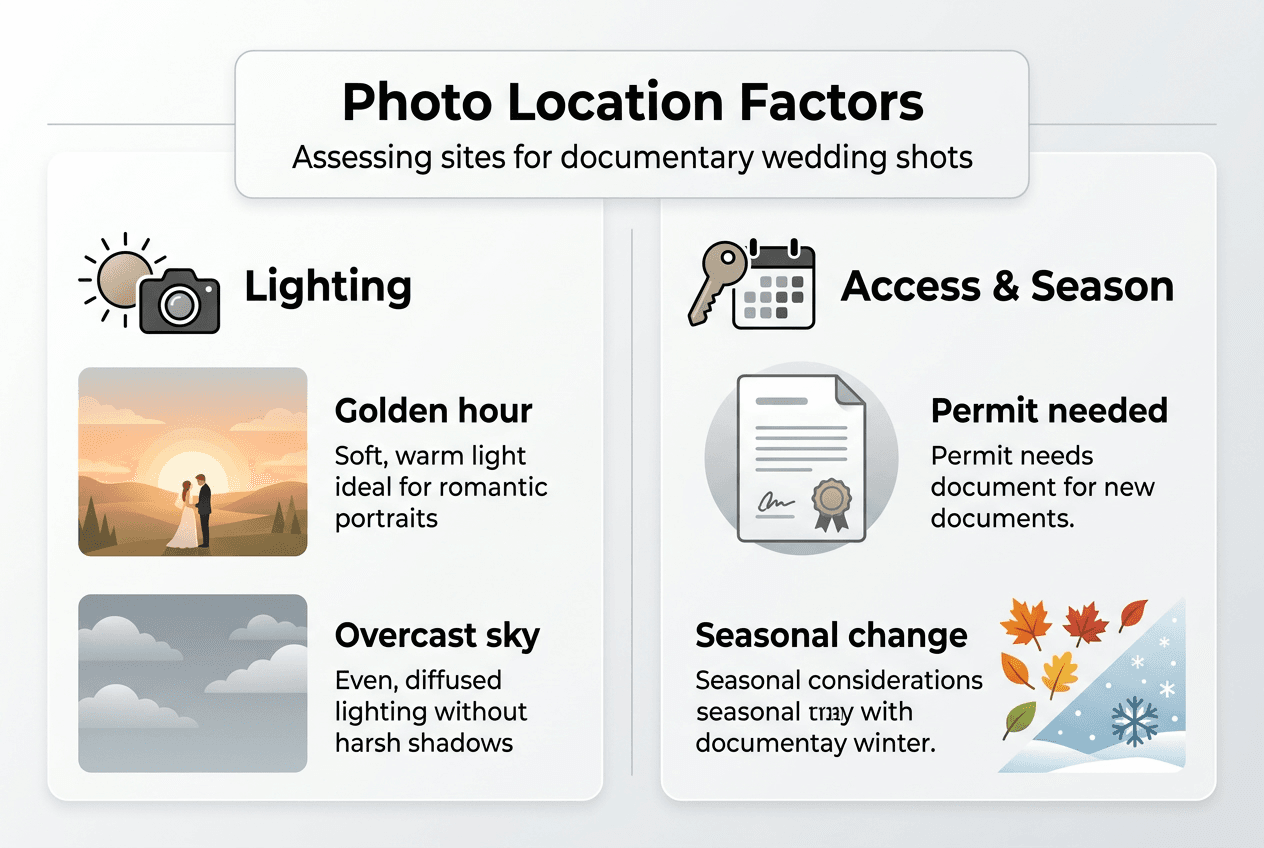
Golden hour, the period shortly after sunrise or before sunset, provides the most flattering natural light for wedding photography. Golden hour provides 20-30% better photo quality due to optimal lighting conditions that create warm, soft illumination. This magical light:
Minimises harsh shadows and unflattering contrasts
Enhances skin tones with warm, glowing quality
Creates romantic atmosphere in outdoor settings
Produces even lighting across faces and landscapes
Adds depth and dimension to photographic compositions
Natural light improves emotional impact by 30% versus artificial lighting in wedding photography. Sunlight creates authentic atmosphere that artificial sources cannot replicate, resulting in images that feel genuine and timeless.
Midday sunlight, whilst bright, creates harsh shadows and unflattering contrasts. Overcast days surprisingly offer advantages, providing soft, diffused light that works beautifully for documentary-style photography. Cloud cover acts as a natural softbox, eliminating harsh shadows whilst maintaining good exposure.

Pro Tip: Discuss timing extensively with your photographer during planning meetings. Schedule key photo sessions during golden hour periods, typically the hour before sunset, to maximise natural light benefits and achieve stunning outdoor shots.
Seasonal variations affect available light significantly. Summer weddings offer extended daylight hours and later golden hour timing, whilst winter ceremonies require earlier scheduling to capture optimal natural light before darkness falls.
Steps to choose the perfect wedding photo location for your story
Selecting ideal wedding photo locations requires thoughtful consideration of multiple factors that influence both aesthetics and practical execution. Follow these systematic steps to identify venues perfectly suited to wedding storytelling capturing real love.
Step 1: Identify personally meaningful locations
Begin by listing places significant to your relationship. Where did you first meet? Where did the proposal happen? Which locations represent shared hobbies or interests? Personal connections create authentic emotional responses that translate beautifully into documentary photography.
Step 2: Research accessibility and permissions
Investigate whether your chosen locations require permits, have restricted access times, or charge fees. Historic properties, nature reserves, and public parks often need advance booking or written permission for professional photography.
Step 3: Assess lighting conditions
Visit potential locations at different times, particularly during golden hour when you’ll likely schedule photos. Observe how sunlight moves through spaces, where shadows fall, and which areas offer optimal natural illumination.
Step 4: Consider seasonal factors
Evaluate how your chosen location changes across seasons. Spring brings blossoms, summer offers lush greenery, autumn provides rich colours, and winter creates dramatic minimalist landscapes. Select timing that aligns with your vision.
Step 5: Test photograph the location
Take test shots at your shortlisted venues. This practical exercise reveals photographic potential and highlights any unexpected challenges before your wedding day.
Location factor | What to assess | Why it matters |
Natural light | Quality at different times | Determines photo quality and mood |
Background elements | Visual interest and distractions | Shapes compositional possibilities |
Accessibility | Travel time and logistics | Affects timeline and stress levels |
Permits | Required permissions | Prevents last-minute complications |
Weather backup | Alternative covered options | Ensures flexibility for conditions |
Pro Tip: Create a shortlist of three to five locations and schedule a planning session with your photographer. Their professional expertise helps evaluate each venue’s photographic potential and identify any logistical challenges you might overlook.
Unique locations offer 15-20% higher likelihood of social media sharing and positive feedback. This increased engagement reflects how distinctive settings create memorable, shareable images that resonate with viewers.
Coordinate timing carefully when selecting multiple locations. Factor in travel time, potential traffic, and buffer periods for unexpected delays. Rushing between venues creates stress that shows in photographs, whilst relaxed schedules enable candid wedding shots authentic moments to unfold naturally.
Avoiding common mistakes when choosing wedding photo locations
Many couples inadvertently compromise their wedding photography by overlooking practical considerations when selecting photo locations. Understanding common pitfalls helps you make informed decisions that prevent disappointment.
Accessibility challenges frequently undermine otherwise perfect locations. Remote venues might look stunning online but prove difficult to reach in wedding attire, especially for guests with mobility considerations. Steep terrain, muddy paths, or uneven surfaces create unnecessary stress and limit photographic opportunities.
Overly popular locations, whilst visually appealing, often become crowded with tourists and other wedding parties. Competing with crowds for space diminishes the intimate, personal atmosphere essential for authentic documentary photography. Consider lesser-known alternatives that offer similar aesthetics without the masses.
Weather vulnerability poses significant risks for outdoor locations without backup options. Poor location choices reduce photo satisfaction despite excellent photography techniques. Always identify covered or indoor alternatives nearby that maintain your aesthetic vision if conditions turn unfavourable.
Key mistakes to avoid:
Selecting locations without visiting them personally beforehand
Ignoring permit requirements and access restrictions
Overlooking lighting conditions at your scheduled photo time
Choosing venues too far apart, creating rushed timelines
Failing to communicate location plans with your photographer
Selecting trendy spots that won’t age well in photos
Neglecting guest comfort and accessibility needs
Timing misalignment represents another frequent error. Booking a beach location for midday photos, for instance, guarantees harsh lighting and squinting subjects. Coordinate your schedule to leverage optimal natural light at each chosen venue.
Clichéd locations, whilst safe choices, rarely produce memorable wedding couple photo guide natural authentic images. Generic backdrops create generic photographs that fail to reflect your unique story. Seek venues that genuinely resonate with your relationship rather than following trends.
Inadequate weather contingency planning leaves you vulnerable to disappointment. British weather proves notoriously unpredictable, making backup options essential. Discuss alternative locations with your photographer during planning to ensure seamless adaptation if needed.
Poor communication with your photographer about location expectations and challenges creates avoidable problems. Share your vision clearly, discuss practical concerns openly, and trust their professional input about what will photograph beautifully versus what might disappoint.
Discover your ideal wedding photographer in the UK
After selecting perfect locations for your wedding photography, partnering with experienced professionals who specialise in documentary-style outdoor shoots ensures those venues translate into stunning visual stories. Finding a wedding photographer Derbyshire area expert who understands natural lighting and authentic storytelling makes all the difference.
Professional photographers with local expertise in regions like award-winning wedding photographer Staffordshire bring invaluable knowledge of hidden gems and optimal timing for outdoor venues. Their experience capturing genuine moments in diverse settings, from historic estates to countryside landscapes, ensures your carefully chosen locations shine in every frame. Whether you’re planning a wedding photographer Worcestershire celebration or exploring further afield, connecting with specialists who prioritise documentary authenticity helps transform your location choices into cherished memories.
Frequently asked questions
How far in advance should we choose our wedding photo locations?
Ideally select locations three to six months before your wedding date, allowing sufficient time to secure necessary permits and conduct thorough scouting visits. Early selection enables better coordination with your photographer, who can plan optimal timing and backup options. This advance planning also reduces stress as your wedding approaches.
What if the weather is bad on the wedding day for outdoor photos?
Always identify backup indoor or covered locations during your initial planning phase that maintain your aesthetic vision. Discuss comprehensive contingency plans with your photographer well before the wedding, ensuring they know alternative venues and can adapt quickly. Experienced documentary photographers excel at capturing beautiful images regardless of weather conditions.
Can we use multiple locations for our wedding photos?
Yes, multiple locations provide diverse backdrops and create richer wedding storytelling photography steps throughout your album. However, plan timing and travel logistics carefully to avoid creating stressful rushes between venues. Limit selections to two or three locations maximum, allowing adequate time at each for relaxed, authentic photography.
Do we need permission to photograph at public outdoor locations?
Many public spaces, including parks, historic sites, and nature reserves, require permits for professional wedding photography. Contact venue management or local authorities several months ahead to understand requirements and associated costs. Some locations prohibit commercial photography entirely, making advance research essential.
How do we ensure our chosen locations suit documentary-style photography?
Discuss your shortlisted venues with your photographer during planning consultations, sharing reference images that illustrate your vision. Professional documentary photographers can assess whether locations offer sufficient natural light, interesting compositional elements, and appropriate atmosphere for authentic storytelling. Their expertise helps identify which venues will photograph beautifully versus those that might disappoint despite appearing attractive in person.
Recommended

Comments