
Couples: Watch 5–10 Full Films Before Choosing Wedding Video Style
- 1 day ago
- 7 min read
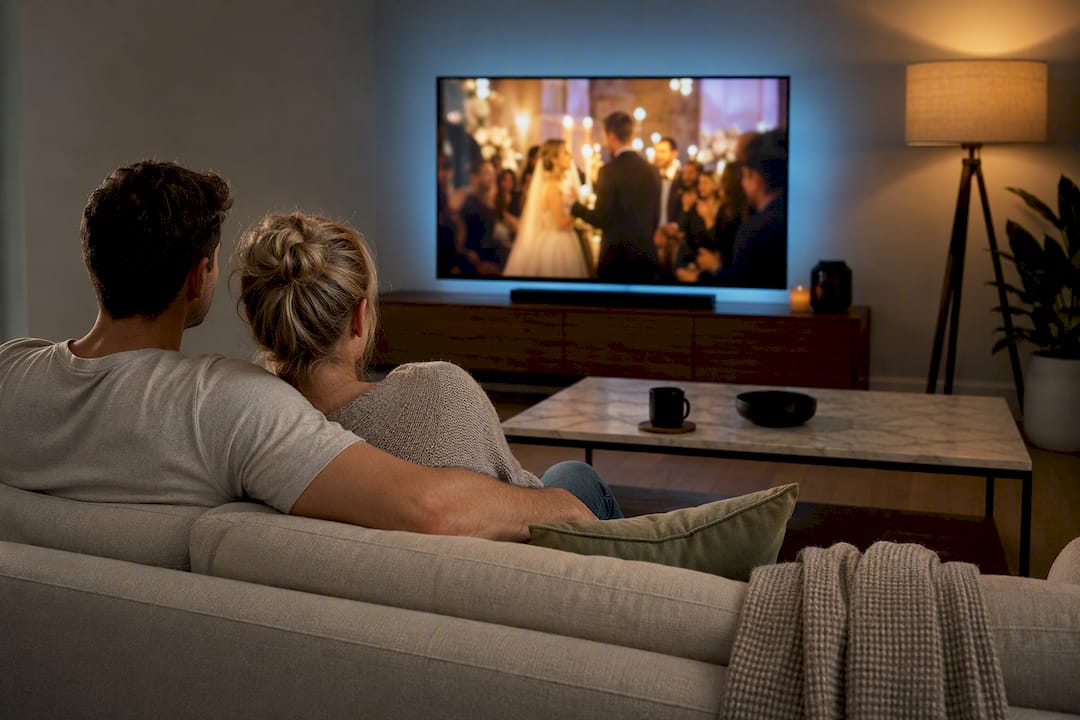
Cinematic wedding films are music-led, colour-graded highlights built for emotion, usually running 3 to 10 minutes. Documentary coverage is a chronological, real-audio record of your day that runs much longer and keeps every vow and speech intact. Choose cinematic if you want a polished, curated love story; choose documentary if you want completeness and authenticity. Most couples end up booking both, and that hybrid approach is now the default recommendation across the industry.
TL;DR:
Cinematic wedding films focus on stylized visuals and music-driven editing, often requiring complex gear and directed shots, resulting in shorter, polished highlights.
Documentary coverage emphasizes authenticity, capturing the day in chronological order with minimal direction, often producing longer, full-length films and preserving speeches and vows intact.
Most couples choose a hybrid approach, blending cinematic highlights with full documentary edits, especially for multi-event weddings or those wanting both emotion and completeness.
Cost varies mainly with crew size, editing hours, and equipment, with cinematic packages generally being more expensive due to additional shooting and post-production work.
Reviewing full wedding films from similar venues and asking specific questions ensures clarity on style, deliverables, and ownership rights before booking.
Table of Contents
Cinematic vs documentary wedding video: what actually differs?
The two styles solve different problems, and the gap shows up in four places: how it looks, how it’s cut, how much direction you get on the day, and how sound is handled.
A cinematic wedding film leans on slow motion, drone shots and a deliberate colour grade to build something closer to a short film than a home video. Documentary coverage stays observational, capturing the day as it unfolds without staging or heavy stylisation.
Editing structure: cinematic films are non-linear and music-driven, often opening with vows before cutting back to getting-ready shots. Documentary edits follow the day in order, morning to last dance.
Direction on the day: cinematic coverage usually asks for short posed or guided sequences. Documentary coverage asks for almost nothing beyond staying out of your guests’ sightlines.
Runtime: cinematic sits at 3 to 10 minutes; documentary edits commonly run 15 to 60 minutes or more.
None of this is a quality judgement. It’s a set of trade-offs between curated emotion and a fuller record.
How each style is actually filmed on your wedding day
What you experience on the day depends heavily on which style your videographer defaults to, and it’s worth knowing before you sign anything.
Crew and kit. Cinematic coverage typically needs gimbals, a drone operator and often a second shooter to cover multiple angles for the edit. Documentary coverage can run lean, sometimes a single shooter with a long lens and a lapel mic.
Direction and portrait time. Expect a videographer working cinematically to request 10 to 20 minutes for directed shots, usually slotted into golden hour or just after the ceremony.
Schedule buffers. Those directed windows need to be pencilled into your timeline in advance, or they get squeezed out by a running-late reception.
Audio setup. Both styles need a clean feed from the ceremony, but cinematic teams sometimes prioritise visuals over dialogue clarity if they’re only using fragments in the final cut.
Guest experience. Documentary crews tend to feel closer to invisible. Cinematic crews are more visibly present when arranging a shot, though rarely disruptive with an experienced team.
What you’ll actually receive: highlights, feature films and full edits
Vague package names cause most of the disappointment couples report after their wedding. Confirm the actual runtime and content before booking.
Highlight reel: 3 to 6 minutes, music-led, designed for sharing on social media. This is almost always cinematic in style.
Short film: 8 to 15 minutes, a slightly fuller cinematic edit with more scenes and dialogue.
Feature or documentary edit: 15 to 60+ minutes, chronological, with full speeches and vows intact.
Raw ceremony/speech files: unedited audio or footage, worth requesting separately if you want a permanent record beyond the edited film.
Delivery is usually via a private online gallery or download link, with turnaround varying by season. Check whether background music is licensed for both private and public sharing, since some tracks are cleared for personal use only and will need swapping if you want to post the film publicly.
How to choose the right videographer for you
Marketing labels like “cinematic” and “documentary” mean different things to different studios, so the label alone won’t tell you what you’re getting. The fix is simple: watch full films, not just the reel on the homepage.
Watch 5 to 10 complete wedding films from each videographer you’re considering, not only their showreel. Consistency across full films is a far better signal of reliability than one polished highlight.
Ask exact questions, not open-ended ones: what’s your editing style, how many shooters will be there, can I see a full wedding from start to finish, what’s your backup plan if you’re ill, what’s the turnaround, and how do you handle music licensing?
Watch for red flags: a videographer with no full films to show you, vague answers about their style, or unclear language about what’s actually included in your deliverables.
Prioritise your spend based on what you actually want kept forever. If speeches matter most, weight your budget towards documentary coverage and full audio. If you want something to watch at anniversaries that feels like a film, weight it towards cinematic craft.
A clear point of view beats a vague promise every time. If a videographer says “I do whatever you want” without naming a signature approach or pointing you to comparable work, that’s usually a sign they don’t have one.
Pro Tip: Ask specifically to see one full film shot at a venue similar to yours, not just their best highlight reel. It tells you how they handle low light, awkward acoustics and long speeches, the parts a showreel conveniently skips.
Why hybrid coverage suits most couples
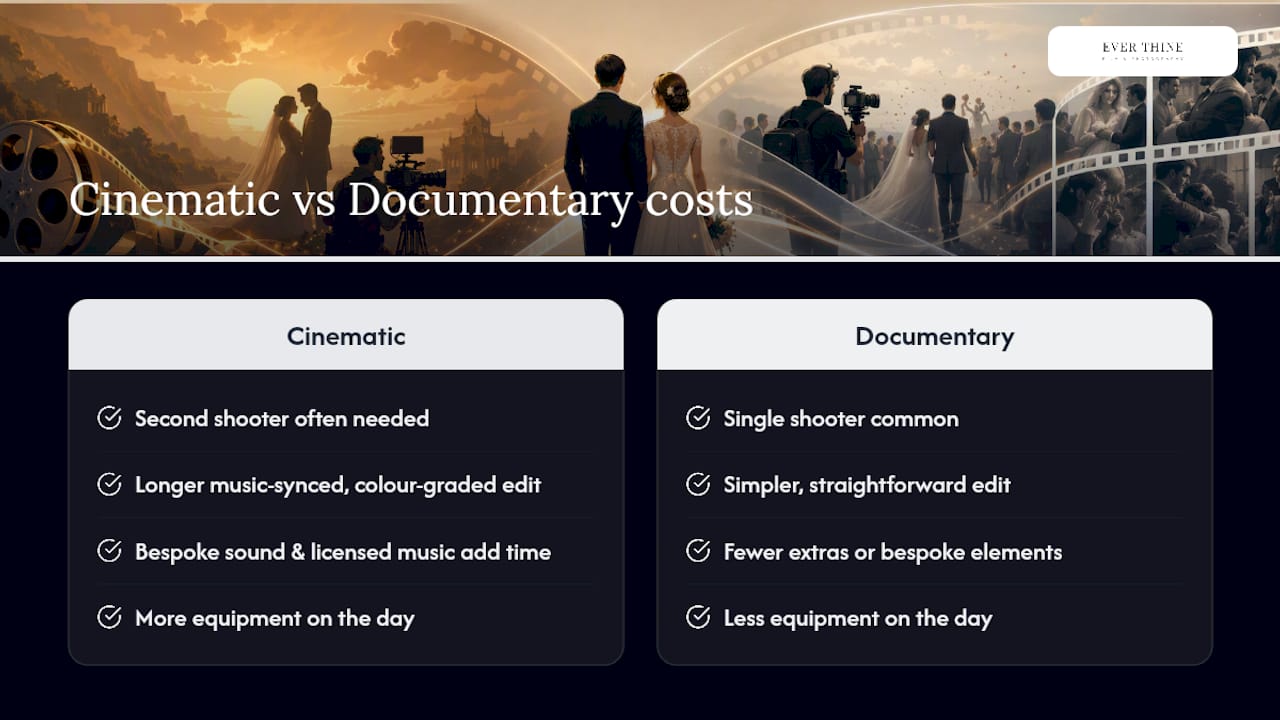
Most modern wedding films blend documentary authenticity with cinematic technique, and it’s easy to see why. A hybrid package typically includes a short cinematic highlight for sharing, plus a longer documentary-style edit covering the ceremony and speeches in full.
On the day, this means short, dedicated windows of 10 to 20 minutes for directed portrait work, folded into what is otherwise an observational, documentary-led day. Hybrid coverage works particularly well for multi-event weddings, or for couples who want both the emotional highlight and the complete record without choosing one over the other.
What does cinematic vs documentary wedding video cost?
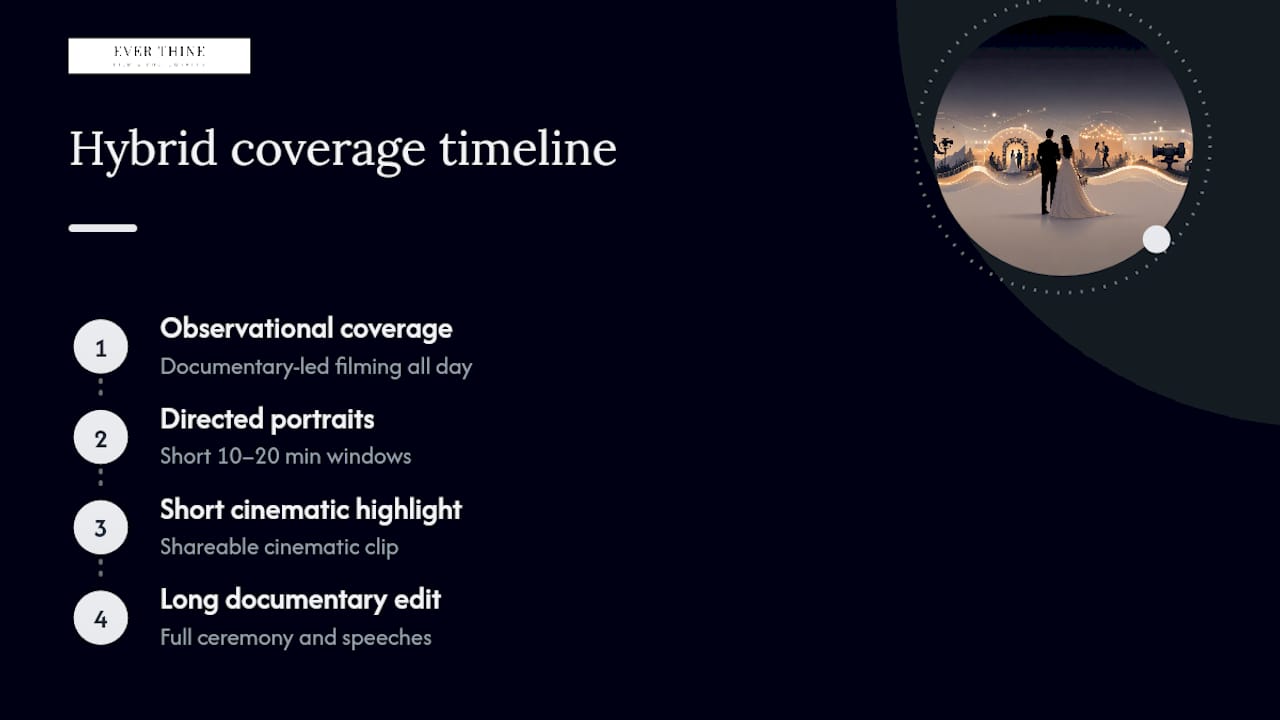
Price differences come down to crew size, editing hours and equipment, not just the label on the package. Documentary-style packages can start lower because they often need a single shooter and a simpler edit.
Cinematic packages tend to sit higher because they usually need a second shooter, more time on the day and considerably longer in the edit suite to build a music-synced, colour-graded film. Bespoke sound design and licensed music both add to turnaround, sometimes by several weeks compared with a straightforward documentary delivery.
Before signing anything, check three things in the contract: the delivery timeframe, how many rounds of revisions are included, and who owns the rights to the raw footage. These details vary far more between suppliers than the headline price does, and they matter more once your wedding is behind you and all you have left is the film.
Why our approach works for both styles
Weddingfilmphotography builds every wedding on documentary-first coverage, then layers cinematic craft on top where it earns its place, rather than forcing your day into a fixed style. Our documentary approach keeps your ceremony and speeches intact, while cinematic editing shapes the highlight you’ll actually share. When you’re reviewing any videographer’s portfolio, including ours, ask to see full weddings shot at venues similar to yours before booking. It tells you far more than any showreel.
Our honest recommendation for choosing between styles
Our preference, if pushed, is documentary storytelling finished with cinematic polish, because it protects the moments couples regret losing while still giving you something beautiful to watch back. Couples who want a keepsake film for anniversaries tend to lean cinematic; couples who want their grandmother’s toast preserved word for word lean documentary. If you’re still unsure, come to a consultation with three questions ready: your must-keep moments, your ideal runtime, and your budget ceiling. That conversation usually settles it faster than any style guide.
— Dawn & Carl
Book coverage that fits your style, cinematic, documentary or both
Some wedding photography and videography providers film documentary-style as standard and build cinematic highlights on top, allowing clients to have both deliverables without choosing just one at booking.
[
Packages typically include an engagement shoot, liability insurance and a written breakdown of what the film will contain, such as ceremony, speeches and a shareable highlight. Coverage options can vary to prioritize cinematic elements or documentary completeness, with different levels of direction and audio capture. Check our current availability and see full wedding films on our Staffordshire wedding photography page, or get in touch directly through our Derbyshire booking page to enquire about your date.
Sources
FAQ
What style of wedding video is best?
There’s no single best style, it depends on whether you value curated emotion or a complete record. Most couples find a hybrid, combining a cinematic highlight with fuller documentary coverage, gives them both.
What is a cinematic wedding video?
A cinematic wedding video is a music-led, highly edited highlight film, typically 3 to 10 minutes long, using techniques like slow motion, drone footage and colour grading to create an emotionally paced story.
What is the difference between videography and cinematography for a wedding?
Videography generally refers to straightforward filming and recording of events, while cinematography describes the deliberate visual craft, framing, lighting, movement, associated with a cinematic wedding film. In practice, “cinematic” videographers apply cinematography techniques to wedding footage.
What are the current trends in wedding videography?
Hybrid coverage is the clearest trend: couples increasingly want a cinematic highlight paired with a full documentary edit rather than picking one style exclusively. Raw audio requests for speeches and vows are also becoming more common as couples realise how often that detail gets missed.
Recommended


Comments