
How lighting shapes wedding photos: a 2026 guide


Many couples believe brighter light automatically creates better wedding photos, but this common assumption often leads to disappointment. The truth is lighting quality, not just intensity, profoundly affects the mood, clarity, and emotional storytelling in your wedding images. Understanding how different lighting techniques influence your photos helps you make informed decisions that enhance your memories. This guide explains core lighting concepts, debunks misconceptions, and provides practical strategies to optimise your wedding photography’s aesthetic and emotional impact.
Table of Contents
How Natural And Artificial Lighting Affect Wedding Photo Aesthetics And Mood
A Comparative Framework For Evaluating Wedding Photography Lighting Techniques
Practical Tips For Couples To Optimise Lighting In Their Wedding Photography
Summary And Next Steps For Using Lighting To Enhance Your Wedding Memories
Key takeaways
Point | Details |
Lighting shapes aesthetic and emotional qualities | Light quality, direction, and colour temperature dramatically influence how your photos look and feel. |
Natural and artificial light create distinct effects | Golden hour delivers warm romance whilst artificial light provides controlled illumination indoors. |
Understanding lighting optimises schedules and venues | Knowledge of lighting helps you plan photo timing and assess venue conditions effectively. |
Common misconceptions harm photo quality | False beliefs about brightness and flash can lead to disappointing, unflattering results. |
Planning with your photographer improves results | Discussing lighting preferences early ensures authentic, beautiful wedding memories. |
Understanding the basics of lighting in wedding photography
Lighting serves as the foundation of every photograph, controlling exposure, mood, and image clarity. Without proper illumination, even the most skilled photographer cannot capture the emotional depth and visual beauty your wedding day deserves. Wedding photography lighting blends artistic vision with technical control to create images that tell your unique love story.
Three main lighting types shape wedding photography:
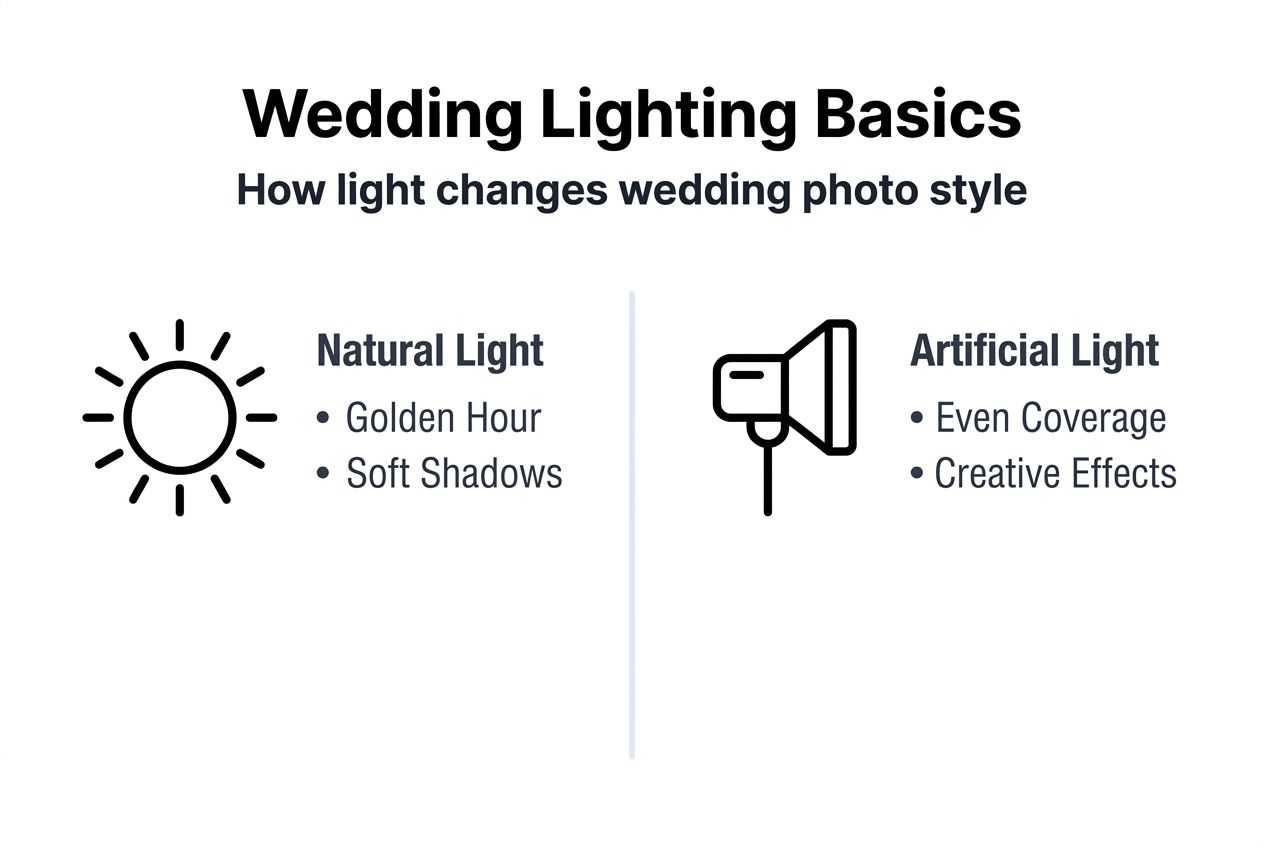
Natural light from the sun creates authentic, soft illumination that changes throughout the day
Artificial light includes flash units and continuous lights that provide consistent, controllable illumination
Mixed lighting combines ambient and artificial sources to balance atmosphere with visibility
The direction of light fundamentally alters how subjects appear in photos. Front lighting illuminates faces evenly but can appear flat, whilst side lighting adds dimension and texture through shadows. Backlighting creates dramatic silhouettes and romantic glows. Quality matters equally, with soft light wrapping gently around subjects and harsh light creating sharp, unflattering shadows. Colour temperature influences the warmth or coolness of your images, ranging from the golden tones of sunset to the blue cast of overcast skies.
Understanding these concepts helps you communicate preferences to your photographer and recognise how venue characteristics affect your photos. Different photography styles leverage lighting in unique ways, from documentary approaches that embrace available light to more controlled portrait sessions that shape illumination precisely.
How natural and artificial lighting affect wedding photo aesthetics and mood
Golden hour natural light creates warm tones that enhance romantic ambiance, making photos appear softer and more flattering. This magical period, occurring roughly one hour after sunrise or before sunset, bathes subjects in honey-coloured light that minimises skin imperfections and adds an ethereal quality to images. Overcast days provide beautifully diffused natural light that eliminates harsh shadows, though the resulting photos may feel cooler and more subdued.

Artificial lighting delivers consistent illumination regardless of weather or time, making it essential for indoor ceremonies and evening receptions. Modern flash equipment, when diffused properly, replicates natural light qualities whilst maintaining the authentic atmosphere of your celebration. Continuous artificial lights allow photographers to preview exactly how illumination affects your photos before capturing the moment.
Mixed lighting approaches combine the authenticity of ambient light with the control of artificial sources. In venues with limited windows or during evening events, photographers balance existing light with carefully positioned flash to maintain natural colour tones and emotional resonance. This technique preserves the mood of candlelit receptions whilst ensuring faces remain clearly visible and beautifully lit.
Light directly influences how skin tones reproduce in photographs, affecting whether complexions appear healthy and radiant or washed out and unflattering. Colour accuracy depends on matching white balance to the dominant light source, preventing unwanted colour casts that distort the true atmosphere of your wedding. Understanding these effects helps you plan your photography timeline around optimal lighting conditions.
Pro Tip: Schedule a venue visit during the same time of day as your wedding to observe how natural light enters the space. This reconnaissance helps identify ideal photo locations and anticipate lighting challenges, ensuring your photographer arrives prepared with appropriate equipment and backup plans.
Common misconceptions about wedding photography lighting
Many couples wrongly assume that intense, direct sunlight creates the best outdoor wedding photos. In reality, midday sun produces harsh shadows under eyes and noses, creates unflattering squinting, and causes overexposed highlights that lose detail. Diffused light from cloud cover or shade often delivers far superior results, wrapping subjects in even, flattering illumination.
Flash photography carries an undeserved reputation for producing artificial, unflattering images that destroy romantic atmosphere. Modern flash techniques, including bounce flash and off-camera lighting, seamlessly blend with ambient light to create natural-looking photos that preserve the authentic mood of your celebration. Skilled photographers use flash as a subtle fill light rather than the dominant source.
The belief that indoor venues always require harsh, intrusive lighting overlooks sophisticated techniques that maintain natural aesthetics. Photographers balance window light with carefully positioned artificial sources, use high ISO capabilities to capture ambient light authentically, and employ light modifiers to soften any necessary flash. The result looks organic and true to the moment.
Timing misconceptions lead couples to schedule all photos during harsh midday light when everyone is available, missing the dramatically superior quality of morning and evening light. This choice sacrifices the warm, flattering illumination that makes wedding photos timeless and romantic. Strategic scheduling around optimal light transforms photo quality dramatically.
Understanding lighting fundamentals helps couples communicate effectively with photographers, ensuring expectations align with photographic reality and preventing disappointment when reviewing final images.
Educating yourself about lighting realities enables productive conversations when choosing your wedding photographer, helping you evaluate portfolios with informed eyes and ask relevant questions about lighting approaches and equipment capabilities.
A comparative framework for evaluating wedding photography lighting techniques
Natural light delivers authenticity and soft shadows that many couples find most appealing for romantic wedding imagery. It requires minimal equipment, feels comfortable for camera-shy subjects, and creates organic-looking photos that age beautifully. However, natural light depends entirely on weather conditions and time of day, offering limited control over intensity and direction. Cloudy skies or indoor ceremonies may provide insufficient illumination for crisp, well-exposed images.
Artificial lighting grants photographers complete control over exposure, direction, and intensity regardless of environmental conditions. It ensures consistent results throughout your wedding day, from dark church interiors to evening receptions. Flash freezes motion sharply, capturing dancing and celebrations without blur. The drawback lies in potential harshness if misused, and some couples find visible lighting equipment intrusive during intimate moments.
Mixed lighting combines ambient and artificial sources to balance atmospheric authenticity with technical control. Photographers layer existing light with subtle fill flash, maintaining the natural colour and mood whilst ensuring proper exposure. This approach works brilliantly in challenging venues with mixed colour temperatures or limited natural light.
Backlighting creates a halo effect that enhances ethereal, dreamy qualities often sought in wedding portraits. Placing subjects between the camera and light source produces luminous rim lighting around hair and shoulders, separating subjects from backgrounds beautifully. This technique requires careful exposure management to prevent faces from appearing too dark.
Lighting Technique | Best Uses | Advantages | Limitations |
Natural light | Outdoor portraits, golden hour sessions | Authentic mood, flattering softness | Weather dependent, limited control |
Artificial light | Indoor ceremonies, evening receptions | Consistent results, motion freezing | Can appear harsh if misused |
Mixed lighting | Challenging venues, transitional spaces | Balances atmosphere with control | Requires advanced skill |
Backlighting | Romantic portraits, creative shots | Dreamy halo effect, subject separation | Needs careful exposure management |
Choosing the right technique depends on your venue’s lighting characteristics, wedding timing, and desired photographic style. Discuss these factors with your photographer to develop a lighting strategy aligned with your vision.
Pro Tip: Request to see examples of how your photographer handles different lighting scenarios, including challenging indoor venues and variable weather conditions. This reveals their adaptability and technical skill across diverse lighting environments.
Practical tips for couples to optimise lighting in their wedding photography
Schedule portrait sessions during golden hour, typically one hour before sunset, when warm, directional light flatters skin tones and creates romantic ambiance naturally.
Visit your venue during the same time of day as your wedding to assess natural light availability, identify shadows and bright spots, and plan optimal photo locations accordingly.
Request that your photographer bring reflectors to bounce light into shadows and diffusers to soften harsh sunlight, simple tools that dramatically improve outdoor portrait quality.
Discuss lighting style preferences during initial consultations, sharing example photos that demonstrate your preferred mood, whether bright and airy or moody and dramatic.
Build flexibility into your photography timeline to accommodate unexpected weather changes or lighting opportunities that arise spontaneously throughout your day.
Choose ceremony and reception venues with large windows or outdoor spaces that maximise natural light options whilst maintaining backup plans for artificial lighting.
Communicate any concerns about visible flash equipment if you prefer discreet, unobtrusive photography that doesn’t interrupt your wedding’s natural flow.
Trust your photographer’s expertise when they suggest timing adjustments or location changes based on current lighting conditions and their professional experience.
Pro Tip: Create a shot list that prioritises must-have photos during optimal lighting windows, ensuring your photographer captures essential images when natural light quality peaks rather than rushing through them during harsh midday sun.
Implementing these strategies ensures you maximise the lighting advantages available at your venue and time of day. Following essential photography tips helps coordinate lighting considerations with other crucial wedding day preparations.
Summary and next steps for using lighting to enhance your wedding memories
Lighting fundamentally shapes both the emotional tone and visual quality of your wedding photographs, influencing mood, clarity, and how authentically your memories are preserved. Understanding the distinct characteristics of natural, artificial, and mixed lighting empowers you to make informed decisions about timing, venues, and photographic approaches.
Key insights to remember:
Light quality matters more than intensity for flattering, romantic wedding photos
Golden hour natural light delivers the warmest, most flattering illumination for portraits
Proper artificial lighting maintains authentic atmosphere whilst ensuring proper exposure
Common misconceptions about brightness and flash lead to avoidable photo quality issues
Strategic planning around lighting conditions dramatically improves final image quality
A planned lighting strategy, developed collaboratively with your photographer, ensures your wedding photos authentically capture the joy, emotion, and beauty of your celebration. Consider venue characteristics, seasonal timing, and your preferred photographic style when making decisions. Apply this knowledge to create wedding memories you’ll treasure forever, images that transport you back to the feelings and atmosphere of your special day.
Professional wedding photography with expert lighting care
Your wedding day lighting deserves expert attention to capture authentic, beautiful moments that reflect your unique love story. Ever Thine Film & Photography specialise in managing natural and artificial light to craft stunning, emotionally resonant wedding photos across the Midlands.
Our award-winning photographers understand how to work with challenging venues and variable weather, ensuring flattering results regardless of conditions. We provide tailored photography sessions aligned with your venue’s lighting characteristics and optimal natural light timing. Whether you’re planning a celebration in Derbyshire, Worcestershire, or Staffordshire, we bring technical expertise and artistic vision to every wedding.
Contact us early in your planning process to discuss your perfect lighting style and photographic vision, ensuring we capture your wedding memories beautifully.
Frequently asked questions
What is the best time of day for natural light wedding photos?
Golden hour, roughly one hour after sunrise or before sunset, offers warm, soft light ideal for romantic photos that flatter skin tones naturally. Scheduling portraits during this period enhances mood dramatically and reduces harsh shadows. Planning your photography timeline around golden hour ensures the most beautiful natural lighting for key images.
How can couples ensure good lighting in indoor wedding photography?
Use diffused artificial lighting combined with ambient light to maintain a natural appearance indoors whilst ensuring proper exposure. Large windows provide valuable natural light supplementation. Discuss lighting plans with your photographer during venue visits to manage limitations and develop appropriate strategies. Reviewing venue-specific photo guides helps identify optimal indoor photo locations.
Do artificial lights ruin the natural look of wedding photos?
Properly used artificial light enhances visibility without compromising natural atmosphere or authentic emotional tone. Skilled photographers balance flash intensity with ambient light, positioning equipment strategically to create seamless, organic-looking results. Modern techniques make artificial lighting virtually invisible in final images. Choosing an experienced photographer ensures artificial light enhances rather than detracts from your wedding photos’ natural beauty.
Recommended

Comments