
How to Plan Wedding Videography for Perfect Memories

Updated: Dec 22, 2025

Over 90 percent of british couples now opt for professional videography to document their weddings. Choosing a videographer is about more than just keeping memories, it is about crafting a film that reflects your relationship and style. With preferences ranging from documentary to cinematic, finding the right creative approach sets the stage for a truly memorable wedding film. This guide highlights key steps and expert tips to help you shape every aspect of your british wedding videography experience.
Table of Contents
Quick Summary
Key Point | Explanation |
1. Establish your videography vision | Define your desired wedding film style to reflect your unique love story, considering elements like emotional tone and atmosphere. |
2. Research potential videographers thoroughly | Gather recommendations and review portfolios to find a videographer whose style aligns with your vision and who captures genuine moments effectively. |
3. Discuss logistics with your videographer | Review technical aspects like lighting, audio and venue specifics to ensure coverage of all important moments seamlessly. |
4. Create a detailed filming plan | Develop a minute-by-minute schedule with your videographer, specifying key moments and shots to capture throughout your wedding day. |
5. Review sample edits and provide feedback | Examine various edit styles with your videographer and give constructive feedback to ensure the final film reflects your personal style and narrative. |
Step 1: Define your videography vision and style
Your wedding film represents far more than a simple recording of events it captures the emotional essence of your most significant day. Establishing a clear videography vision helps transform raw footage into a cinematic narrative that truly reflects your unique love story. When planning your wedding videography, understanding your personal style becomes paramount.
Begin by exploring different wedding film styles that resonate with your personality. Some couples prefer a documentary approach that captures spontaneous moments with minimal intervention, while others desire a more stylised, cinematic experience with carefully composed shots. Discuss your expectations thoroughly with potential videographers to ensure your vision aligns with their creative approach. Consider elements like colour palette, emotional tone, and the overall atmosphere you want to convey.
Reflect on the moments that matter most to you both. Do you want your film to emphasise intimate exchanges, capture the grand celebration, or provide a balanced narrative? Some videographers specialise in specific styles such as storytelling, reportage, or traditional coverage. Reviewing their previous work can help you understand which aesthetic most closely matches your wedding day vision.
Professional tip: Create a mood board or digital inspiration collection showcasing the type of wedding film style you love. Bring this to your initial consultations to help videographers understand your exact creative preferences.
Here is a comparison of popular wedding videography styles to help you refine your vision:
Style | Approach | Typical Features | Ideal For |
Documentary | Candid, unobtrusive filming | Natural interactions, genuine moments | Couples valuing authenticity |
Cinematic | Artistic, directed shots | Dramatic lighting, creative angles | Couples seeking a filmic feel |
Storytelling | Narrative driven | Voice-overs, chronological flow | Couples wanting a personal story |
Traditional | Formal, event-focused | Key rituals, staged group shots | Couples preferring classic coverage |
Step 2: Research and shortlist professional videographers
Researching and shortlisting professional wedding videographers requires strategic planning and thoughtful evaluation. Your goal is to find a creative professional who can transform your wedding day memories into a cinematic masterpiece that resonates with your personal style and emotional journey.
Start by gathering recommendations from recently married friends, wedding planners, and trusted online platforms. Communicate your expectations clearly with potential videographers to ensure they can capture your vision accurately. Review their portfolios meticulously examining their storytelling techniques, editing styles, and ability to capture genuine moments. Pay attention to how they handle lighting, sound quality, and emotional nuances in their previous wedding films.
Create a comprehensive shortlist of 3 to 5 videographers who align with your aesthetic preferences. Schedule initial consultations to discuss your wedding day vision, review their packages, and understand their approach. During these meetings, ask about their experience, equipment, backup plans, and how they collaborate with photographers to ensure seamless coverage. Request full wedding film samples rather than highlight reels to get a comprehensive understanding of their complete work.
Professional tip: Request references from recent couples and read online reviews to gain deeper insights into the videographer’s professionalism, reliability, and ability to capture authentic wedding moments.
This summary outlines key factors to evaluate when shortlisting videographers:
Evaluation Factor | What to Look For | Why It Matters |
Portfolio Quality | Consistent storytelling and editing | Indicates professionalism and style fit |
Experience Level | Years and type of wedding coverage | Ensures readiness for varied scenarios |
Technical Skills | Sound, lighting, camera work | Impacts film clarity and emotional impact |
Client References | Recent, detailed testimonials | Reveals reliability and client satisfaction |
Step 3: Discuss logistics and venue requirements
Navigating the technical aspects of wedding videography requires careful planning and open communication with your chosen professionals. Understanding the logistical details will ensure your wedding film captures every precious moment seamlessly and authentically.
Consider critical technical factors like background composition, lighting conditions, and audio quality when discussing venue specifics with your videographer. Walk through the entire wedding venue together, identifying optimal shooting locations, potential challenges with lighting or sound, and areas that offer the most visually compelling backdrops. Discuss their equipment requirements such as power sources, permitted movement areas, and any venue restrictions on filming equipment.
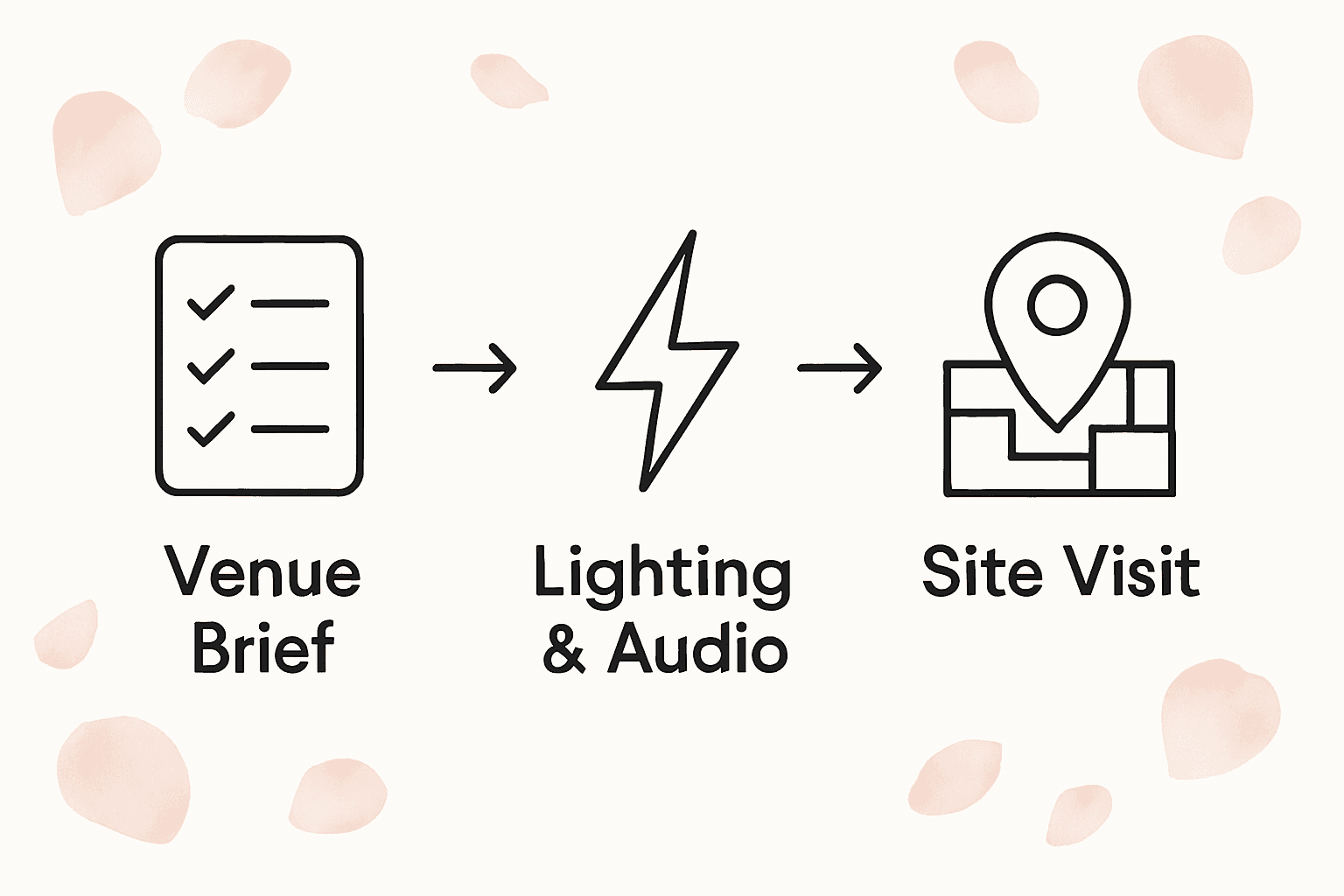
Prepare a comprehensive venue brief that includes detailed information about ceremony and reception spaces. Share floor plans, timing schedules, and specific moments you want captured. Confirm the number of cameras and videographers needed, discuss backup equipment plans, and establish clear communication protocols with other wedding vendors to ensure smooth coordination. Understand their approach to capturing key moments like your processional, exchange of vows, first dance, and speeches.
Professional tip: Request a pre wedding site visit with your videographer to conduct a thorough technical reconnaissance of the venue, allowing you to strategically plan filming positions and anticipate potential technical challenges.
Step 4: Create a detailed wedding day filming plan
Crafting a comprehensive wedding day filming strategy transforms raw footage into a cinematic narrative of your most cherished moments. A well structured wedding timeline ensures that every significant detail is meticulously captured and preserved.
Begin by creating a minute-by-minute shooting schedule that coordinates with your wedding day timeline. Work closely with your videographer to map out key moments including bridal preparations, ceremony proceedings, reception highlights, and candid interactions. Identify specific shots you want captured such as intimate exchanges, family gatherings, and spontaneous emotional moments. Consider requesting multiple camera angles to ensure comprehensive coverage and create visual depth in your final wedding film.

Document your filming preferences in a detailed brief that outlines your expectations, preferred shooting style, and must capture moments. Include information about family dynamics, special relationships, and unique wedding elements that hold personal significance. Discuss potential challenges like low lighting conditions, venue restrictions, or complex venue layouts. Schedule a final pre wedding consultation to review the filming plan, ensuring your videographer understands the nuanced emotional landscape of your special day.
Professional tip: Create a collaborative spreadsheet or shared document with your videographer that breaks down the wedding day schedule, allowing real time communication and last minute adjustments.
Step 5: Review sample edits and finalise your choices
Reviewing sample wedding video edits represents the pivotal moment where your wedding film transforms from raw footage into a personalised cinematic narrative. Discussing your vision thoroughly ensures your wedding memories are captured exactly as you imagine.
Schedule a comprehensive review session with your videographer where you can examine multiple edit styles and discuss specific moments you want highlighted. Request rough cuts that showcase different narrative approaches alternative editing techniques and emotional tones. Pay close attention to transitions sound quality colour grading and storytelling flow. Consider how each edit captures the essence of your unique wedding day moments from intimate exchanges to grand celebrations.
During the review process be prepared to provide constructive feedback that helps refine the final product. Discuss potential adjustments such as music selection pacing of sequences and emphasis on particular emotional moments. Request versions with different musical backgrounds to understand how soundtrack choices dramatically alter the films emotional landscape. Ensure the final edit reflects your personal style personality and the authentic narrative of your wedding day.
Professional tip: Create a detailed feedback document with timestamp references specific edit preferences and emotional moments you want emphasised to help your videographer craft the perfect wedding film.
Capture Your Wedding Day with Expert Videography and Storytelling
Planning wedding videography involves defining your style, choosing the right professional, and managing venue logistics to ensure your film captures every precious emotion and moment. If you want a cinematic, documentary-style film that tells your unique love story authentically and naturally, understanding and navigating these steps can feel overwhelming. Key challenges include articulating your vision clearly, coordinating timing, and finding a videographer who specialises in unobtrusive, heartfelt storytelling.
At Wedding Film Photography based in Staffordshire, our award-winning team focuses on creating cinematic films with a documentary approach that highlights genuine emotions and natural interactions. We help you craft a detailed filming plan and manage venue requirements so your wedding memories are preserved flawlessly. Discover how our personalised packages can bring your vision to life by exploring our comprehensive wedding photography and videography services and learn why couples trust us to capture their story with heartfelt authenticity.
Start turning your wedding day dreams into timeless memories now by contacting us for a personalised consultation. Experience seamless collaboration with professionals who understand the importance of every moment and make your vision their priority. Visit Wedding Film Photography today and take the first step towards the perfect wedding film.
Frequently Asked Questions
How can I define my videography vision for my wedding film?
Establish your videography vision by exploring different wedding film styles that resonate with your personality. Create a mood board with inspiration that reflects your preferences, and share it with potential videographers during your consultations to ensure they understand your creative vision.
What factors should I consider when researching professional wedding videographers?
When researching videographers, look for their portfolio quality, experience level, and technical skills. Make a shortlist of 3 to 5 professionals and review their work thoroughly to ensure they can capture your desired style and emotional moments effectively.
How do I discuss venue requirements and logistics with my wedding videographer?
Communicate with your videographer about crucial venue logistics, including lighting conditions and key shooting locations. Conduct a site visit together to identify optimal filming spots and address any potential challenges related to sound or movement restrictions.
What should be included in my wedding day filming plan?
Your wedding day filming plan should include a minute-by-minute shooting schedule that outlines key moments to capture, such as the ceremony and reception highlights. Collaborate with your videographer to document specific shots you want, and ensure to communicate family dynamics and any special relationships that should be highlighted during filming.
How can I provide feedback on the wedding video edits?
Schedule a review session with your videographer to assess different editing styles and discuss any specific moments you want emphasised. Create a detailed feedback document outlining your preferences and timestamp references to guide any adjustments needed, ensuring the final film reflects your personal style and narrative.
What is the importance of reviewing sample edits during the planning process?
Reviewing sample edits allows you to understand how your wedding film will come together and ensures it meets your expectations. During this process, pay attention to the storytelling flow and make notes on any adjustments you want for the final product.
Recommended

Comments