
What Is Traditional Wedding Photography and How It Shapes Your Big Day


Nearly half of British couples now seek photographers who capture real moments over staged poses. Wedding planning in Staffordshire brings excitement and decisions, but choosing between traditional and documentary styles can shape your memories for years to come. Discover how understanding the differences helps you find a photography approach that reflects your authentic love story, from candid laughter with family to the stolen glances that make your British celebration unforgettable.
Table of Contents
Key Takeaways
Point | Details |
Traditional Wedding Photography | Focuses on structured and posed shots, ensuring comprehensive documentation of key moments and relationships. |
Photographer’s Role | The photographer directs subjects, crafting a polished visual narrative through technical precision and controlled lighting. |
Session Workflow | Typically includes pre-ceremony preparations, ceremony captures, formal post-ceremony portraits, and reception coverage for a complete story. |
Understanding Costs | Couples should evaluate photography packages carefully, considering coverage duration, edited image numbers, and potential additional costs to align with their budget. |
Defining Traditional Wedding Photography Styles
Traditional wedding photography represents a classic and structured approach to capturing matrimonial memories. As outlined by wedding planning experts, this photographic style focuses on meticulously posed portraits and carefully organised group photographs where the photographer actively directs participants into precise compositions.
The hallmark of traditional wedding photography is its emphasis on formal, structured imagery. Photographers using this approach systematically document key wedding moments by positioning couples, families, and wedding parties in deliberately arranged settings. This style prioritises clarity, formality, and comprehensive visual documentation - ensuring every significant relationship and moment is professionally captured. Key characteristics include:
Formal group shots with entire wedding party
Posed couple portraits in carefully selected locations
Precise positioning and staging of subjects
Comprehensive documentation of ceremonial moments
Controlled lighting and professional composition techniques
While some modern couples prefer candid styles, traditional wedding photography offers a timeless and elegant record of matrimonial celebrations. Professional photographers skilled in this approach understand how to balance formal requirements with aesthetic elegance, creating images that will be treasured for generations.
Expert Tip: When selecting a traditional wedding photographer, request to review their full wedding album portfolios to assess their ability to create beautifully composed, technically precise images.
Key Characteristics and Approach Explained
Traditional wedding photography demands an extraordinary level of technical precision and professional orchestration. The approach requires photographers to craft a deliberate narrative through carefully constructed images that capture the formality and emotional significance of a wedding day. Wedding photography professionals understand that this style is more than mere documentation - it’s about creating a comprehensive visual narrative.
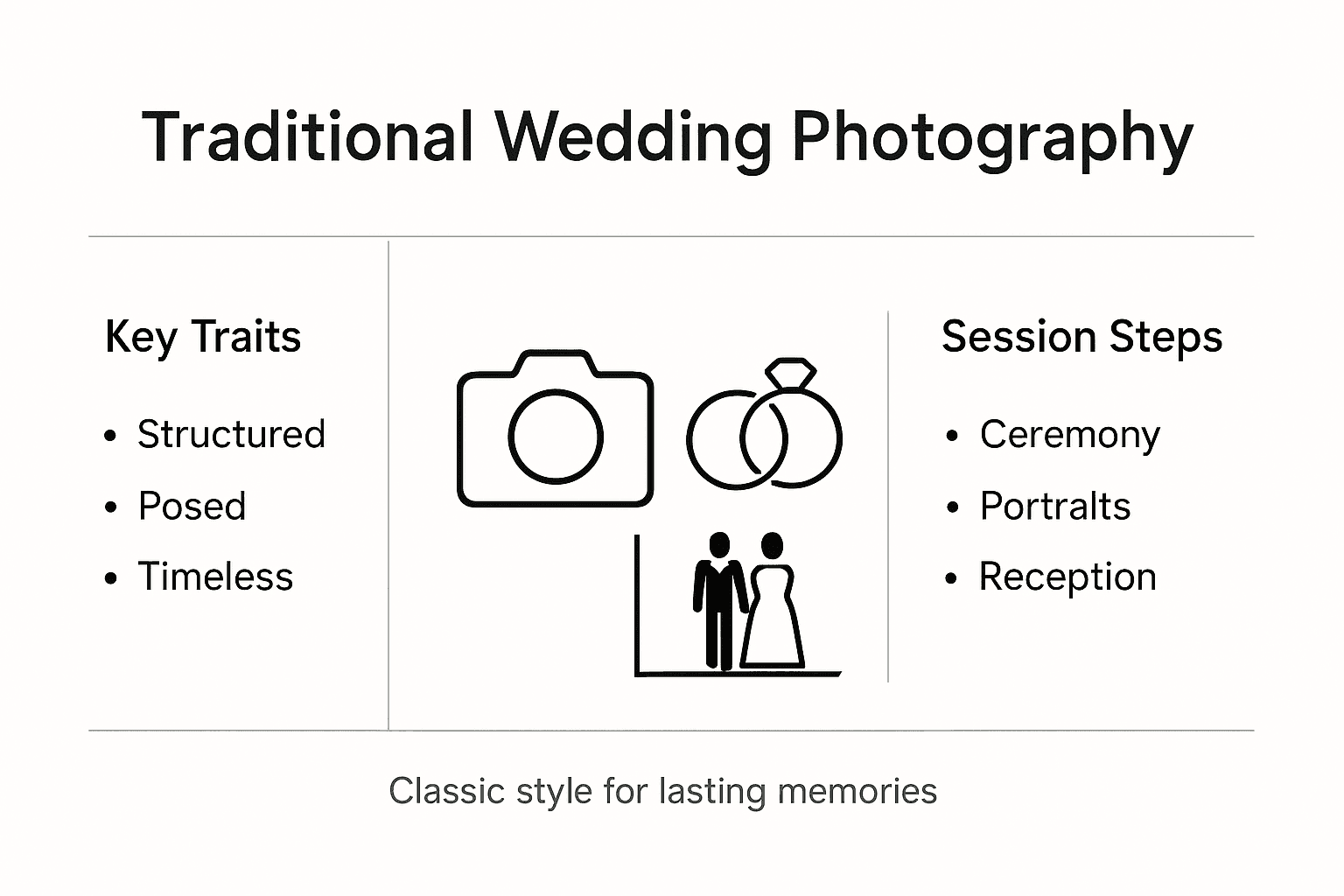
At its core, traditional wedding photography centres on creating a structured visual record. Professional photographers specialising in this style typically allocate specific time during the wedding day for orchestrating group photographs, family portraits, and couple shots. These sessions are meticulously planned to ensure every important relationship and moment receives appropriate attention. The photographer acts almost like a director, guiding participants into precise arrangements that highlight relationships and capture the day’s emotional essence.
The technical elements of traditional wedding photography are equally significant. Photographers employ sophisticated lighting techniques, carefully selected backgrounds, and professional compositional strategies to produce images of exceptional quality. Key technical considerations include:
Balanced lighting to enhance facial features
Strategic positioning to highlight relationships
High-resolution camera equipment
Professional editing to refine image quality
Attention to background details and composition
While contemporary wedding photography trends increasingly favour candid and documentary styles, traditional approaches remain popular among couples seeking a comprehensive, structured visual record of their wedding day. This style provides a timeless collection of images that serve as a formal, elegant representation of the couple’s matrimonial celebration.
Expert Tip: Schedule additional time during your wedding day specifically for formal photographs, allowing your photographer sufficient opportunity to create perfectly composed group and couple portraits.
Typical Photo Sessions and Process Flow
Traditional wedding photography follows a carefully choreographed sequence of photo sessions designed to capture the most significant moments of a couple’s wedding day. Creative wedding group photo strategies help photographers systematically document the celebration while ensuring each important relationship and moment receives appropriate attention.

The typical process typically begins with pre-ceremony preparations, where photographers capture intimate moments of individual wedding party members getting ready. This includes detailed shots of wedding attire, accessories, and candid interactions between bridesmaids, groomsmen, and immediate family members. Photographers carefully document these preliminary moments, creating a narrative that builds anticipation for the main event.
During the wedding ceremony, traditional photographers focus on key moments such as:
The processional entrance
Exchange of vows
Ring exchange
First kiss as a married couple
Signing of the marriage certificate
Post-ceremony photography shifts to a more structured approach, with dedicated time allocated for formal group photographs and couple portraits. These sessions are meticulously planned to ensure comprehensive coverage of family configurations, wedding party groupings, and romantic couple shots. Professional photographers typically follow a predetermined shot list, systematically working through different combinations of family members and wedding party participants.
The final phase involves reception coverage, capturing speeches, first dance, cake cutting, and other significant celebrations. Throughout these sessions, traditional wedding photographers blend formal posed shots with more spontaneous moments, creating a comprehensive visual narrative of the entire wedding day.
To help with planning, see this summary of typical photo sessions in a traditional wedding photography workflow:
Session Phase | Key Focus | Desired Outcome |
Pre-ceremony | Preparations and detailed moments | Build anticipation; showcase details |
Ceremony | Main matrimonial events | Preserve pivotal wedding moments |
Post-ceremony | Family and group portraits | Comprehensive record of relationships |
Reception | Formalities and spontaneous celebration shots | Blend of posed and candid highlights |
Expert Tip: Provide your photographer with a detailed shot list in advance, including specific family groupings and must-have photographs to ensure no important moments are missed.
Traditional Versus Documentary Wedding Photography
Wedding photography styles represent distinct approaches to capturing a couple’s most cherished day. Comparative wedding photography techniques reveal fundamental differences between traditional and documentary approaches that significantly impact how wedding memories are preserved.
Traditional wedding photography is characterised by its structured and deliberate approach. Photographers in this style meticulously arrange subjects, creating carefully composed portraits that emphasise formality and timeless elegance. Each image is thoughtfully planned, with photographers actively directing participants into specific poses and configurations. The result is a collection of polished, refined photographs that present a romanticised and idealised version of the wedding day.
In contrast, documentary wedding photography embraces a dramatically different philosophy:
Minimal photographer intervention
Candid, spontaneous moment capture
Authentic emotional storytelling
Natural lighting and unposed interactions
Emphasis on genuine emotional narratives
Documentary photographers operate almost invisibly, capturing genuine moments as they naturally unfold. They prioritise emotional authenticity over technical perfection, seeking to tell the wedding day’s story through unscripted, genuine interactions. While traditional photographers create staged narratives, documentary photographers capture the raw, unfiltered essence of the celebration.
Ultimately, the choice between traditional and documentary styles depends on personal preference. Some couples desire the polished, timeless aesthetic of traditional photography, while others prefer the genuine, emotional storytelling of documentary approaches. Many modern photographers now blend elements from both styles, offering a nuanced approach that captures both structured elegance and authentic moments.
Here’s a concise comparison of traditional and documentary wedding photography:
Aspect | Traditional Style | Documentary Style |
Photographer’s Role | Actively directs subjects | Observes and captures discreetly |
Image Composition | Structured and formal arrangements | Unplanned, spontaneous interactions |
Lighting | Controlled, professional setup | Primarily natural light |
Narrative Approach | Idealised visual record | Authentic emotional storytelling |
Typical Result | Polished, timeless portraits | Genuine, candid moments |
Expert Tip: Discuss your preferred photography style with potential photographers during initial consultations, requesting full wedding albums to understand their specific approach and artistic vision.
What to Expect: Costs, Packages and Misconceptions
Understanding wedding photography pricing requires careful navigation of complex package structures and realistic expectations. UK wedding photography packages demonstrate significant variation, with prices typically ranging from £1,400 to over £3,000 depending on photographer experience, coverage duration, and included services.
Traditional wedding photography packages generally encompass several core elements that couples should carefully evaluate. Most professional photographers offer tiered packages with different levels of coverage, including options for half-day or full-day shooting, number of edited images, and additional deliverables. Typical package components include:
Photographer coverage hours
Number of professionally edited digital images
Online image gallery
Print rights
Optional physical wedding album
Optional engagement photoshoot
Second photographer option
Common misconceptions can significantly impact couples’ expectations and wedding photography experience. Many couples mistakenly assume that lower-priced packages provide identical services, when in reality, reduced costs often correlate with limited coverage, fewer edited images, or less experienced photographers. Professional traditional wedding photographers invest substantial time in post-production, equipment maintenance, and skill development, which directly influences their pricing structure.
Budget considerations extend beyond the initial package price. Couples should discuss potential additional costs such as travel expenses, album upgrades, extra printing services, and potential overtime charges. Transparent communication with potential photographers helps prevent unexpected financial surprises and ensures couples select a package aligned with their specific requirements and budget constraints.
Expert Tip: Request a comprehensive breakdown of package inclusions and potential additional costs during your initial photographer consultation to avoid unexpected financial surprises.
Capture Your Wedding Day with the Perfect Balance of Tradition and Authenticity
Choosing the right wedding photography style can feel overwhelming when faced with the decision between traditional, structured portraits and candid, documentary storytelling. The challenge lies in preserving the timeless elegance of formal shots while also embracing the genuine emotions that make your wedding day truly unique. If you want photos that reflect both the classic beauty and the heartfelt moments your celebration deserves this is where expert guidance makes all the difference.
Discover how our team at Wedding Film Photography combines professional craftsmanship with unobtrusive storytelling to deliver a seamless blend of traditional and natural wedding coverage. By working closely with you we ensure every posed portrait and spontaneous interaction is captured with precision and authenticity. Explore our comprehensive packages and see how personalised planning can give you peace of mind and stunning images you will cherish forever. Begin your journey towards unforgettable wedding memories today by visiting our main website and let us help turn your vision into reality.
Frequently Asked Questions
What is traditional wedding photography?
Traditional wedding photography is a classic and structured approach that focuses on posed portraits and carefully organised group photographs, capturing key wedding moments with an emphasis on clarity and formality.
How does traditional wedding photography differ from documentary photography?
Traditional wedding photography emphasises structured, staged imagery with the photographer actively directing subjects, while documentary photography captures spontaneous, unposed moments, focusing on authentic emotional storytelling.
What key moments are typically captured in traditional wedding photography?
Essential moments include pre-ceremony preparations, the ceremony itself (like the processional entrance and exchange of vows), post-ceremony family group portraits, and significant reception events such as speeches and the first dance.
What should I consider when choosing a traditional wedding photographer?
Evaluate the photographer’s portfolio for composition and technical skill, discuss your preferred style and expected outcomes, and ensure transparent communication regarding package inclusions and potential additional costs.
Recommended


Comments