
What is pre-wedding consultation: your full guide

TL;DR:
Pre-wedding consultations are essential planning tools that clarify your wedding vision, budget, and logistics before signing contracts.
Thorough preparation, including questions, visual references, and aligning expectations with your partner, maximizes their benefits.
Most couples assume a pre-wedding consultation is little more than a polite introduction over coffee. It is not. Understanding what is pre-wedding consultation properly can be one of the most useful things you do during your entire planning process. Far from a formality, a well-structured consultation is where your wedding vision gets tested, refined, and grounded in reality. This guide walks you through what these meetings involve, what to expect in pre-wedding consultation settings, how to prepare, and why the best couples treat them as a planning priority rather than an afterthought.
Table of Contents
Key takeaways
Point | Details |
More than a meet-and-greet | Pre-wedding consultations clarify vision, budget, and logistics before any contract is signed. |
Preparation is everything | Submitting priorities and questions beforehand means you spend less time on basics and more on tailored advice. |
Multiple consultation types exist | Planner, photographer, and vendor consultations each serve a distinct purpose and deserve separate attention. |
Timing matters | Scheduling consultations early in your engagement protects against delays, cost increases, and missed bookings. |
Trust is built face to face | Direct meetings reduce misunderstandings that emails and messages consistently fail to prevent. |
What a pre-wedding consultation actually involves
The term gets used loosely, so it helps to be specific. Pre-wedding consultations focus on clarifying your vision, receiving expert advice, and laying the groundwork for personalised planning, all before you sign anything. That last point matters more than most couples realise.
These meetings typically run between 45 minutes and 90 minutes, depending on whether you are speaking with a wedding planner, a photographer, or a specific vendor. Format varies too. Some professionals prefer in-person meetings at a studio or venue, while others offer video calls that work just as well if you are planning from a distance or have a demanding work schedule.
What gets discussed during a consultation usually includes:
Your overall wedding vision, including theme, colour palette, and atmosphere
Budget expectations and how realistic they are given your priorities
Venue logistics, including access times, lighting, and layout considerations
Vendor recommendations and how different suppliers work together
Timeline structure across the day and in the lead-up to the wedding
Any specific concerns or unusual circumstances particular to your wedding
One often-overlooked element is the pre-consultation form. Many professionals ask you to complete one before the meeting. Submitting concrete questions beforehand maximises the value of the session because it allows your consultant to skip the generic groundwork and focus on what you actually need.
What can you expect to walk away with? Depending on the provider, typical deliverables include a budget breakdown, a draft timeline, a recommended vendor list, and sometimes a mood board. These outputs give your planning something concrete to build from.
Pro Tip: Ask each professional ahead of your meeting what the session will cover and what you will receive afterwards. Some consultations are advice only, while others include written summaries or planning documents.
Why the benefits of planning consultation are genuinely significant
The honest reason most couples do not take pre-wedding consultations seriously enough is that the benefits are invisible until something goes wrong. When a vendor misunderstands your brief, or when two suppliers are operating with conflicting timelines, you feel the cost of not having spoken clearly earlier.
Face-to-face vendor meetings reduce stress, improve mutual understanding, and align expectations in ways that email exchanges simply cannot replicate. You can read tone, ask follow-up questions immediately, and get a genuine sense of whether the person in front of you actually gets what you are trying to create.
“A pre-wedding consultation is not just an information exchange. It is the moment you decide whether someone understands your vision well enough to be trusted with it.”
Beyond vendor alignment, there is the question of emotional readiness. Early sessions identify potential concerns and help couples address them before they become genuine problems. Planning a wedding is one of the most logistically complex things most people ever do. Having a structured space to voice your concerns, ask the questions you are embarrassed to ask, and get honest answers from someone experienced is genuinely valuable.
There is also the matter of trust. Consultations occur before contract signing precisely so you can evaluate whether a vendor’s style and approach are the right fit. Walking into a contract without that conversation is a risk you do not need to take.
How to prepare for pre-wedding consultation sessions
Good preparation is what separates a useful consultation from a pleasant but forgettable chat. Here is how to get the most out of it.
Write your questions down in advance. Not vague thoughts, but specific questions. What happens if it rains? How many photographers will be present? What is the cancellation policy? Written questions prevent the blank-mind moment that happens when someone asks if you have anything to raise.
Complete the pre-consultation form thoroughly. If your professional sends one, treat it seriously. Detailed pre-submitted priorities allow the consultant to tailor the entire session to your situation rather than starting from scratch.
Know your budget range. You do not need a precise figure, but you need a realistic range. Consultants can only give you relevant advice if they understand what you are actually working with.
Agree with your partner before the meeting. Arriving with misaligned expectations wastes time and can create awkward moments. Talk through your top priorities together beforehand.
Bring visual references. Photos, saved Instagram posts, screenshots of decor or photography styles you love. Professionals work much more effectively from visual examples than from descriptive language alone.
Pro Tip: Treat every consultation like a job interview, but in reverse. You are the one deciding whether to hire this person. Come prepared, ask the hard questions, and trust your instincts about fit.
The pre-wedding planning advice that gets overlooked most consistently is this: be honest. If your budget is tight, say so. If you are worried about family dynamics affecting the day, raise it. Consultants have heard it all, and they can only help you if they know the full picture.
Comparing consultation types: planners, photographers, and vendors
Not all pre-wedding consultations work the same way, and understanding the differences helps you prioritise your time and budget.
Consultation type | Primary focus | Typical duration | Common output |
Wedding planner | Full planning, budget, logistics, vendor coordination | 60 to 90 minutes | Planning timeline, budget breakdown, vendor list |
Photographer / videographer | Visual style, shot list, timeline, locations | 45 to 60 minutes | Style alignment, day timeline, engagement shoot plan |
DJ or musician | Music preferences, ceremony flow, MC duties | 30 to 45 minutes | Set list preferences, timeline notes |
Officiant | Ceremony structure, vows, personal elements | 45 to 60 minutes | Ceremony script draft, order of service |
Venue coordinator | Access, layout, supplier logistics | 30 to 60 minutes | Site visit notes, vendor contact list |
Wedding planner consultations cover the broadest ground. A one-hour power session with a UK planner, for example, typically costs around £100 and focuses on solving specific challenges based on information you have submitted in advance. It is advice and strategy, not execution.

Photography consultations are narrower but no less important. This is where you discover whether a photographer’s documentary style matches your vision, whether they have shot at your venue before, and how they handle the practical side of the day. This is also where the connection between consultation and final imagery becomes most clear. A thoughtful conversation before the wedding directly shapes the photographs you will treasure for decades.
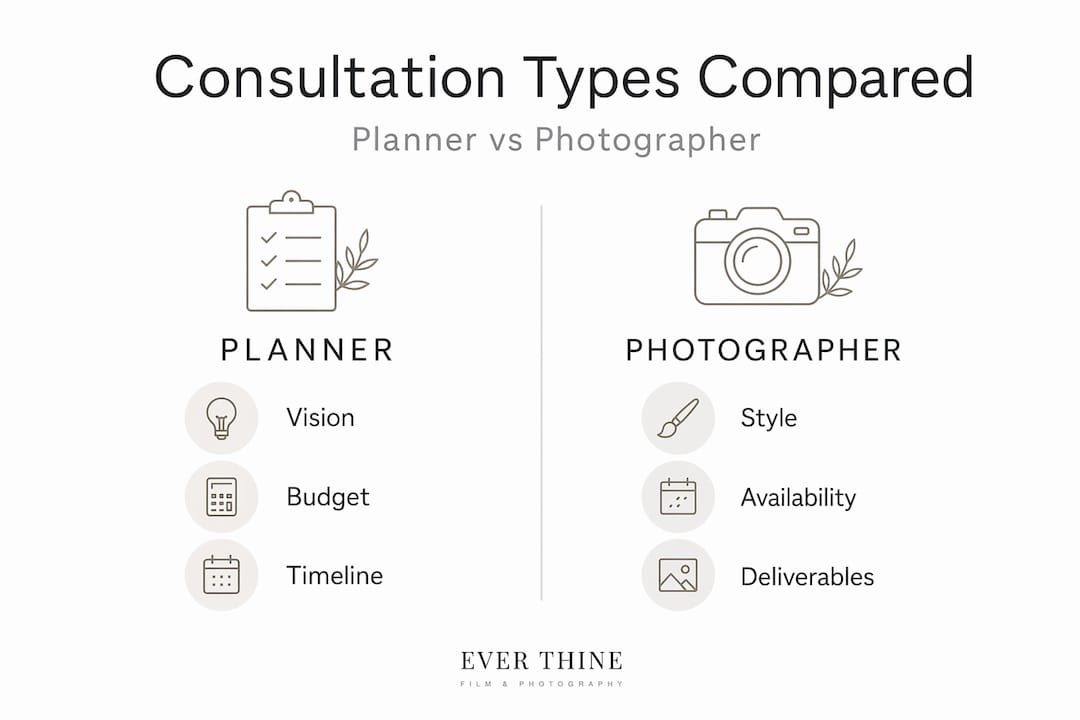
Vendor-specific meetings with DJs, officiants, and florists each have their own rhythm, but the principle is the same. Speak in person, align expectations, and document what you agreed.
Fitting consultations into your wedding planning timeline
Knowing when to schedule your consultations is as important as knowing what to discuss in them.
Average engagements last around 15 months, which gives you a reasonable window if you start early. The problem is that most couples wait until they feel “ready” to begin, and that delay costs them options. Popular photographers, venues, and planners book up quickly, sometimes a year or more in advance.
A sensible consultation timeline looks something like this:
12 to 18 months before: Initial planner and photographer consultations to establish vision and secure key suppliers
9 to 12 months before: Venue coordinator meetings and initial vendor consultations for music, catering, and floristry
6 months before: Follow-up consultations to review progress, adjust timeline, and confirm details
4 to 6 weeks before: Final pre-wedding meetings with all key suppliers to run through day-of logistics
You can track these milestones alongside your wider planning using a wedding timeline checklist built specifically for UK couples. Having everything in one organised place makes the consultation process feel far less overwhelming.
The most flexible couples build buffer time into this schedule. Consultations sometimes reveal that a supplier is not the right fit, which means starting a search again. That is not a setback. That is exactly what the consultation was designed to prevent from becoming a post-contract problem.
My honest take on why consultations are underestimated
In my experience working with couples across the Midlands and beyond, the consultations that make the biggest difference are almost never the ones couples expected to matter most. It is rarely the grand planner session. More often it is the 45-minute photography meeting where someone finally articulates what they actually want versus what they thought they wanted.
I have seen couples arrive at a consultation with a very clear idea of what they need, only to realise within 20 minutes that they had been planning around a vision that did not reflect them at all. That kind of clarity is almost impossible to reach through a string of emails. Face-to-face meetings build trust and surface real concerns in a way no digital exchange can.
What I find consistently undervalued is the vetting function. Couples focus so much on whether they like a vendor’s portfolio that they forget to assess whether they can actually work with that person under pressure. A consultation tells you both things.
My strongest pre-wedding meeting tip is this: do not use the consultation to impress your vendor. Use it to genuinely interrogate whether this person is right for you. The professionals worth hiring will respect you more for it, and the ones who do not are the ones you needed to rule out anyway.
— Ever
Bring your consultation insights to life with professional photography
[
A pre-wedding consultation sets your vision in motion. What happens next is where that vision gets captured for good. At Weddingfilmphotography, every couple goes through a thorough pre-wedding conversation before a single frame is shot. This is not a formality. It shapes the entire creative approach for your day.
Whether you are planning a wedding in Derbyshire, Staffordshire, or Worcestershire, Weddingfilmphotography brings the same relaxed, documentary-led style to every wedding. That style begins in the consultation room, not on the day itself. If you are ready to have a real conversation about your wedding photography, get in touch and let’s start there.
FAQ
What is a pre-wedding consultation?
A pre-wedding consultation is a structured meeting between engaged couples and a wedding professional, held before any contract is signed. It covers vision, budget, logistics, and expectations to ensure both parties are genuinely aligned.
What should I expect in a pre-wedding consultation?
You can expect to discuss your wedding vision, timeline, and priorities in detail. Many consultations also result in tangible outputs such as a budget draft, vendor list, or planning timeline.
How do I prepare for a pre-wedding consultation?
Write your questions down in advance, complete any pre-consultation forms thoroughly, and agree with your partner on your top priorities before the meeting. Having a realistic budget range ready also helps your consultant give you relevant advice.
How many consultations do I need before my wedding?
Most couples benefit from separate consultations with their planner, photographer, and key vendors such as their DJ and officiant. Each serves a distinct purpose, and trying to cover everything in one session usually means important detail gets missed.
When should I book my first pre-wedding consultation?
Ideally, book your initial consultations 12 to 18 months before your wedding date. Early planning protects you from delays and limits the risk of your preferred suppliers being unavailable.
Recommended


Comments