
Couple portrait photography tips that actually work
Updated: May 30

TL;DR:
Most couples believe they need to rehearse poses before their portrait session, but genuine connection depends on natural prompts. Effective lighting, short sessions, and location choices enhance authenticity, while wardrobe and style should reflect individual personalities. When couples relax and focus on each other, beautiful images emerge effortlessly, regardless of posing experience.
Most couples assume they need to know how to pose before their portrait session. They rehearse angles in the mirror, Google “how to stand” the night before, and arrive at the shoot stiff with self-consciousness. The truth is that the best couple portrait photography tips have nothing to do with perfect posture. They are about creating conditions where genuine connection can happen naturally. This guide covers lighting, equipment, posing prompts, location choices, and session planning, giving both couples and photographers a practical framework for portraits that feel true.
Table of Contents
Key takeaways
Point | Details |
Prompts beat poses | Action-based instructions create real reactions that rigid posing directions simply cannot replicate. |
Golden hour timing matters | Begin outdoor sessions no later than 40 minutes before sunset for the most flattering natural light. |
Short sessions stay authentic | Limiting active direction to 10 to 20 minutes prevents fatigue and preserves natural energy. |
Style should match personality | Choosing photojournalistic, editorial, or lifestyle photography based on your personality produces more lasting images. |
Wardrobe choices affect the whole image | Soft neutrals and earth tones complement most environments and keep attention where it belongs. |
1. Couple portrait photography tips: start with the right equipment
Great portraits begin long before the shutter fires. Your lens choice alone shapes how intimate and flattering the final image feels. A 70 to 200mm telephoto lets you shoot from a comfortable distance, which means couples forget you are there far more quickly than they would with a wide lens pressed close to their faces. An 85mm or 135mm prime lens on a full-frame sensor delivers that beautiful background compression which makes subjects stand out from their surroundings.
For outdoor couple photography in fading light, a fast prime such as an 85mm f/1.4 or f/1.8 is particularly useful. You retain enough shutter speed to freeze movement without having to push ISO to extremes.
Speaking of ISO, this is where many photographers hesitate unnecessarily. Raising ISO to 1600 to 6400 to maintain a sharp shutter speed produces cleaner results than letting speed drop and introducing motion blur. Some grain in a portrait is invisible at print size. A blurred face is never acceptable.
Key equipment considerations:
Lens choice: 85mm or 135mm prime for flattering compression; 70 to 200mm for documentary distance
Aperture: f/1.8 to f/2.8 for subject separation; close down to f/4 for sharp dual-focus shots
Shutter speed: 1/200s or faster when couples are moving; never drop below 1/100s for standing portraits
Stabilisation: Use in-body or lens stabilisation when shooting handheld in low light
Pro Tip: If you want to create a fake golden flare during overcast sessions or in low light, a 200 w/s strobe at half power with a full CTO gel placed behind the couple at a low angle produces warm, sun-like light that mirrors genuine sunset tones beautifully.
2. Posing ideas for couples: prompt, don’t direct
The single biggest shift you can make is to stop giving static pose directions and start giving prompts instead. There is a meaningful difference between saying “put your arm around her” and saying “tell her something she doesn’t know about you.” One produces a position. The other produces a moment.
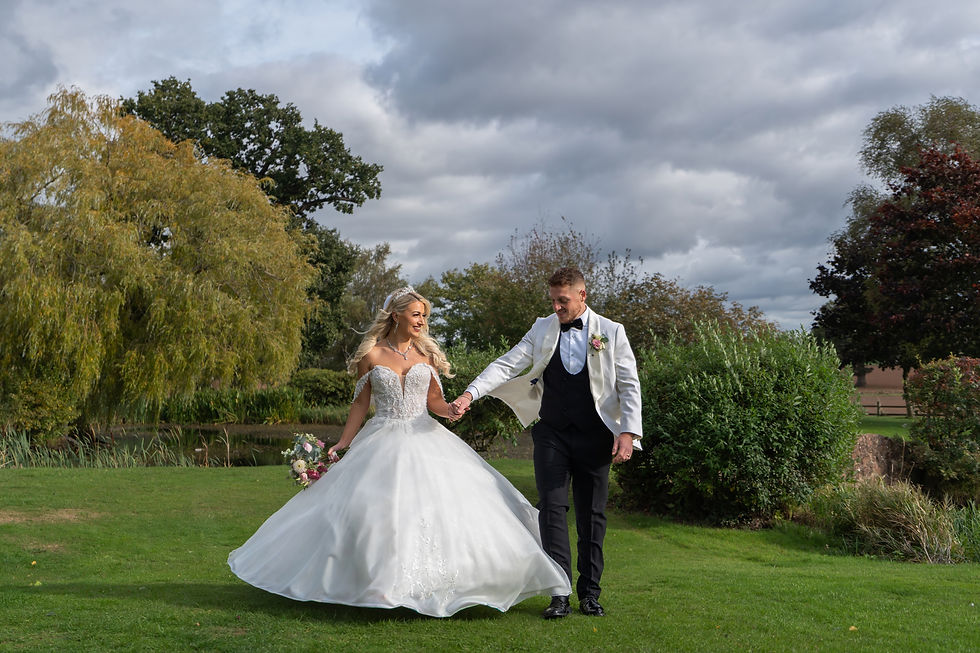
Action-based prompts naturally draw out authentic reactions because the couple’s attention moves away from the camera and towards each other. That is exactly where it belongs.
Here are prompts that work consistently well:
The whisper — Ask one partner to whisper something genuine into the other’s ear. It creates closeness, eye closure, and often laughter.
Walk towards me — Have the couple walk together naturally, holding hands or with arms around each other. Movement relaxes the body instantly.
The forehead rest — Ask them to close their eyes and rest their foreheads together. Simple, quiet, intimate.
Tell me what you love — While they are in position, ask one partner to quietly list things they love about the other. The resulting expressions are unscripted.
The spin — Ask one partner to spin the other slowly. Creates movement, laughter, and genuine spontaneous contact.
Look at each other, not me — Remind couples that focusing on each other rather than the camera creates portraits that feel timeless rather than performed.
The slow walk away — Have them walk away from you together, close. Then call their names so they turn back naturally.
Pro Tip: Limit portrait sessions to 10 to 20 minutes of active direction. Beyond that, couples begin to feel self-conscious and tired, and it shows. Shorter sessions with high energy consistently produce better results than drawn-out ones.
For more guidance on how to move and feel natural in front of the camera, the natural posing guide from Weddingfilmphotography covers the most common couple positions in plain, practical language.
3. Lighting tips for portraits: using golden hour and beyond
Light is the single most influential variable in portrait photography, and understanding how to work with it rather than against it separates good portraits from genuinely memorable ones.
The golden hour window
Scheduling portrait sessions to begin 40 minutes before sunset gives you the warm, directional light that flatters virtually every skin tone and adds depth to your images. This is not a loose suggestion. It is a precise window. Arrive late and the light is already gone.
Light condition | Quality | Best use |
40 minutes before sunset | Warm, directional, golden | Full portrait sessions; all couple photo shoot ideas |
Overcast midday | Soft, even, shadow-free | Close-up detail shots; flattering for all skin tones |
Post-sunset (5 to 10 minutes) | Rich sky colours, cool reflected light | Silhouettes and atmospheric wide shots |
Midday direct sun | Harsh, unflattering shadows | Avoid for portraits; use deep shade instead |
Managing the light as it fades
The common instinct is to slow the shutter as the light drops. Resist this. Overcast days produce soft, even light that is genuinely flattering, but as natural light fades on any session, raise ISO rather than lowering shutter speed. The post-sunset window of five to ten minutes often yields the richest sky tones of the whole session. Use a wide aperture and a high ISO to capture it cleanly.
Additional lighting considerations for outdoor couple photography:
Position couples so the light source is to the side or slightly behind for dimension, not flat front-on
Use trees, archways, and buildings as natural diffusers in harsh midday conditions
Carry a reflector to add fill light on the shadowed side of a face without extra kit
When no natural sun is available, an off-camera flash with a CTO gel placed low and behind the couple recreates that golden warmth convincingly
4. Choosing locations that work for your portraits
Location shapes not just the background but the emotional tone of the entire session. A beach at low tide reads completely differently to a woodland path in autumn, even if the couple is wearing identical outfits in both.
Natural frames and beach edges add depth and compositional interest that a plain open field simply cannot. Rocks, water lines, overhanging branches, and stone archways all serve as natural framing tools that lead the viewer’s eye directly to the couple.
When choosing a location, consider what genuinely means something to the couple rather than defaulting to wherever looks nicely photogenic. A location with personal significance creates more relaxed body language because the couple already feels comfortable there. For couples unsure about what to expect from a formal session, the complete couples portrait guide from Weddingfilmphotography explains what each session type involves and how to prepare.
5. Wardrobe and styling choices that photograph well
Wardrobe is the one variable that has a visual impact in every single frame, yet it is often an afterthought for couples preparing for a shoot.
Soft neutrals and earth tones photograph consistently well in natural settings. Sage green, warm cream, dusty rose, terracotta, and navy all complement outdoor environments without competing with them. Busy patterns, overly bright colours, and large logos pull attention away from faces, which is the last thing you want.
Complement, don’t match: Coordinated outfits feel more natural than identical ones. Think tonal families rather than matching sets.
Fabric texture adds life: Linen, silk, and soft cotton move well and catch light beautifully. Synthetic fabrics can look flat.
Layer for depth: Jackets, scarves, and cardigans give couples something to do with their hands and add visual dimension.
Comfort first: If someone is tugging their outfit or feeling self-conscious about their clothes, it will show in every image.
6. Matching session style to your personality
Choosing the right photography style based on the couple’s personality rather than current trends is one of the most overlooked couple portrait photography tips. The style you choose shapes how the images feel for the next twenty years.
Here is a brief comparison to help with that decision:
Style | Feel | Best for |
Photojournalistic | Candid, unscripted, documentary | Couples who feel awkward being directed |
Editorial | Polished, dramatic, fashion-forward | Couples who enjoy being styled and directed |
Lifestyle | Natural but loosely guided | Most couples wanting a relaxed, real feel |
Classic portrait | Timeless, formal, composed | Couples who want structured, heirloom-quality images |
The photojournalistic approach suits couples who genuinely hate being photographed. There is minimal direction involved. You get natural interaction between partners rather than curated moments. The editorial route suits those who love the idea of a styled shoot and are comfortable with direction. Lifestyle sits between both and works for the majority of couples who want images that feel real without being entirely unguided.
For couples feeling anxious about the session itself, reading up on managing photography stress before the day makes a significant practical difference.
My honest take on what actually makes these portraits work
I’ve shot hundreds of couple sessions, and the ones that consistently produce the strongest images share one thing: the couple stopped trying to be photographed and started just being with each other.
The technical side matters. I pay close attention to light quality, lens choice, and timing. But I’ve learned that all of that counts for very little if the couple is tense. My job is to create an environment where they can genuinely relax, which means I spend as much energy on conversation and humour before I ever raise the camera as I do on any technical preparation.
What I’ve found is that photographers often underestimate how much clients mirror your own energy. If you are anxious or overly perfectionistic on the day, they feel it. If you are calm, purposeful, and enjoying yourself, they relax into the session naturally.
The most common misconception I encounter from couples is that they need to look a certain way. They don’t. Couples do not need to know how to pose at all. That is entirely the photographer’s responsibility. The couple’s only job is to show up and be present with each other. When that happens, genuinely beautiful images follow without exception.
— Ever
Ready to put these tips into practice?
If reading through these couple portrait photography tips has you thinking about your own session, Weddingfilmphotography would love to help you bring it to life. Based in Staffordshire and covering Derbyshire, Worcestershire, and beyond, the team specialises in natural, documentary-style portraits that capture who you actually are rather than a posed version of you.
[
Whether you are planning an engagement shoot or exploring your wedding photography options, get in touch to discuss a session tailored to your personalities, your location, and your story. You can explore the work and services of a wedding photographer in Staffordshire or browse packages for wedding photography in Derbyshire to find what fits best.
FAQ
Do couples need to know how to pose for portraits?
No. A good photographer handles all of that through prompts and guidance. Couples only need to focus on each other and follow simple, natural instructions.
When is the best time of day for couple portrait photography?
Golden hour, beginning 40 minutes before sunset, produces the warmest and most flattering light for outdoor portraits. Overcast days are also excellent for soft, even lighting without harsh shadows.
How long should a couple portrait session last?
Active direction should last 10 to 20 minutes to preserve energy and authenticity. Longer sessions risk fatigue, which registers clearly in the images.
What should couples wear for their portrait session?
Soft neutrals and earth tones complement most outdoor settings. Coordinating colours rather than matching outfits, and prioritising comfortable fabrics, tends to produce the most natural-looking results.
What photography style is best for couples who hate being photographed?
A photojournalistic or lifestyle approach works best. Both styles involve minimal rigid direction and allow couples to interact naturally, which produces candid, relaxed portraits without the pressure of formal posing.
Recommended
Comments