
How to Manage Wedding Photography Stress for Couples


Feeling nervous about how your Staffordshire wedding photos will turn out is completely normal. With endless perfect images filling social feeds, the pressure to achieve flawless shots can feel overwhelming. The reality is, perfect photos are genuinely rare and most of your day will unfold in beautifully unscripted ways. This guide shares practical ways to set expectations, communicate with your photographer, and truly enjoy your documentary-style wedding coverage with less anxiety.
Table of Contents
Quick Summary
Key Insight | Explanation |
1. Set Realistic Photography Expectations | Understand that perfect wedding photos are rare; embrace the imperfections of your day. |
2. Plan Your Shot List and Timeline | Work with your photographer to outline key shots and create a flexible wedding day timeline. |
3. Communicate Openly with Your Photographer | Honest and clear communication helps prevent misunderstandings and ensures your needs are met. |
4. Trust Your Photographer’s Expertise | Relax and allow your photographer to lead; their experience will help you feel more at ease. |
5. Review Memories Together Post-Wedding | Spend time looking through your photos together to appreciate the moments captured and reflect on the day. |
Step 1: Set realistic expectations for your photography
Realising what’s actually possible on your wedding day is the foundation for stress-free photography. Social media and magazine spreads often showcase the best shots from hundreds of frames, edited to perfection. Your wedding won’t look like that naturally, and that’s perfectly fine.
Start by understanding that perfect photos are genuinely rare in real wedding photography. The lighting might not be ideal. Your venue could have challenging shadows. People will blink. Moments won’t unfold exactly as you imagined. These aren’t failures—they’re reality.
Spend time reviewing your photographer’s full portfolio, not just their highlight reel. Look at their documentary-style work across different venues and lighting conditions. Check images from actual weddings in Staffordshire where they’ve worked. This shows you what genuinely happens during a real day, not a curated selection.
Have an honest conversation with your photographer about what’s achievable. Discuss:
The specific lighting conditions at your venue and time of day
How many formal group shots are realistic given your guest count
The balance between candid moments and posed photographs
Which shots matter most to you
How the busy nature of the day affects coverage
If you’re not accustomed to being photographed, give yourself grace. Most couples feel awkward in front of the camera initially. Your photographer understands this and will guide you through poses and positioning. Trust their expertise—they’ll help you look natural rather than stiff.
Here is a summary comparing candid and posed wedding photography styles:
Aspect | Candid Style | Posed Style |
Atmosphere | Natural, emotional | Formal, intentional |
Interaction | Little direction from photographer | Guided by photographer |
Moments Captured | Unscripted, spontaneous | Carefully arranged moments |
Best For | Capturing genuine reactions | Highlighting traditional shots |
Recognising that the wedding day is busy and emotional helps you set achievable goals. You won’t have unlimited time for couple shots between ceremonies and receptions. Your emotional state will shift throughout the day. Your timeline will almost certainly shift. Building in flexibility prevents disappointment.
Couples who accept that imperfection is part of authentic wedding photography experience far less stress and actually enjoy their day more.
Pro tip: Ask your photographer for a shot list they consider realistic for your timeline, then build your expectations around that rather than Pinterest fantasies. This removes the guesswork and keeps both of you aligned.
Step 2: Prepare key shots and timelines with your photographer
Planning your shot list and timeline before the wedding day removes uncertainty and keeps everyone aligned. This conversation with your photographer prevents last-minute confusion and ensures the moments that matter most get captured.
Start by identifying your must-have shots. Think about what truly matters to you as a couple. Are formal family groups essential? Do you want extended couple portraits? What about candid moments during the reception? Write these down and prioritise them. Your photographer will help you understand what’s realistic within your timeframe.
A well-planned timeline ensures that key moments happen without rushing or stress. Work with your photographer to build an hour-by-hour schedule that accounts for getting ready, the ceremony, group photos, couple portraits, and reception coverage. Include realistic buffer time between locations and activities. Weddings rarely stay perfectly on schedule, so flexibility is crucial.
Discuss these specific timing elements with your photographer:
How long to allocate for couple portraits (typically 30 minutes is realistic)
When formal family groups should be photographed (often immediately after the ceremony)
Travel time between your getting ready location and the ceremony venue
Reception timeline, including key moments like first dance and cake cutting
Whether you’ll have a first look and how much time that requires
Consider spreading couple portrait sessions throughout the day rather than one long block. A brief 15-minute session during golden hour before the reception often produces better images and keeps energy higher than an exhausting hour-long session.
Build in buffer periods around key moments. If your ceremony starts at 2pm, don’t schedule family photos immediately after without allowing time for guests to settle. If you’re moving between venues, add 15 minutes to your estimated travel time. These small cushions prevent your day feeling rushed.
A shared understanding of shot priorities and timing between you and your photographer eliminates stress and allows everyone to focus on enjoying the day.
Pro tip: Create a simple one-page timeline to give your photographer, your partner, and your wedding coordinator. Include start times for getting ready, ceremony, couple portraits, and key reception moments so everyone knows what’s happening when.
Step 3: Communicate your needs clearly and openly
Open and honest communication with your photographer is the key to reducing anxiety and achieving results you love. Many couples worry about being difficult or demanding, but photographers actually prefer clarity over assumptions.
Start with an initial conversation where you discuss your photography vision and style. Share examples of images you love, whether they’re from your photographer’s portfolio or other sources. Explain what appeals to you about documentary-style photography versus posed shots. Talk about the mood and feeling you want captured. This gives your photographer a clear picture of your aesthetic preferences.
Establishing rapport and clarity on your vision helps your photographer understand what matters most to you. Be specific about non-negotiables. If family portraits are absolutely essential, say so. If you want minimal posed shots and maximum candid moments, communicate that explicitly. If certain people or dynamics are important to capture, explain why.
Talk honestly about your concerns and anxieties. Are you nervous about being photographed? Does the idea of being in the spotlight cause stress? Let your photographer know. They work with nervous couples regularly and have techniques to help you feel comfortable and natural.
Share your expectations about communication during the planning process:
How often will you check in (weekly emails, monthly calls)?
Who is the main point of contact for questions?
When will you finalise details like shot lists and timelines?
How will you receive proofs and final images?
What’s the process for revisions or adjustments?
Be transparent about any constraints you’re working with. Budget limitations, venue restrictions, or time pressures all affect what’s possible. Your photographer would rather know upfront than discover problems on the day.
Discuss flexibility and realistic limitations. Your photographer might have ideas that differ from Pinterest boards. They understand your venue’s lighting and layout. Trust their expertise when they suggest alternatives or adjustments to your original plans.
Regular, honest conversations throughout your planning process prevent misunderstandings and build the trust that leads to a relaxed, enjoyable wedding day.
Pro tip: Schedule a video call with your photographer rather than just emailing back and forth. Hearing each other’s voices and seeing faces builds rapport quickly and prevents miscommunications that often happen through text.
Step 4: Relax and trust your photographer’s expertise
Trusting your photographer transforms your wedding day from a stressful performance into a genuine celebration. Your photographer has guided hundreds of couples through their big day and knows exactly how to bring out your best selves.

Build confidence by scheduling an engagement session or pre-wedding shoot with your photographer before the big day. This relaxed session lets you practise being in front of the camera in a low-pressure environment. You’ll discover which angles flatter you, how to position yourselves naturally, and how your photographer works. Most importantly, you’ll realise that being photographed is far less awkward than you feared.
Relaxing in front of the camera becomes easier when you’ve already established rapport with your photographer. The familiarity removes anxiety. You already know their style, their directions, and how they help you look natural. On your wedding day, you can simply follow their guidance rather than second-guessing yourself.
Remember that your photographer is on your team. They want beautiful photographs just as much as you do. They’ve chosen their career specifically because they love capturing authentic moments and emotions. Viewing them as a supportive friend rather than a critical observer shifts your entire mindset.
Let your photographer lead during key moments:
Trust their positioning suggestions for couple portraits
Follow their gentle directions for posing and movement
Allow them to capture candid moments without interference
Rely on their expertise about timing and lighting
Accept their recommendations about what’s feasible
Your photographer understands your venue’s layout, light patterns, and timing constraints far better than you do. When they suggest a different location for couple photos or recommend condensing the timeline, they’re working in your best interest.
On the day itself, let go of micromanaging. You’ve done the planning. You’ve communicated your needs. Now simply enjoy your wedding and trust that your photographer has this handled. The more relaxed and present you are, the better your photographs will be.
Couples who genuinely trust their photographer and let them do their job end up with photographs that authentically capture their joy and connection.
Pro tip: On your wedding morning, text your photographer something positive. A simple message like “Looking forward to today” reminds you both that you’re partners in creating memories, not adversaries in a photo shoot.
Step 5: Review your wedding memories together after the day
Reviewing your photographs and wedding memories together transforms the post-wedding period from anticlimax into celebration. This shared experience helps you process the day and reconnect with the emotions you felt.
Wait a few days before diving into your images. You’ll feel emotionally raw immediately after your wedding, and viewing photos straight away can feel overwhelming. Give yourself time to decompress and recover. After a week or so, you’ll have perspective and can appreciate your images more fully.
When your photographer provides your proofs or online gallery, set aside dedicated time to review them together as a couple. Pour a drink, get comfortable, and take your time looking through the images. This isn’t about editing or selecting prints yet, simply about experiencing the day through your photographer’s lens.
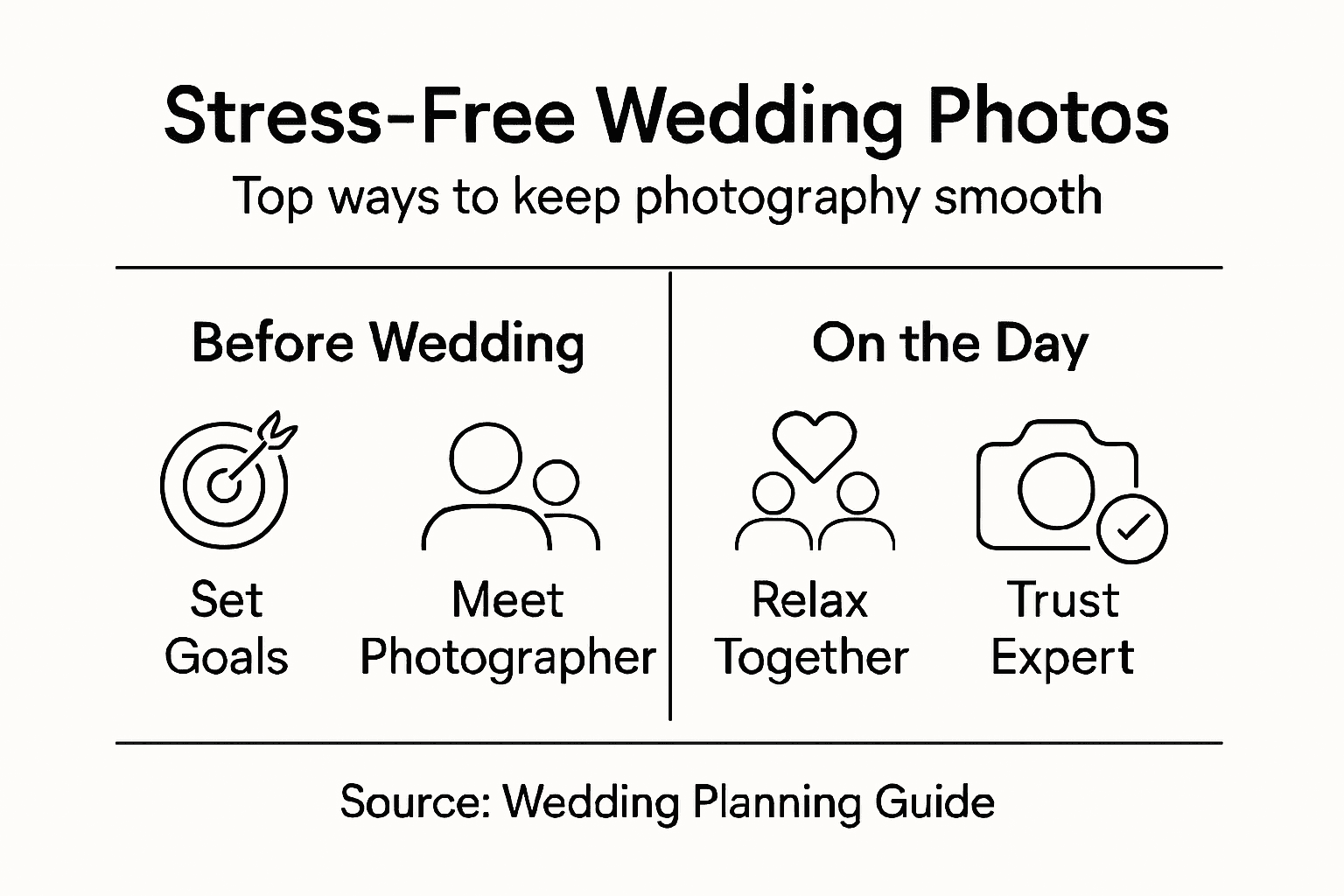
Using shared wedding photo apps allows you and your guests to compile memories in one interactive space. These platforms collect photos from your photographer, your guests’ phones, and other sources. You’ll discover candid moments you didn’t know were captured and see your day from multiple perspectives.
This table provides a quick overview of common post-wedding photo sharing options:
Method | Advantages | Considerations |
Online Gallery | Easy remote access; shareable links | Requires internet access |
Physical Album | Tangible keepsake; long-lasting | Additional cost; design time |
Wedding Photo App | Collects guests’ photos; interactive | Relies on guest participation |
As you review, you’ll likely notice things you didn’t experience in the moment:
Genuine expressions captured between posed shots
Details in your venue or flowers you were too busy to notice
Beautiful light you didn’t consciously register
Your partner’s face during meaningful moments
Guest reactions and interactions you completely missed
Discuss the images as you go through them. Which photos made you smile? Which moments surprised you? Did the photographer capture what mattered most? These conversations help you appreciate the documentary-style approach and understand how your photographer saw your day.
Don’t get caught in perfectionism. You might notice someone blinked or a strand of hair out of place. These imperfections are part of authentic wedding photography. They make your memories feel real, not staged.
Reviewing your wedding photographs together is when the stress of planning finally releases and you truly celebrate what you’ve created.
Pro tip: Turn your favourite photographs into a printed album or coffee table book. Physical copies you can touch and share mean far more than digital files gathering dust on a hard drive.
Capture Your Wedding Day with Confidence and Calm
Managing wedding photography stress means setting clear expectations, planning your shot list thoughtfully, and most importantly, trusting the expertise of your photographer. At Wedding Film Photography, we specialise in creating natural, unobtrusive images that tell your authentic love story without added pressure. We understand the emotional and busy nature of Weddings in Staffordshire and beyond so our documentary-style approach puts you at ease and lets your genuine moments shine.
Take the first step towards stress-free wedding memories by exploring our personalised photography and videography services. With a proven track record and heartfelt client testimonials, we help couples focus on what truly matters while we handle capturing every meaningful detail. Visit our homepage now to discover how we can make your day effortlessly memorable and get in touch to begin your photography journey today.
Frequently Asked Questions
How can I set realistic expectations for my wedding photography?
Start by understanding that perfect photos are rare in real wedding photography. Review your photographer’s full portfolio to see actual wedding shots and have an honest conversation about achievable moments.
What should I include in my shot list for my wedding photographer?
Identify must-have shots that truly matter to you as a couple, such as family portraits and key moments during the reception. Prioritise these and discuss them with your photographer to ensure they are included in your timeline.
How can I communicate my photography needs clearly to my photographer?
Have an initial conversation to discuss your photography vision, sharing examples of images you love. Be specific about your non-negotiables and any concerns you may have, which helps to establish rapport and clarity.
What can I do to relax and trust my photographer on my wedding day?
Build confidence by scheduling an engagement session with your photographer before the wedding. This helps you get comfortable in front of the camera and establishes a familiar rapport, making your wedding day experience smoother.
How should I review our wedding photographs after the big day?
Wait a few days before reviewing your images to give yourself time to decompress and regain perspective. Set aside dedicated time to look through the photographs together, discussing which moments resonated most with you to fully appreciate the memories captured.
Recommended


Comments