
Wedding Photography Checklist Workflow for a Seamless Day


Planning a wedding in Staffordshire is an exciting journey, but making sure every heartfelt moment is beautifully documented can feel daunting. A flawless documentary-style wedding album starts with careful preparation and clear communication, capturing the true spirit of your love story from the first look to the final dance. This guide provides a comprehensive wedding photography checklist that helps you plan key moments, coordinate with your photographer, and secure every memory so your special day unfolds seamlessly and stress-free.
Table of Contents
Quick Summary
Essential Insight | Explanation |
1. Start planning 12 weeks in advance | Begin coordinating your photography schedule around three months before the wedding to ensure all key moments are captured effectively. |
2. Develop a comprehensive equipment strategy | Assemble and test your photography gear beforehand, including backup options, to avoid technical issues on the wedding day. |
3. Communicate effectively with all parties | Establish a detailed plan with the couple and other vendors to align on shot lists, timelines, and logistics for smooth coordination. |
4. Capture both planned and candid moments | Use your skills to document key events and spontaneous interactions to tell a complete story of the couple’s special day. |
5. Verify image quality post-event | After the wedding, review your shots thoroughly to ensure that all important moments have been captured with proper quality and composition. |
Stage 1: Plan your essential photography timeline
Creating a well-structured photography timeline is fundamental to capturing every magical moment of your wedding day. Professional photographers understand that seamless documentation requires meticulous advance planning. When developing your photographic schedule, you’ll want to map out key moments and allocate appropriate time slots, ensuring no precious memories slip through the cracks.
The core of successful wedding day photography lies in strategic timeline preparation. Typically, couples should begin coordinating their photography schedule approximately 12 weeks before the wedding. During this planning phase, identify critical moments like getting ready, ceremony highlights, group photographs, couple portraits, and reception events. Work closely with your photographer to discuss precise timings and shot lists, allowing them to anticipate and position themselves perfectly for each significant moment. Consider creating a detailed shot list that includes specific groupings for family photographs, ensuring everyone who matters is included without disrupting the day’s natural flow.
Transitioning between different photography segments requires careful choreography. Discuss potential locations for portraits, understand lighting conditions, and plan buffer times between key moments. This approach minimises stress and maximises the potential for capturing spontaneous, beautiful interactions.
Photographer’s Advice: Create a realistic timeline with 10-15 minute buffers between scheduled events to accommodate unexpected delays and maintain a relaxed atmosphere.
Stage 2: Prepare detailed equipment and backup gear
Photographers know that professional wedding documentation demands exceptional technical preparation. Your photography equipment represents the critical foundation for capturing stunning wedding memories, requiring meticulous planning and comprehensive gear selection. Understanding how to prepare and manage your photographic resources will distinguish between an amateur and a professional approach.

Professional wedding photographers must develop a comprehensive equipment preparation strategy. This involves assembling a robust kit that includes multiple camera bodies, various lenses, additional batteries, multiple memory cards, portable chargers, and backup lighting equipment. Each piece of gear should be thoroughly tested and cleaned before the wedding day. Consider packing duplicate equipment for each critical component camera body, wide angle lens, telephoto lens to ensure zero risk of technical failure during crucial moments.
Technical proficiency extends beyond simply owning equipment. Familiarise yourself with every piece of gear intimately understand its settings, potential limitations, and optimal performance conditions. Practice changing lenses quickly, switching camera bodies seamlessly, and managing equipment in various lighting scenarios. Pack your gear strategically in padded, protective cases that allow quick access while keeping equipment safe from potential damage.
Photographer’s Advice: Create a dedicated wedding day equipment checklist and perform a complete gear test the week before the event to identify and resolve any potential technical issues.
Stage 3: Coordinate with the couple and wedding team
Successful wedding photography begins long before the actual day arrives. Effective communication and collaborative planning are the cornerstones of capturing a couple’s most cherished memories, transforming professional coordination into a seamless visual narrative that reflects their unique love story.
Professional photographers must develop comprehensive communication strategies well in advance of the wedding day. This involves conducting detailed pre wedding consultations to understand the couple’s specific vision, preferred photography style, and must have moments they want documented. Schedule an in depth planning meeting where you discuss everything from family dynamics and group photo configurations to specific cultural traditions or personal preferences that might impact photography. During this consultation, request a comprehensive shot list that outlines critical moments and key individuals to be photographed.
Building strong collaborative relationships extends beyond the couple to include the entire wedding team. Communicate proactively with wedding planners, venue coordinators, celebrants, and other vendors to understand the event logistics. Share your photography timeline, confirm key shooting locations, discuss potential lighting challenges, and establish clear communication protocols for the wedding day. This collaborative approach ensures smooth coordination, allows you to anticipate potential challenges, and positions you to capture spontaneous moments with minimal disruption.
Photographer’s Advice: Create a shared digital folder or document where all key wedding team members can access and review the photography schedule to ensure everyone is aligned and informed.
Stage 4: Capture key moments throughout the day
Wedding photography is an intricate dance of anticipation, skill, and storytelling. Your role as a photographer is to transform fleeting moments into timeless memories, creating a visual narrative that encapsulates the couple’s most precious day. Understanding the critical moments to capture requires both technical expertise and emotional intelligence.
Professional photographers must meticulously plan their wedding ceremony documentation, focusing on the sequence of pivotal moments. This includes capturing the bride’s processional, the exchange of vows, ring placement, the first kiss, and the official signing of the marriage certificate. Beyond these traditional milestones, pay close attention to the unscripted moments emotional reactions from parents, spontaneous laughter, tender glances between the couple that reveal the true essence of their relationship. Position yourself strategically to capture these genuine interactions without disrupting the natural flow of the event.
The wedding day presents a rich tapestry of photographic opportunities that extend far beyond the ceremony itself. During the reception, focus on documenting the couple’s first dance, speeches, cake cutting, and candid interactions with guests. Move seamlessly between planned shots and spontaneous moments, using a combination of wide angle and telephoto lenses to capture both intimate details and broader scene compositions. Be prepared to anticipate and quickly respond to emotional highlights subtle gestures, unexpected reactions, and moments of pure joy that make each wedding unique.
Photographer’s Advice: Always keep a backup camera body with a versatile lens attached and within immediate reach to ensure you never miss a critical moment.
Stage 5: Verify completed shots and final details
The culmination of a wedding photography assignment demands meticulous attention to detail and a comprehensive approach to final image verification. Your responsibility extends far beyond simply taking photographs capturing the complete narrative of the couple’s special day requires strategic review and quality assurance.
Professional photographers must follow systematic verification protocols to ensure no critical moments are missed. This involves systematically reviewing your digital files immediately after the event verifying each camera card contains the expected sequences, checking image quality across different lighting conditions, and confirming you have captured all previously agreed group compositions. Cross reference your shot list with the actual images, paying particular attention to key moments like ceremony highlights, family group photographs, and intimate couple portraits. Zoom into images to assess focus, exposure, and technical precision ensuring each photograph meets professional standards.
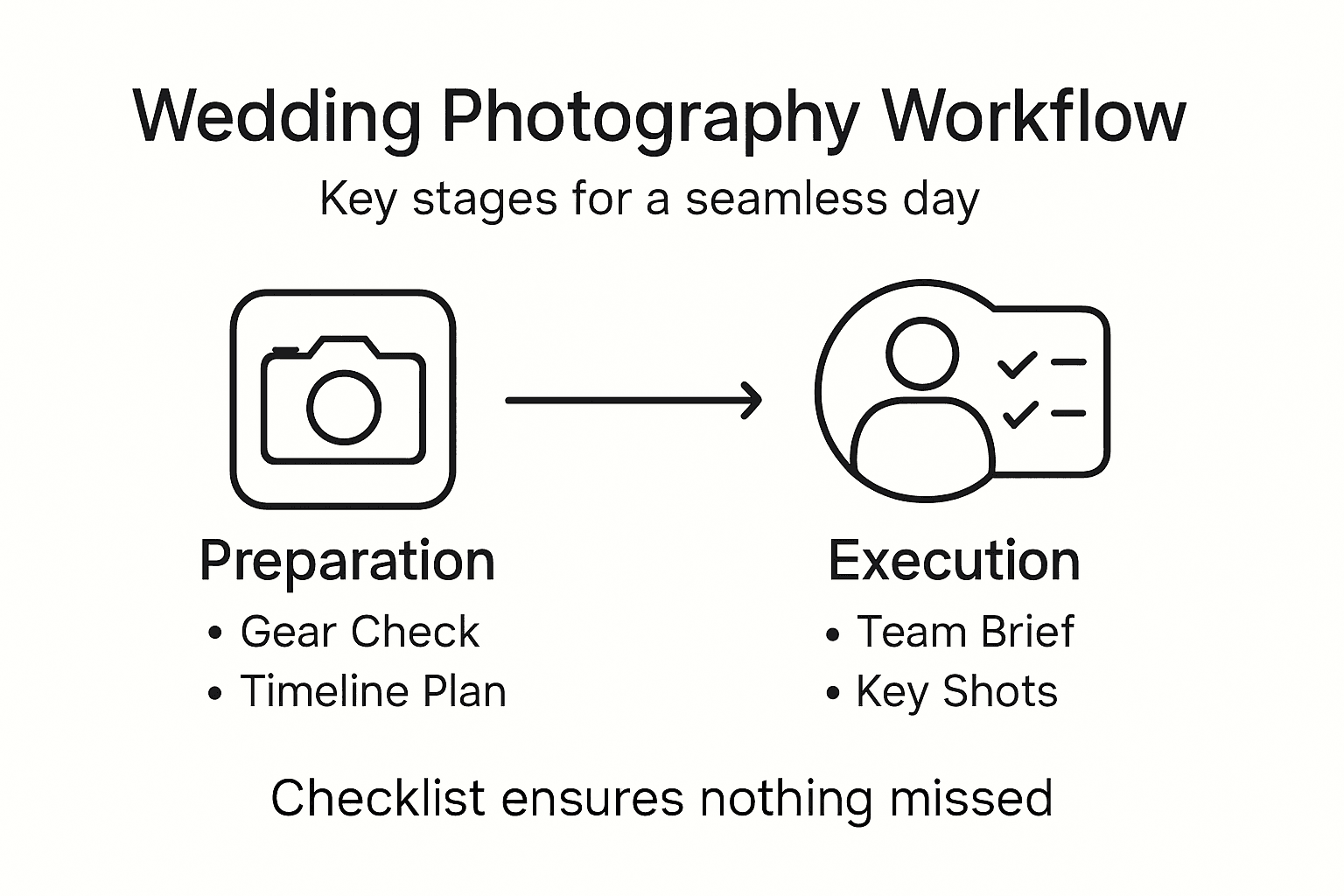
The final verification process requires both technical scrutiny and emotional intelligence. Beyond technical checks, review your images as a storyteller asking yourself whether the photographs genuinely reflect the day’s emotional landscape. Look for sequences that demonstrate the couple’s connection, candid interactions between guests, and moments that reveal the wedding’s unique atmosphere. Consider creating a preliminary selection of images that showcase the most compelling narratives before beginning the full post processing workflow. This approach allows you to present a curated preview to the couple while maintaining the integrity of your comprehensive photographic documentation.
Photographer’s Advice: Create a digital backup of your wedding day images on at least two separate storage devices immediately after the event to prevent potential data loss.
Below is a summary of essential backup strategies for wedding photographers:
Backup Strategy | When Applied | Importance |
Duplicate Equipment | Before and during event | Prevents gear failure disruption |
Spare Batteries & Cards | Throughout day | Sustains capture ability |
Multiple Storage Devices | Immediately post-event | Secures data against loss |
Equipment Checks | Week before event | Detects technical issues early |
Here is a quick overview of critical photography timeline stages and their primary objectives:
Stage | Main Goal | Professional Impact |
Planning | Map key moments | Ensures no missed memories |
Equipment Prep | Prepare full kit & backup | Guarantees readiness and reliability |
Coordination | Align with couple & team | Achieves smooth workflow |
Capture | Seize vital and candid moments | Creates a cohesive visual story |
Verification | Check image quality & completeness | Delivers professional assurance |
Ensure Your Wedding Photography Flows Seamlessly with Expert Support
Planning a wedding photography timeline that captures every heartfelt moment without stress can feel overwhelming. The challenges of coordinating key shots, preparing backup equipment, and aligning with your wedding team demand precision and experience. This article highlights the importance of creating realistic schedules, managing technical gear, and verifying your images so your special day is perfectly preserved.
At Wedding Film Photography based in Staffordshire, we understand these crucial steps intimately. Our award-winning team specialises in natural, unobtrusive documentary-style photography and cinematic films that tell your love story with emotional authenticity. From carefully planning your photography timeline to expertly capturing and reviewing every memory, we take care of the details so you can enjoy your day.
Discover our approach to creating relaxed and timeless wedding memories and learn how our tailored packages can meet your unique needs. Ready to start planning with professionals who value your story as much as you do? Visit us now and take the first step towards flawless wedding coverage.

Capture every authentic moment without compromise. Contact Wedding Film Photography today to ensure your wedding day is immortalised exactly as you envision.
Frequently Asked Questions
How do I create a photography timeline for my wedding?
Creating a photography timeline involves mapping out key moments, such as the ceremony and first dance, and allocating time slots for them. Start this process approximately 12 weeks before your wedding by working closely with your photographer to discuss timings and create a shot list.
What equipment should I prepare for wedding photography?
Prepare a comprehensive kit that includes multiple camera bodies, a variety of lenses, spare batteries, and backup memory cards. Ensure all equipment is tested and cleaned before the wedding day to guarantee optimal performance.
How can I coordinate effectively with my wedding team and photographer?
Engage in detailed pre-wedding consultations with your photographer and other vendors to discuss your vision, must-have moments, and logistics. Create a shared digital folder to keep everyone informed about the photography schedule and key locations.
What key moments should I focus on capturing during the wedding?
Prioritise capturing critical moments like the bride’s entrance, vows, and reception highlights, along with candid interactions between guests. Be ready to adapt to spontaneous events, using different lenses to document both details and broader scenes.
How do I verify that all necessary shots have been captured after the wedding?
Implement a systematic verification process by reviewing digital files immediately after the event. Cross-reference your shot list with actual images to ensure completeness and quality, focusing on both technical precision and the emotional narrative of the day.
Recommended


Comments