
45 to 60 Min Day After Wedding Photos for UK Couples, Photographer Tips
Updated: Sep 10

A day-after wedding photoshoot is a relaxed portrait session held after the ceremony, usually the following day but sometimes weeks later, that trades wedding-day time pressure for location freedom and creative control. The single biggest advantage is choice: couples can shoot at a clifftop, a favourite café, or a venue they loved but never got to use properly, without a wedding schedule breathing down their neck. That freedom costs extra money and planning, but for many couples the trade is worth it.
TL;DR:
A day-after wedding photoshoot offers greater location flexibility, enabling couples to shoot at meaningful or scenic destinations without wedding-day time constraints.
Scheduling early, preferably before the honeymoon, helps preserve the wedding look and allows for optimal lighting during golden hour.
The session often involves additional costs for travel, styling touch-ups, and dress preservation, making it a significant but valued extra expense.
A shorter, focused shoot at a single striking location can reduce costs and fatigue while still capturing relaxed, natural images.
Choosing the location based on personality and narrative, such as outdoor adventures or sentimental spots, enhances the emotional quality of the photos.
Table of Contents
What is a day-after wedding photoshoot?
You will see this called a few things: a day-after session, an after-session, an adventure session, or simply a post-wedding photoshoot. All describe the same idea. A post-wedding photoshoot is a portrait session, separate from the ceremony and reception, dedicated purely to images.
Timing is flexible, and that matters more than most couples realise. There’s no strict rule governing when it happens; photographers routinely schedule sessions the next morning, a week later, or after the honeymoon.
Day after: dress, hair and makeup still closely match the wedding look.
Days or weeks later: more rest, but a fresh blow-dry and touch-up makeup are usually needed.
After the honeymoon: great for tan lines and relaxed energy, but the dress may need cleaning or steaming first.
A couple marrying at a Staffordshire barn venue might do a day-after shoot in the same grounds at sunrise, while a destination couple in Italy might wait until they’re home and book a local moorland or coastal session instead.
What are the benefits of day-after wedding photos?
The main draw is location freedom. On the wedding day you’re tied to the venue and the schedule; the day after, you can drive to a clifftop, a bluebell wood, or a city street you’ve always loved. Destination photographers often build these sessions into their collections specifically to capture scenery the wedding itinerary never allowed time for.
It’s also a genuine second chance. If rain hit during the ceremony, or the timeline left only twenty rushed minutes for portraits, a day-after session fixes that gap.
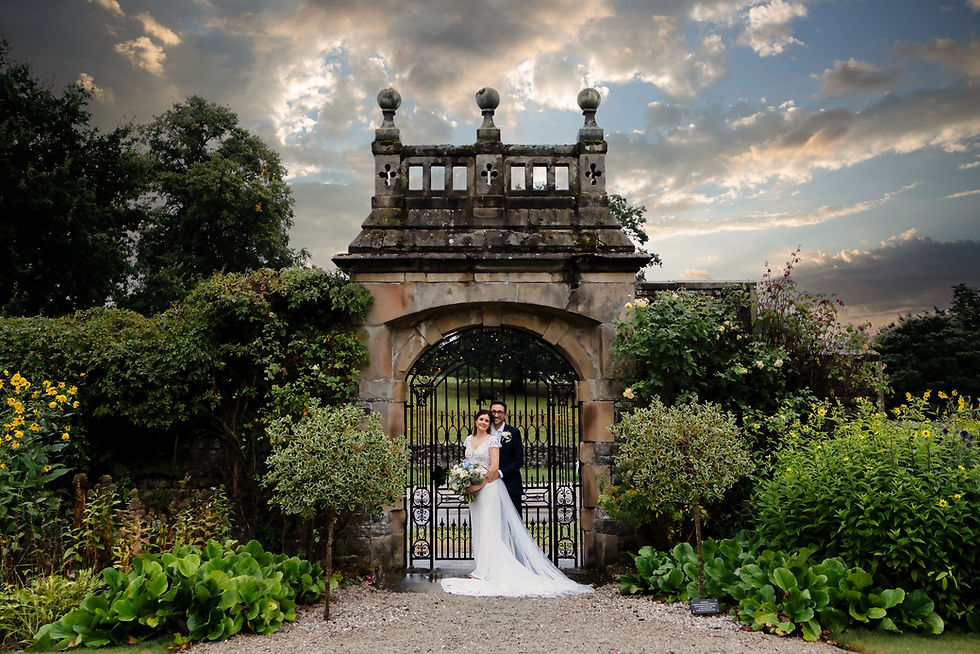
The pace changes everything. Couples consistently describe the relaxed atmosphere as producing more natural, candid images than a pressured wedding-day slot ever could.
Other benefits worth weighing:
Time to try a second outfit, different florals, or a bolder styling choice.
Room for genuine playfulness. Laughing, running, dancing shots that a tight schedule simply doesn’t allow.
A chance to involve pets, family heirlooms, or a location with personal meaning that didn’t fit the wedding day plan.
What are the downsides of a day-after session?
The obvious one is cost. Most photographers treat this as an add-on to the wedding package rather than something included, so expect an extra day rate, plus travel, hair and makeup, and possibly a dry-clean bill for the dress.
Fatigue is real too. Weddings are exhausting, and some couples wake up the next morning wanting sleep and a fry-up, not a two-hour shoot. Waiting solves the tiredness problem but creates another: the longer you leave it, the more your look drifts from the wedding day.
Extra costs: day rate or package add-on, travel, touch-up hair/makeup, bouquet preservation or a copy.
Physical toll: sore feet, tired faces, and less patience for direction.
Look mismatch: fading manicures, sunburn or tan lines, a dress that’s been packed away.
Some couples skip it entirely if the wedding-day coverage already captured everything they wanted.
Pro Tip: If budget is tight, ask your photographer about a shorter session, 45 minutes to an hour rather than a full half-day, at one striking location instead of several. You get the creative payoff without the full add-on price.
When should you schedule your day-after photos?
Book the session as soon as your venue and photographer confirm availability, ideally when you sign your wedding contract, so travel and light can be planned properly.
Choose likeness over rest if detail matters to you. The day after keeps hair, makeup and the dress’s fit closest to the wedding look.
Chase golden hour. Early morning or evening light flatters skin and creates the soft, cinematic tone most couples want; midday sun on a bright dress is unforgiving.
Work around the honeymoon, not against it. If you’re flying out within 48 hours, book the shoot for the morning before you leave or push it to a specific date after you’re home.
Don’t wait too long. Practitioners advise against a long delay if matching wedding-day hair, makeup and dress fit is the goal; a suntan or a haircut changes the story fast.
Where should you shoot your day-after photos?
Location should follow personality, not trend. A few directions worth considering:
Adventure and outdoor. Moorland, cliffs, waterfalls. Dramatic backdrops suit couples who want emotive, wind-in-the-hair imagery rather than polished poses.
Coastal and lakeside. Beach or lake settings give soft natural light and movement (waves, reflections, a dress trailing in shallow water) for a relaxed, romantic feel.
Urban and architectural. City streets, grand doorways, or a favourite café work well for couples who want an editorial, magazine-style set of images.
Venue revisits and sentimental spots. Returning to the ceremony venue without the timeline pressure, or visiting a first-date café or family home, turns the shoot into a piece of storytelling rather than just pretty pictures.
Explore more creative ideas for unique wedding photos if you want a fuller list of settings and styling combinations before you brief your photographer.
What should you bring to your day-after shoot?
A short checklist keeps the morning calm instead of chaotic.
Confirm the booking in writing, whether it’s a wedding-package add-on or a separate contract, including price, timings and location.
Pack the dress bag, spare shoes (comfortable ones for walking to location), and a small emergency kit: safety pins, stain remover, blister plasters.
Bring a duplicate bouquet or a preserved version if the original has wilted, along with any accessories from the wedding day.
Sort logistics ahead of time: transport, parking, and whether the location needs permission (National Trust land and many beaches do).
Book hair and makeup touch-ups for the right time slot, not the moment you wake up.
Agree a rain plan and keep supplier contact numbers saved in your phone.
Pro Tip: Ask your photographer for a quick “location scout” photo the week before. Seeing the light and setting in advance saves confusion on the day and lets you plan outfit colours around the backdrop.
How do you brief your photographer for a day-after shoot?
Treat this as its own creative conversation, not an afterthought bolted onto your wedding booking. Ask directly about fees, travel charges, image rights, retouching levels and turnaround time so nothing gets assumed.
Build a short mood board (five to ten images) showing poses, colour tones and locations you like.
Ask what’s included: raw files, edited high-resolution images, an album, or prints, and by what date you’ll receive them.
Confirm who arranges hair and makeup, and whether that’s built into the shoot’s running order or handled separately beforehand.
Discuss the couple’s portrait session format you want, whether that’s a documentary-style walk-and-talk or more directed posing.
A clear brief and mood board genuinely change the outcome. Photographers who work from one report far fewer disappointed clients than those who leave the creative direction open on the day.
Dawn & Carl’s take on day-after sessions
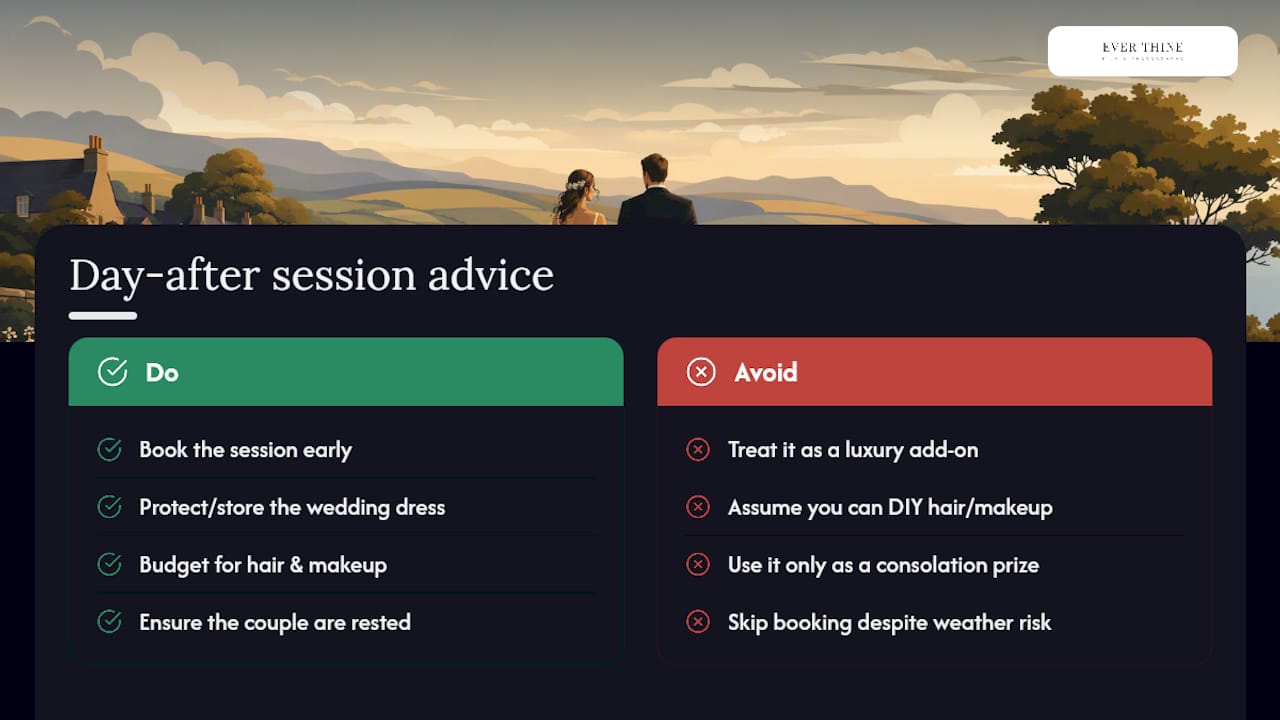
Day-after sessions serve as a working tool rather than a luxury add-on, letting couples reach locations a wedding-day timeline might not permit. When weather ruins portrait time on the day itself, this is the honest fix, not a consolation prize.
Our advice to couples is blunt: book it early, keep the dress protected in the meantime, and budget realistically for hair and makeup rather than assuming you’ll manage it yourselves. A relaxed, authentic shooting style only works if the couple in front of the camera is actually rested enough to enjoy it.
— Dawn & Carl
Book your day-after session with Weddingfilmphotography
Weddingfilmphotography builds day-after sessions as a natural extension of the wedding-day coverage, not a bolt-on afterthought, so the light, styling and story stay consistent from ceremony to portrait shoot. A day-after or after-honeymoon session can often be added to wedding day photography and videography coverage, allowing destination clients to capture scenery the wedding itinerary had no time for.
[
If you’re planning a wedding across Staffordshire, the West Midlands, or further afield, start by checking availability and asking about travel fees for your chosen location. Couples in Derbyshire can view package details on the Derbyshire wedding photography page, Staffordshire couples can see full service options on the award-winning Staffordshire wedding photographer page, and Worcestershire couples can find local booking details on the Worcestershire wedding photographer page. Get in touch to request a quote and lock in your date before your preferred weekend goes.
Sources
FAQ
What is the 30-minute rule for weddings?
It’s a scheduling guideline suggesting couples set aside some dedicated time for formal portraits on the wedding day itself, though many photographers recommend longer if the timeline allows. A day-after session removes this constraint entirely, giving you as much time as you’ve booked.
What are the must-have photos on a wedding day?
Most photographers prioritise getting-ready shots, the ceremony, family formals, couple portraits, and reception candids on the day itself. A day-after shoot is where you add the dramatic, location-driven portraits there simply wasn’t time for.
What is the etiquette for posting wedding photos?
Couples typically wait for the photographer’s edited gallery before posting formal images, sharing personal phone snaps in the meantime if they wish. There’s no fixed rule, but checking your photographer’s usage terms first avoids posting low-resolution or unedited work.
What does “post-wedding pictures” mean?
Post-wedding pictures usually refer to a dedicated photoshoot held after the wedding day, commonly known as a day-after session or after-session. Timing is flexible, from the very next morning to months later, depending on what suits the couple.
Recommended

Comments