
Relaxed wedding style: an authentic approach for UK couples
Updated: Apr 10

TL;DR:
Relaxed weddings prioritize genuine moments, warmth, and natural flow over formal structure.
Documentary photography captures authentic emotions, resulting in timeless, storytelling images.
Skilled professionals create flexible timelines and understanding vendors for a calm, intimate experience.
Most couples assume weddings fall into one of two camps: a formal affair with rigid schedules and stiff group shots, or a loosely planned party that feels a bit chaotic. Neither sounds particularly appealing if what you actually want is a day that feels like you. The good news is there is a third way, and it is growing in popularity across the UK. A relaxed wedding style is not about abandoning structure. It is about prioritising genuine moments, warm connections, and a day that unfolds naturally. This guide will walk you through exactly what that means, how to achieve it, and why it produces the most beautiful, honest wedding photographs.
Table of Contents
Key Takeaways
Point | Details |
Authenticity matters | A relaxed wedding style allows your story and personalities to shine without rigid traditions. |
Focus on genuine moments | Documentary photography captures real joy, laughter, and love, making wedding memories last. |
Flexible planning works | Intentional but flexible timelines reduce stress and help the day flow naturally. |
Vendor collaboration is key | Communicate your vision with professionals so everyone supports a relaxed, enjoyable day. |
What is a relaxed wedding style?
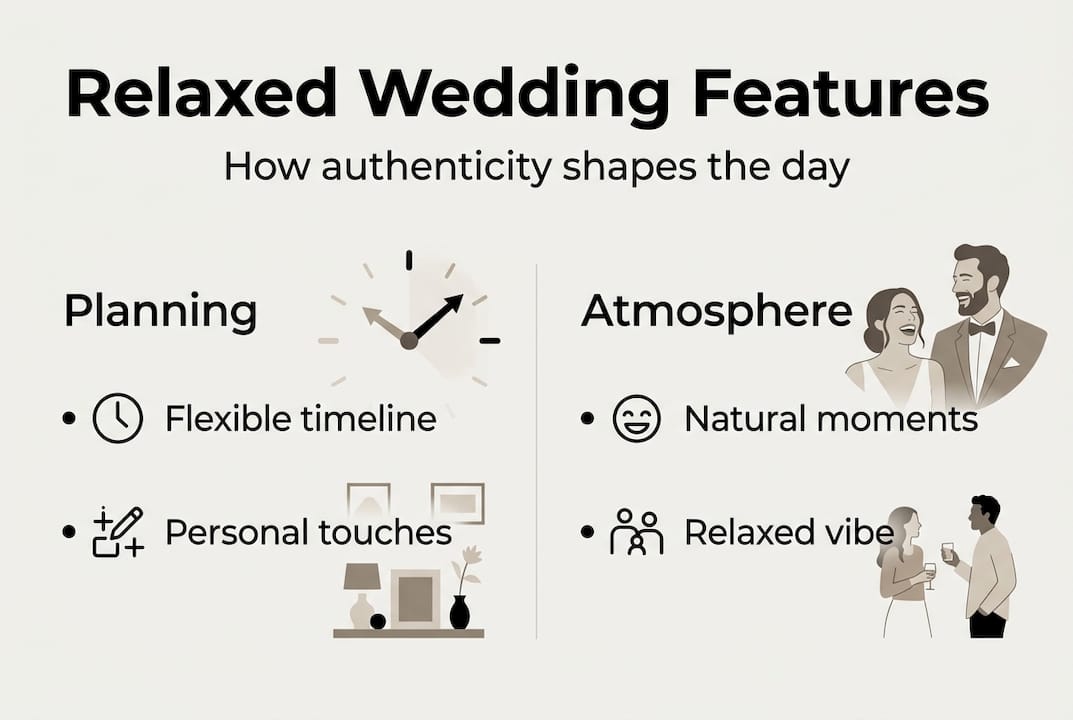
A relaxed wedding style is an intentional approach to your wedding day that places emotional authenticity above rigid formality. It does not mean turning up in flip-flops and hoping for the best. It means designing your day around what genuinely matters to you as a couple, rather than following a checklist of traditions simply because they are expected.
At its core, this style values flexibility, atmosphere, and real moments over performance. Guests feel at ease. The couple can breathe. And the whole day has a warmth that formal weddings often struggle to replicate. As explored in our guide to photojournalistic wedding style, relaxed weddings focus on genuine moments with far fewer rigid rules than their formal counterparts.
Some key features that define this approach:
Informal or semi-formal dress codes that reflect your personality
Flexible scheduling with breathing room between events
Personal touches such as handwritten vows, DIY details, or meaningful music
Smaller guest lists or intimate venue choices that encourage real conversation
A photography style that documents rather than directs
Here is a quick comparison to help you see the difference:
Feature | Formal wedding | Relaxed wedding |
Scheduling | Minute-by-minute itinerary | Flexible, flowing timeline |
Photography | Posed, structured shots | Candid, documentary style |
Atmosphere | Grand, ceremonial | Warm, personal, intimate |
Guest experience | Formal seating, strict order | Relaxed mingling, informal flow |
Dress code | Black tie or strict formal | Smart casual or personal choice |
This style suits a wide range of celebrations. Outdoor ceremonies in gardens or woodland, barn receptions, intimate restaurant takeovers, and even city rooftop events can all carry a relaxed feel. The venue matters less than the intention behind the day.

One important myth to address: relaxed does not mean unplanned. The most beautifully relaxed weddings are actually thoughtfully organised. The difference is that the structure serves the couple, not the other way around.
The role of documentary photography and authentic storytelling
Once you embrace a relaxed wedding style, the photography approach becomes obvious. Posed, heavily directed photography works against everything a relaxed day is trying to achieve. Documentary photography for weddings excels at capturing genuine, relaxed moments precisely because the photographer is an observer, not a director.
Documentary or candid wedding photography works by allowing moments to happen naturally, then capturing them as they unfold. The photographer blends into the background. Nobody is being told where to stand or how to smile. What you get instead are images that reflect how the day actually felt.
Why do couples love this approach so much? Because ten years from now, you will not want to look at a photograph of yourself standing perfectly still, staring at the camera. You will want to see your partner laughing at something your best man said. You will want to see your mum wiping a tear during the ceremony. You will want to feel the day all over again.
Authentic storytelling through photography means your wedding album becomes a narrative, not a catalogue. Each image connects to the next. There is emotion, movement, and life in every frame.
“The best wedding photographs are the ones you did not know were being taken. They are the ones that make you cry when you see them for the first time.”
To get the most from this approach, here are some things that genuinely help:
Tell your photographer your story. Share how you met, what makes you laugh, who the key people are.
Point out emotional moments in advance. If your grandmother is attending and means the world to you, say so.
Trust the process. Resist the urge to manage every shot. Let your photographer work.
Avoid over-scheduling. Rushed timelines kill candid moments.
Pro Tip: When briefing your photographer, focus on feelings rather than shot lists. Instead of saying “I want a photo by the oak tree,” say “I want images that feel warm and joyful.” This gives a documentary photographer the creative freedom to find those moments for you.
If you are unsure how to present yourself naturally in front of a camera, our guide on posing for natural photos offers practical advice without the awkwardness. You can also explore natural wedding photography tips for more ideas on how to prepare.
How professionals create a relaxed wedding experience
A relaxed wedding does not happen by accident. Behind every effortless-looking day is a professional who has thought carefully about pace, flow, and the emotional arc of the event. Understanding how they do it helps you collaborate more effectively.
Here is how experienced photographers and planners approach a relaxed wedding day:
Build a flexible timeline. Rather than scheduling every fifteen minutes, they create generous blocks of time that allow for natural delays without stress. A wedding day timeline built around calm, flexible flow is the foundation of a relaxed experience.
Identify the emotional peaks. Professionals know where the big moments are likely to happen: the first look, the vows, the first dance. They position themselves without intruding.
Brief the couple on what to expect. Knowing what comes next removes anxiety. A quick walkthrough of the day’s flow helps couples feel confident rather than reactive.
Communicate with all vendors. A relaxed day requires every supplier to be on the same page. When the caterer, florist, and photographer all understand the tone, the day flows.
Leave buffer time. The single biggest cause of a stressful wedding day is a timeline with no breathing room. Professionals always build in buffer.
Here is an example of what a relaxed wedding photography timeline might look like:
Time | Event | Approach |
10:00 | Getting ready | Candid, observational coverage |
12:30 | Ceremony | Unobtrusive, documentary shooting |
13:30 | Drinks reception | Relaxed mingling, natural group shots |
15:00 | Couple portraits | Gentle direction, short and enjoyable |
16:00 | Wedding breakfast | Storytelling coverage of speeches and toasts |
19:00 | Evening reception | Low-light, atmospheric candid shots |
Pro Tip: Most couples overlook the getting-ready portion of the day. This is often where the most genuine emotion surfaces. Make sure your photographer arrives early enough to capture it. Our wedding day checklist can help you think through every stage.
For those who want to go deeper into preparation, the stress-free wedding photography preparation guide covers everything from lighting considerations to how to brief your bridal party.
Choosing the right photographer and planning your relaxed wedding
Your photographer is arguably the most important vendor you will hire for a relaxed wedding. Not because of equipment or editing style, but because of personality and approach. A photographer who is naturally calm, unobtrusive, and genuinely interested in people will produce very different results from one who prefers control and direction.
When searching for the right fit, look for these qualities:
A portfolio full of candid, in-the-moment images rather than heavily posed shots
Testimonials that mention how relaxed couples felt on the day
A communication style that feels easy and warm, not transactional
Experience with venues and lighting conditions similar to your own
A genuine interest in your story, not just your booking
Consultation matters enormously. A good first conversation should feel like chatting with someone who genuinely wants to understand your vision. If it feels like a sales pitch, trust that instinct.
As a couple, there are things you can do before the day to set yourselves up for success. Discussing your preferences openly with your photographer, sharing your guest list dynamics, and flagging any anxiety about being photographed all help enormously. Managing wedding photography stress is something many couples overlook until they are already feeling it.
One of the most effective things you can do is book a pre-wedding shoot. The benefits of a pre-wedding shoot are well documented. A pre-wedding session helps couples ease into being photographed naturally, building comfort and trust with their photographer before the big day.
Pro Tip: Use your pre-wedding shoot as a rehearsal for relaxing, not for getting the perfect shot. Wear something comfortable, visit a location you love, and let the session be low-key. The images will be better for it, and so will your confidence on the day.
A simple planning checklist for a relaxed wedding:
Choose a venue that suits your personality, not just the guest list
Build a timeline with generous buffer time between events
Brief your photographer on your story and key people
Book a pre-wedding shoot at least six weeks before the wedding
Communicate your relaxed vision to all vendors from the start
Our take: why relaxed weddings are the future
We have photographed hundreds of weddings, and the ones that produce the most extraordinary images are almost never the most formal. They are the ones where couples have given themselves permission to simply be.
Formality has its place, but it often creates distance. Distance between the couple and their guests. Distance between the day and how it actually feels. When everything is choreographed, you end up with a performance rather than a memory.
What we see consistently is that couples who embrace a relaxed approach end up with wedding photographs that surprise them. Not because the images are technically perfect, but because they are true. They capture a glance, a laugh, a quiet moment that nobody else noticed. Those are the images that matter in twenty years.
The shift towards relaxed weddings is not a trend. It is a return to what weddings are actually about: two people, their people, and a day worth remembering. Our guide to natural wedding images explores this further if you want to see what authenticity looks like in practice. Do not be afraid to define “relaxed” on your own terms.
Looking for a relaxed wedding photographer?
If everything in this guide resonates with you, the next step is finding a photographer who truly understands this approach, not just one who claims to.
[
At Ever Thine Film & Photography, we specialise in documentary-style coverage that lets your day unfold naturally while we capture every real moment. Whether you are planning a celebration in the Midlands or beyond, our Staffordshire wedding photographer services cover a wide range of venues and styles. We also cover neighbouring counties, and our Derbyshire relaxed wedding photographer page gives you a sense of the landscapes and venues we love working in. Get in touch for a relaxed, no-pressure conversation about your day.
Frequently asked questions
Is a relaxed wedding style suitable for large weddings?
Yes, a relaxed wedding style works beautifully for larger celebrations as long as the atmosphere remains informal and centred on the couple. As noted in our photojournalistic style guide, relaxed weddings can include large guest lists provided the vibe stays genuine and unhurried.
How do I make my wedding photos look natural?
Choose a photographer who specialises in documentary or candid coverage, and communicate your preference for unposed, in-the-moment images from the very first conversation. Photographers skilled in candid wedding styles help couples achieve beautifully natural results without the awkwardness of traditional posing.
Do I need a strict timeline for a relaxed wedding?
A flexible timeline works far better than a rigid one. Build in buffer time around key events rather than scheduling every moment. Flexible timelines support a relaxed atmosphere while still ensuring nothing important is missed.
What types of venues fit a relaxed wedding style?
Outdoor spaces, barns, gardens, and informal venues tend to suit this style best, though any venue can work with the right intention. Our photojournalistic wedding guide highlights how informal and outdoor settings naturally complement a relaxed, documentary approach.
Recommended


Comments