
Guides for brides UK: your complete wedding planning roadmap
Updated: May 3

TL;DR:
UK couples plan weddings in various timelines, from under six months to over eighteen months.
Modern wedding planning prioritizes flexibility, storytelling, and authentic moments over strict rules.
Professional photographers and coordinators help capture genuine memories and reduce planning stress.
Forget the idea that every UK wedding demands a year or more of frantic preparation. Plenty of couples pull off beautiful, personal celebrations in a fraction of that time, while others prefer the luxury of an extended runway to finesse every detail. Recent 2025 data reveals a striking split: roughly a quarter of UK couples plan in under six months, and another quarter take over eighteen. Neither approach is wrong. What matters is choosing the timeline that fits your life, your priorities, and your vision for the day.
Table of Contents
Key Takeaways
Point | Details |
Flexible planning timelines | UK couples plan weddings across a range of timelines, from under six months to over eighteen months. |
Etiquette matters | Navigating invitations, complex families, and modern expectations is easier with expert-backed guides. |
Professional help pays off | Hiring planners or coordinators can save money, reduce stress, and avoid costly mishaps. |
Document your story | Documentary-style coverage preserves genuine moments and emotions for decades. |
Understanding UK wedding planning timelines
The first thing to accept is that there is no single “correct” timeline for planning a UK wedding. 2025 enquiry data from Guides for Brides paints a vivid picture of how varied real couples’ journeys actually are. Understanding where you sit in this spread helps you set realistic expectations and make smarter decisions from day one.
Planning timeline | Percentage of UK couples |
Under 6 months | 27% |
6 to 12 months | 23% |
12 to 18 months | 23% |
Over 18 months | 27% |
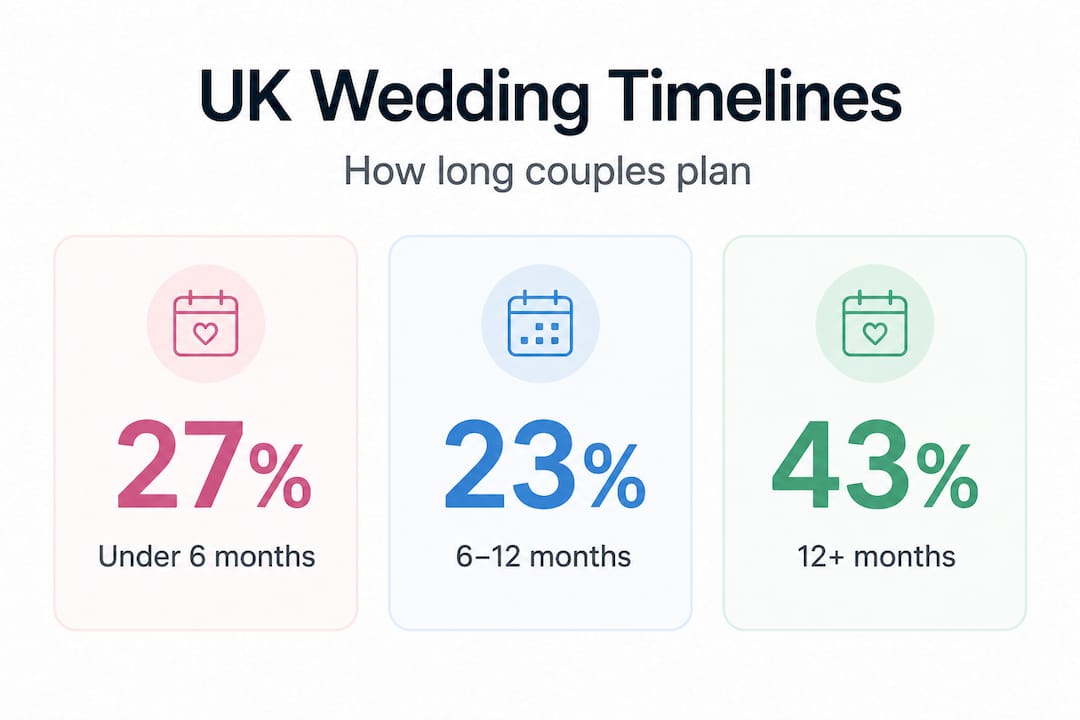
What does this mean in practice? Couples planning in under six months typically opt for simpler ceremonies, smaller guest lists, and flexible venues with availability at shorter notice. The trade-off is real: popular venues, sought-after photographers, and specialist suppliers are often booked twelve months or more in advance. If your heart is set on a particular barn in the Cotswolds or a specific award-winning documentary photographer, you will need that longer runway.
On the other hand, longer timelines bring their own challenges. Sustaining motivation over eighteen months is harder than it sounds. Trends shift, budgets fluctuate, and supplier circumstances change. Couples who plan well beyond a year sometimes find they need to revisit early decisions closer to the date anyway.
Here are the key factors that should shape your chosen timeline:
Venue availability. The most in-demand venues in the UK fill up quickly, sometimes two years ahead for peak summer Saturdays.
Guest list size. Larger gatherings require more logistical lead time for catering, seating, and accommodation.
Budget flexibility. A generous budget can unlock last-minute premium suppliers; a tighter one benefits from early booking discounts.
Ceremony type. Religious ceremonies, especially those requiring banns to be read or faith-specific preparation, often demand more notice.
Personal capacity. If you are both working full-time or managing a family, build in extra time to avoid burnout.
Our UK wedding planning guide breaks this down further with practical month-by-month timelines tailored to different starting points. You can also use our wedding day checklist to keep track of every task as your date approaches, regardless of when you start.
Pro Tip: Book your venue and photographer first. These two decisions shape almost everything else, from the feel of your reception to how your day is visually remembered. Secure them before worrying about centrepieces or favours.
Essential guides for brides: etiquette and inclusivity
Once you’ve decided how much time you have, the practical details of etiquette, guest management, and inclusivity come into sharp focus. This is where many couples feel a sudden wave of anxiety. Who sits where? How do you word an invitation when parents are divorced? What do you do about a difficult relative or an awkward plus-one request?
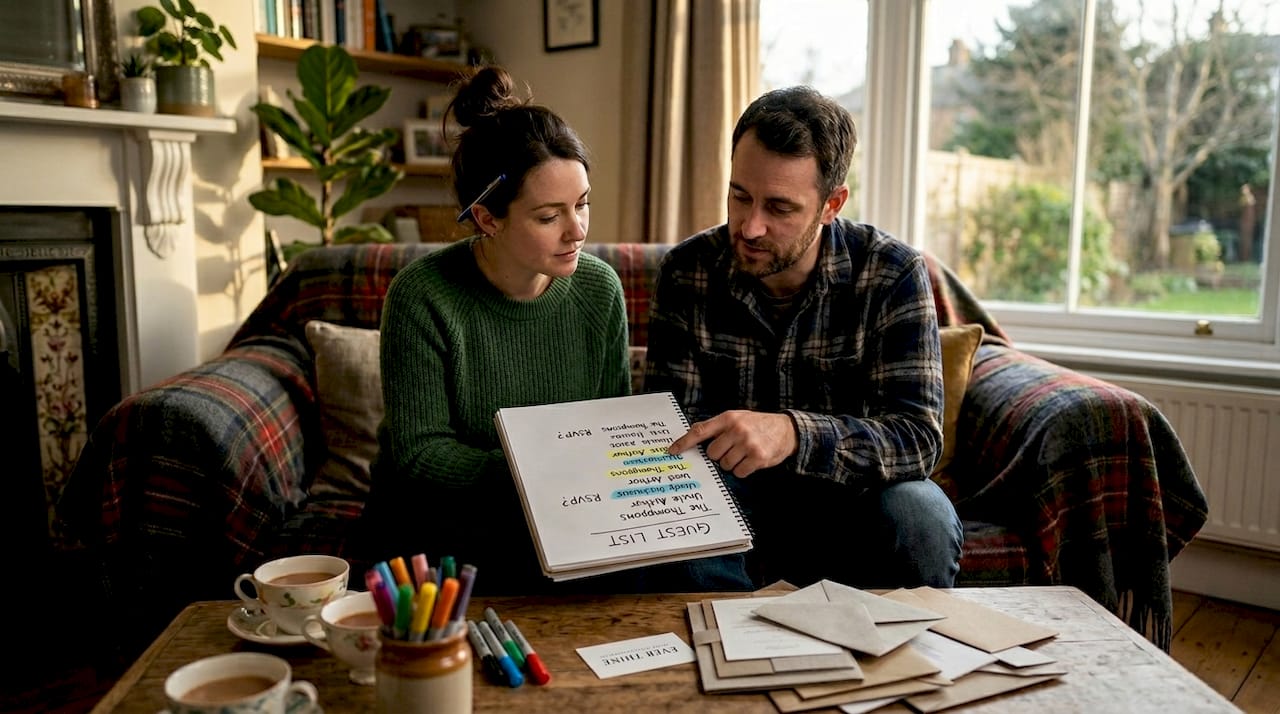
The good news is that modern guidance has caught up with modern life. Debrett’s Wedding Guide is one of the most thorough resources available, covering everything from the formal wording of invitations to the genuinely tricky territory of blended families, estranged relations, re-marriages, and how to handle children at the reception. What makes it particularly useful is that it does not pretend weddings are simple. It acknowledges that real families are complicated.
Here is a comparison of common etiquette challenges and the modern approach versus the traditional one:
Scenario | Traditional approach | Modern approach |
Plus-ones | Strict rules based on relationship status | Assess case by case, prioritise your comfort |
Divorced parents | Separate tables, minimal interaction | Seat to minimise conflict, communicate in advance |
Children at the reception | Children either all invited or none | Clear communication; child-free with soft exceptions |
Re-marriage announcements | Often kept low-key | Celebrate openly, adapt wording to reflect your story |
Estranged family members | Obligatory invitations | Decision is entirely yours, no obligation required |
Inclusivity goes beyond managing difficult dynamics. It means ensuring every guest, regardless of age, mobility, dietary need, or cultural background, feels genuinely welcomed and considered. This includes accessible venues for guests with mobility challenges, varied menu options for dietary requirements, and sensitivity around religious or cultural traditions that may differ from your own.
Our comprehensive planning tips include a section on inclusive wedding planning that many couples find transformative. Small gestures, such as bilingual signage, quiet spaces for guests who find large gatherings overwhelming, or dedicated seating for elderly relatives near exits, make a lasting impression.
Pro Tip: Send a brief pre-wedding survey to guests with dietary or accessibility requirements. It removes the guesswork, prevents last-minute scrambles with caterers, and shows guests that you genuinely care about their experience.
Budgeting and supplier selection: getting it right in the UK
Navigating etiquette and guest management is only part of the equation. Now, let us turn to finances and supplier selection, because even the most beautifully planned wedding can unravel if the budget is not handled with care.
The average UK wedding cost continues to rise. Breaking your budget into clear categories prevents the creeping overspend that catches many couples off guard:
Venue hire and catering. Often the single largest expense, accounting for 30 to 40% of the total budget.
Photography and videography. Typically 10 to 15% of the overall budget; a false economy to cut here.
Music and entertainment. Live bands cost considerably more than DJs; factor in both options before deciding.
Flowers and décor. Costs vary enormously depending on seasonality and style; get at least three quotes.
Attire. Dress, suit, accessories, and alterations can add up faster than expected.
Stationery and favours. Often underestimated; digital alternatives can reduce costs significantly.
Contingency fund. Keep at least 10% of your total budget unallocated for unexpected expenses.
“DIY planning risks stress, especially for complex or large weddings. Experts recommend partial or on-day coordinators to manage details and logistics, as professional planners can save money through supplier networks and help couples avoid costly mistakes.”
An on-day coordinator, in particular, is worth serious consideration even if you handle the full planning yourself. They manage the timeline on the day, liaise with suppliers, and handle problems before you ever know they existed. You get to be a guest at your own wedding rather than a project manager.
When choosing suppliers, balance quality, reliability, and budget with equal weight. A cheaper supplier who delivers late or produces poor results costs far more than the saving. Read reviews carefully, ask for references, and check insurance. For wedding photography costs, understanding what drives pricing, experience, equipment, editing time, album production, helps you assess value rather than simply comparing headline figures.
Pro Tip: When meeting photographers and videographers, pay attention to how they make you feel, not just their portfolio. You will spend more time with them than almost any other supplier on your wedding day. Comfort and trust matter enormously.
Documenting your day: tips for contemporary UK weddings
With budgets and suppliers aligned, it is time to consider how you will preserve memories and emotions on your big day. This is where documentary-style coverage has genuinely changed the game for modern UK couples.
Traditional wedding photography often meant long blocks of posed portraits with large groups, formal smiles, and a rigid schedule. Many couples still want a selection of those images. But the shift toward documentary or reportage coverage reflects a deeper desire: to see the wedding as it actually felt, not just how it looked from the front row.
Documentary-style photography captures the stolen glances, the laughter during speeches, the grandmother wiping her eyes during the first dance. These are the images couples return to most often years later, because they trigger genuine memory rather than a posed performance.
Here is how to brief your photographer and videographer for the best natural coverage:
Share your story beforehand. Tell them about your relationship, your families, and the moments that matter most. The more context they have, the better they can anticipate key moments.
Identify key people in advance. A simple list of the most important guests helps your photographer prioritise without interrupting the flow of the day.
Build in natural time buffers. Rushed timelines lead to missed moments. Give yourself generous transitions between ceremony, drinks reception, and dinner.
Limit the formal group shots. Aim for no more than eight to ten formal groupings. This leaves time for candid coverage during the drinks reception, when so many authentic moments unfold.
Trust your team. Once briefed, let your photographer and videographer work. Micro-managing their movements limits their creativity and disrupts the natural atmosphere you hired them to capture.
Our guide to wedding video creation explains how a cinematic film is built from the raw footage of your day, and why certain decisions during planning, like ceremony audio quality and timing of key events, directly affect the final film. You can also explore our stress-free wedding tips for practical ways to create an atmosphere where natural moments actually happen, rather than having to be engineered.
Pro Tip: Ask your photographer to arrive at least ninety minutes before the ceremony begins. The getting-ready moments and early arrivals are often where the most emotional, unguarded photographs are taken, and they set the visual tone for the entire film.
Why a flexible, story-first approach works best for modern UK weddings
Here is something that many wedding planning guides will not tell you plainly: rigid planning often produces forgettable weddings. The couples whose days feel genuinely alive on camera are almost always the ones who held their plans loosely and stayed present in the moment.
We have photographed and filmed weddings across the Midlands, Staffordshire, Derbyshire, and beyond. The consistent thread in the most memorable days is not a perfect schedule or flawless décor. It is flexibility. It is the couple who laughed when the cake topper fell over, the best man who gave an unscripted toast, the flower girl who refused to walk down the aisle and was carried instead. These moments cannot be planned. They can only be captured by photographers and videographers who are watching for them.
The outdated idea that a wedding must follow a strict script rooted in tradition is genuinely worth questioning. Many of the “rules” around wedding planning, from the order of the day to how invitations must be worded, originated in a very different social landscape. Modern UK couples are increasingly confident in adapting or discarding conventions that do not reflect who they actually are.
Story-first planning means making decisions based on what will create genuine memories, not what looks correct on paper. It means choosing a photographer whose work moves you emotionally, not simply one whose package fits the spreadsheet. It means spending more on the music than the floral centrepieces if dancing matters to your crowd. Our planning tips for Staffordshire weddings reflect this philosophy directly, because the couples who enjoy their weddings most are those who prioritise experience over performance.
Capture every moment with trusted UK wedding specialists
All the planning guidance in the world is most powerful when it is backed by the right professional team on the day itself.
[
At Wedding Film Photography, we specialise in documentary-style coverage across the Midlands and beyond, capturing your wedding day as it genuinely unfolds rather than directing it for the camera. Whether you are searching for a wedding photographer in Derbyshire, a wedding photographer in Staffordshire, or a wedding photographer in Worcestershire, our team brings the same relaxed, unobtrusive approach to every venue and every couple. We would love to hear your story and talk through how we can help you preserve it beautifully. Get in touch to check availability for your date.
Frequently asked questions
How long does it typically take to plan a wedding in the UK?
Timelines vary considerably depending on the couple’s priorities and circumstances. 2025 data shows that roughly 27% of UK couples plan in under six months, while another 27% take over eighteen months, with the remaining couples spread across the middle.
Is it necessary to hire a wedding planner or coordinator?
It is not essential, but it is strongly recommended for larger or more complex weddings. Professional planners and coordinators reduce stress, leverage supplier networks to save money, and prevent the logistical mistakes that DIY planning often misses.
How can couples handle tricky etiquette issues during wedding planning?
Modern etiquette guides like Debrett’s Wedding Guide address real-world complexities including blended families, estranged relatives, plus-ones, and re-marriages, making it far easier to navigate situations that traditional guides simply ignore.
Why is documentary-style coverage so popular for UK weddings?
Documentary coverage prioritises authentic emotion over posed perfection. It captures the moments that genuinely happened rather than the moments that were arranged, which is why many UK couples find these images and films the ones they return to most often in the years that follow.
Recommended

Comments