
How to choose a wedding style: a practical guide

TL;DR:
Choosing a wedding style involves focusing on the emotional feeling you want to evoke rather than just aesthetics.
Understanding the distinctions between style, theme, and aesthetic helps create a cohesive and harmonious wedding design.
Choosing a wedding style sounds exciting until you open Pinterest and find yourself buried under thousands of conflicting ideas, each one more beautiful than the last. Knowing how to choose a wedding style that actually feels like you is the difference between a wedding that looks assembled and one that feels completely cohesive. The good news is that style selection does not need to be overwhelming. With the right starting point, a clear framework, and a bit of honest reflection, you can move from inspiration overload to a confident, consistent vision your entire planning journey can follow.
Table of Contents
Key takeaways
Point | Details |
Start with emotion, not aesthetics | Identify three feeling words before browsing any imagery to anchor every future decision. |
Venue shapes everything | A venue with natural personality reduces decor costs and prevents clashing visual choices. |
Mood boards require curation, not collection | Limit your mood board to 3 to 5 core colours and a small, focused set of images. |
Season affects budget and style | Seasonal flower choices can shift floral costs by up to 30%, which directly influences feasible styles. |
Brief vendors with emotional keywords | Vendors who understand your feeling words deliver more consistent and authentic results. |
How to choose a wedding style: understanding the terminology
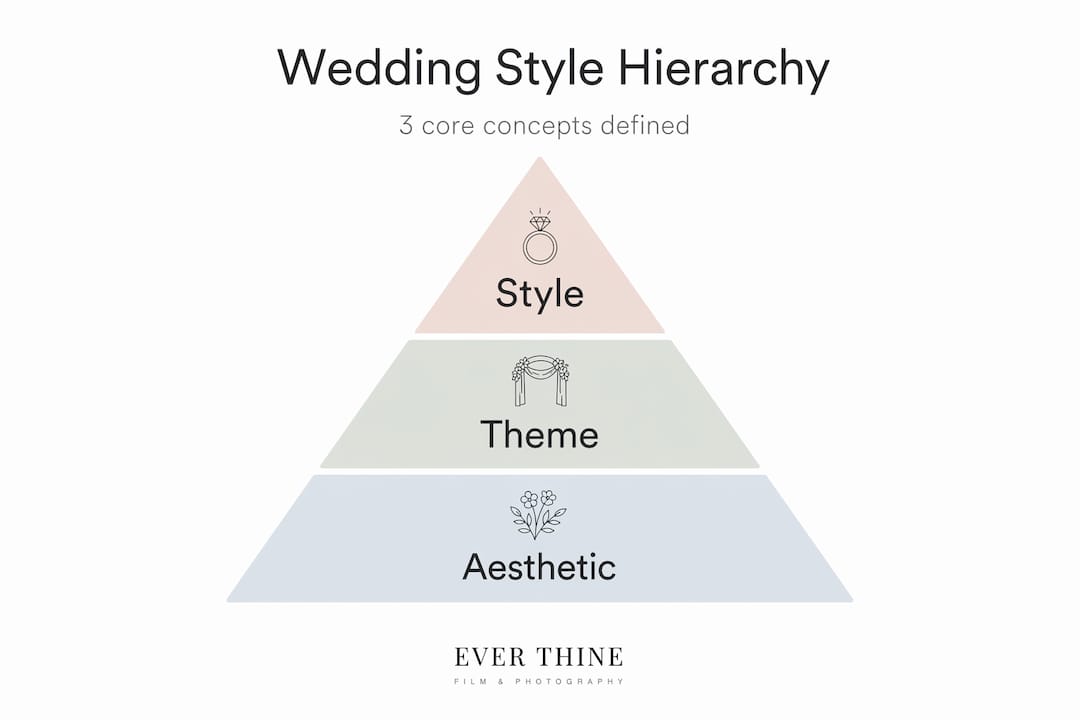
Before you can make any decisions, you need to speak the language. The words “style,” “theme,” and “aesthetic” get used interchangeably by most couples, but they mean very different things in practice.
According to Brides, a wedding aesthetic defines the overall style and vibe that guides the look and feel from ceremony to reception, going well beyond individual décor choices. Think of it as the emotional atmosphere your guests walk into.
Here is how the three terms stack up:
Term | Definition | Example |
Style | Broad visual and formality direction | Formal, rustic, bohemian, contemporary |
Theme | Specific subject or motif layered onto a style | Garden party, Tuscan vineyard, Art Deco |
Aesthetic | The detailed sensory feel including colour, texture, and mood | Warm terracotta tones, dried florals, candlelit intimacy |
Your style sits at the top level. It sets the formality and general direction. Your theme gives it a narrative angle. Your aesthetic handles every specific visual and sensory detail. Classic styles tend to be more formal, while bohemian approaches lean away from tradition and toward an organic, free-spirited feel.
Understanding these three layers prevents a very common planning mistake: building a mood board full of beautiful images that do not actually belong together. A relaxed garden-party style and an ultra-formal gold-and-white aesthetic, for example, create visual tension rather than harmony. Clarity about which layer you are working within keeps your decisions focused and makes vendor conversations far more productive.
Start with feelings, not flowers
The single most useful thing you can do before browsing any wedding style ideas is settle on three words that describe how you want the day to feel. Not look. Feel.
Choosing three emotion-describing words gives your planning a filtering tool that prevents style drift. Words like “intimate,” “relaxed,” or “dramatic” are specific enough to do real work. Vague words like “pretty” or “nice” are not.
Here is a practical exercise to find your three words:
Each of you writes down five words that describe your ideal day independently, without discussing first.
Compare your lists and circle any overlaps. Those are your non-negotiables.
From the combined list, agree on three final words together.
Use those three words as a filter: does this décor idea, venue, or colour palette serve all three of them?
Words to consider as starting points: warm, playful, elegant, wild, minimal, vibrant, romantic, theatrical, joyful, raw, refined, earthy, airy, or timeless.
Wedding aesthetics should first align emotionally before they align visually, which is why this step comes before any image searching. If your three words are “intimate, earthy, joyful,” then a grand ballroom with crystal chandeliers fails the test immediately, no matter how beautiful it looks on its own.
Pro Tip: Once you have your three words, go back through any inspiration you have already saved and delete anything that does not match all three. Deleting non-matching inspiration is one of the most effective ways to prevent Pinterest overwhelm and maintain focus.
Venue, season, and budget: the practical foundation
Your emotional keywords tell you what you want to feel. Your venue, season, and budget tell you what is genuinely achievable. These two sets of information need to meet in the middle.
Why venue comes first
The venue is the single most influential physical factor in choosing wedding decor and overall style. A converted barn has exposed beams and warm wood tones already built in. A Georgian manor brings symmetry, grandeur, and period detail. Selecting a venue whose natural features align with your desired feeling removes the need to fight the space with heavy decoration, saving both time and budget.

The role of your venue in wedding photos is also significant. When the venue’s personality matches your style, your photography will have a natural visual consistency throughout the day without needing to manufacture it.
Seasonal influences on your style
Season affects which flowers are available at reasonable cost, which colour palettes feel appropriate, and what your guests will physically be comfortable in. Out-of-season blooms can increase your floral budget by 20 to 40%, which in turn limits other décor choices.
Broad seasonal style tendencies:
Spring: Blush pinks, lilac, delicate greens. Tulips, ranunculus, sweet peas. Feels fresh and romantic.
Summer: Bright, bold palettes or soft whites. Peonies, roses, sunflowers. Suits outdoor or relaxed settings.
Autumn: Rich burgundy, burnt orange, deep teal. Dahlias, berries, dried elements. Lends itself to dramatic or rustic styles.
Winter: Ivory, champagne, deep green, navy. Amaryllis, eucalyptus, hellebores. Suits formal or cosy intimate settings.
Budget realities that affect style
Friday and Sunday weddings typically cost 20 to 40% less than Saturdays, and booking in off-peak months extends savings further. That freed budget can be redirected into the style elements that matter most to you, whether that is florals, lighting, or a statement backdrop.
Pro Tip: Build a simple spreadsheet with your three style keywords in one column and the venue, season, and décor options that serve each keyword in the next. This turns abstract style words into concrete, comparable choices.
Building your mood board properly
A mood board is not a collection. It is a curation. There is a significant difference.
A mood board with 3 to 5 core colours and a focused set of images gives vendors a clear picture of your style and prevents the planning drift that happens when inspiration becomes a cluttered folder of conflicting ideas. The goal is clarity, not comprehensiveness.
Organise your mood board into a small number of clear categories: colour palette, florals, ceremony décor, reception atmosphere, and attire. Each category should contain no more than four or five images. When a new image you love does not fit with what is already on the board, that is the board doing its job. Not every beautiful thing belongs in your wedding.
Pro Tip: When sharing your mood board with florists, stylists, and photographers, include your three emotional keywords alongside the images. Vendors who deeply understand your emotional keywords deliver far more consistent results than those who are working from images alone.
Colour acts as the most powerful unifying element across your entire wedding. Choose one dominant colour, one secondary colour, and one accent. Apply these consistently across stationery, florals, table settings, and attire details. When guests look at your photographs years later, that palette is what will make the day feel like a complete, intentional story.
Finalising your style: a step-by-step approach
At this point you have your emotional keywords, an understanding of how venue, season, and budget shape your choices, and a focused mood board taking shape. Now it is time to pull everything together into a practical plan.
Confirm your three feeling words and write them somewhere you will see them regularly throughout planning.
Audit your venue against those words. Does the space already serve your style, or are you working against its natural character?
Lock in your colour palette of one dominant, one secondary, and one accent colour.
Cull your mood board to a focused set of images across five categories, with no more than four images each.
Brief every vendor with your emotional keywords and mood board together. Do this at the start of each vendor relationship.
Avoid over-decorating. A cohesive style with fewer, well-chosen elements almost always looks better than a maximalist approach that mixes five different aesthetic references.
Revisit your keywords whenever a new decision arises. If a choice does not serve your three words, it is a no.
Common pitfalls to avoid when choosing wedding decor and finalising your style:
Mixing two major conflicting styles, such as ultra-formal with bohemian, without a very clear unifying element.
Following trends rather than personal taste. Trends shift. Your photographs do not.
Leaving style briefing too late in vendor conversations. Style misalignment is much harder to fix closer to the day.
A wedding that looks like you will always outlast a wedding that looks like this year’s most popular trend.
Coordinating with your photographer early is particularly valuable here. When your photographer understands your style, feeling words, and colour palette from the beginning, they can make lighting, timing, and compositional decisions on the day that serve the overall aesthetic rather than simply documenting what happens to be in front of them.
My honest take on choosing a wedding style
I have worked alongside hundreds of couples across Staffordshire and beyond, photographing weddings of every conceivable style. What I have come to believe, very firmly, is this: most couples already know how they want to feel on their wedding day. They just do not trust it yet.
What I have seen derail good wedding style choices is not a lack of ideas. It is too many ideas without a framework. A couple arrives with a mood board of 200 images they love individually but that collectively point in five different directions. No florist, photographer, or stylist can serve five directions at once.
The three-feeling-words method is the single most useful tool I have encountered. When a couple tells me their day should feel “wild, joyful, and intimate,” I immediately know how to position myself, which moments to prioritise, and how to read the light throughout the day. When they say they want it to be “beautiful,” I have nothing concrete to work with.
My other strong conviction is that the venue conversation comes before the style conversation, not after. I have photographed weddings where a couple tried to impose an industrial chic aesthetic onto a traditional English country house. The result was always visual tension, never harmony. Work with the space you are in. Let it be part of your style rather than something to overcome.
Trust your instincts. The couples whose weddings feel most authentic are almost never the ones who followed trends. They are the ones who were honest about who they are and let that honesty shape every decision.
— Ever
Capture your chosen style beautifully
Once your wedding style is clear, the next priority is making sure it is photographed in a way that honours it. Your décor, colour palette, and atmosphere deserve images that reflect the feeling you spent so much time carefully building.
[
At Weddingfilmphotography, we specialise in documentary-style photography and cinematic film that works with your chosen aesthetic rather than imposing something generic onto it. Whether you are planning a relaxed barn celebration, a formal manor house reception, or an intimate outdoor ceremony, our approach is built around understanding your style from the very first conversation. We work with couples across Derbyshire, Staffordshire, and Worcestershire, and we would love to hear about yours. Get in touch to discuss how we can bring your chosen style to life on the page and on screen.
FAQ
What is a wedding style?
A wedding style is the broad visual and formality direction of your wedding, such as rustic, bohemian, formal, or contemporary. It differs from a theme, which is a specific narrative motif, and from an aesthetic, which covers the detailed sensory details like colour, texture, and mood.
How do I pick a wedding theme if I feel overwhelmed?
Start by choosing three words that describe how you want your day to feel rather than look. These emotional keywords act as a filter that removes the need to evaluate every possible option individually and narrows your choices naturally.
How does venue choice affect wedding style?
Your venue’s existing personality shapes your style more than almost any other factor. A venue that already aligns with your desired feeling reduces decor costs significantly and creates a more natural, harmonious result than trying to work against the space.
What are the best wedding styles for a limited budget?
Styles that lean into natural environments, seasonal florals, and minimal decoration tend to work well on tighter budgets. Booking on a Friday or Sunday and choosing in-season flowers can reduce costs considerably, freeing funds for the decorative elements that matter most to you.
How many colours should a wedding colour palette have?
A focused palette of three colours works best: one dominant, one secondary, and one accent. This provides enough visual interest to feel intentional while remaining coherent across florals, stationery, attire details, and table settings.
Recommended
Comments