
Role of Direction in Wedding Films – Impact on Authenticity
- Jesús Magan
- Feb 14
- 7 min read

Updated: Feb 15

Choosing how your wedding day is filmed can shape the way your love story is remembered long after the celebrations end. Many couples in Staffordshire want a film that feels real rather than staged, yet capturing genuine moments involves much more than simply recording events. Discover how thoughtful direction techniques and documentary wedding film approaches can ensure your unique relationship and emotional connection are reflected in every frame, creating a lasting visual memory that is both authentic and artistic.
Table of Contents
Key Takeaways
Point | Details |
Effective Direction Enhances Narrative | Proper wedding film direction combines technical skills with emotional insight to create compelling narratives that represent the couple’s love story. |
Understand Film Styles | Couples should discuss their preference for documentary or cinematic styles to ensure their unique story is effectively captured. |
Storytelling Techniques Matter | Authentic storytelling requires cinematographers to anticipate genuine moments and maintain a respectful distance to capture true emotions. |
Misconceptions About Videographers | Wedding videographers are active storytellers, not just passive recorders; understanding their multifaceted roles enhances collaboration. |
Defining Direction in Wedding Films
Wedding film direction is more than simply capturing moments; it’s about crafting a narrative journey that authentically represents a couple’s unique love story. Screen direction principles play a crucial role in transforming raw wedding footage into a compelling cinematic experience.
At its core, direction in wedding films involves strategic decision-making about how moments are captured, framed, and sequenced. This process requires a delicate balance between technical expertise and emotional intelligence. Cinematographers must anticipate and capture genuine interactions while maintaining a seamless visual narrative that feels both intimate and professionally composed.
Key aspects of wedding film direction include:
Understanding spatial relationships between subjects
Maintaining emotional continuity
Selecting meaningful moments that reveal the couple’s personality
Using camera movements that enhance storytelling
Balancing candid shots with intentionally composed sequences
Technical considerations intersect with creative vision, requiring filmmakers to make split-second decisions about lighting, composition, and emotional resonance. Film direction fundamentals emphasise the importance of creating a narrative that feels both authentic and artistically crafted.
Pro tip: Work closely with your wedding filmmaker to discuss your vision, ensuring they understand the unique dynamics of your relationship and can capture moments that truly reflect your personal story.
Types of Direction: Documentary vs. Cinematic
Wedding film direction encompasses two primary styles that fundamentally transform how a couple’s love story is captured and presented: documentary and cinematic approaches. Wedding videography styles reveal distinct methodologies that offer couples unique narrative experiences.
In documentary-style wedding films, the primary focus is on capturing genuine, unscripted moments as they naturally unfold. This approach prioritises authenticity, with cinematographers becoming almost invisible observers who record the day’s emotional landscape without interference. The result is a raw, intimate portrayal that feels like a genuine time capsule of the wedding day.
Key characteristics of documentary wedding film direction include:
Minimal staged or rehearsed scenes
Emphasis on candid, spontaneous interactions
Natural sound and ambient audio
Chronological storytelling
Unobtrusive camera work
Conversely, cinematic wedding films transform the wedding narrative into a more dramatic, artistic experience. Filmmakers employ professional storytelling techniques borrowed from feature filmmaking, including:
Carefully composed shots
Dramatic music selections
Stylised editing techniques
Intentional lighting and colour grading
Narrative arcs that heighten emotional impact
Documentary and cinematic styles are not mutually exclusive; many modern wedding films blend elements from both approaches to create a unique storytelling experience.
Pro tip: Discuss your personal storytelling preferences with your wedding filmmaker, exploring how they can blend documentary authenticity with cinematic artistry to capture your unique love story.
Here’s a side-by-side comparison of documentary and cinematic wedding film direction styles:
Aspect | Documentary Approach | Cinematic Approach |
Storytelling Style | Follows real events naturally | Creates narrative arcs intentionally |
Visual Tone | Raw and unembellished | Polished and stylised |
Audience Experience | Feels personal and authentic | Appears dramatic and inspiring |
Editing Techniques | Minimal, in chronological order | Creative, often non-linear |
Emotional Impact | Emphasises genuine reactions | Heightens emotions through artistry |
Key Techniques for Natural Wedding Storytelling
Capturing the genuine essence of a wedding day requires sophisticated storytelling techniques that go beyond mere documentation. Wedding storytelling photography demands a nuanced approach that preserves the emotional authenticity of each moment while creating a compelling narrative arc.

Successful natural storytelling in wedding films hinges on developing a deep understanding of human interaction and emotional dynamics. Cinematographers must cultivate an almost intuitive ability to anticipate and capture fleeting moments of genuine connection, transforming seemingly ordinary interactions into profound visual narratives that reveal the couple’s unique relationship.
Key techniques for achieving authentic wedding storytelling include:
Maintaining physical distance to ensure subjects remain unaware and natural
Using multiple camera angles to capture comprehensive emotional landscapes
Listening actively to capture spontaneous, unscripted interactions
Developing a rapport with the couple before the wedding day
Selecting equipment that minimises intrusive presence
Professional wedding storytellers employ several sophisticated strategies to create immersive narratives:
Observational positioning that feels invisible
Anticipatory framing to capture unexpected moments
Minimal intervention during key emotional sequences
Strategic use of ambient sound
Emotional matching through editing techniques
The most powerful wedding stories are not manufactured, but carefully observed and sensitively revealed.
Pro tip: Request a pre-wedding consultation with your filmmaker to discuss your relationship’s unique dynamics, helping them understand the subtle emotional nuances they should prioritise.
Impact of Direction on Authenticity and Emotion
The subtle art of wedding film direction profoundly impacts the emotional landscape of visual storytelling, transforming raw moments into deeply meaningful narratives. Wedding storytelling techniques reveal how intentional direction can elevate authentic emotional experiences from mere documentation to profound memory preservation.
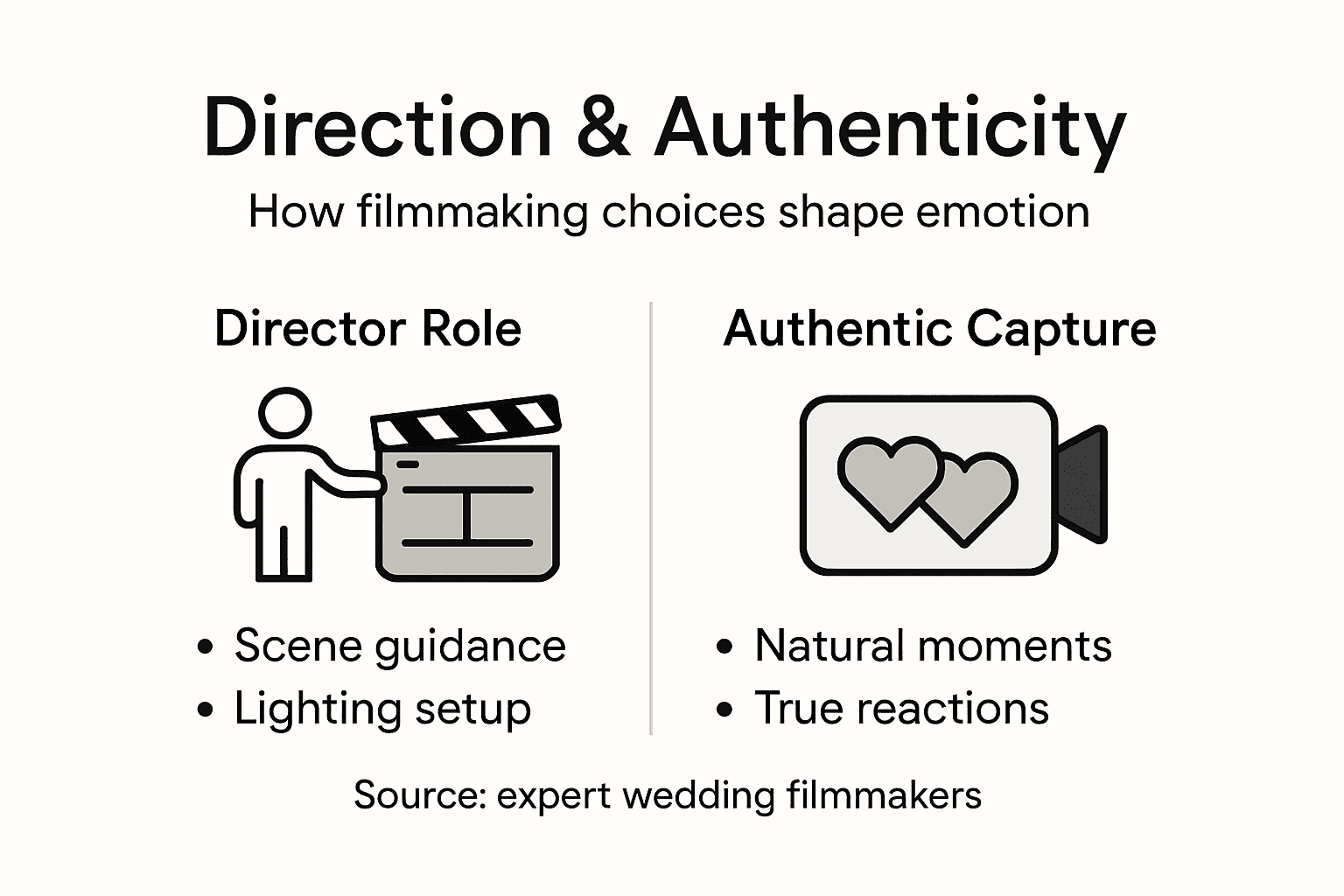
Directional choices serve as the invisible architecture of emotional storytelling, determining how viewers will ultimately experience and interpret the wedding day’s most intimate moments. A skilled filmmaker must navigate the delicate balance between observation and interpretation, using technical expertise to amplify genuine emotions without disrupting the natural flow of events.
Key emotional impact considerations in wedding film direction include:
Creating emotional depth through strategic framing
Capturing microexpressions that reveal genuine feelings
Understanding non-verbal communication signals
Recognising and highlighting genuine connection moments
Maintaining emotional continuity across different wedding segments
The filmmaker’s directional approach directly influences emotional authenticity through several critical mechanisms:
Minimising intrusive camera movements
Selecting unobtrusive filming positions
Using natural lighting to preserve mood
Allowing moments to unfold organically
Maintaining respectful emotional distance
Authentic wedding storytelling isn’t about perfect shots, but about capturing genuine human connection in its most raw and beautiful form.
Pro tip: Request your wedding filmmaker demonstrate previous work that showcases their ability to capture genuine emotional moments without artificial manipulation.
Common Misconceptions About Videographer Roles
Many engaged couples harbour misunderstandings about the complex craft of wedding videography, often reducing the role to simple documentation. Wedding videography techniques reveal a far more nuanced and creative professional practice that goes well beyond merely pressing record.
The notion that wedding videographers are passive observers is fundamentally flawed. Professional filmmakers are active storytellers who carefully orchestrate visual narratives, making deliberate artistic and technical choices that transform raw footage into emotionally resonant memories. These professionals do not simply capture events, but craft carefully constructed visual stories that reveal the genuine essence of a couple’s relationship.
Common misconceptions about wedding videographer roles include:
Believing they only record events sequentially
Assuming technical skill is more important than emotional intelligence
Thinking pre-planning is unnecessary for wedding films
Expecting uniform, generic wedding video styles
Underestimating the complexity of narrative construction
Professional wedding videographers actually perform multiple sophisticated roles:
To clarify professional wedding videographer roles, here’s an overview of their main functions and value:
Role | Core Responsibility | Value for Couples |
Emotional Storyteller | Reveals unique relationship dynamics | Captures heartfelt memories |
Technical Cinematographer | Manages camera and lighting | Delivers high-quality visuals |
Creative Director | Shapes visual narrative | Crafts engaging story experience |
Narrative Architect | Designs structure and sequence | Ensures film flows seamlessly |
Emotional storytellers
Technical cinematography experts
Creative directors
Narrative architects
Discreet observers
A wedding videographer is not a camera operator, but a visual poet translating love into moving imagery.
Pro tip: Request a comprehensive consultation with potential wedding videographers to understand their unique storytelling approach and creative vision.
Capture Your Wedding Story with True Direction and Authenticity
Understanding the profound role of direction in wedding films is key to creating a timeless narrative that truly reflects your unique love story. If you seek a natural, unobtrusive style that balances documentary authenticity with cinematic artistry, Wedding Film Photography in Staffordshire offers expert storytelling crafted with emotional intelligence and technical mastery. Our approach focusses on capturing genuine moments, framing your day with care, and blending sophisticated techniques to preserve the heartfelt authenticity that the article highlights as essential.
Discover how our team acts not just as videographers but as visual narrators who respect your story’s emotional depth. Visit our services page to explore packages designed to reflect your vision and trust us to shape your wedding memories with directional insight that creates compelling, emotional films. Don’t wait to ensure your wedding day is documented with artistry and honesty — connect with us today and begin a creative collaboration that brings your love story to life.
Frequently Asked Questions
What is the role of direction in wedding films?
Direction in wedding films involves crafting a narrative journey that authentically represents a couple’s unique love story by making strategic decisions about how moments are captured, framed, and sequenced.
How does the choice between documentary and cinematic styles affect wedding films?
The choice between documentary and cinematic styles impacts how the wedding narrative is captured; documentary focuses on genuine, unscripted moments, while cinematic employs artistic techniques for a dramatic experience, blending both styles can create a unique storytelling experience.
What techniques help maintain emotional authenticity in wedding films?
Techniques that help maintain emotional authenticity include maintaining physical distance from subjects, using multiple camera angles, actively listening for spontaneous interactions, and establishing a rapport with the couple prior to the wedding day.
Why is emotional intelligence important for wedding videographers?
Emotional intelligence is crucial for wedding videographers as it helps them understand and capture the genuine essence of relationships, ensuring that the narrative resonates emotionally with viewers while preserving the authenticity of the moments captured.
Recommended

Comments