
Spot Genuine Unobtrusive Wedding Photography: Ask for Full Galleries
Updated: Sep 6

Unobtrusive wedding photography means hiring someone to document your day as it unfolds rather than direct it, so you get authentic, emotional images with minimal posing. It suits couples who want honest memories over stiff, staged portraits. Expect a short portrait block, usually 15 to 30 minutes, with the rest of the day shot candidly around you.
TL;DR:
Full galleries reveal consistent candid storytelling and help assess whether a photographer specializes in genuine documentary work.
Having a second shooter improves coverage by capturing spontaneous moments from multiple angles and scenes across the day.
Most wedding packages include 8 to 10 hours of coverage, producing hundreds of images with turnaround times ranging from four to twelve weeks.
Experienced photographers prep by visiting the venue beforehand and working discreetly to stay out of guests’ way, ensuring unobtrusive coverage.
Guests relax more naturally with unobtrusive photography, resulting in authentic emotions and less disruption to the wedding flow.
Table of Contents
What is unobtrusive wedding photography, really?
Documentary wedding photography treats the photographer as a silent observer rather than a director. They watch for genuine moments, the laugh, the tear, the fumbled vow, and photograph them as they happen rather than asking you to recreate them. That’s the core distinction from traditional style, where the photographer calls the shots and every image is arranged.
It doesn’t mean no direction at all. Most documentary photographers still run a short portrait block and move family formals along briskly so nobody stands around while a queue of great-aunts waits their turn. What changes is the proportion: a brief amount of structured time against many hours of unscripted coverage.
Couples who choose this route usually get:
Galleries that feel true to the day, not a highlights reel of forced smiles
Images that age well emotionally, because nothing in them was staged for the camera
Guests who relax faster, since there’s no photographer constantly herding people into position
The trend now leans toward blending the two. Many photographers offer a candid editorial mix, documentary coverage for most of the day with one polished, lightly directed portrait session. If a photographer promises “100% candid, zero posing,” be a little sceptical. Nearly everyone builds in some portrait time. What matters is how small that slice is and how relaxed it feels.
What should you look for in a photographer’s portfolio?
A portfolio tells you more than any sales pitch. Here’s how to actually read one:
Ask for full galleries, not just highlights. A curated reel of 40 stunning shots proves nothing about how someone shoots hour six of a wedding day. Full galleries show consistency.
Check the mix of frame types. Genuine documentary work has wide shots that place you in the room, medium shots that capture interaction, and tight detail shots, rings, tears, a hand on a shoulder. If every image is the same medium-distance portrait, that’s a flag.
Look for repeated candid patterns across different weddings. One great gallery could be luck. Five galleries with the same natural energy suggest a consistent working method.
Watch for staged-looking emotion. Real laughter and real crying photograph differently to a coached reaction. It’s subtle, but once you notice it, you’ll spot the difference in seconds.
The clearest evidence of genuine documentary practice isn’t one perfect photo; it’s consistent candid storytelling across an entire gallery, not just the handful of images chosen for a website’s homepage.
Pro Tip: Ask every shortlisted photographer for one full, unedited-selection gallery from a wedding with a similar timeline to yours. If they hesitate or only offer curated sets, that tells you something.
How much coverage do you actually need?
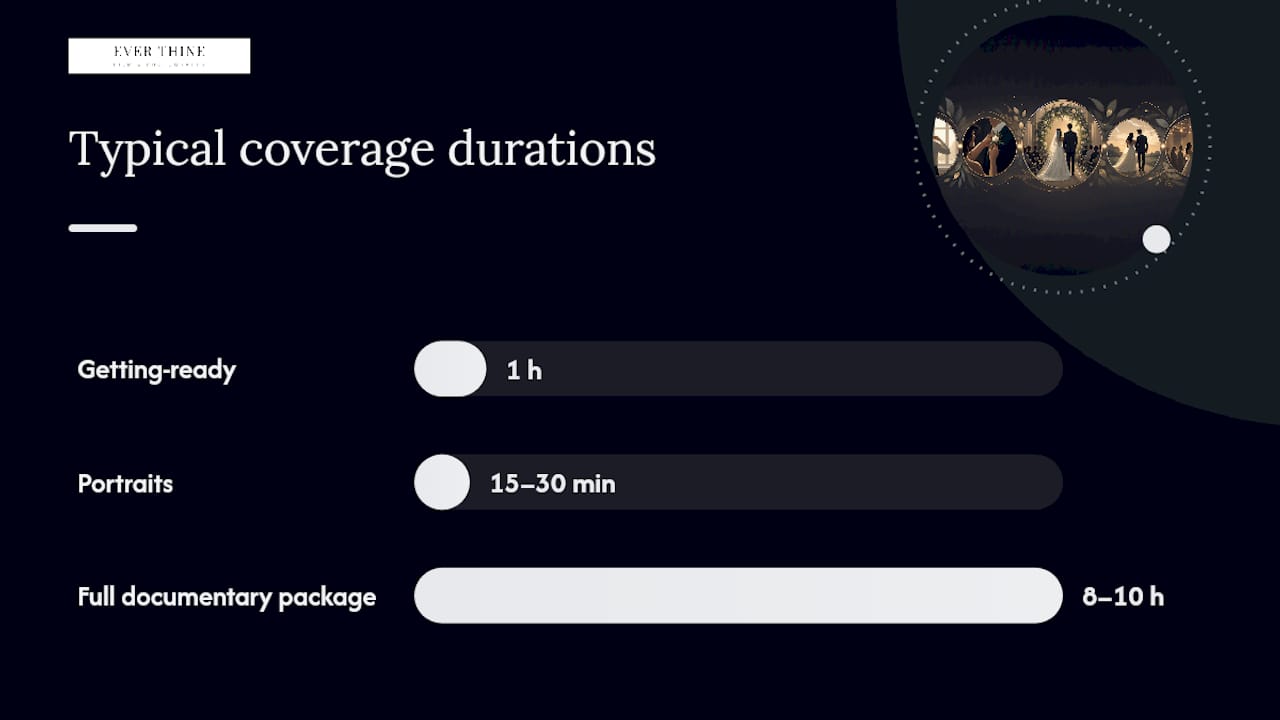
Most documentary weddings run on a fairly predictable rhythm. Coverage typically starts with getting-ready shots (an hour or so), runs through the ceremony, allows 15 to 30 minutes for portraits, and then documents the reception loosely until the first dance or speeches wrap up.
A few things shape how well that timeline holds up:
A second shooter matters more than people expect. One photographer can only be in one place. Two-photographer coverage means one stays with you for portraits while the other captures your guests’ reactions during the speech, or gets the groom’s face during the aisle walk instead of only the bride’s. Documentary work depends on catching things you can’t see happening around you, which is exactly why teams split duties this way.
Deliverables affect price more than most couples realise. An 8 to 10 hour documentary wedding commonly produces 400 to 900 or more edited images in the final gallery. Turnaround is usually somewhere between four and twelve weeks depending on the season and the studio’s workload.
Hours booked should match your actual day. An eight-hour package covering getting ready through to the first dance suits most weddings; if you’ve got a longer reception or a second outfit change, say so upfront rather than assuming it’s included.
If you want a fuller shot list of what to prioritise across the day, our guide to emotional wedding moments worth capturing is worth a read before your planning meeting.
How do you choose a genuinely unobtrusive photographer?
Ask these before you sign anything:
Can I see two or three full galleries from recent weddings, not just highlights?
Will there be a second shooter, and what does that add to the coverage?
What’s your flash policy during the ceremony and speeches?
How do you handle family formals, and how long does that usually take?
What’s your backup plan for illness or equipment failure?
Contracts should spell out image rights, payment schedule, delivery timeline, and cancellation terms in plain language. If any of these are vague, ask for clarity in writing before booking.
On pricing, experience and staffing move the number more than anything else. Photographers who include a second shooter as standard tend to sit in a higher bracket than solo operators, and albums or extended coverage add further to the total. A common checklist among documentary specialists covers staffing, flash policy, image rights, and backup procedures as the four non-negotiables before deposit.
Technical choices that keep a photographer out of sight
Discreet coverage relies on natural light wherever possible, saving flash for genuinely dark moments like an evening first dance. Silent shutter modes, fast prime lenses, and handheld shooting all help a photographer move through a room without drawing attention. Editing choices matter too: warmer, lower-contrast grading tends to read as documentary, while punchier, high-contrast edits lean editorial.
Why experience and preparation matter more than gear
Two named photographers, Dawn and Carl, work across Staffordshire and the wider West Midlands as a multi-award-winning wedding photography team, and their approach to unobtrusive coverage rests on groundwork done before the wedding, not just skill on the day.
What separates experienced documentary teams from beginners:
They walk the venue in advance, working out where to stand during vows or speeches without blocking sightlines, a habit experienced teams build over repeated weddings.
They coordinate quietly with venue staff and the wedding planner so nobody’s guessing where the photographer will be.
They keep family formals tight and efficient, so guests aren’t standing around losing patience.
Genuine testimonials tend to mention feeling “unaware” the photographer was even there, a specific, checkable phrase worth searching for when reading reviews.
How does an unobtrusive style change things for your guests?
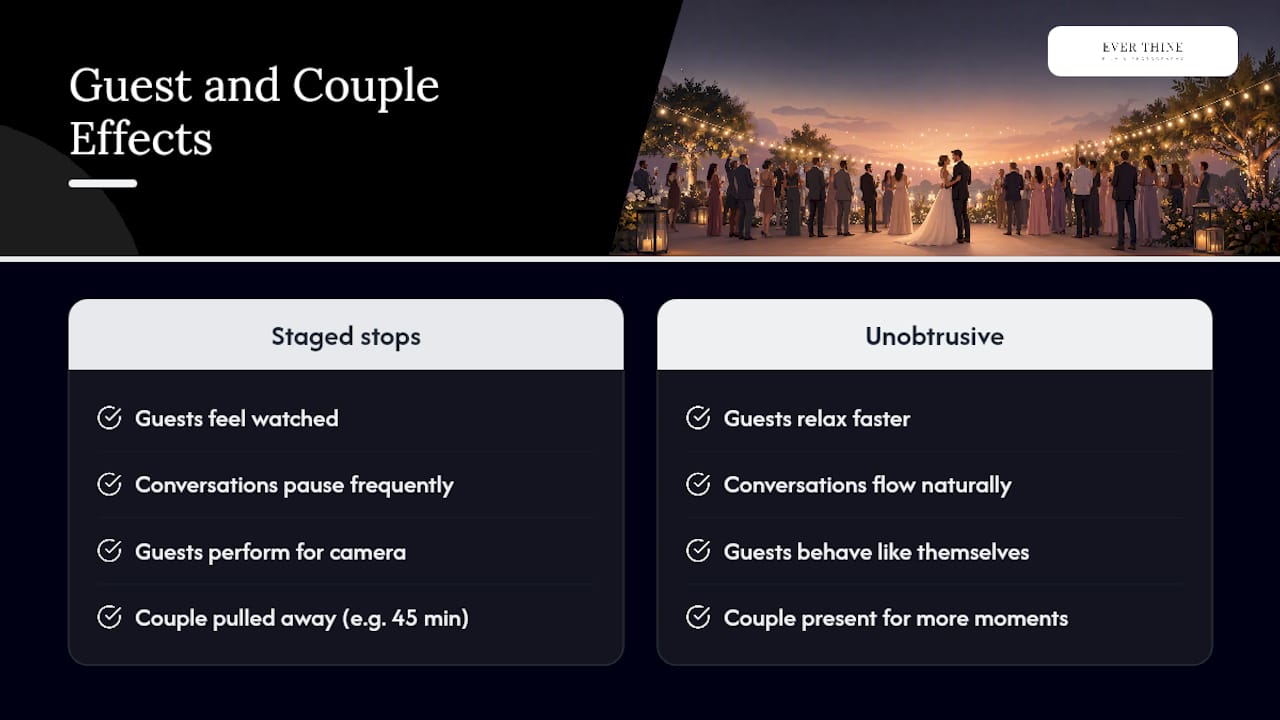
This is the part couples underestimate until their wedding day arrives. A photographer who constantly stops the room to arrange shots changes the mood, guests feel watched, conversations pause, and the natural energy of the day gets interrupted every few minutes. Unobtrusive coverage removes that friction almost entirely.
Guests relax faster when nobody’s asking them to pose. That means more genuine laughter during the speeches, more relaxed dancing later, and fewer moments where people are self-consciously aware of a lens pointed at them. It also means your grandmother, your best man, your nervous nephew, all behave more like themselves rather than performing for a camera.
There’s a knock-on effect for you too. When your photographer isn’t interrupting the flow of the day to set up shots, you spend less time being pulled away from your own wedding. You’re not disappearing for a 45-minute posed session while guests wait for cocktail hour to start; you’re present for more of it, which is usually the entire reason people choose this style in the first place.
The trade-off is that some couples still want a handful of genuinely polished, romantic portraits for the wall or the album. That’s fine, and entirely compatible with unobtrusive coverage. A short, well-run portrait block doesn’t disrupt guest experience the way constant staged interruptions do. The key is keeping it brief and treating it as a small, deliberate pause rather than the backbone of the day. Our piece on the role of posing in wedding photography goes into how that balance usually works in practice.
Our approach to working with camera-shy couples
We hear it constantly in early consultations: “We hate having our photos taken.” Good documentary work is actually built for exactly that anxiety. Planning conversations before the wedding focus on where we’ll be and when, so nothing feels like a surprise on the day itself.
Preparation happens well before the ceremony, walking the venue, agreeing the portrait block length, talking through family formals so there’s no confusion. On the day, that groundwork means we can stay quietly out of the way while you simply live in the moment.
— Dawn & Carl
How to see full galleries and check availability
If you’ve read this far, you already know the tell of genuine documentary work: full galleries with consistent candid storytelling, not a curated highlights reel. That’s exactly what Weddingfilmphotography shows couples before they book, real full-length galleries from real Staffordshire and West Midlands weddings, so you can judge the work the same way this guide just taught you to.
[
The team offers documentary wedding photography, videography, content creation, and engagement shoots for local and destination weddings. Deliverables and turnaround are agreed upfront in writing, so there’s no ambiguity about what lands in your gallery or when. Browse full galleries and see the team’s award history on the Staffordshire wedding photographer page, or check dates for a Derbyshire wedding on the Derbyshire service page. Get in touch to check your date’s availability and talk through what your day actually needs.
Sources
FAQ
What is the 30-minute rule for weddings?
It’s a common planning guideline suggesting couples allow roughly 30 minutes for the formal portrait block, enough time for a documentary photographer to capture a handful of polished images without eating into the rest of the day.
Is £500 cheap for a wedding photographer?
It’s on the low end for professional documentary coverage in the UK, since experienced photographers who include a second shooter and full-day coverage typically sit in a higher bracket, reflecting staffing and the 400 to 900-plus edited images a full gallery usually contains.
What are some common mistakes couples make with wedding photography?
The biggest ones are judging a photographer only on curated highlight reels rather than full galleries, booking too little coverage time, and not confirming staffing, flash policy, or backup plans in writing before the deposit is paid.
Recommended


Comments