
What is storytelling photography: a complete guide

TL;DR:
Storytelling photography uses sequences of images to convey emotion and narrative, prioritizing relationships over technical perfection. It relies on authentic moments, deliberate composition, and careful sequencing to create meaningful stories that engage viewers emotionally and intellectually. This approach differs from photojournalism by allowing creative control, emphasizing purpose, and shaping the viewer’s experience through intentional storytelling.
Storytelling photography is defined as the practice of using single images or deliberate sequences to communicate a narrative, convey emotion, and provide context, prioritising how images relate to each other over isolated technical perfection. Unlike conventional photography that captures a scene, narrative photography creates meaning through the relationship between images, the authenticity of human moments, and the intentional choices a photographer makes before pressing the shutter. This discipline sits at the intersection of art, journalism, and human connection. Photographers like those at Weddingfilmphotography have built entire careers around it, recognising that a photograph’s greatest power lies not in its sharpness or exposure, but in the story it tells.
What is storytelling photography and why does it matter?
Storytelling photography is the art of capturing images that narrate a meaningful experience with emotion and context rather than simply documenting a scene. The distinction sounds subtle, but it changes everything about how a photographer approaches their work. A technically perfect portrait of a bride standing still is a record. A photograph of her laughing with her grandmother while adjusting her veil is a story.

The importance of storytelling photography lies in its ability to engage viewers emotionally and intellectually at the same time. When an image implies what happened before and what might happen next, it pulls the viewer into the frame. That engagement is what separates a photograph people glance at from one they remember for years.
Storytelling photography also matters because it preserves truth in a way that posed imagery cannot. Authentic human moments and genuine expressions carry a weight that no amount of careful staging can replicate. This is why documentary-style wedding photographers, photojournalists, and portrait artists all draw from the same well of storytelling principles, even when their subjects and contexts differ enormously.
What are the essential elements that make a photo tell a story?
Six core elements determine whether a photograph tells a story or simply records a moment. Understanding each one gives you a practical framework for making deliberate creative decisions.
Subject. The subject is the emotional and narrative centre of the image. Strong storytelling photography focuses on a subject whose expression, gesture, or action carries meaning. A subject looking off-frame implies a world beyond the photograph. A subject in motion implies time passing.
Setting and environment. Context transforms meaning. A child crying in a playground tells a different story from a child crying in a hospital corridor. The environment provides the narrative scaffolding around your subject.
Composition. The rule of thirds, leading lines, and negative space all guide the viewer’s eye toward the story you want to tell. Composition and timing work together to imply narrative motion within a still image, engaging the viewer’s imagination about what happens next.
Lighting. Mood is largely a function of light. Soft, diffused light creates intimacy. Harsh directional light creates drama. Photographers who understand light use it as a narrative tool, not just a technical variable.
Timing. Henri Cartier-Bresson’s concept of the decisive moment remains the gold standard here. The fraction of a second between anticipation and resolution is where the story lives. Waiting for that moment requires patience and a clear sense of what story you are trying to tell.
Emotional authenticity. Staged scenes rarely carry the same weight as genuine ones. The most powerful examples of storytelling photos capture micro-behaviours, candid gestures, and unguarded expressions that no director could script.
Pro Tip: Before you raise the camera, ask yourself: what is the single emotion I want this image to convey? Every compositional and technical decision should serve that answer.
How do sequences and photo essays build stronger photographic narratives?
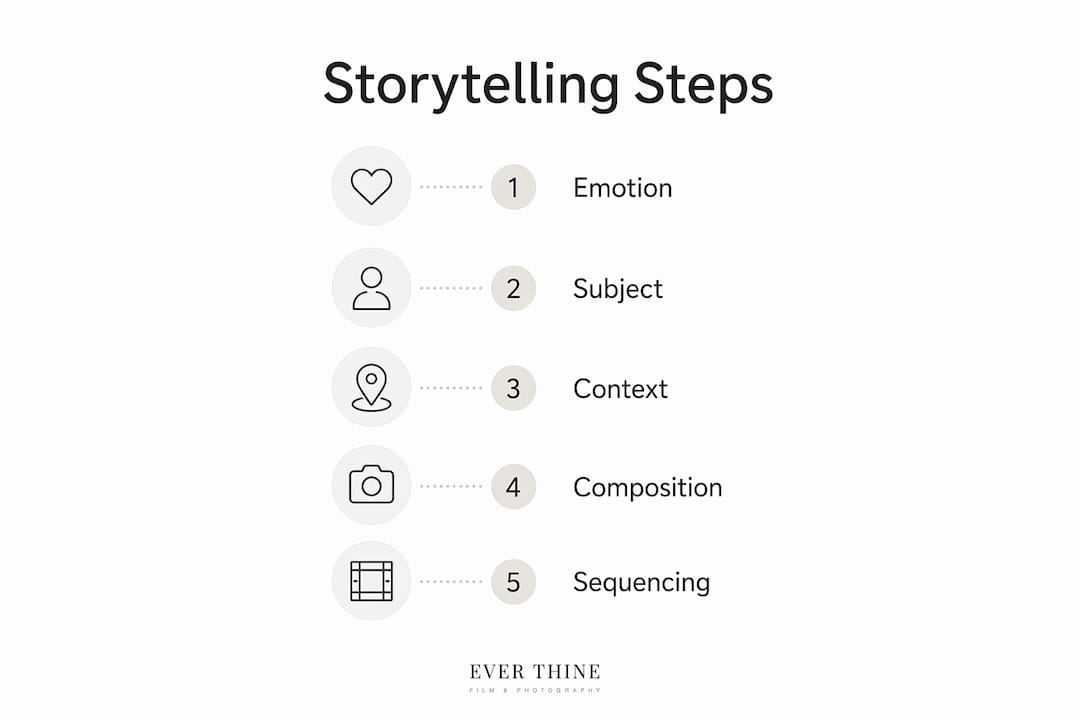
A single image can be extraordinary, but a sequence of images tells a story that no single frame can carry alone. The photo essay is the most developed form of storytelling in photography, and understanding how it works will transform how you approach any shoot.
Photo essays build stories through deliberate flow: establishing shots set the scene, mid-range images develop context, close-ups reveal emotion, and portraits anchor the human element. The rhythm created by moving between these image types mirrors the way a written narrative moves between description, action, and reflection.
Captions and text play a supporting role in photo essays, providing context that the images alone cannot supply. The key is restraint. Text should clarify, not narrate. The moment your captions start telling the story instead of the images, the essay loses its visual power.
Rearranging the order of images in a photo essay dramatically affects the story’s rhythm, emotional cadence, and overall impact. This is a lesson most photographers learn by accident the first time they sequence a body of work and discover that swapping two images changes the entire emotional arc.
Format | Storytelling strength | Best use |
Single image | High emotional impact in one frame | Social media, editorial covers, awards entries |
Photo essay | Sustained narrative arc with emotional depth | Magazines, wedding albums, documentary projects |
Captioned sequence | Narrative clarity with contextual support | News features, educational content, travel stories |
Uncaptioned sequence | Pure visual storytelling, viewer-led interpretation | Fine art, gallery exhibitions, personal projects |
Pro Tip: When curating a photo essay, print your images and lay them on a table rather than reviewing them on screen. Physical arrangement makes the rhythm and gaps in your narrative far easier to see.
What distinguishes storytelling photography from photojournalism?
The two disciplines share DNA but serve different masters. Understanding the distinction helps photographers choose the right approach for their work and maintain the integrity that both forms demand.
Photojournalism aims to visually report real-time events under strict ethical frameworks. Its purpose is direct depiction without narrative manipulation. A photojournalist covering a protest does not arrange subjects or wait for a more aesthetically pleasing moment. The event dictates the image.
Storytelling photography operates with greater narrative freedom. The photographer’s emotional intent, compositional choices, and sequencing decisions all shape the story being told. This creative latitude is what allows wedding photographers, portrait artists, and documentary photographers to create work that feels authored rather than merely recorded.
The key differences break down as follows:
Purpose. Photojournalism informs. Storytelling photography evokes.
Ethics. Ethical storytelling in photojournalism demands truthful representation, accurate captions, and accountability to the subject and audience. Storytelling photography has ethical responsibilities too, particularly around consent and representation, but it is not bound by journalism’s editorial standards.
Creative control. Photojournalists react to events. Storytelling photographers often shape the conditions under which moments occur, through location choice, timing, and gentle direction of subjects.
Narrative intent. Strong visual storytelling requires intended purpose and creative choices guided by the story being told. Photojournalism’s story is determined by the event itself.
The overlap is real and worth acknowledging. The best photojournalists are also master storytellers. National Geographic’s support of visual storytellers demonstrates that the most impactful documentary work combines journalistic rigour with narrative artistry. The distinction is one of primary purpose, not absolute separation.
How can photographers apply storytelling techniques to their work?
Practical application is where theory becomes craft. These steps give you a repeatable process for approaching any shoot with storytelling intent.
Define your narrative before you shoot. Narrative intent guides the shooting and sequencing process. Write one sentence describing the emotional story you want to tell. Everything from location choice to the time of day you schedule the shoot should serve that sentence.
Identify your emotional thread. What is the feeling you want the viewer to carry away? Tenderness, joy, melancholy, triumph? This thread connects every image in your sequence and gives your editing decisions a clear criterion.
Blend candid moments with gentle direction. Narrative photoshoots combine candid authenticity with subtle direction, using light and composition to maintain authenticity while achieving narrative clarity. You do not need to choose between documentary and directed. The most compelling storytelling photography lives in the space between them.
Use light as a narrative tool. Shoot during golden hour for warmth and intimacy. Use window light for quiet, contemplative portraits. Avoid flat midday light unless the flatness itself serves your story.
Review your images with sequence in mind. After a shoot, resist the urge to select your best individual frames first. Instead, lay out a rough sequence and identify the narrative gaps. Then go back and find the images that fill those gaps.
Experiment with themes and personal style. The photographers whose storytelling in photography resonates most strongly are those who have developed a recognisable point of view. Experiment with recurring themes, colour palettes, and compositional habits until your work has a voice.
Pro Tip: Study the wedding storytelling photography steps used by documentary wedding photographers. Even if weddings are not your genre, the discipline of capturing a complete story arc within a single day is one of the most demanding and instructive exercises in storytelling photography.
Key takeaways
Storytelling photography succeeds when narrative intent, emotional authenticity, and deliberate sequencing work together from the first moment of planning to the final edit.
Point | Details |
Definition is foundational | Storytelling photography prioritises narrative and emotion over technical perfection or isolated moments. |
Six elements drive the story | Subject, setting, composition, lighting, timing, and emotional authenticity each contribute to narrative power. |
Sequences outperform single images | Photo essays with deliberate flow create sustained emotional arcs that single frames cannot achieve alone. |
Intent separates it from photojournalism | Storytelling photography uses creative freedom and narrative purpose; photojournalism is bound by editorial ethics and real-time events. |
Planning precedes shooting | Defining your emotional thread before the shoot shapes every technical and compositional decision that follows. |
Why storytelling photography changed how I see every frame
After years of working with couples and observing how they respond to their wedding photographs, I have come to believe that most photographers underestimate how much narrative intent matters before the camera is even raised. The technical side of photography is learnable in months. The storytelling side takes years, and not because it is complicated. It takes years because it requires you to stop thinking about the image and start thinking about the person looking at it years from now.
The photographers I admire most, whether shooting for editorial clients or capturing authentic wedding stories, share one habit: they arrive at every shoot with a clear emotional intention. They know what they are trying to make the viewer feel before they know what the light will look like. That clarity does not constrain their creativity. It focuses it.
The challenge I see most often in aspiring photographers is the tendency to treat storytelling as a post-production concern, something to be constructed in the edit. It is not. The story is built in the planning, refined in the shooting, and revealed in the sequencing. The edit only clarifies what was already there. If the story is not in the images, no amount of clever sequencing will conjure it.
My honest advice: shoot one complete photo essay every month for a year. Choose a subject you genuinely care about. Force yourself to tell the story in twelve images or fewer. That constraint will teach you more about storytelling photography than any technical course.
— Ever
How Weddingfilmphotography captures your story in every frame
[
At Weddingfilmphotography, storytelling is not a style choice. It is the foundation of everything we do. Every wedding we cover is approached as a complete narrative, from the quiet moments of preparation to the last dance of the evening, with each image selected and sequenced to reflect the genuine emotion of your day. Our documentary approach means we work without intrusion, capturing the moments that actually happened rather than the ones that were arranged for the camera. If you are looking for a wedding photographer in Derbyshire who treats your wedding as a story worth telling with craft and care, we would love to hear from you.
FAQ
What is storytelling photography in simple terms?
Storytelling photography is the practice of using images, individually or in sequences, to communicate a narrative and evoke emotion rather than simply record a scene. The story emerges from the relationship between images, the authenticity of the moments captured, and the intentional choices the photographer makes.
What makes a photo tell a story?
A photograph tells a story when it combines a compelling subject, meaningful context, deliberate composition, and authentic emotion to imply a narrative beyond the frame. Timing is critical: the decisive moment between anticipation and resolution is where the story lives.
How is storytelling photography different from photojournalism?
Photojournalism documents real events under strict ethical frameworks without narrative manipulation, while storytelling photography uses creative freedom, sequencing, and emotional intent to shape the viewer’s experience. Both value authenticity, but storytelling photography allows greater authorial control.
How do you start telling stories with photos?
Define the single emotion you want the viewer to feel before you shoot, then use subject, light, composition, and timing to serve that intention. Reviewing your images as a sequence rather than as individual frames reveals the narrative gaps you need to fill.
Why are photo essays more powerful than single images?
Photo essays build a sustained narrative arc through deliberate sequencing of establishing shots, close-ups, and portraits, creating rhythm and emotional depth that no single frame can carry alone. Rearranging the order of images changes the story’s emotional impact significantly.
Recommended
Comments