
Why Edit Wedding Photos? 30% More Emotional Impact in 2026


You’ve probably heard that editing wedding photos strips away authenticity, turning real moments into artificial perfection. That’s a myth. Professional editing actually amplifies genuine emotions while correcting technical flaws that cameras inevitably capture. Understanding how wedding photo editing tips enhance your memories helps you appreciate why edited images deliver 30% more emotional resonance than unprocessed files.
Table of Contents
Key Takeaways
Point | Details |
Editing enhances storytelling | Professional editing corrects technical flaws while amplifying emotional impact and narrative flow. |
Consistency creates cohesion | Unified color grading and tonal balance produce a polished, professional album aesthetic. |
Styles shape mood | Light & Airy, Dark & Moody, and Classic Timeless styles each create distinct emotional atmospheres. |
Time investment is significant | Wedding photo editing typically requires 10 to 40 hours of skilled work per wedding. |
Quality outweighs quantity | Culling and refining images ensures only the best moments reach your final album. |
Introduction: Why Editing Matters in Wedding Photography
Raw wedding photos straight from the camera rarely look like the polished images you see in portfolios. Cameras capture scenes with inconsistent lighting, washed out colors, and distracting backgrounds that your eyes naturally filter out in real time. Editing enhances colors, sharpness, and image clarity while correcting lighting and exposure inconsistencies which raw photos inevitably have.
Think of editing as the darkroom process photographers used for decades, now done digitally. Your photographer captures the moment, but editing shapes how that moment makes you feel when you revisit it years later. Proper editing doesn’t fabricate emotions; it removes technical barriers that prevent you from experiencing the authentic feelings from your wedding day.
Professional editing serves four critical functions:
Corrects exposure and white balance inconsistencies across different lighting conditions
Enhances color saturation and contrast to make details visually compelling
Removes distracting elements that pull focus from meaningful moments
Creates visual cohesion that transforms individual photos into a unified story
Without these refinements, your wedding album authenticity actually suffers because technical flaws distract from genuine emotions. The goal isn’t perfection but clarity, allowing your love story to shine through without technical limitations getting in the way.
Pro Tip: Ask your photographer to show you before and after examples from real weddings. This helps you understand their editing philosophy and ensures their style matches your vision before booking.
How Editing Enhances Wedding Photography
Specific editing techniques directly impact how your photos make you feel when you look at them. Color correction balances and unifies tones; noise reduction improves clarity in low light; sharpening highlights details without creating artificial effects. Each technique serves a distinct purpose in elevating image quality while preserving the authentic atmosphere of your day.
Color correction ensures skin tones look natural across all lighting conditions. Churches often have warm tungsten lights while outdoor receptions feature cool natural light. Without correction, your skin might appear orange in ceremony photos and blue during cocktail hour. Professional editing harmonizes these variations so your album feels cohesive rather than disjointed.
Noise reduction clarifies images captured in challenging lighting. Evening receptions and dimly lit venues introduce digital noise that makes photos look grainy. This technique smooths those imperfections while retaining important details like fabric textures in your dress or intricate floral arrangements.
Sharpening brings attention to meaningful details:
Eyes gain sparkle and emotional connection
Dress embroidery and lace patterns become visible
Ring details and jewelry catch light properly
Floral arrangements show texture and depth
The key is subtlety. Over editing creates an artificial look that screams “processed.” Creative wedding editing techniques maintain authenticity by applying corrections that your eyes would naturally make but cameras cannot. You shouldn’t notice the editing itself, only how beautiful and emotionally resonant the final images feel.
Pro Tip: Request a small sample of edited images before your photographer processes the full wedding. This gives you a chance to provide feedback on editing intensity and ensures the final delivery matches your expectations.
The Role of Editing in Storytelling and Cohesion
Your wedding album tells a story that unfolds across hundreds of images captured over many hours. Professional editing ensures cohesion across hundreds of images by standardizing color grading, exposure, and tonal balance, creating seamless visual flow and a professional album aesthetic. Without this consistency, your album feels disjointed, like watching a film where the color grade changes every scene.

Consistent color grading creates emotional continuity. A warm, golden tone might run through your entire day, connecting morning preparation photos with evening dancing shots. This unified palette makes your album feel professionally curated rather than like a random collection of snapshots. The colors guide viewers emotionally, maintaining the romantic or dramatic mood you want to convey.
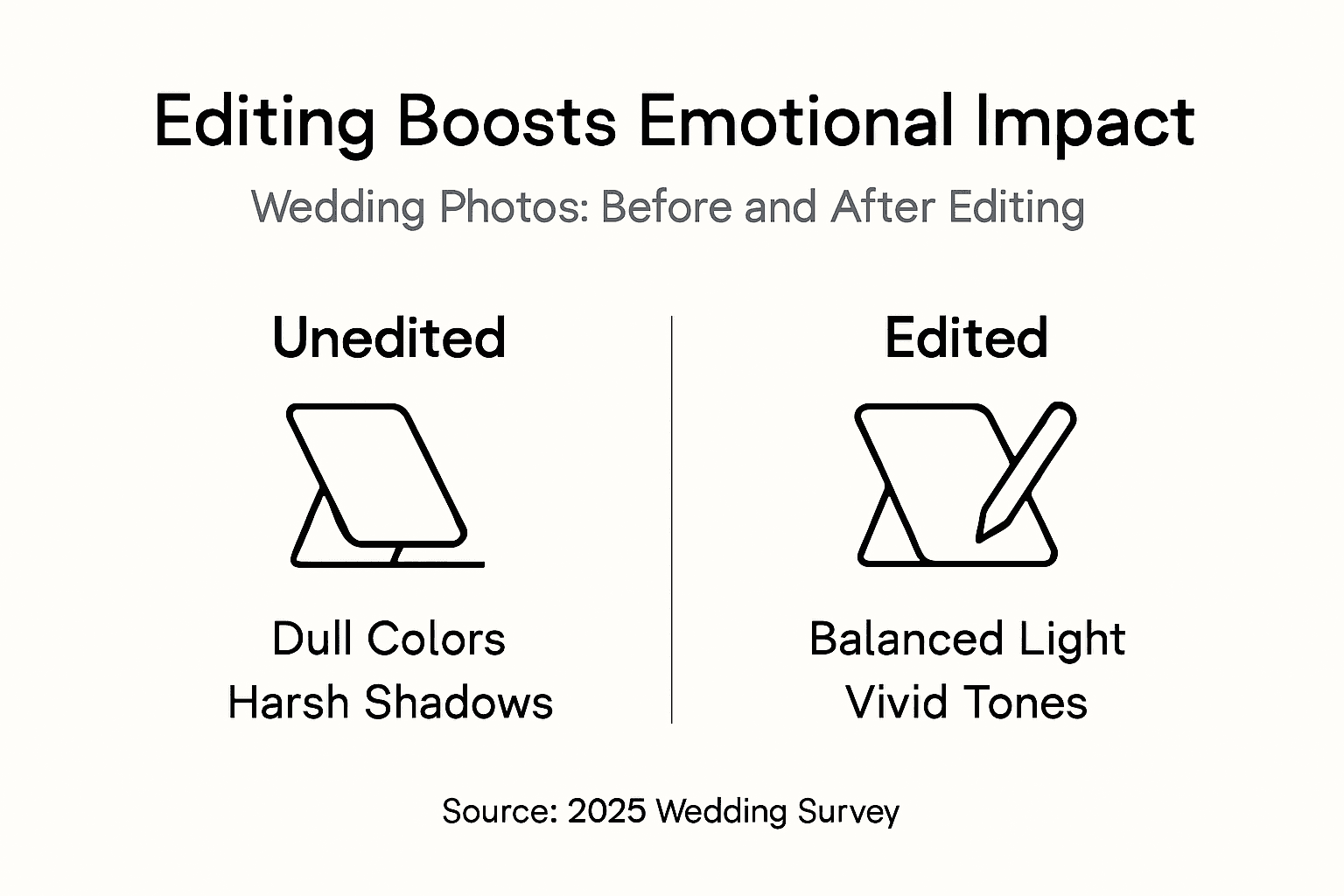
Exposure and tonal balance maintain visual rhythm as viewers move through your album. Too much variation between bright and dark images creates a jarring experience. Balanced editing ensures each photo flows naturally into the next, much like chapters in a book maintain consistent formatting while telling different parts of the story.
Aspect | Unedited Album | Cohesively Edited Album |
Color consistency | Varies wildly by lighting conditions | Unified palette creates emotional continuity |
Exposure balance | Bright overexposed and dark underexposed mix | Consistent exposure maintains visual flow |
Emotional impact | Distracting technical flaws reduce engagement | Clean images amplify genuine feelings |
Professional appearance | Amateur snapshot collection | Curated, gallery worthy presentation |
Creative editing for storytelling highlights emotional peaks in your day. Slightly enhanced contrast during your first kiss or dance makes those moments visually stand out. Softer, brighter editing during getting ready photos conveys anticipation and joy. These subtle variations within a consistent overall style create narrative emphasis.
Your wedding storytelling becomes more powerful when editing removes technical distractions. Viewers focus on your emotions, not on blown out windows or color casts. The photos transport them into your day rather than reminding them they’re looking at photographs.
Pro Tip: Create a Pinterest board showing albums or photo series you love. Share this with your photographer so they understand the level of cohesion and storytelling flow you expect from your edited images.
Popular Wedding Photography Editing Styles
Different editing styles create distinct emotional atmospheres, much like how music genres evoke different feelings. Choosing the right style ensures your photos match the mood and aesthetic you envision for your wedding memories. Three primary styles dominate contemporary editorial wedding style essentials, each offering unique visual characteristics.
Light & Airy editing produces soft, romantic images with bright exposure and pastel tones. This style features:
Bright, slightly overexposed highlights that create an ethereal glow
Soft shadows with minimal contrast
Desaturated or pastel color palettes
Emphasis on whites, creams, and light tones
Dark & Moody editing adds dramatic depth through rich contrast and saturated colors. Characteristics include:
Deep shadows that create emotional intensity
Strong contrast between highlights and shadows
Rich, saturated color tones
Emphasis on drama and sophistication
Classic Timeless editing maintains natural balance with true to life colors and moderate contrast. This approach offers:
Natural skin tones without extreme color shifts
Balanced exposure across highlights and shadows
True to life color reproduction
Versatile aesthetic that ages well over decades
Style | Mood | Color Palette | Best For |
Light & Airy | Romantic, soft, dreamy | Pastels, whites, desaturated | Garden weddings, spring celebrations, romantic couples |
Dark & Moody | Dramatic, emotional, intense | Rich jewel tones, deep shadows | Autumn/winter weddings, dramatic venues, artistic couples |
Classic Timeless | Elegant, natural, balanced | True to life, neutral tones | Traditional ceremonies, couples wanting versatile longevity |
Consider your venue and season when selecting a style. Light & Airy works beautifully for outdoor spring weddings but might feel disconnected from a Gothic cathedral ceremony. Dark & Moody enhances autumn colors and dramatic architecture but could overwhelm a bright beach wedding.
Your personal aesthetic matters most. If your home decor favors bright, minimalist spaces, Light & Airy photos will integrate beautifully. If you prefer rich colors and dramatic art, Dark & Moody might resonate more. Classic Timeless offers flexibility for couples who want photos that work in any setting.
Wedding Photo Editing Workflow and Time Investment
Understanding the professional editing process helps you appreciate the skill and time investment behind your final images. Editing workflows typically involve culling, batch editing, individual refinement and exporting, taking 10 to 40 hours per wedding depending on image volume and complexity. This significant time commitment reflects the craftsmanship required to transform thousands of raw files into a polished collection.
The professional workflow follows these sequential steps:
Culling images to select the best shots: Photographers review 2,000 to 4,000 raw images, eliminating duplicates, blinks, and technically flawed photos. This reduces the set to 400 to 800 keeper images that tell your story most effectively.
Applying batch edits using presets for efficiency: Photographers apply their signature style through custom presets that adjust exposure, contrast, and color across similar lighting situations. This creates baseline consistency while preserving time.
Individual image refinements for quality and consistency: Each selected photo receives individual attention for fine tuning. Photographers adjust specific areas, correct remaining color casts, and ensure every image meets professional standards.
Exporting final images in client preferred formats: Edited photos are exported in high resolution for printing and web optimized versions for sharing online. This step includes file organization and wedding photo delivery process preparation.
The time range of 10 to 40 hours varies based on several factors. A small intimate wedding with 300 photos might require 10 to 15 hours. A full day celebration producing 800 images could demand 30 to 40 hours. Complex lighting situations, multiple venues, and detailed retouching requests all extend editing time.
Many photographers now integrate AI tools for initial adjustments, but the artistic vision still requires human judgment. AI can suggest exposure corrections or identify faces for priority editing, but it cannot make creative decisions about mood, storytelling emphasis, or stylistic consistency.
Following a structured photography workflow tips approach ensures quality remains high across hundreds of images. Photographers often edit in multiple sessions to maintain fresh perspective and catch inconsistencies that fatigue might otherwise miss.
Pro Tip: Understand that faster delivery doesn’t mean better quality. A photographer promising 48 hour turnaround likely uses heavy automation with minimal individual attention. Quality editing takes time, typically 4 to 8 weeks for full wedding delivery.
Preserve Your Wedding Memories with Professional Editing
Now that you understand how editing transforms raw captures into emotionally resonant memories, choosing a photographer who excels at both documentation and post production becomes essential. Professional photographers in your region combine documentary style shooting with sophisticated editing expertise to deliver albums that authentically capture your love story.
If you’re planning a celebration in the Midlands, experienced Derbyshire wedding photographer services offer the documentary approach and editing finesse needed to preserve genuine moments. Similarly, Staffordshire wedding photographer expertise ensures your photos receive the time and artistic attention they deserve. Couples in neighboring counties can explore Worcestershire wedding photographer options that maintain the same commitment to storytelling through both capture and editing.
Explore portfolios showing complete weddings, not just highlight reels. This reveals consistency across different lighting conditions and how editing maintains cohesion throughout the day. Book a consultation to discuss editing styles and timelines, ensuring your photographer’s approach aligns with your vision for preserving these irreplaceable memories.
Frequently Asked Questions About Wedding Photo Editing
Does editing change the authenticity of wedding photos?
Professional editing enhances rather than fabricates authenticity by removing technical barriers that distract from genuine emotions. Proper editing corrects camera limitations like poor white balance or underexposure while preserving the real moments and feelings from your day. The goal is revealing truth more clearly, not creating fiction.
How long does professional wedding photo editing usually take?
Most professional photographers require 4 to 8 weeks to fully edit and deliver wedding photos, reflecting the 10 to 40 hours of actual editing work involved. Rushing this process compromises quality and consistency. Faster turnaround often means less individual attention to each image and reduced artistic refinement.
Can editing fix all issues in photos?
Editing has limits and cannot resurrect fundamentally flawed images. Severely out of focus shots, extreme motion blur, or completely missed moments cannot be fixed in post production. However, editing excels at correcting exposure issues, color casts, minor distractions, and enhancing properly captured images to their full potential.
What editing style is best for a romantic wedding?
Light & Airy editing typically suits romantic weddings best with its soft, dreamy aesthetic and pastel color palette. However, Classic Timeless editing also works beautifully for romance by maintaining natural, warm tones without dramatic intensity. Consider your venue, season, and personal aesthetic when making this choice.
Why is consistent editing important in an album?
Consistent editing creates visual flow that makes your album feel professionally curated rather than like a random snapshot collection. Unified color grading, exposure balance, and tonal consistency guide viewers emotionally through your story without jarring technical variations that break immersion and reduce the overall impact of your memories.
Recommended


Comments