
Why full day coverage matters for your wedding

TL;DR:
Full-day wedding photography captures every moment from preparations to the final dance, providing a complete story of the day.
Shorter packages suit small, simple weddings, while full-day coverage benefits larger or multi-venue events.
Full-day wedding photography coverage is defined as having a photographer present from the moment you begin getting ready through to the final dances of the evening reception. This approach gives you a complete, uninterrupted record of your wedding day, not just the headline moments. Couples who choose all-day coverage consistently report a more relaxed experience, because there is no pressure to rush through portraits or skip candid moments between events. Understanding why full day coverage works so well starts with knowing what it actually includes and what you stand to lose without it.
What are the key benefits of full-day wedding photography coverage?
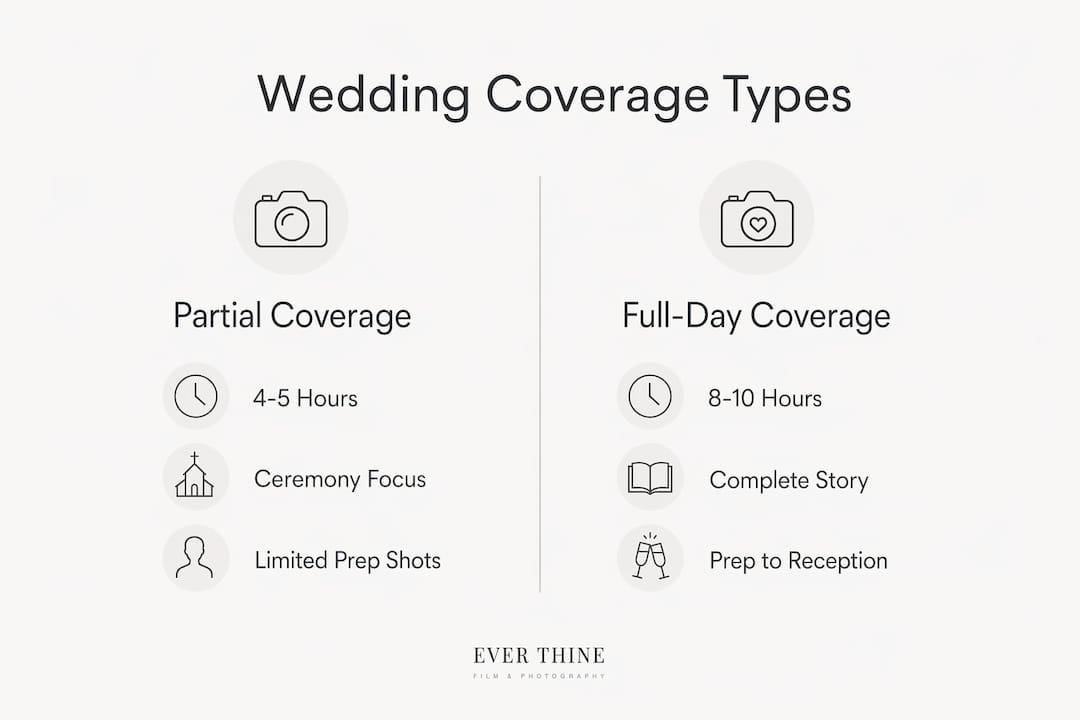
Full-day coverage transforms your wedding photographs from a highlight reel into a genuine story. Full-day coverage typically runs 8–10 hours, starting with preparation and finishing as the reception winds down. That duration is long enough to capture hair and makeup, the first look, the ceremony, couple portraits, speeches, and dancing, all without feeling rushed.
The single biggest advantage is pace. Full-day coverage reduces pressure on couples, creating breathing room in the schedule that leads to more natural, unposed images. When your photographer is not racing against a clock, they can wait for the light to shift, follow a quiet moment between your grandmother and your partner, or catch the laughter that breaks out after a speech. Those are the photographs couples treasure most.
Key benefits of all-day coverage include:
Complete storytelling. Every stage of the day is documented, from the nervous excitement of getting ready to the joy of the last dance.
Flexibility for delays. Weddings rarely run exactly to schedule. Full-day coverage absorbs delays without sacrificing important moments.
Candid moments between events. The quieter gaps between formal events are where authentic emotional moments are most likely to appear.
Multiple locations. If your ceremony and reception are at different venues, full-day coverage handles the transition without cutting anything short.
Reduced decision fatigue. You do not need to choose which parts of your day to prioritise. Everything is covered.
Pro Tip: Ask your photographer to build at least 20 minutes of unscheduled time into your timeline. That buffer is where the most memorable candid shots tend to happen.
When might couples prefer shorter photography coverage instead?
Shorter photography packages are the right choice for a specific type of wedding. Smaller, intimate weddings with fewer events can be well served by focused coverage of four to five hours, capturing the essential moments without the cost or length of a full day. A registry office ceremony followed by a private dinner, for example, may not need ten hours of photography.
Budget is the most common reason couples consider shorter packages. A four or five hour package still covers the ceremony, formal portraits, and the beginning of the reception. For couples whose priority is a handful of beautiful images rather than a full narrative, that can be entirely sufficient.
Shorter coverage also suits couples who find the presence of a camera intrusive. Some people feel more relaxed knowing the photographer will leave after the ceremony and portraits, allowing the rest of the evening to feel entirely private.
Scenarios where shorter packages make sense:
Intimate weddings with fewer than 30 guests and a single venue
Ceremonies with no formal reception or evening event
Couples with a tight budget who want quality over quantity
Elopements or destination micro-weddings with a simple timeline
Weddings where the couple prefers minimal photography presence
Coverage tailored to your event always produces better results than a one-size-fits-all package. The key is matching the coverage length to the actual shape of your day.
How to decide if full-day coverage is right for your wedding
The decision comes down to four practical factors: the size of your wedding, the number of locations, the complexity of your timeline, and your personal priorities.
Count your key moments. List every event you want photographed: getting ready, first look, ceremony, couple portraits, family formals, speeches, cake cutting, first dance, and evening dancing. If that list runs to eight or more distinct events, full-day coverage is almost certainly the right choice.
Map your locations. Large or multi-venue weddings strongly benefit from full-day coverage, and experienced photographers often recommend a second shooter for weddings with 150 or more guests. If your ceremony and reception are in different places, factor in travel time and what happens during it.
Think about your wedding size. Eight hours is widely considered the sweet spot for balanced full-day coverage, providing comprehensive documentation while remaining budget-conscious for most weddings. Larger or more complex days may need ten hours or more.
Consider your photography style. Documentary and candid photography, the style practised by Weddingfilmphotography, requires time to unfold naturally. Staged portrait sessions can be completed in two hours. A full day of documentary coverage produces a fundamentally different result.
Plan for the unexpected. Weather delays, a late supplier, or an emotional moment that runs long can all push your timeline back. Full-day coverage absorbs those changes. Shorter packages cannot.
Pro Tip: Share your full wedding timeline with your photographer before booking, not just the ceremony time. A good photographer will tell you honestly whether your day needs four hours or ten.
Consulting your photographer directly is the most reliable way to make this decision. Weddingfilmphotography offers personalised package advice based on your specific timeline and venue, rather than applying a standard template.
What does full-day coverage include compared to partial coverage?
Full-day coverage follows a clear structure. Understanding that structure helps you see exactly what you gain and what you give up with a shorter package.
A typical full-day schedule runs as follows: preparation (hair, makeup, and dressing), first look or pre-ceremony portraits, the ceremony itself, family formals, couple portraits, cocktail hour, reception entrance, speeches, first dance, cake cutting, and evening dancing. Deliverables in higher-tier packages often extend beyond coverage hours to include edited digital images, a second shooter, an engagement session, and a printed album.

The “breathing room” between formal events is where documentary photography earns its value. A photographer who arrives at 9:00 AM and leaves at 7:00 PM has time to photograph the quiet moments: your mother fastening your dress, your partner reading your vows for the first time, the best man’s nervous laugh before the ceremony. Fewer hours force photographers to move quickly from moment to moment, which reduces the authenticity of the images. Rushed coverage produces technically correct photographs. Full-day coverage produces photographs that feel true.
Feature | Partial coverage (4–5 hours) | Full-day coverage (8–10 hours) |
Getting ready | Not included | Included |
Ceremony | Included | Included |
Couple portraits | Limited | Full session |
Speeches and toasts | Sometimes included | Included |
Evening dancing | Not included | Included |
Candid moments | Fewer opportunities | Extensive |
Schedule flexibility | Minimal | High |
Second shooter option | Rarely included | Often available |
Professional wedding photography packages vary considerably in what they bundle with coverage hours. Always confirm exactly which events and deliverables are included before signing a contract.
Key takeaways
Full-day wedding photography coverage is the most effective choice for couples who want a complete, authentic record of their day, from preparation through to the final dance.
Point | Details |
Coverage duration | Full-day packages typically run 8–10 hours, covering all key events from preparation to reception end. |
Pace and authenticity | Longer coverage removes time pressure, producing more natural and candid images throughout the day. |
When shorter works | Intimate weddings with simple timelines and fewer than 30 guests can be well served by four to five hours. |
Complexity drives length | Multi-venue weddings or those with 150 or more guests almost always benefit from full-day coverage and a second shooter. |
Tailor to your day | Match coverage length to your actual timeline; consult your photographer before deciding. |
The honest truth about coverage length
Couples often ask me whether they really need a full day, or whether they are simply being upsold. My honest answer is that it depends entirely on the shape of your wedding, and any photographer who gives you a different answer without knowing your timeline is guessing.
What I have observed, again and again, is that the photographs couples regret not having are almost always from the parts of the day they did not cover. Nobody ever says they wished they had fewer photographs of their mother’s face during the ceremony, or fewer shots of their friends dancing at midnight. The regret runs the other way.
The misconception I encounter most often is that full-day coverage means a photographer following you everywhere with a camera in your face. Documentary-style coverage is the opposite of that. A skilled photographer working in that style is largely invisible. You forget they are there, and that is precisely when the best images happen.
My advice is to build your timeline first, then choose your coverage length. If your day genuinely ends at 6:00 PM with no evening reception, you do not need ten hours. But if you have a full evening ahead and you are cutting coverage to save money, you will feel that decision when you look at your photographs a year later.
— Ever
Weddingfilmphotography: full-day coverage across the Midlands
Weddingfilmphotography offers full-day and tailored wedding photography and film packages across Derbyshire, Staffordshire, and Worcestershire, working in a documentary style that suits couples who want natural, unobtrusive coverage.
[
Whether your wedding is an intimate gathering or a large multi-venue celebration, the team builds packages around your actual timeline rather than a fixed template. Couples across the region trust Weddingfilmphotography for wedding photography in Derbyshire and beyond, with coverage options that include second shooters and cinematic film alongside photography. Contact the team directly for a personalised consultation and timeline review before you book.
FAQ
What does full-day wedding photography coverage include?
Full-day coverage typically spans 8–10 hours and includes preparation, ceremony, couple portraits, speeches, and evening dancing. Higher-tier packages often add a second shooter, edited digital images, and a printed album.
How many hours of wedding photography do most couples need?
Eight hours is considered the sweet spot for most weddings, covering all key events from getting ready through to the main reception. Larger or multi-venue weddings may need ten hours or more.
Is full-day coverage worth the extra cost?
Full-day coverage removes time pressure and allows photographers to capture candid, unposed moments that shorter packages miss. For couples with a full evening reception, the additional cost is consistently justified by the quality and completeness of the images.
When is shorter wedding photography coverage a better choice?
Shorter packages of four to five hours suit intimate weddings with simple timelines, single venues, and fewer than 30 guests. A registry office ceremony with a private dinner is a good example of a day that does not require full-day coverage.
Does full-day coverage mean the photographer is always visible?
Documentary-style photographers work unobtrusively, spending much of the day in the background rather than directing shots. The goal is to capture the day as it happens, not to stage it.
Recommended


Comments