
Registrar Approved by Dawn & Carl: Civil Partnership Photos in England
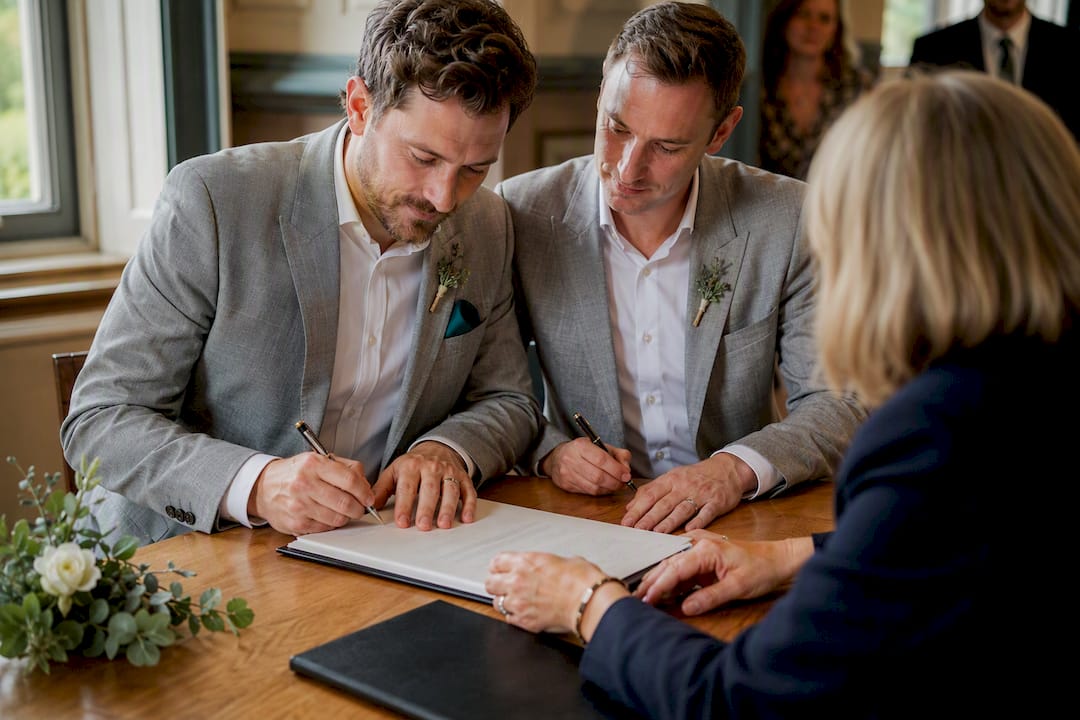
Hire an experienced documentary-style photographer who understands registrar rules and will liaise with the register office or venue on your behalf. Weddingfilmphotography is one option for couples looking for local photographers across England. Permissions vary by ceremony type and venue, so confirming the details before the day matters more than anything else on your planning list.
TL;DR:
Civil partnership photography is highly dependent on the venue, with register offices typically requiring discreet, no-flash shots and approved venues offering more flexibility.
Photographers should have specific experience with register office and civil partnership work, including understanding positioning, equipment restrictions, and liaising with registrar staff beforehand.
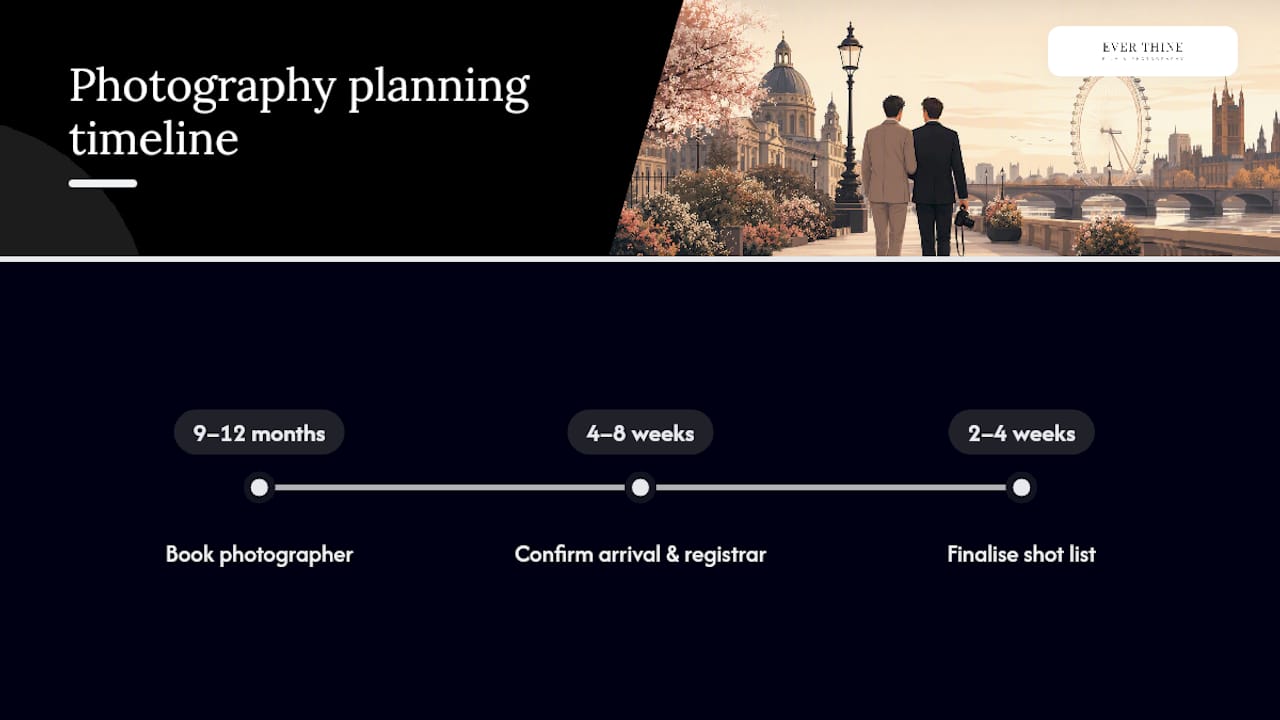
Booking should occur 9 to 12 months in advance, with final details confirmed 4 to 8 weeks before, and shot lists finalized 2 to 4 weeks prior to ensure proper coverage.
Most couples will want a mix of documentary, formal portrait, and social media images, with clear expectations on deliverables and turnaround times established upfront.
Discreet guest photography is usually permitted but requires prior briefing to prevent disruptions during the legal signing and ceremony process.
Table of Contents
What is civil partnership photography and why do the rules differ?
Civil partnership photography covers everything from the legal signing itself to portraits, candid reactions and social media content captured around it. Unlike a typical event, the ceremony has a strict legal core, and that changes what a photographer can and cannot do while it happens.
A civil partnership is formed in law the moment both partners sign the civil partnership schedule in front of a registrar and two witnesses, under the Civil Partnership Act 2004. No words need to be spoken for it to be legally binding. Any speeches, readings or celebratory elements around that signing are entirely optional extras, which is why two couples can have wildly different-looking days despite signing an identical document.
Gov confirms ceremonies happen either at a register office or at a venue approved by the local authority, and you need to settle on which before giving notice. That choice is the single biggest factor in how much photography freedom you’ll get.
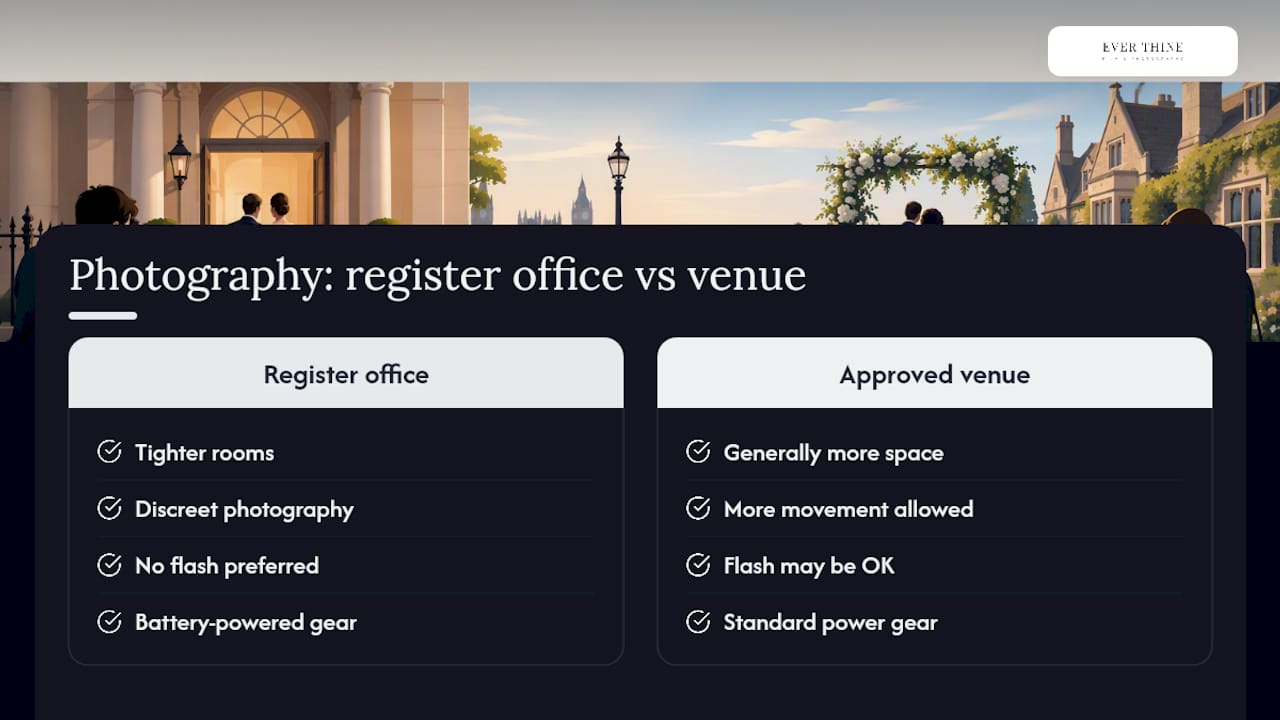
Register offices tend to run tighter rooms. Local packs, such as the one from Milton Keynes, typically ask for discreet photography with no flash, battery-powered equipment only, and positioning agreed with the registrar in advance. Approved venues generally allow more room to move, but “generally” is doing a lot of work in that sentence. Always confirm the venue’s own policy and get your registrar liaison sorted before the day, not on it.
What should you ask a photographer before you book?
A photographer who has never stood inside a register office signing room will not know the unwritten rules, so ask directly rather than assuming. Building this into your first conversation saves an awkward moment on the day itself.
Cover these points before you sign a contract:
Experience: ask specifically about register-office and civil partnership work, not just weddings generally, and request examples.
Positioning and equipment: where will they stand during the signing, will they use flash, and how do they handle the schedule itself to avoid capturing personal data in a close-up shot.
Deliverables: how many edited images, whether social-ready files are included, turnaround time, and total fees.
Contract terms: deposit amount, cancellation policy, and confirmation the photographer carries insurance.
Registrar contact: will they get in touch with the register office or venue beforehand, and do they need to bring ID or paperwork on arrival.
That last point trips people up more than any other. A full checklist of photographer questions is worth working through properly rather than relying on memory during a busy planning period, and it pays to think through how you’ll coordinate with your photographer on logistics like arrival time and who briefs the registrar.
When should you book your photographer?
Book as early as you reasonably can to benefit from specialised Photography SEO Services that help photographers get discovered and booked for shoots. Council planning checklists, including Oxfordshire’s ceremony guidance, recommend starting supplier bookings, photography included, within a 9 to 12 month planning window. Photographers with strong reputations for discreet, documentary-style work get booked out fastest, especially for popular Saturday dates.
Once booked, aim to confirm the finer details 4 to 8 weeks ahead: exact arrival time, who’s contacting the registrar, and whether the venue has specific restrictions your photographer needs briefing on. Lock the final shot list 2 to 4 weeks out, once your running order is settled.
If you’re doing a two-part ceremony, legal signing at the register office followed by a separate celebration at an approved venue, split your photography brief accordingly. The York ceremonies checklist points to this two-part structure as a practical way to get a low-key legal signing and a more relaxed, photography-friendly celebration afterwards. Tell your photographer which part matters most for coverage time, because the two venues will rarely offer equal creative freedom.
How do you get discreet, compliant images on the day?
Good register-office photography looks effortless precisely because nobody in the room notices it happening. That takes preparation, not luck.
Follow this rough running order:
Arrive early and introduce your photographer to the registrar. A brief hello lets the registrar suggest the best spot before anyone’s under pressure.
Keep equipment minimal and battery-powered. Continuous lighting rigs, stands and trailing cables are usually not welcome in a signing room.
Prioritise the signing itself, then reactions. The pen touching paper, a glance between partners, a witness smiling. These small moments carry more weight than posed shots.
Hold formal portraits for immediately after. A short window straight after the signing works best for family groups and couple portraits, before anyone drifts off.
Capture a couple of vertical clips or images for social media while everyone is still dressed up and in one place.
Registrars can and will ask a photographer to stop if movement or flash disrupts proceedings, a point Gloucestershire’s photography policy states plainly. Brief your guests too. If Auntie Jean is planning to stand up with a phone the moment pens come out, that’s worth heading off in advance.
Pro Tip: If you want a genuinely close-up shot of the signed schedule, ask in advance. Many registrars will happily reposition or partly cover the document so you get the detail shot without any personal data showing in frame.
What styles and deliverables should you expect?
Most couples end up with a blend of three distinct styles rather than picking just one, and knowing the difference helps you brief your photographer accurately.
Documentary or candid coverage captures the day as it unfolds, unposed reactions, the walk to the register office, small interactions between guests. This is where the emotional weight of a civil partnership tends to live, because it’s unscripted.
Formal portraits are the deliberately posed images: the couple together, family groupings, witnesses. These take minutes rather than hours in a register office setting, so agree the shot list beforehand so nobody’s improvising a group photo list on the pavement outside.
Social media content has become its own deliverable in the last few years. Same-day edited images and short vertical clips, ready to post before the celebration is even over, are now a common request rather than an add-on. Deliverables typically include an edited digital gallery, a smaller batch of quick-turnaround social files, and sometimes short-form video alongside stills. Confirm numbers and turnaround times in writing rather than assuming they match what a wedding photographer might offer.
Does a civil partnership carry different legal weight than a wedding?
A civil partnership carries the same legal recognition as marriage in England, but the ceremony that creates it is structurally different, and that difference shapes photography more than couples expect.
There’s no legal requirement for vows, readings or spoken commitment. The Civil Partnership Act 2004 sets the bar at signing the schedule in front of a registrar and two witnesses. That means the “ceremony” a photographer is often hired to cover can, legally speaking, be over in minutes. Everything else, readings, music, a walk down an aisle, is added by choice, not requirement.
Some couples choose a signing-only appointment specifically because they want something quiet and private. Surrey County Council’s guidance notes these appointments often limit attendance to the couple and two witnesses, meaning photography can be restricted entirely or reduced to a single, very still shot. If that’s not what you want, the two-part structure mentioned earlier gives you both the quick legal signing and a fuller celebration where photography has more room to breathe.
Vow renewals sit in a different category again. They have no legal standing at all, so restrictions loosen considerably. A vow renewal held for a civil partnership anniversary can be photographed however the couple likes, since no registrar or statutory schedule is involved.
What personal or cultural factors shape the photography style?
Civil partnerships are chosen by both same-sex and opposite-sex couples in England, often for reasons that have nothing to do with romance alone, some prefer the legal framework’s history, others simply don’t want the word “marriage” attached to their relationship. That variety in motivation tends to produce more varied photography briefs than you’d see at a typical wedding.
Same-sex couples booking civil partnership photography sometimes want visible representation prioritised: images that clearly show two brides or two grooms, shared confidently rather than shot ambiguously. Others actively prefer understated, private coverage, particularly if family attendance is limited or complicated. Neither approach is more valid than the other, and a good photographer asks rather than assumes.
Opposite-sex couples choosing a civil partnership over marriage, an option that’s been available since 2019, sometimes want photography that quietly signals the distinction, less traditional bridal imagery, more focus on partnership and equality as themes. Guest numbers also run smaller on average than at weddings, which changes group portrait planning considerably; fewer relatives to gather, but often more emphasis on the handful of people who matter most.
The common thread across all of this is that briefing matters enormously here. Don’t assume your photographer will guess your preferences from the venue alone.
Dawn & Carl’s perspective: what we’ve learned in register offices
We’ve spent years photographing civil partnerships across Staffordshire, Derbyshire and Cheshire, and the register-office sessions taught us more about restraint than any approved-venue wedding ever has. One signing that stands out was a couple who wanted a genuine close-up of the schedule itself. We asked the registrar beforehand rather than on the day, and she simply repositioned the paperwork so we got the shot without a single private detail visible.
That’s the pattern we’d point every couple towards: ask early, ask specifically, and let the registrar tell you what’s possible rather than guessing. Register offices and approved venues each demand a different rhythm, and adapting to that rhythm, not fighting it, is what produces images couples actually treasure years later.
— Dawn & Carl
How Weddingfilmphotography can help you plan the day
If you want a documentary photographer who understands register-office etiquette rather than one learning the rules on your wedding day, Weddingfilmphotography offers tailored services. The team emphasizes registrar-liaison groundwork in every civil partnership booking to ease planning on the day.
[
Enquire and you’ll get a planning call to talk through your ceremony type, whether that’s a signing-only appointment, a full approved-venue celebration, or the two-part structure many couples choose. Weddingfilmphotography handles registrar or venue liaison ahead of time, shares sample galleries so you know exactly what you’re getting, and keeps contract and insurance details straightforward from the outset. Alongside documentary wedding photography, the team offers cinematic videography and same-day content creation from £600 for couples who want social-ready clips before the celebration even winds down. Coverage extends beyond Staffordshire into Derbyshire, Worcestershire and Warwickshire. Get in touch to check your date and talk through what your particular ceremony needs.
Sources
FAQ
Can you take photos during a civil partnership signing?
Yes, most register offices allow discreet photography, usually without flash and with positioning agreed with the registrar beforehand, as outlined in Milton Keynes’ civil partnership pack. Registrars can restrict or stop photography if it disrupts the ceremony.
What’s the difference between a signing-only appointment and a full ceremony for photography?
A signing-only appointment often limits attendance to the couple and two witnesses, which restricts photography significantly, as Surrey County Council explains. A full ceremony at an approved venue generally allows fuller documentary coverage.
How much does civil partnership photography cost with Weddingfilmphotography?
Wedding and civil partnership photography pricing is available on request directly through Weddingfilmphotography, while same-day content creation packages start from £600 as a one-off fee. Get in touch for a quote tailored to your ceremony type and venue.
When should we book our civil partnership photographer?
Book as early as possible, ideally within the 9 to 12 month planning window suggested by Oxfordshire’s ceremony guidance. Confirm final details 4 to 8 weeks before the day and lock your shot list 2 to 4 weeks out.
Can guests take photos too, or should we rely only on our photographer?
Register offices and approved venues generally allow guest photography but ask everyone to remain discreet and avoid disrupting the signing. Briefing guests in advance, alongside your professional photographer, helps avoid the ceremony being interrupted by phones going up at the wrong moment.
Recommended

Comments