
UK Couples' Wedding Photo Rights, Solicitor Guidance and Privacy Tips

Your photographer owns the copyright in your wedding photos, not you. Under the Copyright, Designs and Patents Act 1988, copyright belongs to whoever created the image the moment the shutter clicks, and paying an invoice doesn’t change that. What you normally receive instead is a licence to use the images personally. If you want actual ownership, you need to ask for a written assignment before the wedding, not after.
TL;DR:
Photographers automatically retain copyright ownership of wedding photos unless a written assignment transfers it to the client before the event.
The standard license granted to couples usually covers personal use, including printing, sharing with family, and posting on private social media, but prohibits commercial and resale activities.
Most wedding contracts should clearly specify copyright ownership, scope of permitted use, and any portfolio or social media rights to avoid disputes.
Asking for a written license or assignment upfront, as well as privacy restrictions, minimizes misunderstandings and protects your digital privacy and image rights.
Photographers often rely on their portfolio images for marketing, but couples can request embargoes, privacy controls, or exclusions for sensitive images in advance.
Table of Contents
Wedding photo ownership UK: what the CDPA 1988 actually says
Copyright in the UK arises automatically the second a photograph is taken. There’s no registration process, no form to fill in, no fee to pay. This surprises a lot of couples who assume that because they’ve booked and paid for a photographer, the resulting images belong to them outright.
They don’t. Section 11 of the CDPA 1988 states that the author of a work is its first owner, and in wedding photography, the author is the person who took the picture. That’s the photographer, almost every time. Gov confirms this is the statutory default, and that commissioning or paying for photography doesn’t transfer copyright ownership to the client.
There are exceptions, though they rarely apply to weddings:
Work created by an employee during their employment usually belongs to the employer, not the individual photographer.
Crown copyright covers certain government-commissioned works.
A historic quirk under the pre-1989 law meant commissioned photographs sometimes defaulted to the client, but that rule was swept away when the 1988 Act came into force on 1 August 1989, and it has no bearing on weddings shot today.
Copyright doesn’t last forever, but it lasts a long time. Photographic copyright generally runs for many decades after the death of the photographer, which means your wedding album could still be under copyright protection well into the future. That duration matters if you’re thinking long term about family archives, reprints, or passing images down through generations.
What your licence actually lets you do
Most wedding contracts give you a personal use licence rather than the copyright itself. It’s a narrower right, but for the vast majority of couples, it covers everything they actually want to do with their photos.
A typical personal licence permits:
Printing photos for your home, framing them, and building physical albums.
Sharing images privately with family and friends, including on personal social media accounts.
Ordering additional prints or products through the photographer’s own print service.
What it usually doesn’t allow is just as important to understand:
Selling or sublicensing the images to anyone else, including stock photo sites.
Using photos in paid advertising, product packaging, or other commercial contexts.
Entering images into photography competitions without the photographer’s written consent, since doing so can breach both copyright and the photographer’s professional interests.
File type and delivery method also shape what you can realistically do. A high-resolution digital file behaves differently from a low-resolution web preview, and some galleries limit downloads or watermark images specifically to keep casual sharing within the bounds of the licence. GOV.UK’s guidance makes clear that licence terms vary contract to contract, so read the small print rather than assuming.
Pro Tip: If you’re planning to use wedding photos commercially later, such as in a business launch or a magazine feature, flag it with your photographer before the wedding. Retroactively asking for commercial rights almost always costs more and sometimes isn’t possible at all.
Reading your contract: the clauses that actually matter
Before you sign anything, work through the document with this checklist in hand. It takes ten minutes and can save considerable disappointment later.
Copyright clause. Confirms who owns the copyright, almost always the photographer, and should state this in plain terms rather than leaving it implied.
Licence scope. Spells out exactly what you’re permitted to do: print, share privately, post to social media, and nothing beyond that unless stated.
Assignment clause (if any). Some contracts include an option to buy full copyright, usually at a premium. Check whether this exists and what it costs.
Portfolio use. Most photographers reserve the right to use your images in their own marketing, on their website, or in competition entries. This is standard, but you can ask for limits.
Social media consent. Look for whether the photographer needs your permission before posting, and whether you can withdraw that consent later.
Third-party sharing. Covers whether images can be passed to venues, suppliers, or wedding blogs, and under what conditions.
If you want anything different from the standard terms, say so before booking. A well-drafted contract should set out clearly who owns what and what you’re allowed to do with the images, and any bespoke agreement, whether it’s a portfolio embargo or an expanded personal licence, belongs in a written schedule or signed addendum attached to the main contract. A verbal promise from a photographer, however well meant, won’t hold up if a dispute ever arises.
Pro Tip: Ask your photographer to email you a written summary of any verbal agreement, even a small one. A two-line email confirming “no wedding photos on your public portfolio for 12 months” is enforceable in a way that a chat at your final meeting simply isn’t.
Assignment vs licence: buying broader rights
An assignment transfers copyright ownership itself, not just permission to use the images. Under UK law, an assignment must be in writing and signed to be valid; a handshake or a friendly email exchange won’t achieve it.
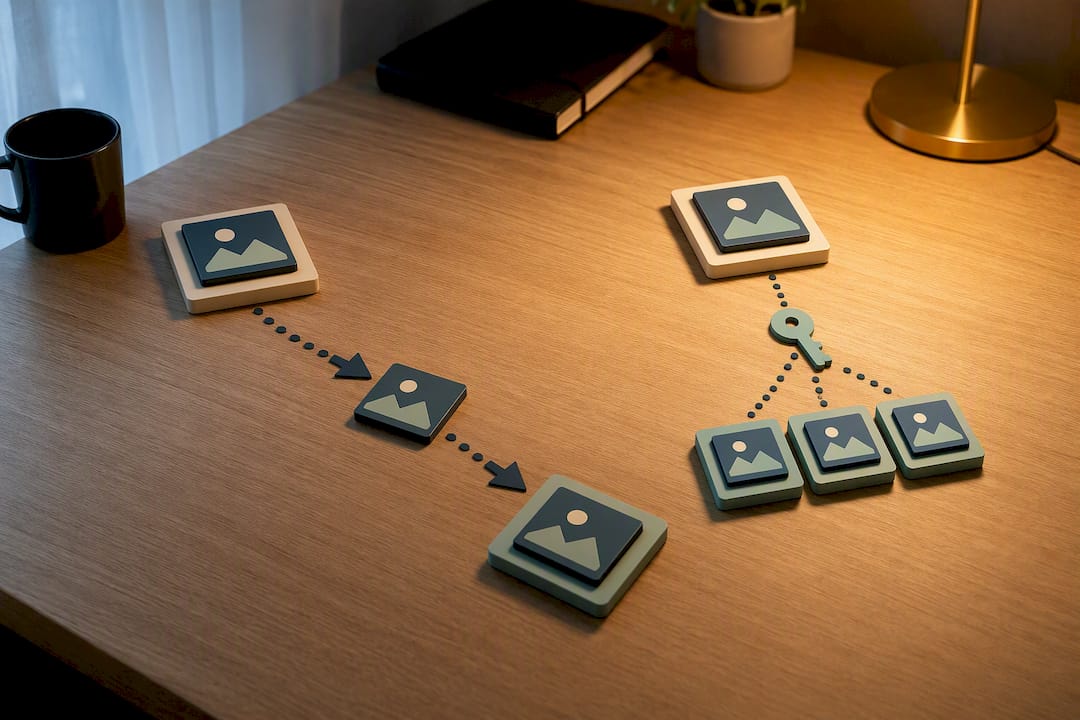
Licences, by contrast, are flexible and usually far cheaper. A photographer can tailor a licence to almost any scenario without giving up the underlying copyright, which is why most wedding contracts stick with licensing rather than assignment.
There are trade-offs worth weighing before you ask for full ownership:
Assignment typically costs more, since photographers price it to reflect the loss of their own future use of the images.
Once assigned, the photographer usually can’t use those images in their portfolio or marketing without separate permission from you.
Moral rights, such as the right to be credited as the photographer, remain with them regardless of assignment unless they explicitly waive that right in writing, as set out in the CDPA 1988.
Assignment tends to make sense when you have a genuine commercial reason: reselling images, publishing in a magazine, or building a business around your wedding content. For the ordinary couple who just wants prints, an album, and the freedom to post on Instagram, a well-worded licence covers everything you need without the extra cost.
Your right to privacy over public exhibition
Copyright ownership isn’t the only legal protection in play. As the person who commissioned private, domestic photographs, you also hold a statutory right that stops anyone, including the photographer, from publicly exhibiting or issuing copies of those images without your permission. This sits alongside copyright rather than replacing it, as government guidance on assignment of copyright explains.
In practice, this means you have real leverage to protect your privacy even though the photographer owns the copyright. You can reasonably ask for:
An embargo period before any images appear on the photographer’s public portfolio or social media.
A restricted or password-protected online gallery, rather than a fully public one.
Specific images excluded from portfolio or marketing use altogether, particularly ones involving children or sensitive family moments.
Delivery practices matter here too. A private, passworded gallery with expiry dates and download limits protects your privacy far better than an open link shared casually over email.
If your wedding photos are used without permission
Act quickly if you spot your images being used somewhere you didn’t authorise, whether that’s a stranger’s Instagram, a wedding blog, or a commercial advert.
Check your contract first. Confirm exactly what licence terms apply and whether the use genuinely breaches them.
Contact whoever’s using the image directly. Often a polite message requesting removal or proper credit resolves things without escalation.
Request a formal takedown. Most platforms have a copyright reporting process, and photographers can invoke this on your behalf since they typically hold the copyright.
Escalate if needed. Formal remedies include a solicitor’s letter, a court injunction, or a claim for damages, though these tend to be reserved for clear commercial infringement rather than a single unauthorised repost.
Pro Tip: Screenshot everything the moment you find it, including the URL, date, and any caption. Evidence has a habit of disappearing once someone realises they’ve been caught, and a solicitor will ask for exactly this before doing anything else.
Practical wording: what to ask your photographer for
Small, specific requests work far better than vague ones. Instead of “can I have more rights”, try asking for concrete clauses you can point to later.
A licence clause specifying “personal, non-commercial use including printing, private social media sharing, and family distribution.”
A time-limited portfolio embargo, such as “images not published on public marketing channels for six months.”
Explicit written consent requirements before any image appears in paid advertising.
On delivery, passworded galleries, sensible download limits, and agreed embargo dates protect your privacy without stopping your photographer from ever showcasing their work. Most photographers rely on portfolio images to book future clients, so a fair compromise, rather than a blanket refusal, usually gets you the best outcome.
Pro Tip: Put embargo and privacy requests in writing before the wedding, ideally as an email you can both refer back to. Asking after delivery puts you in a much weaker negotiating position.
Why photographers keep the copyright, and why that’s not unreasonable
It’s tempting to see copyright retention as photographers being precious about “their” pictures. In reality, a working portfolio is how most wedding photographers get their next booking. Every image in their marketing has to come from somewhere, and that somewhere is previous weddings they’ve shot.
None of that means your privacy wishes don’t matter since photographers often rely on portfolio images for marketing. Good photographers will happily agree to embargoes, restricted galleries, or excluding specific images from public use, provided you ask clearly and put it in writing. The friction usually isn’t about who owns what; it’s about assumptions never being discussed until after the contract’s signed. Raise it early, and most of this resolves itself without any tension at all.
— Dawn & Carl
Clear terms from the start with a professional wedding photography service
Knowing your rights is one thing; booking a photographer who discusses licence terms openly before your wedding day is another. A professional wedding photography service discusses personal use licences, portfolio embargoes, and privacy preferences as a standard part of the planning conversation, not an afterthought raised after delivery.
[
Whether you’re booking wedding photography, cinematic videography, or same-day wedding content creation from £600 one-off, you can request specific wording on licence scope, social sharing consent, or a written assignment where that genuinely suits your plans. Couples across Staffordshire and the wider West Midlands can raise these points directly during a planning call, well before contracts get signed. Get in touch to talk through your wedding date and the licence terms that matter most to you.
Sources
FAQ
Do I own the rights to my wedding photos?
No, not by default. The photographer owns the copyright under the CDPA 1988, and you typically receive a licence for personal use such as printing and private sharing rather than the copyright itself.
Can a photographer use my photos without my permission in the UK?
For portfolio and marketing use, generally yes, since they own the copyright, though your commissioner’s privacy right can restrict public exhibition of private, domestic images without your consent. For commercial use beyond that, most contracts require your separate agreement.
Who legally owns a photograph?
Under Section 11 of the CDPA 1988, the person who takes the photograph is the first legal owner of its copyright, with limited exceptions for employee-created or Crown works.
If I hire a photographer, who owns the photos?
The photographer usually retains copyright even after you’ve paid for their services, as confirmed in GOV.UK’s copyright guidance. You receive a licence to use the images personally, and full ownership only transfers if both parties agree a written assignment.
Recommended

Comments