
6–8 Hours: When UK Couples Must Feed Their Wedding Photographer
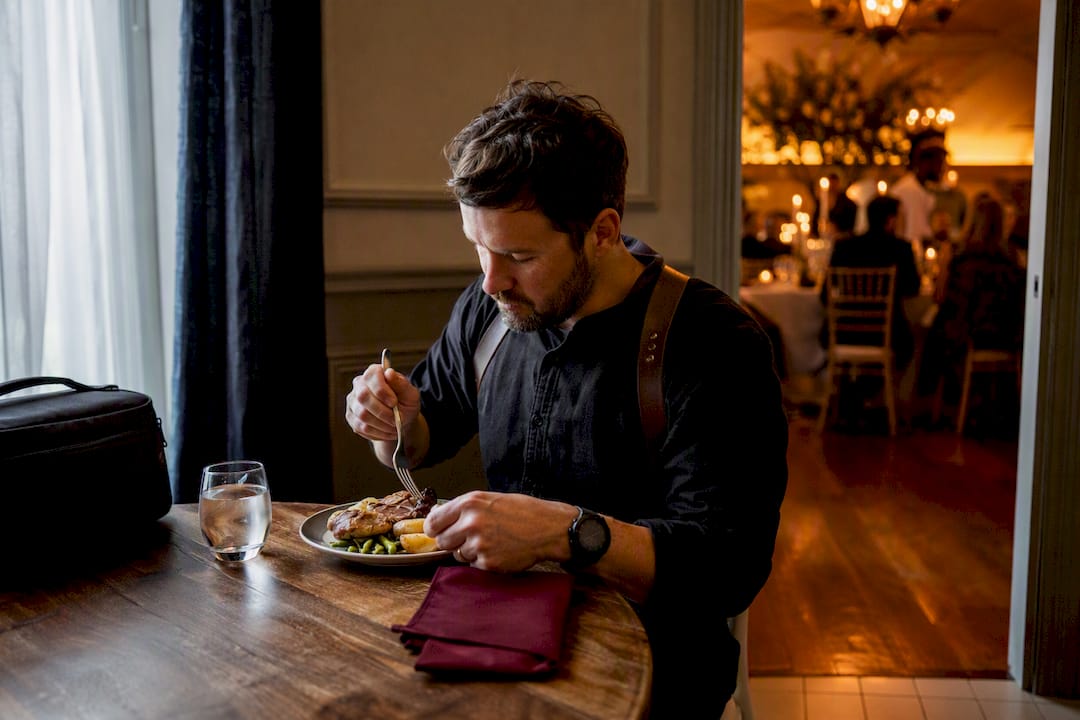
Yes, in most cases, if your photographer is booked for a full day. Anyone covering roughly six hours or more of your wedding needs a proper break and a meal, and most photographers will expect one. For short bookings of just a ceremony or a few hours of reception, feeding them is a kind gesture rather than an obligation. Check your contract first: many photographers already state their meal expectations in writing.
TL;DR:
Photographers booked for more than six hours usually include a meal clause in their contract, so providing food prevents gaps in coverage and maintains photo quality.
Scheduling the meal before key moments like speeches or dancing ensures the photographer captures all important events without interruption.
Opt for simple, budget-friendly supplier meals such as boxed lunches, buffet portions, or hot dishes, and clearly communicate dietary needs in advance.
Arranging a dedicated, quiet space with water and timely food delivery minimizes coverage gaps and keeps vendors comfortable during long days.
Early confirmation of meal plans through the contract and pre-wedding communication avoids last-minute issues, especially at remote venues.
Table of Contents
Do wedding photographers expect to be fed?
It depends almost entirely on how long they’re on site. A photographer booked for two or three hours to cover a ceremony and a few portraits generally doesn’t expect food. There simply isn’t time for a proper break, and most will have eaten beforehand or will grab something on their way home.
Full-day coverage changes the picture completely. A photographer working from bridal prep through to the first dance is on their feet for ten, twelve, sometimes fourteen hours. Feeding full-day suppliers is standard advice precisely because that kind of shift without a break affects concentration, energy, and ultimately the quality of the images you get back.
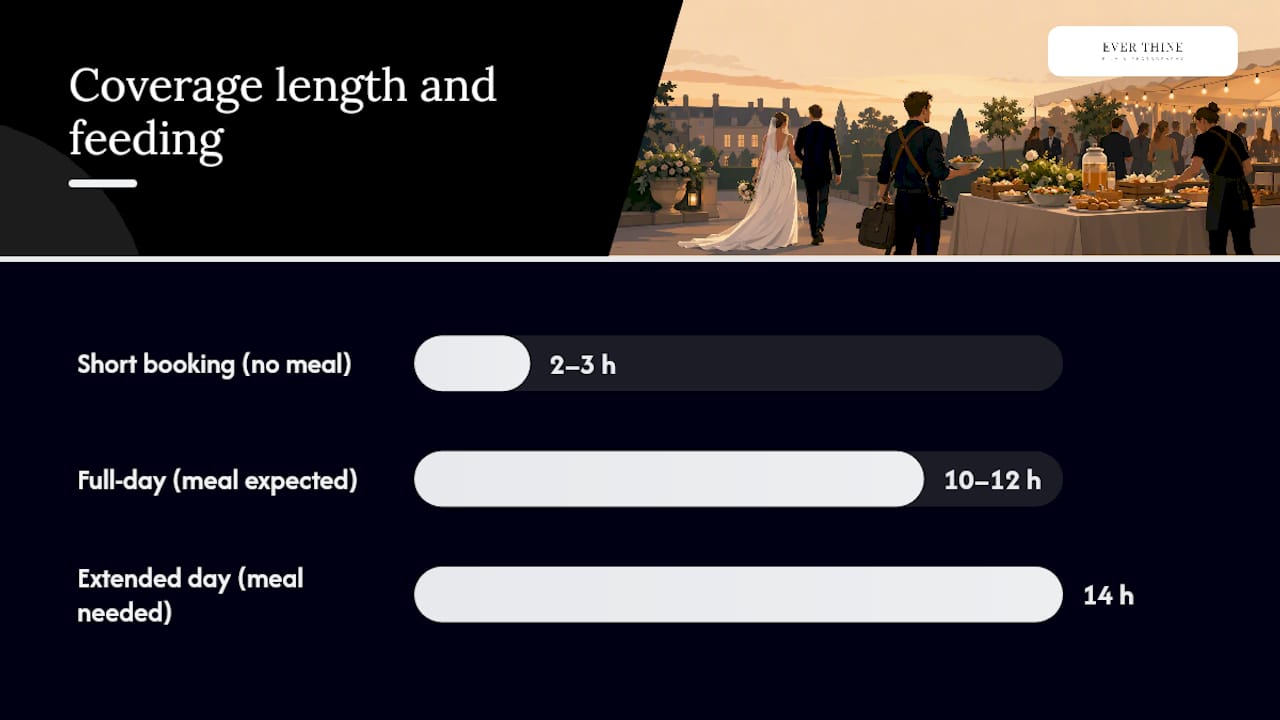
Some photographers put their meal expectations directly into the contract. Others leave it looser, preferring the flexibility of bringing a packed lunch if nothing’s arranged, so long as they know in advance whether to expect anything.
What tends to separate a smooth wedding day from a stressful one is early clarity. Here’s what usually shapes whether a meal is expected:
Coverage length. Short bookings rarely need feeding; full-day packages usually do.
Contract wording. Some photographers specify a meal clause outright.
Venue logistics. Remote venues with no nearby food options raise the stakes.
Personal preference. Many photographers are happy with a packed lunch rather than a plated meal.
Continuous coverage demands. Documentary-style shooting with no downtime makes a scheduled break more important, not less.
None of this is really about entitlement. It’s about a long shift needing fuel, the same as any physically demanding job.
When should you actually provide a meal?
Use coverage length as your main guide, not guesswork. Photographers booked for around six to eight hours or more commonly build a meal clause into their contract, and if no food turns up, they may have to step away from site to find some, which is the last thing you want happening during the speeches.
A few clear rules make the decision easier:
Six to eight hours plus, arrange a meal. This is the threshold most full-day photography and videography packages cross.
Feed them before the speeches, not after. Scheduling the meal ahead of the formal proceedings means your photographer isn’t mid-mouthful when the father of the bride starts talking, and it protects your coverage of the moments you’ll actually want captured.
Micro-weddings and half-day packages rarely need it. If your photographer is only there for a few hours, there’s generally no expectation to provide food.
Destination weddings need extra thought. If the venue is remote with no shops or restaurants nearby, feeding your photographer stops being optional courtesy and becomes practical necessity, whatever the coverage length.
The timing point matters more than most couples realise. A photographer who’s eating cold sandwiches in a corridor at exactly the moment your first dance begins isn’t going to get you the shot you wanted. Building a fifteen or twenty minute meal window into the timeline, ideally straight after the wedding breakfast and before speeches or dancing kick off, solves this without anyone noticing a gap.
What food should you actually give them?
You don’t need to match your photographer’s plate to your guests’ three-course meal. Most caterers offer a supplier meal or vendor meal, which is a simpler, cheaper version of the main course designed exactly for this purpose.
Realistic options include:
A reduced main course from your caterer, usually served slightly ahead of or alongside the guest meal.
A hot buffet portion, if your reception includes buffet-style catering rather than a plated service.
A boxed lunch or sandwich with sides, which works well for photographers who’d rather eat quickly and get back to work.
A simple hot dish, such as a curry, pasta, or stew, which caterers can often produce cheaply in bulk.
Dietary requirements matter here too. If your photographer has told you about an allergy or preference, label their meal clearly and make sure your caterer has planned for it the same way they would for a guest with dietary needs. Don’t assume vegetarian, vegan, or gluten-free options will simply appear if nobody’s asked for them in advance.
On cost, caterers frequently offer supplier meals at a reduced rate compared to the standard guest price, precisely because they’re simpler dishes served without the full presentation. Asking your caterer directly for their supplier rate, rather than assuming you’ll be charged full price per head, is the easiest way to keep this affordable. Event-catering resources like Wild Foodz’s meal offerings guide are worth a browse if you want inspiration for simple, budget-friendly supplier dishes that still feel considered.
Pro Tip: Ask your caterer for their supplier meal price when you book, not the week before the wedding. Prices and availability for a reduced menu are far easier to negotiate early than at the last minute.
Where and how should they eat?
Getting the location right avoids two problems at once: an awkward photo of your photographer mid-bite, and a coverage gap at a moment you wanted captured.
Most photographers prefer a quiet side room or a dedicated suppliers’ table, away from the main guest tables. This isn’t fussiness. Eating in front of guests while working is uncomfortable for most people, photographers included, and a suppliers’ table works efficiently when space allows, letting several vendors take a break together without pulling any of them too far from the action.
A short list of logistics worth confirming with your venue or caterer:
Agree the timing with your caterer so the meal is ready the moment your photographer has a natural gap, rather than sitting cold for twenty minutes.
Pick a room or space away from guest seating, ideally somewhere with a door that closes.
Keep water and soft drinks available throughout the day, not just at the meal break. Constant access to water and soft drinks is one of the cheapest, easiest courtesies you can offer.
Consider a small drinks tab or dedicated supplier refreshments if your venue charges separately for bar service.
None of this needs to be complicated. A thoughtful workflow around the wedding day usually has these details worked out weeks in advance, not decided on the morning itself.
How do you confirm meal arrangements in advance?
Read your photographer’s contract properly before you assume anything. Vendors sometimes state their meal requirements outright, and honouring or renegotiating that clause before the day avoids an uncomfortable conversation when everyone’s already stressed about timings.
A short checklist keeps this simple:
Check the contract for a meal clause and confirm it in writing if there’s any ambiguity.
Ask your caterer whether they offer supplier meals or a reduced-rate supplier menu, and get pricing early.
Use a pre-wedding questionnaire to record who needs feeding, any dietary requirements, and the agreed timing.
Share the final timeline with your venue, so the kitchen knows exactly when to have the meal ready.
Couples who leave this until the week before the wedding tend to find out too late that the caterer needs advance notice for supplier meals, or that the venue’s remote location means there’s nowhere nearby to grab food if nothing’s arranged. A proper planning guide that asks about supplier meals from the outset removes this from your list of things to worry about closer to the date.
What Dawn & Carl ask couples before every wedding
Every couple gets a pre-wedding questionnaire that includes a meal question, because photographers commonly build this into their planning process rather than leaving it to chance on the day itself. It removes any awkwardness and means nobody’s guessing.
A checklist worth copying into your own planning documents:
Confirm coverage hours. Anything over six to eight hours generally needs a meal plan.
Note who needs feeding. Photographer, second shooter, videographer: list everyone on site for the full day.
List dietary requirements and pass them to your caterer with enough notice to plan properly.
Book a supplier meal or agree a packed-lunch arrangement, whichever suits your budget and venue.
Set the meal timing, ideally before speeches, so nobody’s eating during the moments you want captured.
Reserve a quiet room and provide water throughout the day, not just at mealtime.
Dawn & Carl appreciate simple, hot meals when they’re offered, and they’re just as happy with a well-packed sandwich if the venue is remote or the budget’s tight. What matters more than the menu is knowing in advance, so a short break can be planned around your timeline rather than squeezed in as an afterthought. This kind of coordination fits the same unobtrusive approach that keeps coverage continuous and photographers comfortable enough to focus entirely on the day.
Pro Tip: If your venue offers a suppliers’ table, take it. It lets your photographer, videographer, and any other on-site vendors eat together in one short window instead of scattering breaks across the timeline.
Kindness, not obligation
Feeding your wedding photographer isn’t a rule you’ll be penalised for breaking. It’s a courteous gesture that acknowledges someone’s worked a long, physically demanding day on your behalf. If your budget is genuinely tight, prioritise the vendors on site the longest, since they’re the ones a missed meal will actually affect.
If a meal isn’t feasible, alternatives still count: a proper break with snacks and drinks, or a glowing review after the wedding often means more to a photographer than a token gesture on the day itself. What matters most isn’t the specific menu. It’s confirming expectations early, in writing, rather than assuming either side knows what the other expects.
Check the contract. Ask the question. Don’t leave it to guesswork on the morning of the wedding.
— Dawn & Carl
How Weddingfilmphotography plans your meal logistics for you
Meal planning is often included as part of pre-wedding preparations, helping ensure expectations about feeding vendors are clear well before the wedding date, whether that means arranging a vendor meal for full-day coverage or providing packed lunches for remote venues.
[
Upfront clarity about meal logistics helps ensure the wedding day runs smoothly without coverage gaps due to meal breaks or missing lunch arrangements. If you’re booking full-day coverage, browse the wedding photography packages to see how planning and logistics fit together, or get in touch to talk through your venue, your timeline, and any meal arrangements specific to your day. Couples working with venues further afield can also check the Staffordshire and Derbyshire coverage pages for area-specific detail.
Sources
FAQ
Do you have to feed your wedding photographer?
Not always. It’s generally expected for coverage of six to eight hours or more, but optional for short bookings like ceremony-only or half-day packages.
What is the 30-minute rule for weddings?
There’s no single universal short break rule, but many planners build a brief buffer into the timeline around meals and key transitions, giving vendors a proper break without disrupting the schedule.
Why is it important to feed a wedding photographer?
Long days without a break affect energy and focus, and a photographer who has to leave site to find food can miss key moments in your coverage.
How much do you tip a wedding photographer?
Tipping isn’t mandatory or expected in the UK; many photographers value a genuine online review or a thank-you note more than a cash tip.
Does Weddingfilmphotography arrange meal logistics for couples?
Yes, meal timing and vendor meal preferences are confirmed as part of pre-wedding planning, so arrangements are agreed before the wedding day rather than decided on the spot.
Recommended


Comments