
Proposal Photography Ideas: 12 Ways to Capture the Moment
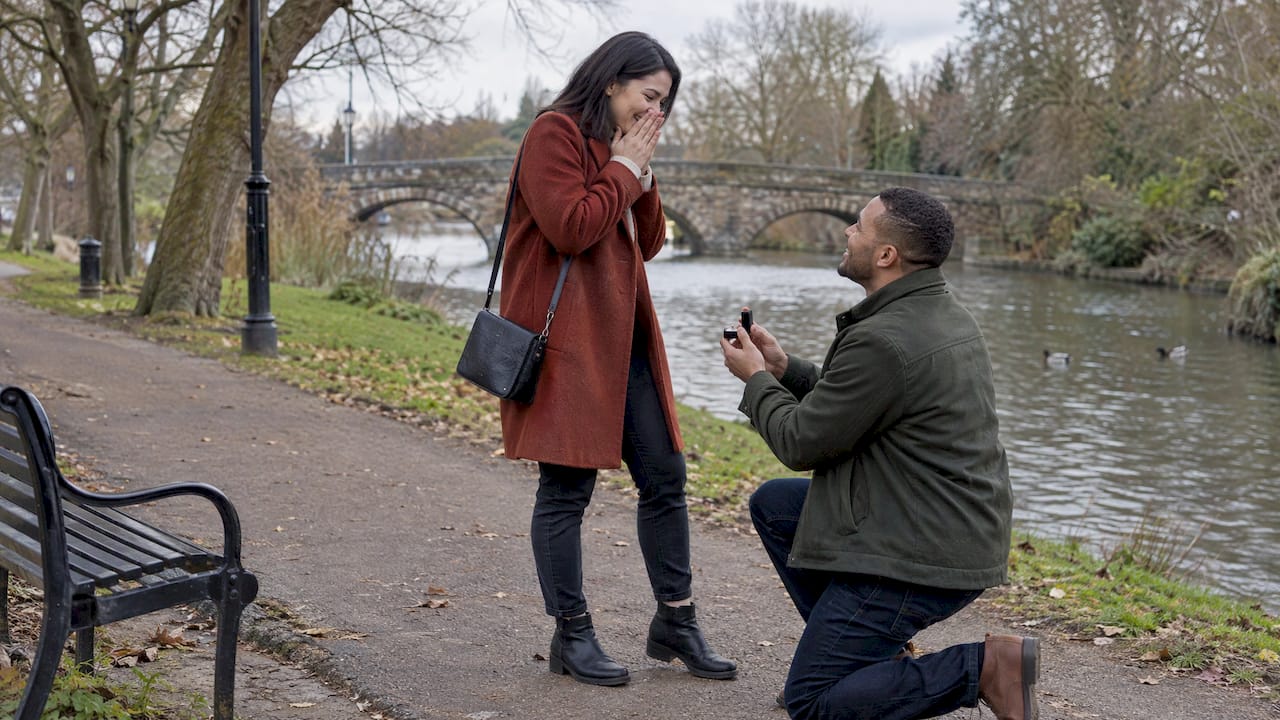
The best proposal photos are the ones that look like the moment felt: one person nervous, the other stunned, nobody looking at the camera. You get them by planning the photography so thoroughly that the proposal itself can stay spontaneous. Below are the ideas, the planning that makes them work, and what to do in the minutes and weeks after the yes. We are a husband-and-wife documentary wedding team in Staffordshire, so we look at every one of these through a candid, unobtrusive lens.
TL;DR
Choose one core idea (hidden photographer, friend with a long lens, a self-timer, or a planned walk) and rehearse the logistics, not the words.
Put the camera where it sees your partner’s face at the moment of the question, ideally with soft light on them, not behind them.
Agree a signal, a kneel spot and a short delay before the photographer steps in, so the first minute stays private.
Check access rules before you book a location: some places, including the Royal Parks, need a permit for wedding photography.
Follow the proposal with a relaxed engagement shoot, which gives you the polished portraits the surprise cannot.
Table of Contents
What makes a proposal photo worth keeping
The ring is the least interesting part of the picture. Years later, you will look for the face: the gasp, the laugh, the hands over the mouth. A guide to secretly photographing a proposal makes the same point, advising you to prioritise the partner’s face over the ring and to let the hug and first words happen before the photographer is revealed.
That gives you a simple test for every idea below. Does it show the reaction? Does it leave the couple alone for the first minute? If yes, it will age well.
Twelve proposal photography ideas
1. The hidden photographer
The classic. A photographer or a confident friend positions themselves out of sight: behind a tree, a wall, a boat house or a group of walkers. The proposer chooses a spot with a clear sightline and a backdrop that is not crowded. This idea works best on a walk or day out, where stopping to admire a view is entirely natural.
2. The long-lens approach
A telephoto lens lets the photographer work from a distance without being noticed. Jessops’ UK proposal spots guide recommends exactly this, along with switching the camera to burst mode before the question is asked, because expressions change in seconds. The result is natural, unposed frames, though the pictures are tighter and show less of the setting. Pair it with a second, wider angle if you have two people shooting.
3. The staged “photo for us”
Ask a stranger, or a friend pretending to be one, to take a photo of you both at a viewpoint. It sounds obvious, but it is believable, and it explains why you are standing still facing each other. Brief your helper in advance on where to stand and to keep shooting after you kneel.
4. The walk and the pause
Plan a route with one natural stopping point: a bridge, a gate, a bandstand, the top of a hill. The photographer waits ahead or behind. You get a sequence rather than a single frame: the approach, the pause, the question, the reaction. This is the most documentary of the ideas, and the one we would choose for a couple who dislike being the centre of attention.
5. Home and familiar places
A proposal in the garden, at the first flat or in the pub where you had your first date will mean more than a famous viewpoint. Photographs in a familiar setting often feel warmer and less performed. Ask a friend or family member to be on hand, with the camera ready and the phone silenced.
6. Sunrise or golden hour
Low sun is flattering and forgiving. Soft side or front light on your partner’s face makes the expression easy to read, and the background glows. Plan the timing around sunset on the day, and have a backup slot or backup day in mind, because British weather will have opinions.
7. Woodland and countryside
Trees give a photographer natural hiding places and filter harsh light. Staffordshire and the wider West Midlands have plenty of parkland and country estates for this sort of proposal, and our guide to romantic photo locations across the UK is a good starting point for ideas by region.
8. City and rooftop proposals
City proposals offer strong backdrops but more people, more noise and more rules. They suit couples who love the city, and they work best early in the morning, when streets are quiet and the light is clean. If your plan involves London, read the section on permissions below first.
9. The video-and-stills combination
Some couples want both a photograph and moving footage of the question, so they can replay the words. If that is you, our engagement video ideas show how to film your story. Decide which medium has priority, because the best position for a camera is not always the best position for a phone gimbal.
10. The detail set
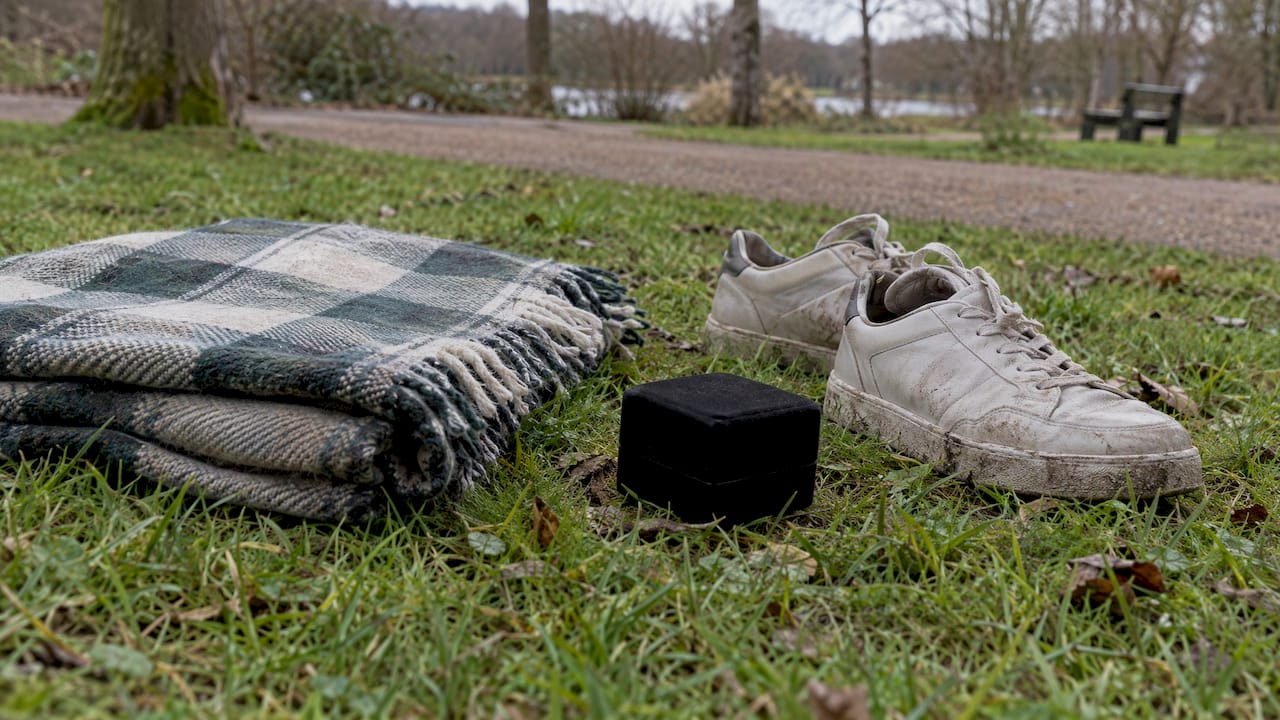
Hands, ring box, shoes on grass, a picnic blanket, a note. These are not the main event, but they fill out the story. Ask your photographer or friend to take a few of these before the question, while you are walking in, so the details are not rushed afterwards.
11. The after-the-yes portrait set
Once you have had a few minutes alone, the photographer steps in for a short run of relaxed portraits: forehead to forehead, laughing, walking away holding hands. Jessops’ guide suggests waiting a few seconds after the yes before approaching, then changing angles and moving closer for ring, hands and reaction close-ups. Keep this set short. You are both emotional and probably have shaky hands.
12. The Polaroid or print keepsake
A single instant photo handed over on the day, or a small photo book assembled later, turns the proposal into an object. Bridebook’s engagement gift guide lists a mini hardback photo book and an engraved keepsake box among its ideas for holding on to the engagement period. It is a nice job for the weeks after, when you are still floating.
Planning a surprise without spoiling it
The more careful the planning, the more natural the moment. These are the points where plans most often go wrong.
Agree a signal and a spot
Choose a signal the photographer can read from a distance: a text, a hand gesture, a code word. Jessops advises confirming the exact kneel spot in advance, so the photographer can frame it before you arrive. Walk the route together a day or two earlier, without your partner, and mark the spot in your head: the bench, the post, the stone.
Get the angle right
The camera should see your partner’s face, not the back of their head. A three-quarter angle shows expression, body language and the ring in one frame. That means you, the proposer, may end up half-turned, which is fine. Standing so your partner faces the light, rather than having it behind them, also keeps their expression visible.
Check the kit and the backups
Charged batteries and empty memory cards sound too basic to mention, but they are the commonest failure. Whoever is shooting should check both the night before and again on arrival. If a friend is taking the photos on a phone, make sure there is enough storage, switch on burst mode and turn off notifications so a message does not buzz at the key moment.
Give the first minute away
After the yes, let the couple have their moment. The photographer waits, then approaches when it feels right. The reaction comes first and the polished portraits come second. It is also the right time to hold back the question “can we take a few pictures?” until you have both had a hug and said what you want to say.
Choosing the location, light and time
Scout early. Jessops’ advice is to visit the location earlier or the day before to see how light falls and where the cleanest backgrounds are, to place the couple facing the light and to avoid harsh midday sun.
A few practical thoughts for UK couples:
Pick a time, then a fallback. Early morning and the hour before sunset give the softest light. Cloud is not a disaster: overcast skies are even and flattering for faces.
Think about the crowd. Popular viewpoints at weekends can mean strangers in the frame. A weekday or early start solves this.
Pick a spot with a reason. A place with meaning for you both beats a famous one every time.
Think about shoes and weather. If you are asking your partner to walk a mile uphill, check they are wearing something suitable and have a coat.
If you want more on how light and surroundings shape natural images, our guide to outdoor wedding photography tips for natural, candid images explains the same principles, and our piece on choosing photo locations for documentary shots will help you weigh up a venue.
Access and permission: check before you book
Some beautiful places have rules. The Royal Parks’ filming guide states that anyone wishing to undertake wedding or lifestyle photography or filming in any of the Royal Parks must obtain a permit, while amateur and student photographers shooting for a private portfolio or non-commercial use are supported without one. If you are hiring a photographer for a London park, ask the park’s filming team about your plan before you commit to the day. Our guide to London wedding photo permits covers the City of London’s rules and costs.
Country estates, National Trust properties, private gardens and churches also have their own policies on photography, so check the venue’s website or phone them. Our church photo rules checklist shows what to ask if the proposal location is a church or chapel.
Making the pictures feel candid, not posed
Candid images come from a relaxed couple and a photographer who is not in the way. A few habits help:
Do not rehearse the pose. Rehearse the logistics: where to stand, where the light is, where the photographer will be.
Look at each other, not the lens. Everything you want is in the expression.
Keep talking. If you are laughing or crying, the picture will show it.
Move on gently. After a few frames, go for a walk. Some of the best pictures arrive when the couple forget they are being photographed.
The guide at WeddingOnly observes that the best proposal photos rarely look perfect in the staged sense, because they look real. Our own piece on how to capture candid moments goes deeper on how we approach it at weddings.
After the yes: relaxed photos together
The proposal is rarely the best portrait you will have. You are mid-emotion, the light may not be ideal and you are probably wearing whatever you left the house in. A calm engagement shoot a few weeks later, in clothes you chose, gives you pictures to use on save-the-dates, in a welcome sign or on the wedding-day table. Our guide to seven creative engagement shoot ideas shows what that can look like.
Then there are the keepsakes: a small photo book, a keepsake box, a framed print of the proposal itself. Choose one or two rather than ten, and put the best frame where you see it every day.
A quick plan you can copy
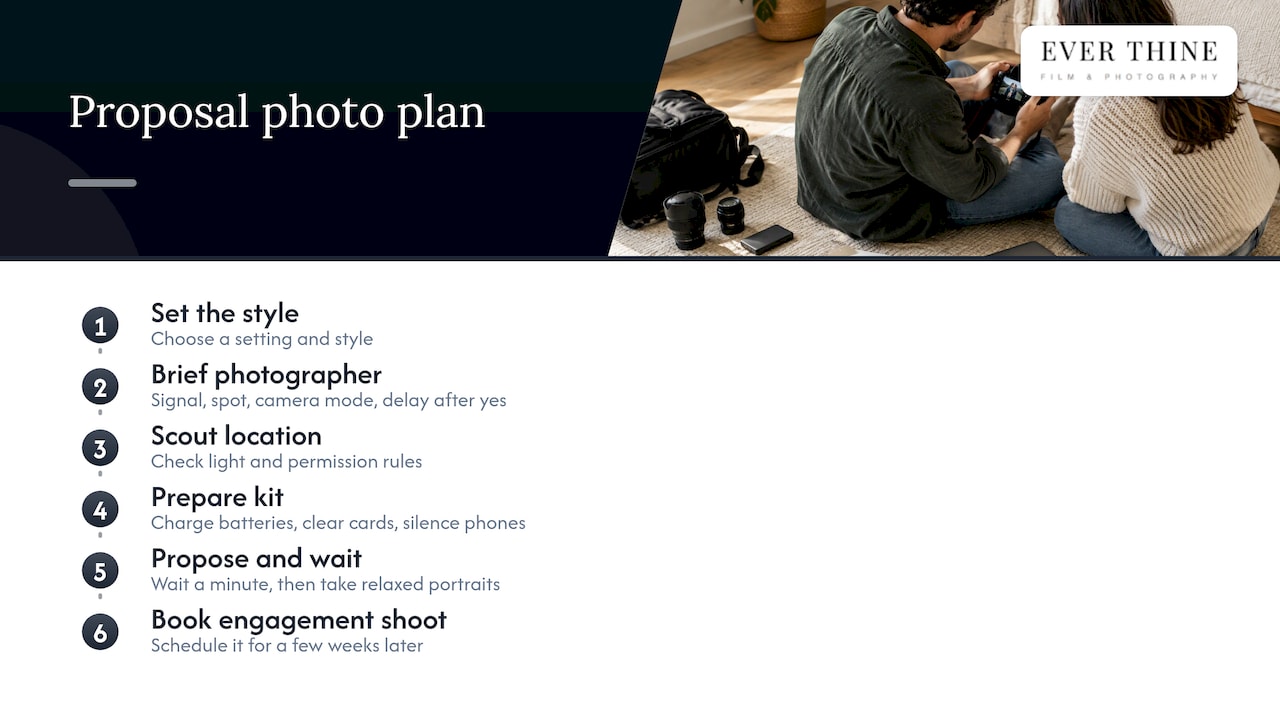
Decide the setting and the style (hidden, long lens, walk and pause).
Brief your photographer or friend: signal, spot, camera mode, delay after the yes.
Scout the location a day before and check the light and any permission rules.
Charge batteries, clear cards, silence phones.
Propose. Wait a minute. Then take a few relaxed portraits.
Book an engagement shoot for a few weeks later.
Our perspective
We photograph weddings in a documentary style, and we think about proposals in the same way: the real moment matters more than a perfect pose. When we are asked what makes pictures of a big emotional event work, the answer is usually the same. Plan the practical parts, then step back and let people be themselves. Over more than a decade as a husband-and-wife team we have learned that couples relax when the person with the camera is calm and quiet. That is the approach we bring to engagement shoots and to wedding days, and it is why we work so hard to be unobtrusive. If your proposal is the first chapter of the story, we would love to help you carry it into the next one with natural photography and film. Dawn & Carl
From proposal to wedding day
Once you have said yes, we can help you capture the next part of the story. We are a multi-award-winning husband-and-wife team based in Staffordshire, offering wedding photography and wedding videography in a documentary style for local and destination weddings. We also offer engagement shoots.
[
If you want quick, share-ready pictures and clips from the wedding day, our wedding content creation starts from £600 as a one-off fee. If you are marrying in Staffordshire, see our page for a wedding photographer in Staffordshire, or get in touch through the site to talk about your date.
FAQ
Do I need a professional photographer for a surprise proposal?
Not always. A friend with a long lens or a steady phone can capture a lovely moment, especially in a familiar setting. A professional photographer brings reliable kit, a sense of light and the ability to stay out of sight, which matters if the location is busy or the lighting is tricky.
How do I stop my partner noticing the photographer?
Choose a spot with natural cover, use a long lens and keep the photographer well back. Agree a signal beforehand so they are not hovering, and give the photographer a clear kneel spot to frame. A relaxed, ordinary-looking outing helps most of all.
What is the best time of day for proposal photos?
Early morning or the hour before sunset gives soft, flattering light. Jessops advises avoiding harsh midday sun and positioning the couple facing the light. Visit the spot beforehand to see how the light behaves.
Do I need a permit to take proposal photos in a London park?
It depends on who is taking the photographs and why. The Royal Parks state that wedding or lifestyle photography and filming in their parks requires a permit, while private, non-commercial photography is supported without one. If you plan to bring a photographer, contact the park’s filming team first.
What should I do straight after she or he says yes?
Step back from the camera and enjoy it. Give yourselves a few minutes alone, then let the photographer approach for a handful of close-ups of the ring, your hands and your faces, followed by a few relaxed portraits. Save the longer session for an engagement shoot.
Sources
Recommended


Comments