
Step by step engagement session: your 2026 guide

TL;DR:
A well-planned engagement session captures couples’ love story naturally through careful preparation, expert timing, and relaxed interactions. Proper outfit coordination, location scouting, and timing around golden hour enhance the final images, which unfold over structured stages. The warm-up period is crucial for easing nerves and enabling genuine moments, resulting in authentic, timeless photos.
A step by step engagement session is a planned photography shoot designed to capture your love story naturally, through structured preparation, expert timing, and relaxed interaction. Unlike a quick portrait sitting, a well-planned engagement shoot unfolds in stages: outfit preparation weeks before, golden hour scheduling, a warm-up period on the day, and a flowing sequence across two locations. The result is a set of images that feel genuinely yours. This guide walks you through every stage, from your first planning conversation with your photographer to the final shots of the day.
How to plan your step by step engagement session in advance
Strong preparation is the single biggest factor separating relaxed, natural engagement photos from stiff, forgettable ones. The work you do in the weeks before your shoot shapes everything that happens on the day.
Start with your outfits. Prepare your outfits two to three weeks before the session, allowing time for dry cleaning, pressing, and any last-minute alterations. Leaving this to the night before creates unnecessary stress and often shows in the photos. Coordinate colours between you and your partner without matching too precisely. Complementary tones photograph better than identical outfits.
Schedule grooming appointments sensibly. Book haircuts and colour treatments at least one week before the shoot, not the day before. Avoid radical grooming changes just before the session. A familiar, fresh appearance builds confidence, and confidence reads clearly in photographs.
Here is a preparation checklist to work through in the weeks before your session:
Finalise both outfits and press them at least two weeks ahead
Book grooming appointments for one week before the shoot
Discuss your preferred style, locations, and must-have shots with your photographer
Scout your chosen locations together and agree on a backup option
Pack layers, comfortable walking shoes, a small emergency kit (stain remover, safety pins), and any props
Confirm travel times and parking to avoid rushing on the day
Pro Tip: Bring your engagement ring freshly cleaned. It catches light beautifully and features in many close-up shots, so a quick clean the evening before makes a real difference.
Location scouting is often overlooked but genuinely changes the outcome. Walking the location with your photographer beforehand means you both know the best spots, the light at different times, and where to transition between areas without wasting time on the day.

When should you schedule your engagement session?
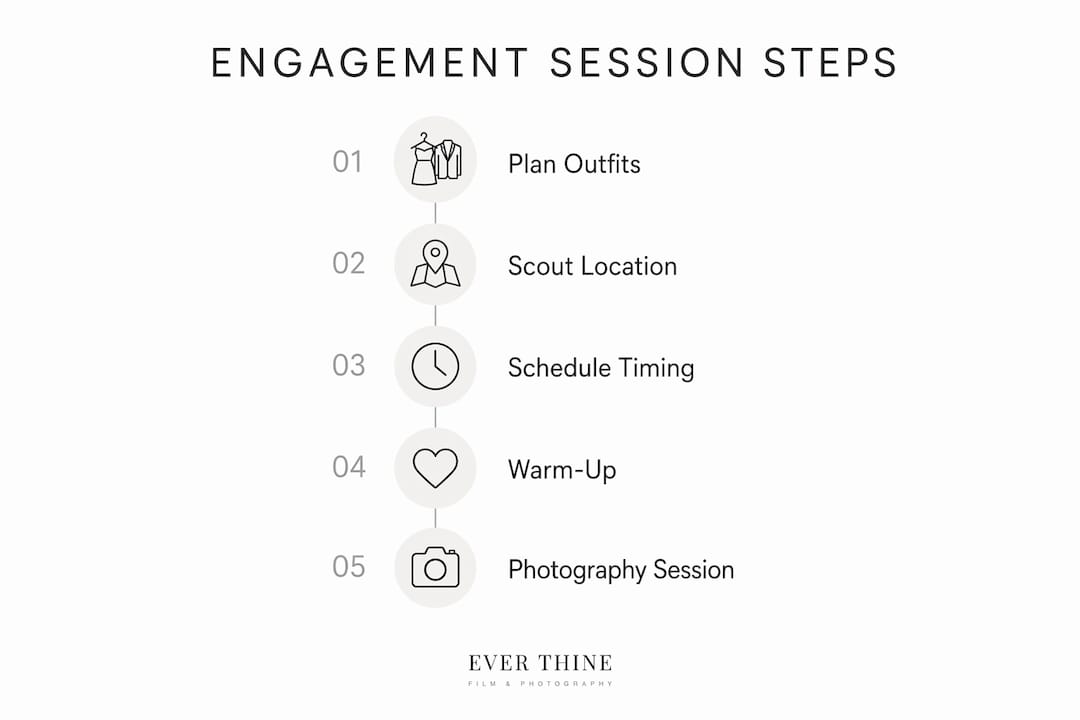
Timing your session correctly is one of the most practical decisions in your engagement photography guide, and it operates on two levels: when in the day, and when relative to your wedding.
Golden hour, the 1–2 hours before sunset, produces the warmest, softest natural light available. Shadows are long and gentle, skin tones are flattering, and backgrounds glow. Morning golden hour, the first hour after sunrise, offers the same quality of light with the added benefit of quieter locations and fewer people in the background.
Overcast days are genuinely underrated. Clouds act as a natural diffuser, eliminating harsh shadows and creating even, flattering light across the frame. Many photographers prefer overcast conditions for portraits precisely because the light is so consistent.
Time of Day | Light Quality | Best For |
Golden hour (pre-sunset) | Warm, soft, directional | Romantic, glowing portraits |
Morning golden hour | Cool, soft, clear | Fresh, quiet locations |
Overcast midday | Even, diffused | Consistent, shadow-free portraits |
Midday sun | Harsh, high contrast | Generally less flattering |
Schedule your engagement photos six to eight months before your wedding day. This timing gives you images ready for save-the-dates and wedding stationery without the pressure of intensive wedding planning bearing down on you. Leaving it later restricts how you can use the images and adds unnecessary stress to an already busy period.
Pro Tip: If your wedding is in spring or summer, consider a late autumn or early winter engagement session. The low winter light is extraordinary, and bare trees create a dramatic, intimate backdrop that summer foliage simply cannot match.
What happens during the session itself?
Understanding the typical flow of an engagement shoot removes most of the nerves couples feel beforehand. A standard session runs for one to two hours and moves through clear stages.
Meet and greet (10 minutes). Your photographer welcomes you, checks in on how you are both feeling, and walks you through the plan for the day. No camera yet. This conversation matters more than most couples realise.
Warm-up period (10–15 minutes). You walk, talk, and move together while your photographer observes and occasionally prompts. The camera may be present but is rarely raised. The first 10–15 minutes often feel slightly awkward, and that is completely normal. Natural ease typically arrives around the 15–20 minute mark.
First location shoot (approximately 45 minutes). Your favourite outfit, your primary location. Your photographer uses movement prompts rather than “stand here and smile” instructions. You might be asked to walk together, whisper something to each other, or simply look out at a view. These prompts unlock genuine interaction and authentic expressions far more effectively than direct posing commands.
Outfit and location transition (approximately 15 minutes). A natural break. Change your outfit, grab a drink, and reset. This pause is built into the plan, so there is no pressure to rush.
Second location shoot (30–45 minutes). By this point, most couples are fully relaxed and the images from this section are often the strongest of the day. You know your photographer’s rhythm, and they know yours.
Final shots and wrap-up (10 minutes). A few last frames, often more spontaneous than anything earlier in the session. Your photographer will let you know when you are done.
“The warm-up period stabilises posture, pacing, and conversational rhythm, enabling more responsive, natural poses later in the session.”
Some photographers offer extended sessions of two to four hours for couples who want more variety or simply more time to settle into the experience. Longer sessions reduce the feeling of being rushed and consistently produce more relaxed, connected images.
What to wear and bring on the day
What you pack and wear directly affects how comfortable you feel, and comfort is the foundation of natural posing and genuine expressions.
Footwear: Bring comfortable walking shoes to swap between locations. Managing footwear changes between varied terrain minimises physical strain and keeps your mood steady. Heels for a few key shots are fine, but walking long distances in them creates tension that shows in your face.
Layers: British weather is unpredictable. A light jacket or wrap serves double duty as a practical layer and a photographic prop.
Pockets: Empty them completely. Keys, phones, and wallets create visible bulges and are a constant distraction. Leave them in a bag or with a friend.
Backup outfit: Pack a spare top or shirt in case of spills or unexpected weather. A small stain remover pen takes up almost no space and has saved many a session.
Props: Keep these minimal and meaningful. A blanket, a book, or flowers from your garden feel personal. Novelty props rarely age well in photographs.
Pro Tip: Bring a small bag with lip balm, a mirror, and a hair brush. A two-minute touch-up between locations takes almost no time and makes a visible difference in the final images.
For a thorough overview of stylish engagement photo choices specific to UK couples, including colour palettes and seasonal outfit ideas, it is worth reading through a dedicated guide before your session.
How do you get the best from your photographer?
The relationship between you and your photographer is the most underestimated variable in engagement photography. Clear communication about your expectations, preferences, and any insecurities before the shoot consistently produces better results than any technical skill alone.
Before the session, share the following with your photographer:
Any poses or angles you feel less confident about
Physical considerations such as injuries or mobility limitations
Specific shots you have seen and loved, shared via a mood board or saved images
Whether you prefer a quieter, more intimate session or something more playful and energetic
Your preferred balance between candid moments and more composed portraits
On the day, trust the process. Your photographer’s prompts are designed to draw out natural moments, not manufacture them. Movement prompts such as walking, laughing, or dancing together consistently unlock authentic expressions that no amount of direct posing can replicate. The session is not a performance. It is a conversation between you, your partner, and the person documenting your story.
For further guidance on authentic engagement moments and how collaborative planning shapes the final images, the approach used in documentary-style wedding photography translates directly to engagement sessions.
Key takeaways
A successful engagement session depends on preparation done weeks in advance, golden hour timing, and a structured warm-up that allows natural connection to emerge before the camera takes centre stage.
Point | Details |
Prepare outfits early | Finalise and press both outfits at least two weeks before to avoid last-minute stress. |
Time your session well | Book golden hour and schedule six to eight months before your wedding for save-the-dates. |
Trust the warm-up | The first 15–20 minutes feel awkward for most couples; natural ease follows shortly after. |
Pack smart on the day | Bring comfortable shoes, layers, an empty-pocketed outfit, and a small touch-up kit. |
Communicate with your photographer | Share preferences, insecurities, and inspiration images before the shoot for the best results. |
Why the warm-up matters more than you think
Most couples arrive at their engagement session expecting to feel nervous, and they are right to expect it. What surprises them is how quickly that nervousness disappears when the session is structured well. In my experience, the couples who get the most from their shoot are not the most photogenic or the most confident. They are the ones who give themselves permission to be a little awkward at the start.
The warm-up period is not a courtesy. It is the mechanism through which genuine images become possible. When you spend the first ten minutes walking and talking without a camera pointed at you, your body language resets. You stop performing and start being. By the time the camera is raised, you have forgotten to be self-conscious.
The trap I see most often is perfectionism. Couples arrive with a mental checklist of poses they want to recreate, and they spend the session trying to manufacture those moments rather than letting them happen. The images that end up on the wall are almost never the ones that were planned. They are the ones where someone laughed unexpectedly, or leaned in to say something quiet, or simply looked at their partner without thinking about it.
Trust your photographer to find those moments. Your job is to show up, be present, and let the session breathe. The Staffordshire engagement photography approach that resonates most with couples is one built on patience and genuine rapport, not a rigid shot list. That philosophy applies wherever you are shooting.
— Ever
Ready to plan your engagement session with Weddingfilmphotography?
Weddingfilmphotography offers bespoke engagement sessions across Derbyshire, Staffordshire, and the surrounding counties, built around your story and your pace. Every session includes personalised preparation guidance, location advice, and a relaxed, documentary-style approach that draws out the moments you will want to keep forever.
[
The team at Weddingfilmphotography brings multi-award-winning expertise to every shoot, with a genuine commitment to making you feel at ease from the first conversation to the final image. If you are ready to see what a natural, unhurried engagement session looks like, view the Derbyshire portfolio and get in touch to discuss your plans. Spaces fill quickly, particularly for golden hour sessions in spring and autumn.
FAQ
How long does an engagement session typically last?
A standard engagement session runs for one to two hours, including a warm-up, two location shoots, and an outfit change. Extended sessions of two to four hours are available for couples who want more variety or a more relaxed pace.
When is the best time of day for engagement photos?
Golden hour, the 1–2 hours before sunset, produces the warmest and most flattering natural light for engagement photography. Morning golden hour and overcast conditions are strong alternatives, each offering soft, even light without harsh shadows.
How far in advance should we book our engagement session?
Book your session six to eight months before your wedding day. This timing ensures your images are ready for save-the-dates and stationery, and avoids the pressure of booking during peak wedding planning.
What should we do if we feel nervous on the day?
Nerves are completely normal and expected. The warm-up period in the first 10–15 minutes is specifically designed to settle you both. Most couples feel noticeably more relaxed by the 20-minute mark, and the best images often come from the second half of the session.
Do we need props for our engagement session?
Props are entirely optional. When used, keep them personal and minimal, such as a blanket, flowers, or a meaningful object. Overly staged props can distract from the natural connection between you, which is the real subject of every great engagement photograph.
Recommended


Comments