
Wedding timeline planning guide for your big day

TL;DR:
Creating a wedding timeline anchored around the ceremony start time helps ensure a smooth, stress-free day.
Including buffer time, confirming vendor setup, and sharing schedules early prevent delays and cascading issues.
A wedding timeline planning guide is the single document that holds your entire wedding day together, telling every vendor, family member, and supplier exactly where to be and when. Without one, even the most beautifully planned wedding unravels into delays, missed moments, and unnecessary stress. The good news is that building a realistic wedding schedule is far more straightforward than most couples expect. This guide walks you through every stage, from the first booking to the final send-off, with practical advice drawn from experienced planners and photographers.

How to build your wedding timeline from ceremony time outwards
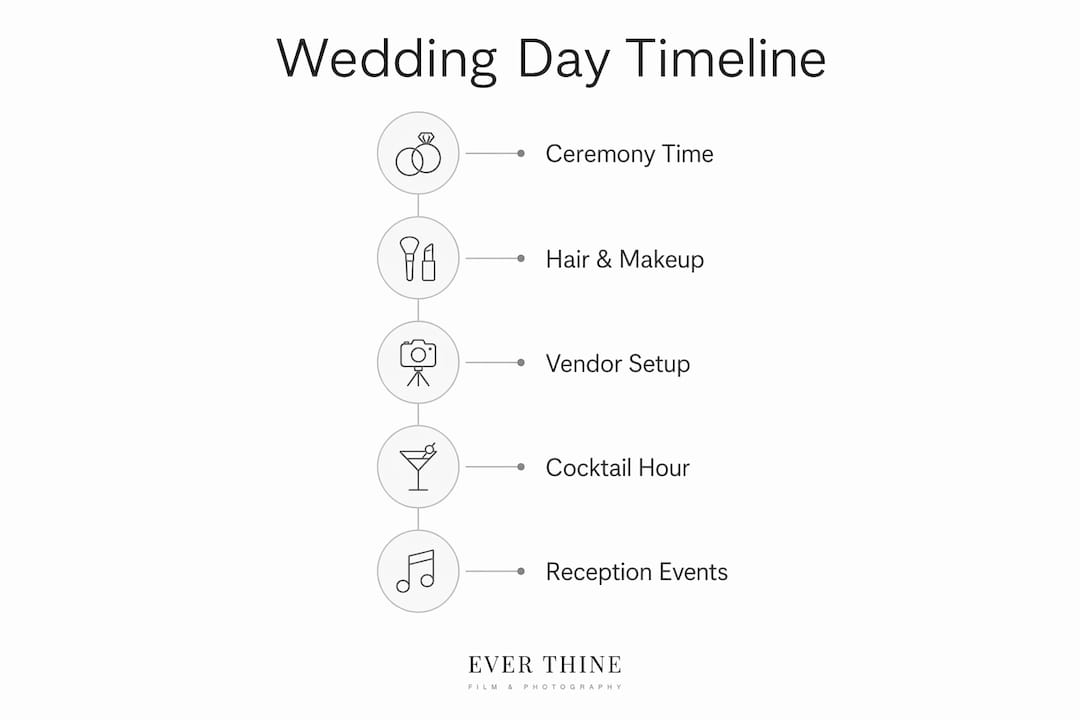
The most reliable method for creating a wedding day itinerary is to anchor everything around your ceremony start time, then work backwards and forwards from that fixed point. Vendor-validated ceremony-first workflow is the most accurate approach to building a realistic schedule and avoiding cascading timing failures. Every other element of your day slots in relative to that anchor.
Working backwards from the ceremony
Start by calculating when hair and makeup must begin. Hair and makeup typically start four to five hours before the ceremony, with 30 to 45 minutes allocated per bridesmaid and 60 to 90 minutes for the bride. If you have five people in your bridal party getting ready, that is a minimum of four hours of chair time before a single photograph is taken. Treat this as a capacity problem, not just a schedule problem. Adding a second stylist cuts that window significantly and removes one of the most common sources of morning delays.
Work backwards further to include vendor arrivals. Florists, photographers, and videographers all need time to set up before the action begins. Setup times vary widely, from 30 minutes to three hours depending on the supplier, so confirm exact arrival windows with each vendor individually rather than guessing.
Working forwards through the reception
Once the ceremony is placed, build forwards. Traditional ceremonies last 30 to 60 minutes, followed by a cocktail hour of around 60 minutes while the couple completes portraits. Receptions typically run four to five hours, covering the wedding breakfast, speeches, first dance, and evening dancing. A typical 2026 template breaks the day into getting ready (four to five hours), couple portraits (one to two hours), ceremony (20 to 30 minutes), cocktail hour (one hour), reception (three to four hours), and send-off (10 to 15 minutes).
Build in buffer time between every major transition. A 15-minute buffer between getting ready and leaving for the venue, and another between portraits and the ceremony, prevents one small delay from pushing everything else back. Always schedule cleanup as a dedicated block. Cleanup generally takes one third to one half of the original setup time, so factor that into your venue hire window.
Pro Tip: Share your finalised timeline with every vendor at least four weeks before the wedding, not just your planner. Photographers, caterers, and florists each need their own copy so there is no confusion on the day.
Your month-by-month wedding planning checklist
A wedding planning checklist works best when it is tied directly to your timeline, so that each task is completed at the moment it has the most impact. Full-size weddings of 100 or more guests typically require 12 to 18 months to plan, while micro weddings can be organised in three to six months and elopements in a matter of weeks. Use the scale of your wedding to calibrate how urgently each milestone needs to be reached.
The table below maps the key planning stages to approximate timeframes:
Timeframe | Key tasks |
12 to 18 months out | Book venue, photographer, videographer, and caterer |
9 to 12 months out | Send save-the-dates, book florist, confirm officiant |
6 to 9 months out | Send invitations, arrange accommodation for guests |
3 to 6 months out | Chase RSVPs, create seating plan, draft day-of timeline |
Final 4 to 8 weeks | Confirm all vendors, share timeline, arrange final fittings |
The Knot’s 12-month checklist structures tasks from engagement through to the day after the wedding, and it remains one of the most widely used planning frameworks available. The key principle it reinforces is that your photographer, venue, and caterer should be secured before anything else, because their availability dictates every other decision.
When it comes to your custom wedding schedule for the day itself, create and circulate a draft two to three months before the wedding. This gives vendors enough time to flag conflicts, request adjustments, and confirm logistics. A printed planner or a shared digital document both work well. The goal is one master document that everyone references, not a chain of separate email threads.
Confirm vendor arrival and departure times in writing
Build a separate timeline for the wedding party covering getting ready, transport, and photos
Include your venue’s hard stop time and work backwards from it
Note any religious or cultural rituals that require dedicated time blocks
What are the most common wedding timeline mistakes?
The most frequent mistake couples make is underestimating how long getting ready actually takes. Planning hair and makeup as a capacity problem rather than a simple schedule entry is the shift that prevents morning delays. If your ceremony is at 2pm and you have six people in the bridal party, your stylists need to begin no later than 8am, and that assumes no breaks and no interruptions.
The second most common error is failing to include buffer time between events. Couples often build a schedule where every segment runs back to back, which means a single 10-minute overrun in portraits cascades into a late ceremony, a delayed wedding breakfast, and speeches that eat into the first dance. Experienced planners consistently recommend padding every transition by at least 10 to 15 minutes.
“Detailed timelines that include every moment improve day-of flow and reduce stress significantly.” — Tessa Lyn Brand, expert wedding planner, via Brides
Overloading the schedule with speeches is another pitfall. Three or four speeches of five minutes each sounds manageable on paper, but in practice they often run longer, and guests lose focus after the second one. Limit formal speeches to three and set a clear expectation with speakers about length.
Pro Tip: Ask your caterer, florist, and photographer to review your draft timeline before you finalise it. Involving vendors in timeline creation reduces the risk of underestimating timing and prevents the cascading delays that derail so many wedding days.
Finally, do not forget vendor exit times. A florist who needs two hours to break down their installation and a venue that charges for overtime are two very different problems, but both stem from the same oversight: not accounting for the end of the day with the same care as the beginning.
How do you adapt your timeline for different wedding styles?
Not every wedding fits the standard template, and a custom wedding schedule for a multicultural ceremony, a destination weekend, or a micro wedding requires a different approach entirely. Multicultural and multi-day weddings require tailored timeline communication with guests and carry additional scheduling complexity that a standard template simply cannot accommodate.
The table below compares the key differences between wedding formats:
Wedding style | Timeline considerations |
Traditional full wedding | 12 to 18 months planning; full vendor team; 8 to 10 hour day |
Micro wedding (under 30 guests) | 3 to 6 months planning; shorter day; fewer vendor handoffs |
Destination or multi-day | Guest communication critical; travel buffers essential |
Multicultural ceremony | Multiple ritual blocks; bilingual programmes may be needed |
Elopement | Weeks to plan; minimal vendors; highly flexible schedule |
For multi-venue weddings, where the ceremony and reception are at separate locations, build in realistic travel time and add 15 minutes on top of your estimate. Guest herding always takes longer than expected. Use your wedding website to publish a guest-facing version of the itinerary so that everyone knows where to be without you having to field dozens of messages on the morning.
For destination weddings, consider creating a full weekend itinerary rather than a single-day schedule. Welcome dinners, group excursions, and farewell brunches all need their own mini-timelines. Apps like Zola and The Knot both offer guest communication tools that allow you to push schedule updates in real time, which is particularly useful when weather or logistics shift plans at short notice.
Micro weddings and elopements benefit from a stripped-back approach. With fewer guests and vendors, the timeline is shorter and more flexible, but it still needs to exist in writing. Even a two-page document covering getting ready, travel, ceremony, and a celebratory meal gives your photographer and officiant the structure they need to do their best work. For photography timeline guidance specific to UK couples, a dedicated resource can help you map out exactly how long each photography segment should take.
My honest view on wedding timelines
After working alongside couples at weddings across Staffordshire, Derbyshire, and Worcestershire, the pattern I see most often is this: the couples who arrive at their reception relaxed and present are almost always the ones who built a generous, vendor-inclusive timeline months in advance. The ones who feel rushed are usually the ones who treated the timeline as an afterthought.
The detail that surprises most couples is how much a first look changes the shape of the day. Scheduling portraits before the ceremony rather than after means you arrive at your reception having already completed the bulk of your photography. You can eat, drink, and talk to your guests without disappearing for an hour. That one structural decision transforms the emotional experience of the day.
I also think couples underestimate the value of building a timeline that includes breathing room. Not every minute needs to be accounted for. A 20-minute window after getting ready, before you leave for the venue, gives you a moment to sit with your closest people, take a breath, and actually feel the weight of what is about to happen. That is not wasted time. That is the day.
Weather contingencies belong in the timeline too, particularly for outdoor ceremonies in the UK. Having a named indoor backup and a decision point written into the schedule (for example, a weather call made by 9am on the morning) removes the anxiety of an open question hanging over the day.
The best timelines are not the most detailed ones. They are the ones that are realistic, shared with everyone who needs them, and held loosely enough to absorb the unexpected without falling apart.
— Ever
How Weddingfilmphotography fits into your wedding day schedule
Planning your photography and videography around your timeline is one of the most important decisions you will make for your wedding day. At Weddingfilmphotography, we work with couples across Staffordshire, Derbyshire, and Worcestershire to build photography coverage that fits your schedule from the first getting-ready shot through to the final send-off.
[

We review your draft timeline before the wedding, flag any gaps or clashes, and confirm our arrival and departure times in writing so there are no surprises. Our documentary approach means we capture the day as it unfolds, without pulling you away from your guests for lengthy posed sessions. If you are still in the early stages of planning, our guide on coordinating with your photographer walks through exactly how to integrate professional coverage into your schedule without adding stress.
FAQ
How long does a typical wedding day last?
Most wedding days run between eight and ten hours from getting ready through to the send-off. Ceremonies last 30 to 60 minutes and receptions typically run four to five hours.
When should I create my wedding day itinerary?
Draft your wedding day itinerary two to three months before the wedding and share it with all vendors at least four weeks before the date. This gives everyone time to raise any timing conflicts.
How much buffer time should I include in my schedule?
Build in at least 10 to 15 minutes of buffer between every major transition. The most critical buffers are between getting ready and departure, and between portraits and the ceremony start.
Do micro weddings need a formal timeline?
Yes. Even a micro wedding with under 30 guests benefits from a written schedule. A short two to three page document covering getting ready, travel, ceremony, and the meal gives your photographer and officiant the structure they need.
How do I handle a multicultural ceremony in my timeline?
Identify every ritual that requires dedicated time and confirm durations with your officiant or cultural adviser. Build each ritual in as a named block and communicate the full programme to guests via your wedding website well in advance.
Key takeaways
A wedding timeline built backwards and forwards from the ceremony time, validated by every vendor, is the most reliable method for a stress-free wedding day.
Point | Details |
Anchor on ceremony time | Build your entire schedule backwards and forwards from the ceremony start time. |
Allow for getting ready | Hair and makeup need four to five hours; treat it as a capacity problem, not just a time slot. |
Include vendor buffers | Confirm setup and cleanup times with every supplier and build those blocks into the schedule. |
Share the timeline early | Circulate your finalised schedule to all vendors at least four weeks before the wedding. |
Adapt for your wedding style | Micro weddings, destination events, and multicultural ceremonies each need a tailored approach. |
Recommended
Comments