
What cinematic style means for your wedding photos and films

TL;DR:
Cinematic wedding style emphasizes storytelling, emotional honesty, and capturing genuine moments rather than staged poses. Skilled professionals use natural lighting, subtle direction, and deliberate editing techniques to create emotionally resonant films. A true cinematic approach values authentic feeling over aesthetic trends, resulting in timeless and heartfelt memories.
There is a common misconception that a cinematic wedding means dramatic slow-motion shots, moody filters, and couples posing like film stars. In reality, cinematic style is something far more meaningful. It is about storytelling, emotional honesty, and the art of capturing your wedding day as a living, breathing narrative rather than a series of posed snapshots. Understanding what genuine cinematic style involves can transform not only how you approach choosing your photographer and videographer, but also how you experience your memories for decades to come.
Table of Contents
Key Takeaways
Point | Details |
Story above style | Cinematic wedding imagery focuses on emotional narrative, not just visual flair. |
Authenticity matters | Natural moments, thoughtfully captured and edited, are at the heart of cinematic style. |
Choose the right team | Work with photographers and videographers who prioritise storytelling and candid moments. |
Editing elevates emotion | Refined colour grading and editing shape the final cinematic look and feel. |
Understanding cinematic style: more than just visuals
Cinematic style in wedding photography and videography draws its roots from classic and contemporary filmmaking. Think of the way a great director uses light to reveal character, or how a carefully composed shot says more than a thousand words. These same principles apply to your wedding day, and the best storytelling professionals know how to use them without making your wedding feel like a film set.
As any experienced team in this field will tell you, cinematic wedding video style is defined by storytelling, visual artistry, and the use of techniques such as lighting, composition, and movement. It is not about applying a fashionable filter or recreating a scene from a popular film. It is about letting the genuine emotion of your day guide every creative decision.
The key elements of cinematic style include:
Composition: Every frame is considered, using space, depth, and foreground interest to give images a rich, layered quality.
Lighting: Natural and controlled light is used thoughtfully to reveal mood and atmosphere rather than simply illuminate subjects.
Movement: Whether it is a slow pan across a reception room or a handheld walk through a woodland ceremony, movement adds dynamism and life.
Editing: The way images or footage are sequenced determines the emotional journey viewers experience.
Authenticity: Crucially, true cinematic style is never staged or artificial. It captures what is genuinely happening, elevated by artistic awareness.
One thing many couples are surprised to learn is that cinematic style is actually more relaxed than traditional posed photography, not less. The photographer or videographer is observing, anticipating, and responding to real moments. You are not expected to perform. You simply live your day, and the story is captured around you.
How cinematic techniques shape your wedding story

Knowing what cinematic style encompasses is one thing. Seeing how it actually works during a real wedding day is another matter entirely. Skilled professionals use a range of deliberate techniques to document weddings authentically while producing visuals that are genuinely striking.
Narrative-driven videography elevates wedding films by building genuine emotional arcs, and this does not happen by accident. A skilled team understands how a day flows, where the emotional peaks are likely to occur, and how to position themselves to capture those moments without disrupting them. Anticipation is everything. A videographer who knows that the groom is likely to tear up when he sees his bride will be in exactly the right position before she rounds the corner. This is planning, not performance.
Here is a clear comparison of how cinematic and traditional approaches differ in practice:
Aspect | Traditional approach | Cinematic approach |
Direction | Heavy posing and staging | Subtle guidance, natural movement |
Camera position | Static, front-facing | Dynamic, varied angles and heights |
Lighting | Often flash-heavy | Natural and shaped light |
Story focus | Events as they happen | Emotional narrative arc |
Editing style | Chronological documentation | Story-led, paced for emotion |
Music and sound | Generic background music | Carefully chosen to support the story |
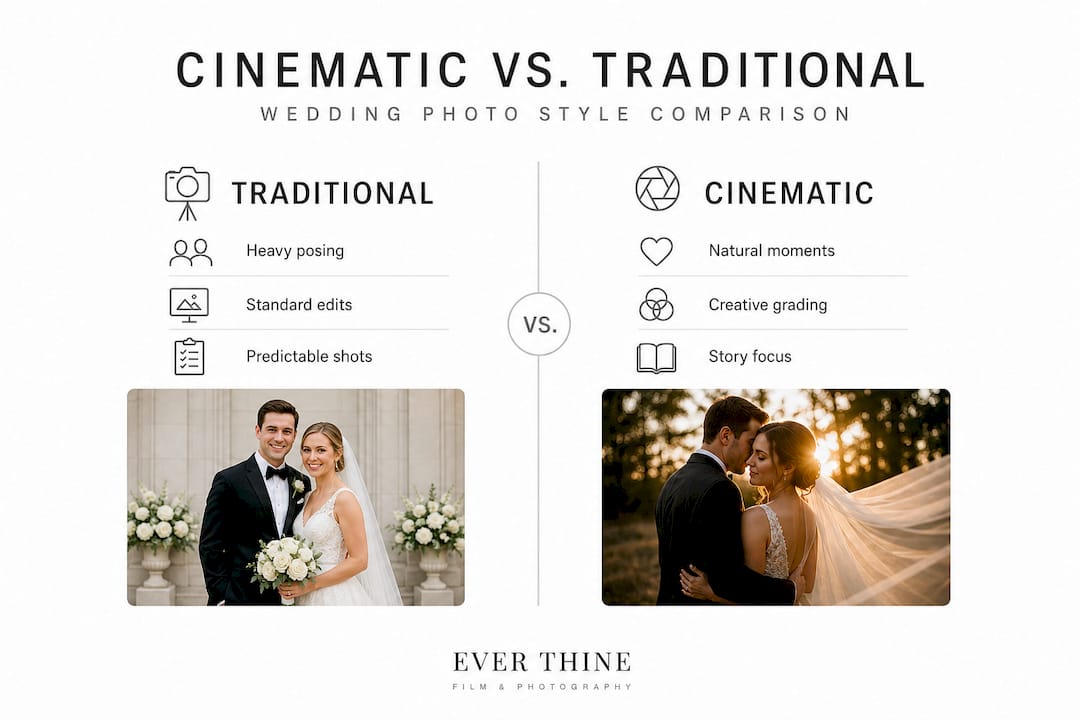
Subtle direction and anticipation of moments help achieve cinematic authenticity. When a couple understands this, they stop worrying about remembering instructions and simply enjoy being with each other. That relaxation shows in every image and every frame of footage.
Here is a simple overview of how the process unfolds on a wedding day for a genuinely cinematic outcome:
Pre-shoot conversation: The team learns about your personalities, preferences, and the moments that matter most to you.
Arrival and observation: Photographers and videographers arrive early to read the light, the venue, and the natural rhythm of the day.
Candid documentation: The majority of the day is captured without direction, using anticipation and positioning to secure decisive moments.
Gentle portrait time: A short, relaxed window for portraits uses natural light and real connection rather than formal poses.
Post-production: Footage and images are shaped into a coherent, emotionally resonant story in the editing suite.
Pro Tip: When you meet a potential wedding team, ask them where they position themselves during the ceremony. A great cinematic team will have a detailed, considered answer that reveals their knowledge of light, angles, and human emotion in that specific context.
Looking for inspiration on what cinematic wedding videographers can achieve when this approach is applied expertly will give you a clear sense of the difference between documentary-cinematic style and a more conventional approach.
The role of editing and colour in cinematic wedding storytelling
What happens in front of the camera is only part of the story. The work that follows in post-production is where raw footage and images are transformed into something genuinely moving. Many couples underestimate just how much skilled editing and colour grading contribute to the final result.
Colour grading brings emotional depth and unity to wedding films, setting mood and continuity across all footage. This is distinct from simply adjusting brightness or adding a filter. Colour grading involves carefully controlling the tones, shadows, highlights, and hues across every single shot so that the entire film feels cohesive, intentional, and emotionally consistent. A warm, golden grade evokes joy and intimacy. Cooler, more muted tones can add a sense of romance or quiet reflection. These are deliberate artistic choices, not automated adjustments.
The table below shows how specific editing techniques create particular emotional effects:
Editing technique | Emotional effect |
Slow pacing between cuts | Allows moments to breathe, builds tenderness |
Matched transitions | Creates visual flow and elegance |
Parallel editing | Connects separate moments, builds anticipation |
Sound design with ambient audio | Grounds the viewer in the real atmosphere of the day |
Music synchronisation | Amplifies joy, tears, or quiet intimacy |
Colour grading consistency | Unifies mood across different lighting conditions |
Editing transforms candid footage into a compelling, seamless narrative, and the best editors know that restraint is as important as creativity. It is tempting to think that more effects, more transitions, and more music means a better film. In practice, the opposite is usually true.
Simplicity serves the story. Every edit should serve the emotion, not distract from it.
Music choices matter enormously. The wrong track can undermine even the most beautiful footage.
Pace should match content. A quiet, intimate moment needs space. A reception full of dancing needs energy.
Less footage, more impact. A tightly edited five-minute film often moves people far more than a thirty-minute documentary.
Pro Tip: When reviewing a team’s showreel or portfolio, watch for consistency in colour and tone across different scenes. A well-graded wedding film looks like one cohesive piece, not a collection of different clips stitched together.
Choosing the right team for your cinematic wedding vision
Understanding cinematic style in depth gives you a significant advantage when you begin meeting potential photographers and videographers. You will know the right questions to ask and the right things to look for in their work.
Story-driven teams prioritise candid moments, using the day’s natural flow to create lasting visual stories. This is the single most important quality to seek. A team that talks about gear, resolution, and technical specifications without mentioning story or emotion may not be the right fit for a cinematic approach.
Qualities to look for include:
A portfolio that shows genuine emotion. Tears, laughter, and quiet glances are more telling than perfectly symmetrical compositions.
Consistency across different weddings. Great cinematic teams deliver a coherent style regardless of the venue or the weather.
Clear communication about their process. They should be able to explain how they work on a day, not just show you what they produce.
Evidence of documentary instinct. Look for images or footage that feel caught rather than constructed.
A relaxed, warm personality. You will spend your entire wedding day with these people. How they make you feel in a consultation is a strong indicator of how you will feel on the day.
During consultations, ask questions such as: How do you approach the first look or ceremony without being intrusive? How do you handle low-light receptions without flash? What is your editing process, and how long does it typically take? How do you incorporate our story and personalities into the final film?
“The difference between a good wedding film and an unforgettable one is whether the couple watching it feels transported back to how they actually felt that day, not just how it looked.”
Understanding the full wedding video storytelling process before you book will help you have far richer, more productive conversations with any team you meet. It also means you are less likely to be swayed by impressive gear lists or flashy showreels that lack genuine emotional depth.
The biggest cinematic style myth – and what really matters
Here is something we genuinely believe after years of capturing weddings in a documentary-cinematic style: the couples who obsess over aesthetics almost always end up with beautiful images that feel somehow empty. The couples who let go and focus on each other end up with films and photographs that make them cry every time they watch them.
The myth is that cinematic means looking a certain way. A particular colour palette, a particular lens, a particular grade. Couples come to consultations having researched cinematography extensively and sometimes arrive with mood boards of visual references. That research is not wasted, but it can lead people in the wrong direction if aesthetics become the primary goal.
What truly makes a wedding film or photo collection cinematic is the presence of genuine feeling. The moment a father steadies his breathing before the first look. The way two people share a quiet glance during the speeches that nobody else notices. The absolute, unguarded joy of the first dance when the couple forgets there is anyone else in the room. These moments cannot be manufactured. They can only be witnessed and captured by someone who knows how to be present without intruding.
Your wedding video story will be timeless if it is rooted in your truth, not in a trend. Trends shift. Colour grades go in and out of fashion. What never ages is the feeling of watching two people who are completely, honestly in love. That is what cinematic style, done properly, will always deliver.
Bring your cinematic wedding vision to life
If everything you have read here resonates with what you want from your wedding day coverage, then you are ready for a team that approaches every wedding as a story worth telling with real artistry and care.
[
At Wedding Film Photography, we specialise in documentary-cinematic wedding coverage across the Midlands and beyond. Whether you are planning a celebration with a Staffordshire wedding photographer, looking for a Derbyshire wedding photographer, or searching for a Worcestershire wedding photographer, our award-winning team brings genuine storytelling instinct and cinematic expertise to every wedding we cover. We would love to hear about your day and show you how we can bring your story to life in a way that feels completely and beautifully yours. Get in touch to begin the conversation.
Frequently asked questions
Is cinematic wedding style suitable for all types of weddings?
Yes, cinematic style is adaptable to any wedding format, whether intimate and low-key or large and elaborate, because it focuses on authentic storytelling rather than specific settings or scales.
How do I make sure my wedding video feels natural and not staged?
Choose a team that specialises in documentary-style, narrative-driven filming and prioritises observation over direction, as genuine emotion is always more compelling than anything constructed.
What’s the difference between cinematic wedding videos and traditional ones?
Cinematic style prioritises story, mood, and emotional resonance through creative editing and composition, while traditional wedding videos primarily document events in a straightforward chronological sequence.
Can I request specific scenes or moments to be included in a cinematic wedding film?
Absolutely, and professional teams blend requests with natural, story-led coverage so that requested moments are captured thoughtfully without disrupting the authentic flow of the day.
Does cinematic style cost more than traditional wedding photography or videography?
Cinematic style typically involves more advanced post-production work, including detailed colour grading and careful editing, which can affect pricing. It is always worth discussing your budget openly with a team so they can show you the options that best match your vision.
Recommended


Comments