
Colour grading for wedding films: enhancing documentary storytelling

TL;DR:
Subtle, natural colour grading supports emotional authenticity in wedding films.
Heavy stylisation can undermine genuine emotions and become dated over time.
Professional grading focuses on consistency, warmth, and serving the story rather than trend-driven looks.
Many couples planning their wedding film assume that bold, dramatic colour changes signal quality. The more stylised the look, the more professional it must be. In reality, the opposite is often true. The finest documentary-style wedding films rely on subtle, natural colour grading to keep your memories feeling genuine and emotionally resonant. Heavy filters can make footage look striking on first viewing, yet feel dated or artificial within a few years. This article explains what colour grading actually is, how professionals approach it, and how you can choose the right style to ensure your wedding film still moves you decades from now.
Table of Contents
What is colour grading and why is it important for wedding films?
Colour grading workflow: The process behind professional wedding films
Comparing documentary-style vs cinematic grading: What couples should know
What professional experience teaches about colour grading wedding films
Discover expertly graded wedding films with Ever Thine Film & Photography
Key Takeaways
Point | Details |
Subtle grading matters | The most emotionally resonant wedding films use natural, understated colour grading to preserve genuine moments. |
Professional workflow | Colour grading involves several key steps from preparation to review to ensure consistency and authenticity in every scene. |
Style choice impacts story | Choosing between documentary and cinematic grading affects the emotional tone and honesty of your wedding film. |
Expert advice | Discuss colour grading preferences with your videographer for the best results tailored to your vision. |
What is colour grading and why is it important for wedding films?
Colour grading and colour correction are two distinct processes, and confusing them is one of the most common mistakes couples make when evaluating wedding films. Colour correction is the technical foundation. It adjusts white balance, exposure, and contrast so that every shot looks consistent and natural, regardless of the lighting conditions when it was filmed. Colour grading comes next. It is the creative layer applied on top of correction, shaping the mood, warmth, and atmosphere of the finished film.
For documentary-style wedding films, the goal of grading is not to impose a dramatic look. It is to support the story. Natural, authentic tones with warm organic colours and minimal transitions preserve the real emotions captured on the day. When grading is done well, you should barely notice it. The footage simply feels warm, true, and alive.
Common misconceptions about colour grading include:
Heavy orange or teal tones signal a cinematic look
Desaturated, faded footage feels artistic and modern
Dramatic colour shifts between scenes add production value
Filters applied in post-production can fix poor lighting choices
None of these are accurate for documentary-style work. Heavy stylisation can actually undermine emotional authenticity by drawing attention to the aesthetic rather than the moment. When you watch your film on your tenth wedding anniversary, you want to feel transported back to that day, not reminded of a visual trend from 2026.
The editing steps for cinematic films involve careful decisions at every stage, and grading is where the emotional character of a film is truly set. Similarly, understanding what makes emotional wedding films so powerful often comes down to restraint in the grade rather than excess.
Pro Tip: When reviewing a videographer’s portfolio, ask specifically how they approach grading for emotional impact. A thoughtful answer reveals far more about their craft than a showreel alone.
Colour grading workflow: The process behind professional wedding films
Knowing why grading matters is one thing. Understanding how professionals actually do it helps you ask better questions and set realistic expectations. Here is a simplified overview of the workflow:
Footage preparation. Raw clips are organised, synced, and reviewed. The editor selects the best takes and identifies any exposure or white balance issues that need correcting before grading begins.
Colour correction. Each clip is adjusted to a neutral, consistent baseline. Skin tones are balanced, highlights are recovered, and shadows are lifted where needed. This stage is purely technical.
Primary grading. The editor applies a base grade to the entire film, establishing the overall warmth, contrast, and saturation. For documentary-style work, this is typically subtle and warm.
Secondary grading. Specific elements within individual shots are refined. Skin tones might be warmed slightly, or a sky might be deepened to feel more natural.
Review and consistency check. The full film is watched in sequence to ensure no jarring tonal shifts between scenes. Consistency is essential for a professional result.
The tools professionals use matter too. Most high-end wedding videographers work in DaVinci Resolve, which is widely regarded as the industry standard for colour work. Others use Adobe Premiere Pro with dedicated colour plugins. Both allow precise, repeatable control over the grade.
Stage | Purpose | Key tool |
Colour correction | Technical accuracy and consistency | DaVinci Resolve / Premiere Pro |
Primary grade | Establish overall mood and warmth | DaVinci Resolve |
Secondary grade | Refine skin tones and specific elements | DaVinci Resolve |
Consistency review | Ensure smooth tonal flow throughout | Playback and comparison |
Camera choice also influences the grading process. Footage shot in a flat, creative wedding editing techniques profile retains far more information for the colourist to work with. This is why professionals shoot in LOG or flat colour profiles, which look washed out on set but give maximum flexibility in post-production. A solid wedding video editing guide will always address this preparation stage as a critical foundation.
Pro Tip: Consistent grading prevents distracting tonal shifts between your ceremony, reception, and speeches. Ask your videographer how they ensure continuity across different lighting environments.
Comparing documentary-style vs cinematic grading: What couples should know
Not all wedding films are graded the same way, and understanding the difference helps you choose the approach that genuinely suits your story. Documentary-style grading and cinematic grading serve very different purposes.
Documentary-style grading prioritises honesty. The aim is to make the footage look as close to real life as possible, with warm, organic tones that feel natural rather than constructed. Transitions between scenes are minimal and smooth. The grade supports the emotion rather than competing with it. When you watch your grandmother’s reaction during the vows, you want to see her face clearly, not through a heavy colour filter.

Cinematic grading takes a more stylised approach. It often involves stronger contrast, selective colour manipulation, and a more deliberate visual mood. Think of the teal-and-orange look common in Hollywood blockbusters, or the cool, desaturated tones of certain art-house films. This can be striking, but it prioritises aesthetic impact over emotional transparency.
Feature | Documentary style | Cinematic style |
Colour tone | Warm, natural, organic | Stylised, high contrast |
Transitions | Minimal, smooth | Deliberate, dramatic |
Lighting treatment | Preserves natural light | Manipulates for mood |
Emotional focus | Authenticity and warmth | Aesthetic and atmosphere |
Longevity | Timeless | Trend-dependent |
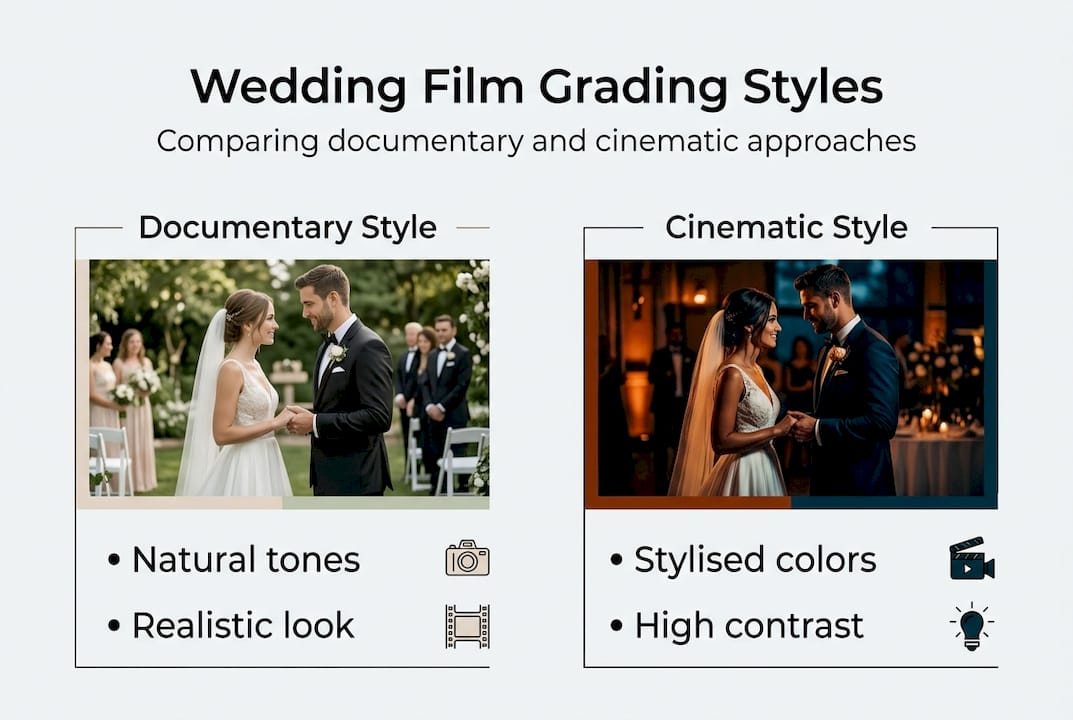
According to natural, authentic tones guidance from wedding film specialists, heavy stylisation should be avoided to preserve real emotions. Over 70% of UK couples, when asked about their priorities, indicate they want their wedding film to feel authentic rather than stylised. That preference is reflected in the growing demand for documentary-style coverage.
Understanding the wedding storytelling process helps clarify why grading choices matter so much. You might also find it useful to review examples of storytelling videos to see how different grading approaches affect the overall feel of a film.
How to choose a colour grading style for your wedding film
Choosing the right grading style starts with honest reflection on what you want your film to feel like in twenty years. Do you want to be transported back to the warmth and joy of the day itself? Or do you want a visually bold piece that prioritises a specific aesthetic? Neither answer is wrong, but knowing it helps you find the right videographer.
Here are practical steps to guide your decision:
Watch sample films critically. Do not just look at the highlight reel. Ask for a full ceremony or speech edit. This shows how grading holds up across an extended sequence.
Look for consistency. Does the tone shift dramatically between indoor and outdoor scenes? Jarring changes suggest inconsistent grading.
Assess warmth and skin tones. Skin tones are the clearest indicator of grading quality. They should look natural, warm, and true to life.
Ask direct questions. Enquire specifically about how the videographer approaches colour grading and what software they use.
Check for trend-chasing. If every film in the portfolio looks identical and follows a current social media aesthetic, consider whether that style will still feel relevant in a decade.
As noted in guidance on natural, authentic tones, prioritising warmth and consistency across varying lighting conditions is essential for preserving real emotions. A good wedding videography guide will always address style preferences as part of the initial consultation process. Understanding post-production for wedding films also helps you appreciate the craft behind a well-graded film.
Pro Tip: Look for consistency and warmth in sample wedding films. If the grade feels invisible and the emotion feels immediate, that is a sign of skilled, restrained work.
What professional experience teaches about colour grading wedding films
Here is something the industry does not say loudly enough: the most technically impressive grade is rarely the most emotionally effective one. We have seen couples fall in love with heavily stylised films during the booking process, only to feel disconnected from them five years later. The aesthetic dated. The emotions, however, were still there, buried under a look that no longer felt relevant.
Subtle, natural colour grading consistently delivers deeper emotional impact over time precisely because it does not compete with the story. Trends in colour grading move quickly. What looks fresh today can feel tired within two or three years. A warm, honest grade tied to the actual light and atmosphere of your wedding day will always feel true.
We have also found that couples who prioritise storytelling over aesthetics tend to be more satisfied with their films long-term. The emotional impact of editing is greatest when the grade serves the moment rather than overshadowing it. Our advice is simple: choose a videographer whose grading you barely notice, because that means it is doing exactly what it should.
Pro Tip: Focus on a tone that reflects your actual memories of the day, not the trend that looked good on Instagram last month.
Discover expertly graded wedding films with Ever Thine Film & Photography
If this article has helped you understand what to look for in professional colour grading, the next step is finding a team whose work genuinely reflects those values. At Ever Thine Film & Photography, we specialise in documentary-style wedding films with warm, natural grading that keeps your memories feeling real.
[
Our portfolio covers couples across the Midlands and beyond. Whether you are searching for a Derbyshire wedding photographer, a Staffordshire wedding photographer, or a Worcestershire wedding photographer, we would love to show you how subtle, consistent grading brings a wedding story to life. Get in touch to arrange a consultation and view full-length film examples.
Frequently asked questions
What is the main difference between colour correction and colour grading?
Colour correction adjusts footage to look natural and consistent, while colour grading stylises and enhances the film’s mood. Correction is technical; grading is creative.
Can I request a specific colour grading style for my wedding film?
Yes, couples should discuss their preferences with their videographer and review sample films before committing to a grading style. Most professionals are happy to tailor their approach within their signature aesthetic.
How does colour grading affect the emotional tone of a wedding film?
Colour grading shapes warmth, authenticity, and atmosphere in the footage, helping convey real emotions. Natural, warm tones tend to feel more emotionally immediate than heavily stylised grades.
What professional software is commonly used for colour grading?
Most professionals use DaVinci Resolve or Adobe Premiere Pro for advanced colour grading in wedding films. DaVinci Resolve is generally considered the industry standard for dedicated colour work.
Recommended


Comments