
What is reportage photography: a complete guide
- Jul 6
- 8 min read

TL;DR:
Reportage photography captures raw, real-time events without staging or manipulation to tell authentic stories. It emphasizes invisibility, anticipation, and emotional resonance in candid moments during unique occasions. The style is ideal for weddings, protests, festivals, and everyday life where genuine human behavior unfolds naturally.
Reportage photography is defined as a journalistic style of image-making that captures real events as they unfold, without posing, directing, or manipulating the scene. Rooted in photojournalism, its primary purpose is authentic storytelling through a sequence of candid images that place the viewer inside the moment. The style demands that the photographer remain invisible, allowing life to happen naturally in front of the lens. Whether applied to protests, festivals, or reportage wedding photography, the defining principle never changes: truth over aesthetics, story over perfection.
What is reportage photography and how does it differ from candid and documentary styles?
Reportage photography is a journalistic style focused on capturing authentic, real-time events unobtrusively, with no posing or scene manipulation. The term comes directly from the French word for reporting, and the approach mirrors how a news reporter covers a story. The photographer observes, anticipates, and records. They never intervene.
The confusion between reportage, documentary, and candid photography is common, but the distinctions matter.
Reportage vs documentary photography
Reportage tells a story about a single unfolding event, such as a wedding, a protest march, or a street festival. Documentary photography, by contrast, covers broader themes or social issues over a longer period. A documentary project on homelessness might take months or years to complete. A reportage shoot covers one afternoon at a community rally. Documentary photography prioritises truthful representation and often involves extended, analytical observation rather than immediate emotional capture.
Reportage vs candid photography
Candid photography simply means photographing people without their knowledge or without posing them. Reportage goes further. It requires a deliberate narrative intent. The photographer is not just snapping unposed images. They are constructing a visual story with a beginning, a middle, and an end. Photojournalists tell stories through a series of images that show minimal camera awareness by subjects, with tight limits on image manipulation to maintain story integrity.
The three styles share a commitment to truth, but their scope and intent differ clearly:
Reportage: Single event, immediate storytelling, emotional and immersive
Documentary: Long-term project, thematic depth, analytical and explanatory
Candid: Unposed images, no narrative requirement, no defined scope
Pro Tip: If you are unsure whether your shoot is reportage or documentary, ask yourself one question: am I covering one event today, or building a body of work over time? The answer tells you which approach applies.
What are the key techniques used in reportage photography?
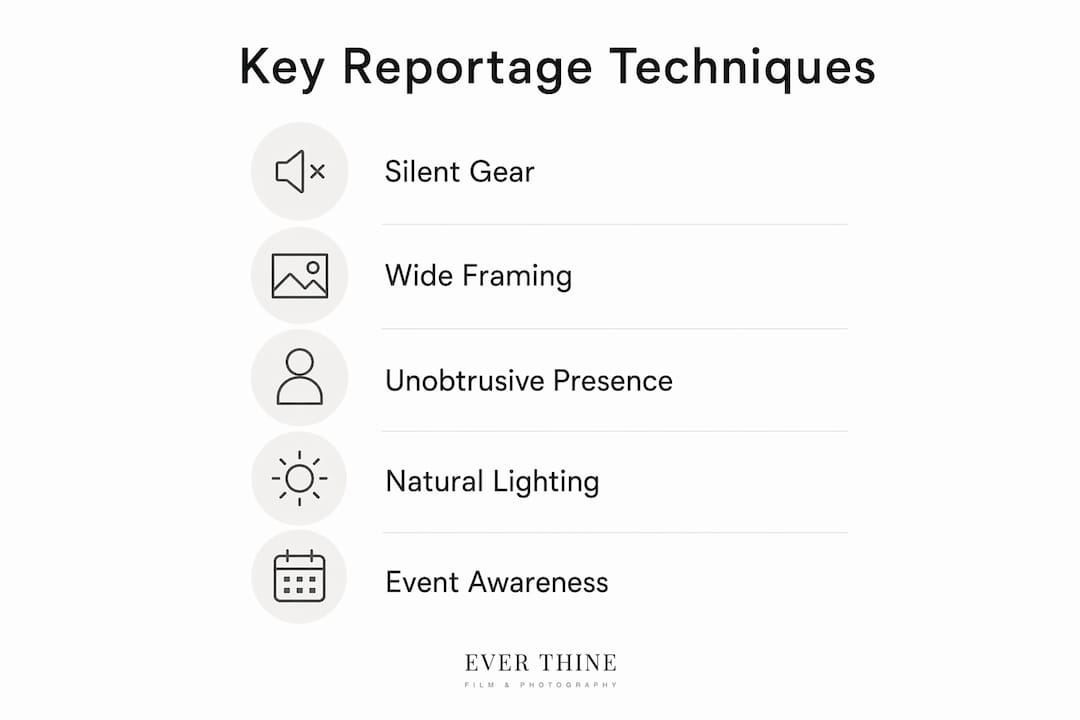
The techniques of reportage photography all serve one goal: keeping the photographer invisible so that subjects behave naturally. Every equipment choice and compositional decision supports that aim.
Gear selection
Reportage photographers use silent gear to remain invisible, including 35mm or 50mm prime lenses and silent shutter modes. A 35mm lens gives a natural field of view close to human vision, which makes images feel immediate and real. A 50mm lens compresses the scene slightly and works well in tighter spaces. Both are compact and far less intimidating than a large telephoto zoom. Smaller, less conspicuous equipment helps capture intimate moments without pulling subjects out of the moment.
Silent shutter mode, available on most modern mirrorless cameras, removes the mechanical click that can alert subjects. At a wedding ceremony or a quiet family gathering, a single shutter sound can shift a subject’s attention and break the authenticity of the scene.
Composition and framing
Professional reportage conventions include composing shots in landscape orientation and shooting wide to show the environment alongside the action. A tight crop of a laughing face tells part of a story. A wider frame that includes the surrounding guests, the venue, and the light tells the whole story. Context is everything in reportage.
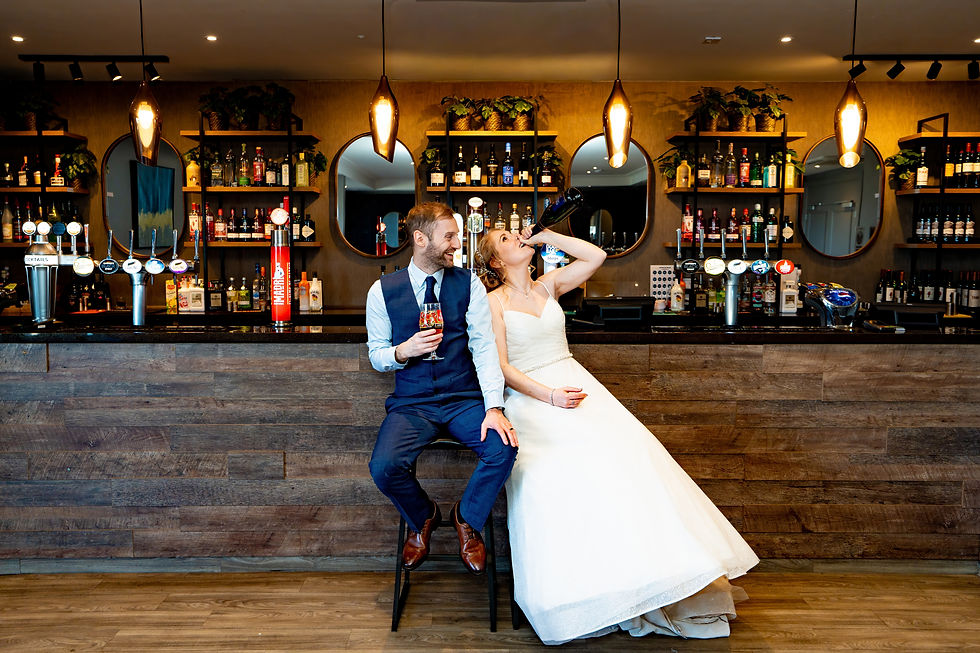
Avoiding the “fourth wall break” is a core convention. When a subject looks directly into the camera, the illusion of an unobserved moment collapses. The viewer is reminded that a photographer was present. Skilled reportage photographers anticipate this and either reframe or wait for the subject’s gaze to return to the scene.
Key compositional habits for reportage:
Shoot wider than you think you need to preserve environmental context
Use landscape orientation as the default to capture scene and action together
Anticipate movement rather than reacting to it
Position yourself where action is likely to happen, not where it is already happening
Keep your camera raised and ready to avoid the delay of lifting it to your eye
Maintaining an unobtrusive presence
Physical behaviour matters as much as gear. Wearing neutral, dark clothing reduces visual presence. Moving slowly and deliberately avoids drawing attention. Staying at the edges of a scene rather than its centre keeps the photographer out of the sightline of most subjects. Over time, subjects forget the camera is there entirely. That is when the most honest images appear.
Pro Tip: Arrive early to every event and spend the first 20 minutes simply being present without shooting. Subjects adjust to your presence far faster when you are not immediately pointing a lens at them.
How does reportage photography create emotional resonance?
Reportage photography aims to create atmosphere and arouse immediate emotion by immersing the viewer in the action. This is the quality that separates it most clearly from documentary work. Where documentary invites analysis, reportage demands feeling.
The emotional power comes from the unguarded nature of the images. A subject who does not know they are being photographed cannot perform for the camera. Their expression, posture, and interaction with others are entirely genuine. The viewer senses this authenticity instinctively, even without being able to articulate why the image feels different from a posed portrait.
“Reportage follows the action directly. It places the viewer inside the moment rather than outside it, looking in. That immediacy is what makes a reportage image feel urgent, alive, and true in a way that a staged photograph simply cannot replicate.”
Composition contributes directly to emotional tone. A wide shot that places a small figure within a vast, busy environment creates a sense of scale and isolation. A tight frame on two people sharing a private laugh creates warmth and intimacy. The photographer’s choice of what to include and exclude shapes the emotional experience of the viewer without altering the reality of the scene.
The story arc matters too. A single reportage image can be powerful, but a sequence of images from the same event builds cumulative emotional weight. The opening image establishes context. The middle images capture action and interaction. The closing image provides resolution or reflection. This narrative structure is what elevates reportage above simple candid photography.
Where is reportage photography most effectively applied?
Reportage photography works best in any setting where real human behaviour is the subject. The style thrives wherever life is happening without a script.
Common applications include:
Weddings. Reportage wedding photography captures unstaged, authentic moments without posing, offering natural storytelling of the day’s events. The first look, the tears during vows, the laughter at the reception. None of these moments can be recreated convincingly once they have passed.
Protests and public events. Political demonstrations and public gatherings produce raw, unfiltered human emotion. Reportage is the natural language of photojournalism in these settings.
Festivals and cultural events. Music festivals, street carnivals, and cultural celebrations offer a constant flow of unscripted moments. The variety of light, colour, and human interaction makes these rich environments for reportage work.
Family life and everyday moments. Reportage applied to domestic settings captures the texture of daily life. A child’s concentration during play, a family meal, a quiet moment between siblings. These images often become the most treasured over time.
Corporate and community events. Conferences, award ceremonies, and community gatherings all benefit from reportage coverage that captures genuine reactions rather than stiff, posed group shots.
Adapting reportage principles to different environments requires reading the room. A loud festival allows more movement and closer proximity without disrupting subjects. A quiet ceremony demands greater stillness and distance. The photojournalistic approach to weddings, for example, requires the photographer to understand the event’s rhythm well enough to anticipate key moments before they happen.
What is reportage videography follows the same principles applied to moving image. The videographer remains unobtrusive, captures events as they unfold, and constructs a narrative from genuine footage rather than directed scenes. The emotional result is the same: a record that feels lived-in and true.
Key takeaways
Reportage photography is the most emotionally direct form of image-making because it captures truth as it happens, without staging, posing, or manipulation.
Point | Details |
Core definition | Reportage photography captures real events unobtrusively, with no posing or scene manipulation. |
Reportage vs documentary | Reportage covers a single event with emotional immediacy; documentary builds analytical narratives over time. |
Essential techniques | Use 35mm or 50mm prime lenses, silent shutter mode, and wide framing to stay invisible and capture context. |
Emotional power | Unguarded subjects produce genuine expressions that viewers recognise as authentic instinctively. |
Best applications | Weddings, protests, festivals, and family life all benefit from reportage’s unscripted, story-driven approach. |
Why I think most photographers misunderstand reportage
The most common mistake I see from photographers new to reportage is treating it as an excuse to be passive. They hang back, wait for something to happen, and then wonder why their images feel flat. Reportage is not passive observation. It is active anticipation.
The best reportage images come from understanding the event well enough to know where the next moment will happen before it does. At a wedding, that means knowing the order of the day, reading the body language of the couple, and positioning yourself near the grandmother who is clearly about to cry. You are not directing anything. You are simply being in the right place at the right time, consistently.
The second pitfall is over-editing. Reportage lives or dies on believability. Heavy colour grading, skin smoothing, or dramatic vignetting all signal to the viewer that the image has been processed, which undermines the sense of truth. Keep post-processing light. Adjust exposure and contrast, correct white balance, and leave the rest alone.
The reward for getting reportage right is unlike anything else in photography. When a client sees an image of themselves laughing with their father, completely unaware the camera was there, the reaction is always the same. They go quiet for a moment. That silence is the measure of a successful reportage image. It means the photograph captured something real.
If you are starting out, practise at every opportunity. Family gatherings, local events, and public spaces are all free training grounds. The skill of becoming invisible takes time to develop, but it is the foundation everything else is built on.
— Ever
Authentic wedding coverage from Weddingfilmphotography
Weddingfilmphotography specialises in candid, reportage-style wedding photography that captures your day exactly as it happens. No stiff poses, no interruptions, no manufactured moments.
[
Every wedding is covered with the same unobtrusive approach: small, silent equipment, a deep understanding of the day’s rhythm, and a commitment to telling your story honestly. Whether you are planning a ceremony in Derbyshire, Staffordshire, or beyond, Weddingfilmphotography brings the same documentary instinct to every shoot. Browse the wedding photography packages to see how reportage principles translate into images you will keep for a lifetime.
FAQ
What does reportage photography mean?
Reportage photography means capturing real events as they unfold, without posing or directing subjects, in a journalistic style focused on authentic storytelling.
How does reportage differ from documentary photography?
Reportage covers a single event with immediate emotional impact, while documentary photography focuses on broader themes over a longer period with a more analytical approach.
What equipment do reportage photographers use?
Reportage photographers typically use 35mm or 50mm prime lenses with silent shutter modes to remain unobtrusive and avoid distracting subjects during an event.
Is reportage photography the same as candid photography?
Candid photography simply means unposed images, whereas reportage requires deliberate narrative intent, constructing a visual story with context, sequence, and emotional arc.
How is reportage photography used at weddings?
Reportage wedding photography captures unstaged moments throughout the day, from the ceremony to the reception, producing a natural, story-driven record of genuine emotions and interactions.
Recommended

Comments