
5–15 Minute First Touch Wedding Photos: UK Photographer Brief
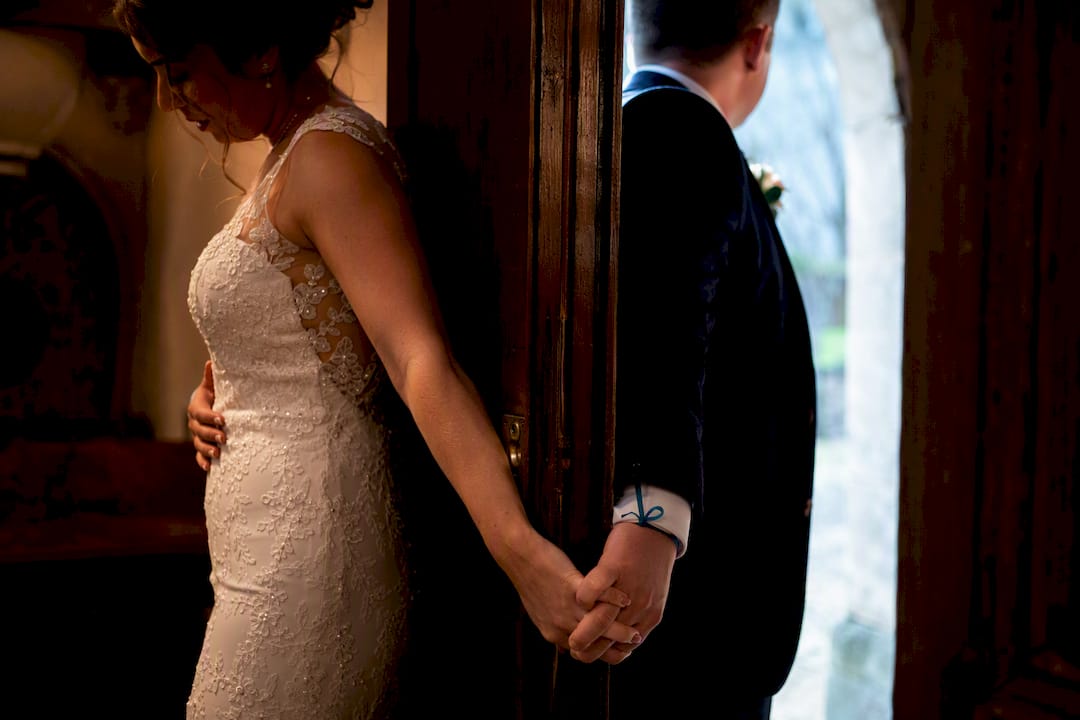
A first touch is a private pre-ceremony moment where partners connect physically, usually hand to hand, through a door, doorframe, or from opposite sides of a wall, without seeing one another. Couples choose it instead of a first look when they want the emotional benefit of a quiet pause together without giving up the moment they walk down the aisle. A skilled photographer can capture the whole thing from a distance, so neither partner even notices the camera.
TL;DR:
A first touch is a private moment where partners connect physically without seeing each other, typically through a door or wall, and it requires less space than a first look.
Popular setups include holding hands across a door gap, standing back-to-back, or using a blindfold, with photographers recommending visual details like close-up hand shots or environmental wide shots.
Planning involves finalizing timing, location, and shot list in advance, and coordinating with the photographer to ensure authentic, candid images using natural light and distance shooting.
A first touch usually lasts between five and fifteen minutes, fitting easily into a morning routine before the ceremony, with a 30-minute buffer recommended for contingencies.
Confirm a private, accessible location and rehearse the sequence with your photographer beforehand to avoid exposure issues and to capture genuine emotion.
Table of Contents
What does a first touch actually look like?
A first look means seeing your partner before the ceremony; a first touch means feeling them without seeing them at all. That distinction is the whole point. The privacy stays intact, but you still get the physical reassurance of contact when nerves are highest.
Photographers report popular methods including holding hands around a wall, standing back to back, using a blindfold, or speaking through a door. Four set-ups come up again and again:
Doorframe or door gap. One partner stands each side of a slightly open door, hands meeting through the gap. Simple, and it works in almost any venue.
Around a pillar or wall corner. Popular at country houses and barns where a convenient stone pillar or exposed beam already exists.
Back-to-back. Partners stand shoulder to shoulder, backs touching, sometimes reading vows or a letter aloud without turning round.
Blindfolded touch. One partner wears a blindfold and reaches out to find the other’s hands, adding a playful, sensory layer to the moment.
Why couples pick a first touch over a first look
The main draw is emotional, not aesthetic. Photographers say the private pause helps calm nerves and tends to produce calmer, more natural expressions once the ceremony starts rather than the wide-eyed shock some couples feel walking into a first look.
Traditionalists get the outcome they want too. UK wedding coverage notes that first touches let couples keep the aisle reveal intact while still producing intimate, emotional photographs beforehand — you are not choosing between tradition and intimacy, you get both.
There is a practical angle as well. Venues with awkward layouts, tight changing rooms, or a ceremony room that opens straight onto the aisle often cannot accommodate a proper first look walk. A first touch needs far less space: a corridor, a garden gate, a vestry door will all do. For couples running a tight schedule, it also slots into a smaller window than a full first look sequence, which usually needs time for a walk, reaction shots, and a portrait session afterwards.
Creative set-ups and photo ideas worth requesting
Beyond the standard doorframe pose, a few set-ups reliably produce the most striking images. Photographers recommend arrangements such as both sides of a door, blindfolded touches, and back-to-back positioning for varied, photogenic results, and a handful of extra details lift the whole sequence further:
Doorframe with tight hand detail plus a wide shot. Ask for one frame close on the hands, another pulled back to show the venue and the light around you both.
Curtain or floral arch. If your venue has drapes or a floral installation, using it as the divider adds texture that a plain door lacks.
Back-to-back letter reading. Reading private vows or a letter aloud while touching backs gives your photographer genuine, unposed reactions to work with.
Blindfolded reach. Slightly theatrical, and it tends to produce laughter, which photographs beautifully.
Exchanging tokens or letters. Small props such as handwritten letters or a modest gift make the moment, and the resulting photos, noticeably more personal.
Pick one or two, not all five. Overloading the moment with props and poses undercuts the spontaneity that makes a first touch worth doing.
How to plan and coordinate a first touch with your photographer
Nothing about a first touch needs to be left to chance on the day itself. Agree the details in advance and it runs itself:
Lock in timing and location during your final planning meeting, not on the morning of the wedding.
Decide how your photographer will shoot it — visible and close, or working at a distance with a telephoto lens and silent shutter.
List the exact frames you want, from tight hand shots to wide environmental frames, so nothing is missed in the moment.
Assign a helper to manage dress logistics, give the timing cue, and keep guests or staff away from the spot.
Talk through backups for light and weather, and agree roughly how long you will both linger before moving on.
A documentary approach using telephoto lenses, silent shooting, and available light tends to capture more authentic emotion than a heavily directed set-up, so it is worth asking your photographer directly how they plan to shoot it rather than assuming.
Pro Tip: Walk the exact spot with your photographer the day before, at the same time of day the moment will happen. Light changes fast, and what looks perfect at 11am can be flat and grey by 2pm.
Where a first touch fits in your wedding-day timeline
A first touch typically needs five to fifteen minutes once you include set-up and photographer direction, which makes it easy to tuck into an already busy morning.
Hair, make-up, and dressing finish first, with detail shots (rings, dress, shoes) captured in parallel.
The first touch happens once both partners are fully dressed, roughly 30 to 45 minutes before the ceremony call time.
A 30-minute buffer follows, covering travel between rooms, last-minute fixes, and settling guests, before the ceremony itself begins.
That buffer matters more than the first touch itself. Skip it and a five-minute moment can easily eat into the margin you need for the unexpected: a delayed car, a missing buttonhole, a guest who needs directing to their seat.
Shot list: exact frames to request from your photographer
Hand this list to your photographer directly, or paste it into your planning notes.
Close-up of clasped hands through the doorframe, wall gap, or curtain.
Wide environmental frame showing one partner on each side of the divider, with the venue visible.
Telephoto or over-the-shoulder POV shot from a distance, to preserve the sense of privacy in the final image.
Silhouette or profile shot using backlight, particularly effective if the moment happens near a window or doorway with strong natural light behind you.
Detail frames of rings, a letter, or any token exchanged, shot separately once the main moment has passed.
A first touch usually runs no longer than fifteen minutes start to finish, including the time your photographer needs to set up and direct the moment, so a tight shot list matters more than a long one. Five frames, done well, beat fifteen rushed ones.
Privacy, accessibility, and venue logistics to confirm
Confirm with your venue coordinator, in writing if possible, that the spot you have chosen is genuinely private during the window you need it. A corridor that looks quiet on a site visit can fill with catering staff or early guests on the day itself.
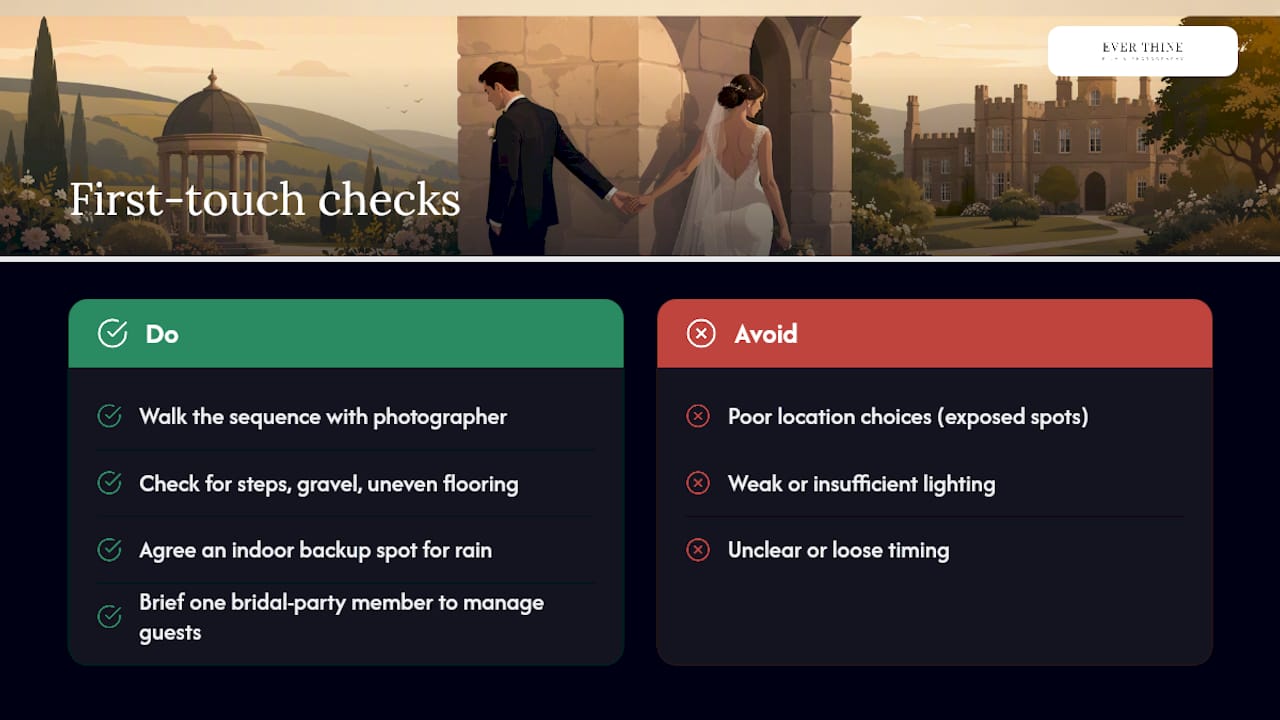
Check the ground too. Steps, gravel, or uneven flooring near a garden gate or pillar can be a real problem in wedding shoes. Poor location choices, weak lighting, and unclear timing are among the most common reasons a first touch ends up rushed or accidentally exposed, so walking the sequence once with your photographer beforehand is worth the ten minutes it takes. Always agree a backup spot indoors in case of rain, and brief one member of your bridal party to manage guest flow so nobody wanders into shot.
Dawn & Carl: photographer notes on capturing authentic first-touch moments
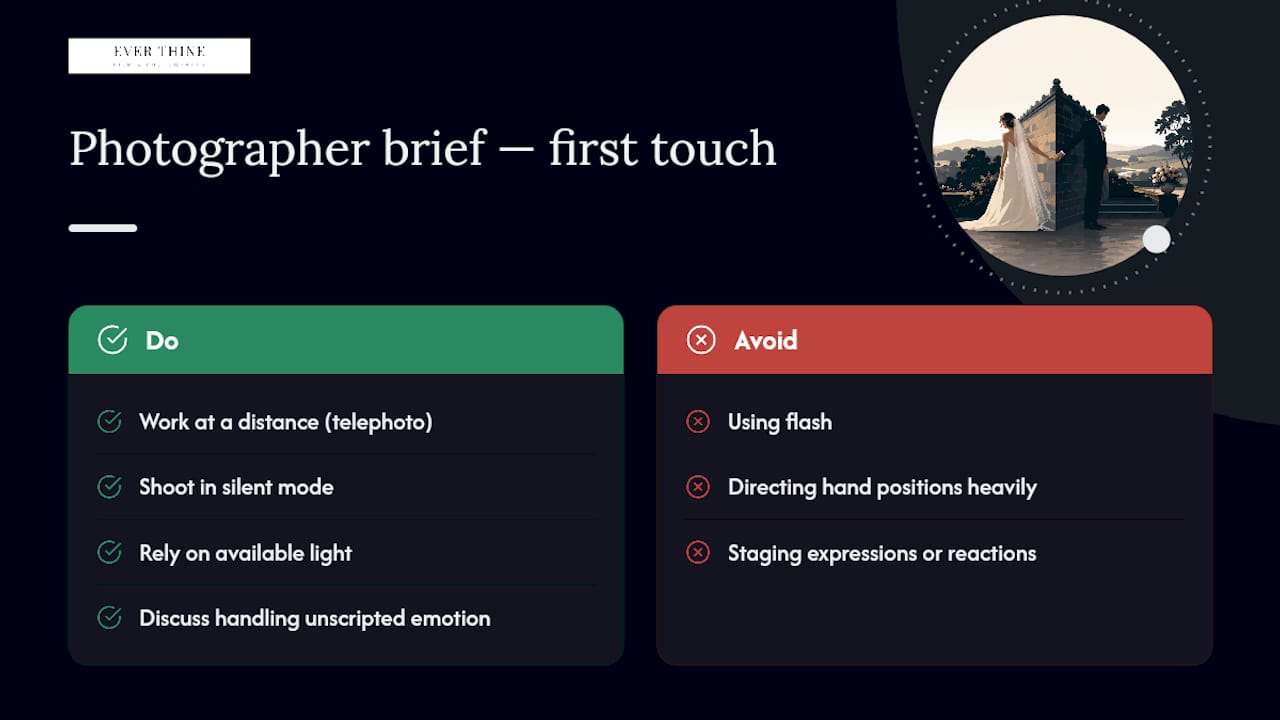
A documentary approach changes what a first touch looks like on camera. Rather than directing every hand position, standing back with a telephoto lens and shooting in silent mode lets the moment unfold the way it would if no camera were there at all, which is usually when the best expressions happen.
Ask your photographer to work at a distance, avoid flash entirely, and rely on available light wherever the venue allows it. It is also worth discussing how they handle genuinely emotional, unscripted moments elsewhere in the day, since the same instincts that produce a good speech reaction shot are what make a first touch photograph feel real rather than staged.
— Dawn & Carl
Book Dawn & Carl for your first-touch coverage
If you like the idea of a first touch but are not sure how to brief a photographer on it, that briefing is a common service provided by wedding photography businesses as standard. Full wedding photography and cinematic film packages often include pre-ceremony coverage needed to plan and shoot a first touch properly, alongside same-day content creation options for highlights.
[
Booking starts with a conversation about your venue, your timeline, and which of the set-ups above actually suits your space, whether that is a doorframe, a pillar, or a curtained arch. Wedding photographers often travel across Staffordshire and the wider West Midlands, and cover destination weddings beyond those areas. Couples in Derbyshire can see full package details on the Derbyshire wedding photography page, and those closer to home will find galleries and pricing on the Staffordshire wedding photographer page. If you are further south, the Worcestershire landing page has regional details and an enquiry form. Get in touch for a bespoke quote and start mapping your first-touch moment into the day itself.
Sources
For more set-up ideas and planning checklists, see creative wedding photography ideas and BlackBride’s first-touch formats.
FAQ
What is the 30-minute rule for weddings?
It refers to keeping a 30-minute buffer in your timeline after moments like a first touch, covering travel between rooms and last-minute fixes before the ceremony begins.
Is a first look with dad or with the groom first?
That depends entirely on personal preference; some couples do a first look with a parent before one with their partner, but a first touch sidesteps the question altogether since it involves no visual reveal to arrange in order.
Can you kiss during a first look or first touch?
Yes, plenty of couples do, though a first touch is usually built around hands and voice rather than a kiss, since the point is connection without sight.
What are the drawbacks of a first look?
A first look needs more time and space than most couples expect, and it removes the traditional aisle reveal entirely, which is exactly why couples who want both intimacy and tradition tend to choose a first touch instead.
How long does a first touch actually take?
Around five to fifteen minutes in total, including set-up and photographer direction, which is why it fits neatly into a morning that already includes hair, make-up, and detail shots.
Recommended

Comments