
How to communicate with photographers: a couple's guide

TL;DR:
Effective communication with photographers is essential for capturing wedding images that truly reflect your day. Clear briefs, open dialogue, and timely questions ensure smoother planning and a more satisfying photography experience.
Effective communication with photographers is the single most important factor in getting wedding images that genuinely reflect your day. Couples who brief their photographer clearly, ask the right questions, and maintain open dialogue throughout the planning process consistently report smoother wedding days and more satisfying results. This guide covers the core techniques for working with photographers, from preparing your brief and building rapport to using practical tools that keep everyone aligned. Whether you are newly engaged or weeks away from your wedding, these strategies will help you get the most from your photographer.
How to communicate with photographers before the wedding
Clear pre-wedding communication is the foundation of great photography. The more your photographer understands your vision before the day, the less time you spend directing and the more time you spend enjoying yourselves.
Start by sharing visual references. Pinterest boards and venue photos give your photographer a concrete sense of the mood, style, and moments you value most. Verbal descriptions alone rarely convey the full picture. A collection of images you love, alongside a few you actively dislike, removes ambiguity and saves time on the day.
Your brief should also cover the practical essentials:
Shot list: A written list of must-have moments and group combinations. A well-organised shot list can save up to 45 minutes during group photo sessions. That time is better spent celebrating.
Timeline: Share your full schedule, including ceremony start time, reception transitions, and any planned surprises. Photographers plan their positioning and lighting around your timeline.
Guest list notes: Flag any guests who are hard to spot in a crowd, elderly relatives who cannot stand for long, or VIPs who must appear in formal portraits.
Image rights: Under the Copyright, Designs and Patents Act 1988, photographers retain copyright by default. You receive a personal use licence. Confirm exactly what you can do with your images before you pay a deposit.
Pro Tip: Organise your brief into a single shared document using Google Drive or a similar platform. Label each section clearly so your photographer can find what they need without back-and-forth emails.
Clear written contracts that set expectations upfront prevent misunderstandings and reshoot requests. Include services, turnaround times, pricing, and usage rights in writing before you sign.
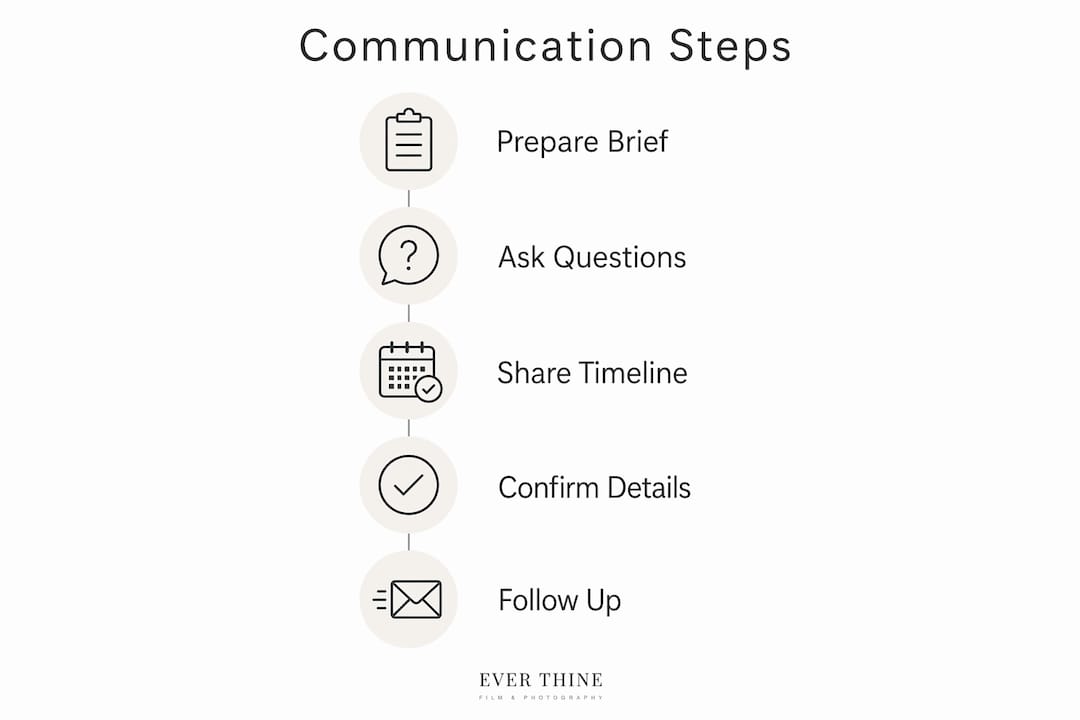
What questions should you ask your wedding photographer?
Asking the right questions before you book confirms compatibility and removes uncertainty. A good photographer welcomes these conversations. One who deflects or gives vague answers is worth reconsidering.
What is your shooting style? Ask whether they work in a candid documentary style, a directed portrait style, or a blend of both. Your answer shapes everything from how relaxed you feel on the day to the mood of the final gallery.
Who will actually photograph our wedding? Some studios send a second photographer or an associate on the day. Confirm the name and portfolio of the person who will be there.
What is your backup plan if you fall ill? Professional photographers generally have trusted colleagues who can step in if they are unwell. Asking this question is not rude. It is responsible planning.
When will we receive our images? Delivery timelines vary widely. Agree a specific timeframe in writing, not a vague estimate.
How will images be delivered? Most photographers use online gallery platforms such as Pixieset or ShootProof to deliver full-resolution images securely. These platforms also allow you to download, share, and order prints.
What are the licensing terms? Confirm whether your licence covers social media use, printing, and sharing with family members.
Pro Tip: Treat your first meeting or video call as a two-way interview. Notice whether the photographer listens carefully, asks questions about you as a couple, and makes you feel at ease. You will spend 8–12 hours with this person on one of the most emotional days of your life. Personality fit matters as much as technical skill.
A pre-wedding consultation is the best place to work through these questions. It also gives you a chance to flag any concerns before the contract is signed.
How do you build strong communication throughout the planning process?
Ongoing communication keeps your photographer informed and your plans aligned. A single briefing call six months before the wedding is not enough.

Establish a clear communication channel early. Email works well for formal updates and document sharing. A messaging app suits quick questions and last-minute changes. Agree which channel your photographer prefers and stick to it. Mixing channels creates gaps.
Share updates proactively. Regular communication about timeline or guest list changes allows your photographer to adjust plans and avoid confusion on the day. Do not wait until the week before to mention that the ceremony has moved by 30 minutes.
Avoid these common communication mistakes:
Leaving decisions too late. Photographers need time to plan lighting, positioning, and logistics. Give them at least two weeks’ notice for significant changes.
Assuming they will remember verbal agreements. Follow up every important conversation with a brief written summary.
Overloading the day-of communication. On the wedding day itself, keep requests short and clear. Your photographer is already working to a plan. Trust the process.
Forgetting to give feedback. If you receive proofs and something is not right, say so clearly and constructively. Specific feedback (“I would prefer warmer tones in the outdoor shots”) is far more useful than “I am not sure about these.”
Booking an engagement shoot is one of the most effective ways to build rapport before the wedding day. Pre-wedding sessions improve natural interaction and ease in front of the camera. They also give you a chance to test communication in a low-stakes setting. You can read more about managing photography stress as a couple in the run-up to your wedding.
What tools help you brief a photographer effectively?
A strong brief combines visual references, written lists, and a clear timeline. Each tool serves a different purpose.
Mood boards communicate atmosphere and emotion. They show your photographer the overall feeling you want, from light and airy to moody and dramatic. Mood boards work best when they are curated rather than exhaustive. Aim for 10–20 images that share a consistent tone.
Shot lists communicate specifics. They list the exact moments and group combinations you need captured. A shot list is not a creative straitjacket. It is a safety net that ensures no important moment is missed. Keep it focused on must-haves rather than nice-to-haves.
Sample galleries show your photographer the editing style you prefer. If you love a particular look, share a gallery that demonstrates it. This is especially useful when discussing colour grading, contrast, and skin tone preferences.
Briefing tool | Best for | Limitation |
Mood board | Communicating overall style and mood | Does not specify individual shots |
Shot list | Ensuring key moments are captured | Can feel restrictive if too long |
Sample gallery | Aligning on editing style | May not reflect your venue or lighting |
Written timeline | Coordinating logistics and positioning | Needs updating as plans change |
Pro Tip: Keep your shot list to a maximum of 20–25 items for group photos. Longer lists slow down the session and reduce the time available for natural, candid coverage. Your photographer will capture the spontaneous moments between the formal shots. Those are often the ones you will treasure most.
For a detailed walkthrough of wedding photography preparation, Weddingfilmphotography has published a practical guide covering everything from venue walkthroughs to timeline planning.
Key takeaways
Clear, proactive communication with your photographer produces better images, a calmer wedding day, and fewer regrets.
Point | Details |
Prepare a visual brief | Share Pinterest boards, venue photos, and sample galleries before the wedding to align on style. |
Confirm rights in writing | Under UK copyright law, photographers retain ownership; agree your personal use licence before paying a deposit. |
Ask the right questions | Confirm shooting style, backup plans, delivery timelines, and who will actually be there on the day. |
Use a focused shot list | A concise shot list of 20–25 group photos saves time and protects against missing key moments. |
Maintain ongoing dialogue | Share timeline and guest list updates proactively; follow up verbal agreements in writing. |
Why communication is the part most couples underestimate
After working with couples across Staffordshire and beyond, the pattern I see most often is this: couples spend months choosing a photographer based on portfolio alone, then hand over a vague brief and hope for the best. The portfolio matters, of course. But the brief matters just as much.
The couples who get the most from their wedding photography are the ones who treat it as a collaboration. They share references, ask direct questions, and stay in contact throughout the planning process. They also trust their photographer to make creative decisions on the day, because they have already established a shared understanding of what they want.
Personality fit is something I feel strongly about. You will spend the better part of a day with your photographer during one of the most emotionally charged experiences of your life. If the first meeting feels awkward or one-sided, that feeling rarely improves. A good photographer asks as many questions as you do. They want to understand your relationship, your priorities, and the moments that matter most to you.
My practical advice: book a pre-wedding consultation, not just a phone call. Sit down together, walk through the day, and share your concerns. The photographers who offer this as standard are the ones who take communication seriously. That investment of an hour before the wedding pays back in images that actually feel like you.
— Ever
Working with Weddingfilmphotography to get your vision right
Knowing what to communicate is one thing. Finding a photographer who genuinely listens is another.
[
Weddingfilmphotography works with couples across Staffordshire, Derbyshire, and Worcestershire using a documentary approach built on honest conversation. Every booking includes a pre-wedding consultation where you walk through your timeline, share your references, and ask every question on your list. The team’s wedding photography in Derbyshire service is built around understanding your day before it happens, so nothing important is left to chance. If you are planning a wedding and want a photographer who treats communication as part of the craft, get in touch with Weddingfilmphotography to start that conversation.
FAQ
What should I tell my photographer before the wedding?
Share your timeline, a shot list of key moments, visual references such as Pinterest boards, and any specific guest requirements. Confirm image rights and delivery timelines in writing before signing the contract.
How many questions should I ask a wedding photographer?
Ask at least six questions covering shooting style, who will attend, backup plans, delivery timelines, image format, and licensing terms. A full questions checklist helps ensure nothing is missed.
Who owns my wedding photos under UK law?
Under the Copyright, Designs and Patents Act 1988, the photographer retains copyright. You receive a personal use licence. Always confirm the specific terms of that licence in your contract before paying a deposit.
How long does a wedding photographer need my brief?
Share your brief at least four to six weeks before the wedding. This gives your photographer time to plan lighting, logistics, and positioning without last-minute pressure.
What is the best way to share my photography brief?
A single shared document on Google Drive works well. Include your timeline, shot list, mood board links, and any venue details in clearly labelled sections so your photographer can access everything in one place.
Recommended


Thank you so much for sharing this guide! Clear communication between a couple and their photo team really makes all the difference on such an important day. When you talk through your timeline, ideas, and favorite angles ahead of time, everything goes so much smoother. Anyone searching for a wedding photographer in Maine should definitely give this a read before their big day!