
Outdoor Wedding Videography: How to Get a Film That Looks and Sounds Right
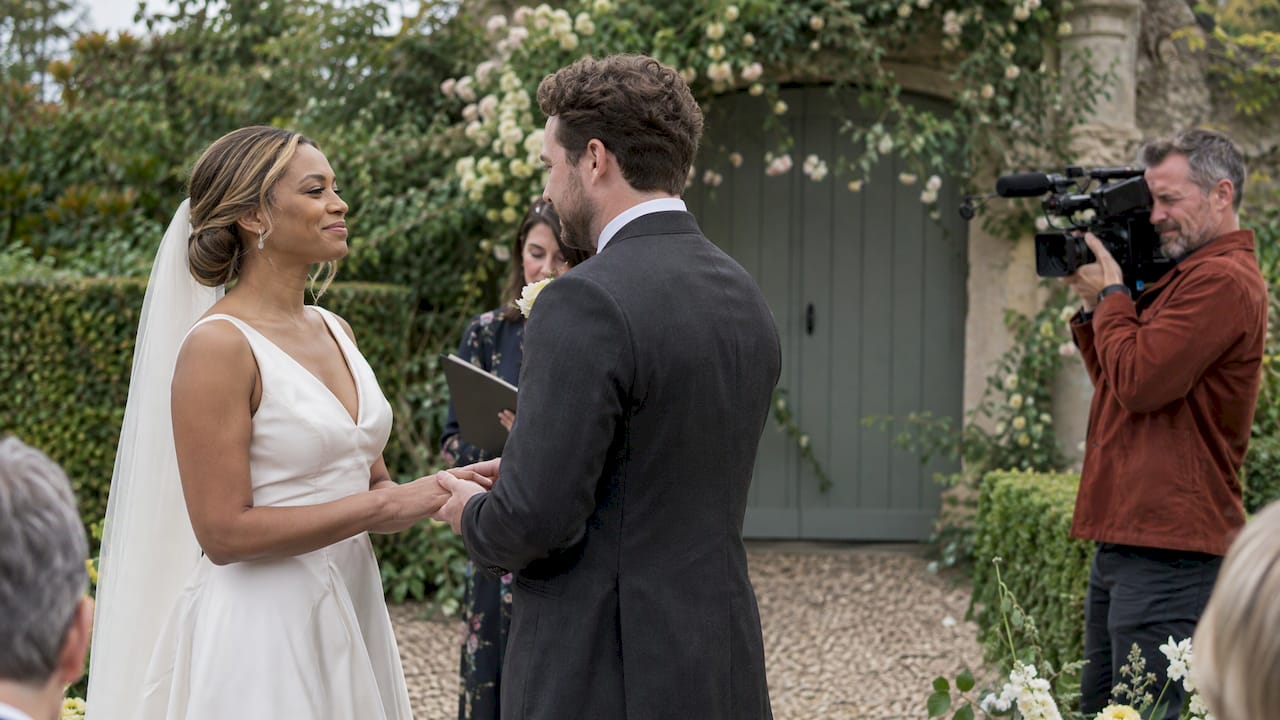
An outdoor wedding film lives or dies on three things: how the light is handled, whether your vows and speeches are properly recorded in open air, and whether there is a weather plan that your videographer has actually seen. Get those right and a garden, field or estate lawn gives you the most beautiful footage of the day. Leave them to chance and you can end up with squinting faces, a wind roar over your vows and a scramble when the clouds arrive.
We are Dawn and Carl, a husband-and-wife team who shoot documentary-style wedding videography and photography across Staffordshire, the West Midlands and the wider UK. This guide is written for couples planning an outdoor ceremony or an outdoor day, whether you are choosing a venue, building a timeline or deciding what to ask a film team before you book.
Key Takeaways
Outdoor ceremonies need a sound plan, not just a camera plan: open air has nothing to bounce speech back, and wind and distance take the rest.
Light changes hour by hour outdoors, so the order of your day shapes how your film looks. Plan the timeline around the light as well as the venue.
A rain plan is part of the film brief. Agree the indoor alternative, who makes the call and by when, before the day.
Summer heat now affects timings too. Shade and later ceremony times protect your guests and your footage.
Choose a videographer who has filmed at your kind of venue and who will walk the plan through with you in advance.
Table of Contents
What changes when you film outdoors instead of indoors
Indoors, a room does a lot of the work. Walls hold the sound, ceilings and windows give you predictable light, and nobody is surprised by a cloud. Outdoors, the film team works with whatever the day provides, and the best outdoor wedding videography is largely about anticipating that.
There are four differences that matter to you as a couple:
Sound. Open-air spaces have no reflective surfaces to carry a voice, so people further back can miss the words, and so can a camera microphone placed at a distance.
Light. Direction, strength and colour shift through the day. Bright midday sun creates harsh shadows and squinting; softer, lower light flatters faces and landscape.
Weather. Wind, rain and heat affect equipment, guests and your schedule.
Space. Outdoor settings are bigger. Guests spread out, the ceremony may be at the far end of a lawn, and the film team needs routes that keep them out of your guests’ sightlines.
None of this is a reason to avoid an outdoor wedding. It is a reason to talk to your film team early, so that the plan covers each of these points before they become problems.
Recording vows and speeches in the open air
Audio is the part of an outdoor film couples most often forget until they watch it back. The picture can be gorgeous, but your vows are the sound you will want to hear in twenty years.
The National Association of Disc Jockeys’ UK guidance on outdoor ceremony audio explains that open-air spaces lack the reflective surfaces that help carry sound indoors, so guests further away may struggle to hear. It recommends wind protection, microphones positioned close to the speakers, and checking audibility at the back of the seating. It also suggests agreeing the setup with the venue or officiant.
In practice that gives you a short list to work through with your film team:
Who is speaking, and where will they stand? A microphone near the person is far more useful than one on a camera across the lawn.
Is there a PA system? If the venue or a DJ is providing amplification for guests, your videographer can plan around it rather than competing with it.
What will the wind do? Windshields on microphones are standard thinking for outdoor audio, but the position of the ceremony also matters. A spot sheltered by trees or a building helps everyone.
Has anyone told the celebrant? Officiants and registrars have their own rules about what can be attached to them, so this is best settled before the day.
SquareMeal’s outdoor wedding planning guide makes a similar point from the venue side: it advises checking power, lighting and sound for an outdoor site, and testing microphones in advance because outdoor acoustics can be unpredictable.
We have written a full walkthrough on this topic, recording wedding vows on video, if you want the detail on what clear audio takes in a UK ceremony.
Working with the light
A film is made of light. Outdoors, you cannot switch it on or move it, but you can choose when things happen.
The most common timeline issue is a ceremony at 1pm or 2pm followed by group photographs in the middle of the afternoon. In summer that is the brightest part of the day, with hard shadows under eyebrows and hats. If you have any flexibility, a later ceremony, or couple portraits scheduled for softer light later in the afternoon or early evening, will make a visible difference to how your skin, your dress and the landscape look on screen.
A few principles we plan around:
Shade is your friend at midday. Tree-lined spots and open-sided marquees give even light and a more comfortable ceremony.
Face the ceremony so the light is kind. The direction the couple faces decides whether the sun is behind them, in their eyes or to the side. Ask your film team to look at the ceremony spot at the time of day you will be using it.
Allow a little time for the couple. Ten or fifteen quiet minutes together, in good light, often gives the most natural footage of the day.
Think about the sky. Overcast light is not a disaster. It is soft and forgiving for faces, and a documentary approach lets the mood of the day be part of the story.
If you are choosing between venues, visit at the time of day your ceremony would take place, not just at the open-day hour that suits the venue.
Heat: the new timeline factor
Weather planning is not only about rain. The BBC reported in August 2026 on how heatwaves are changing summer weddings. Experts it spoke to advise pushing ceremony times towards early evening because peak heat falls between noon and 4pm, offering shade through open-sided marquees or tree-lined spots, and putting water stations separate from the bar.
That advice happens to suit film as well. Guests who are comfortable look relaxed and engaged on camera. A ceremony in the shade, followed by drinks in good evening light, is easier on everyone, including the people holding the equipment.
Rain, wind and the backup plan
In the UK, an outdoor wedding needs a weather plan almost whatever the month. The good news is that a plan reduces the stakes considerably. Wedsi’s rain backup guide suggests listing every outdoor element of the day (photography sessions, guest arrivals, décor, transport, catering), briefing every supplier on the outdoor plan and the indoor alternative, and agreeing who makes the switch call and by when. It also advises asking your photographer for their indoor alternatives before the day.
We would add one thing from the film side: share the plan with your videographer in writing, including the decision time. If the ceremony moves indoors at the last minute, the film team needs to know where the light is, where the power is and where the microphones will go.
How venues handle the switch
Venues approach this differently, so read the terms before you commit:
Salomons Estate in Kent offers two licensed outdoor ceremony settings for up to 200 guests between March and October, with a Plan B Promise of three licensed indoor ceremony spaces as weather cover, a same-day weather decision and no additional cost.
The Granary Estates lists its outdoor courtyard ceremony as an extra £275 for April to September, for up to 88 guests, with the outdoor or indoor decision made four to six weeks before the wedding. If the weather moves the ceremony into the Flint Barn, the £275 stays non-refundable.
Those two examples show why it is worth asking early: one venue decides on the day, another weeks ahead. If the decision is made on the morning, your film team needs a plan that works either way. If it is made weeks ahead, you are committing before you can see the forecast.
Keeping guests happy while you wait
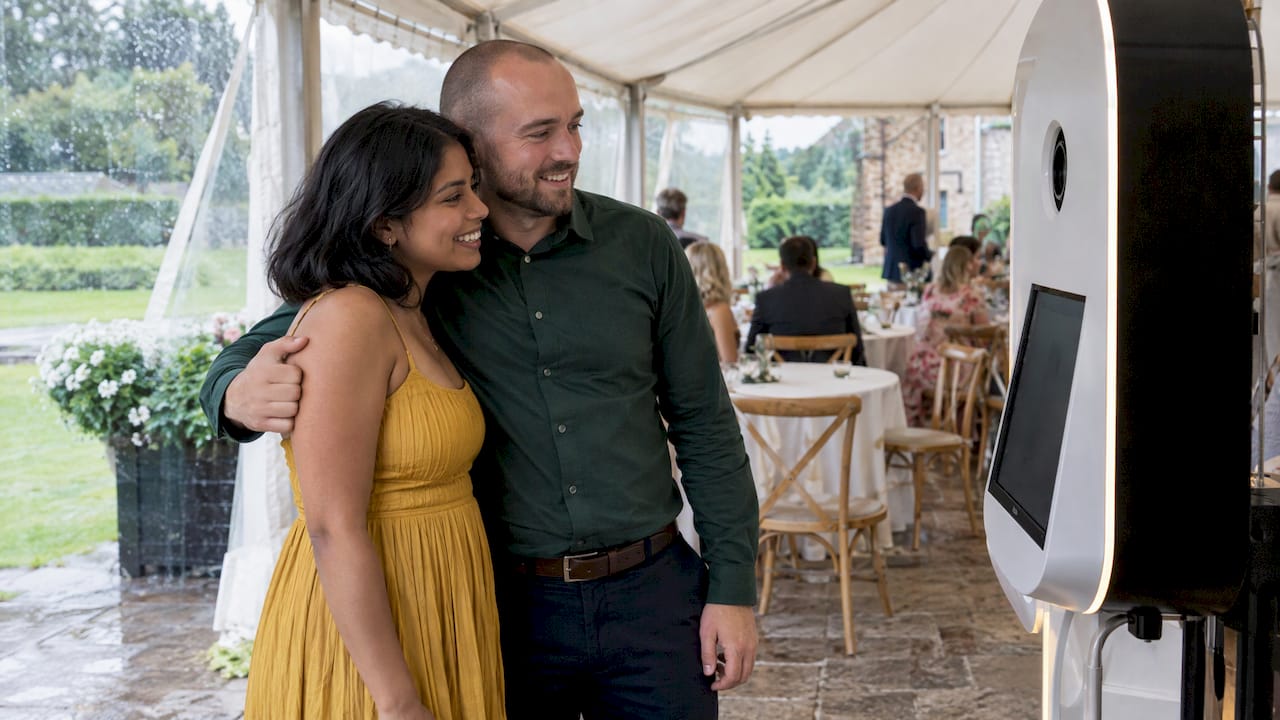
A rain plan is easier to live with when guests have something to do under cover. Entertainment that works indoors or under a marquee, such as a wedding photo booth, keeps the mood up if showers hold the drinks reception inside, and it gives your film some unplanned, joyful moments.
Documentary or cinematic: which style suits an outdoor day?
Couples often ask whether they want documentary wedding videography or something more cinematic. The two overlap, and it is useful to think of them as emphasis rather than rival camps.
Documentary coverage follows the day as it unfolds. The film team stays unobtrusive, records real moments and lets the story tell itself: a father’s face as you walk out, children chasing each other across the lawn, friends laughing during speeches.
Cinematic treatment is about how the footage is shaped: composition, depth, slow motion, music and editing that give the film the feel of a short movie.
The two are not at odds. Our own approach is documentary-led: candid and unobtrusive, with the finished film shaped to tell your love story. Outdoors, that suits the setting. Open space gives a documentary film team room to observe from a distance without being in the way, and natural light gives a cinematic finish without any staging.
If you want to see what is shaping the way couples are choosing, our piece on wedding videography trends covers the styles couples are asking for.
Building the timeline around your film
A good outdoor timeline protects both the guest experience and the footage. A practical order for a typical day looks like this:
Preparations. Natural light by a window, or outside in a sheltered spot if the weather allows.
First look or ceremony. Chosen for the light and the sound plan, not just the registrar’s availability.
Drinks reception. Gives guests shade, water and space, and gives the film team candid footage.
Couple portraits. Short, in the best available light, away from the crowd.
Speeches. Microphones planned for each speaker, with the PA arrangements agreed.
Evening. First dance and party, where the film team needs to know the lighting plan.
Pate Events’ 2026 videography planning guide recommends building the videography schedule into the master timeline, with buffers for weather changes, late arrivals and long speeches, and planning the audio with the AV team rather than assuming a loud room will produce clear sound. Buffers are what stop an outdoor day feeling rushed.
What to ask a videographer before you book
When you speak to a film team about an outdoor wedding, these questions get to the substance quickly:
Have you filmed at this venue, or at a similar outdoor setting?
How do you record vows and speeches outdoors, and who do you speak to at the venue to agree it?
What happens to the film plan if the ceremony moves indoors?
Will you walk the ceremony spot with us, or look at it at the time of day we have chosen?
How long will the finished film be, and when will we see it?
Do you work unobtrusively, and how do you stay out of guests’ way?
A good film team will welcome these. If you are in the Midlands, our guide to the best wedding videography services near Staffordshire covers what to look for locally, and reasons to hire a professional videographer explains why a dedicated team makes a difference compared with relying on guests’ phones.
Budgeting for outdoor wedding films
Price depends on hours of coverage, the number of people filming, the length and style of the finished film, travel and the extras you choose. Outdoor weddings do not automatically cost more, but a more complex day, such as a marquee wedding with several locations, can mean longer coverage.
We publish a range of cost guides so you can compare like with like: understanding wedding videography costs, what half-day videography costs, and our West Midlands breakdown, what you get for West Midlands wedding videography. If your wedding is abroad, see our destination wedding videography cost guide.
When you collect quotes, compare hours of coverage, the number of film-makers, the finished film length and when you receive it, so each quote describes the same thing.

What we offer for outdoor weddings
We cover outdoor weddings across Staffordshire, the West Midlands and beyond, including destination weddings. Our wedding videography is documentary-led and unobtrusive, and we are a multi-award-winning husband-and-wife team with over a decade of experience.
If you would like to see your day while it is still fresh, our wedding content creation service delivers social-media-ready content quickly, and it starts from £600 as a one-off. Many couples like it for sharing a few moments of the ceremony or the garden with absent family the same weekend.
[
If you are comparing venues or dates, tell us where and when, and we will talk through the light, the sound and the weather plan for your day. You can start from our wedding videography page.
Our view: plan the day so the camera can disappear
The best outdoor films we make are the ones where nobody noticed us. That is only possible when the planning has been done in advance. Outdoors, there is more to solve: the sound of your vows, the angle of the sun, the plan if it rains. When we have talked these through with a couple beforehand, we can step back on the day and watch for real moments: a glance, a hand squeeze, a grandparent laughing. That is why our approach is documentary-led and unobtrusive, and why we like to understand your venue before the day. Being a husband-and-wife team means we work as a pair, and in our experience that fits the way couples relax in front of us. Our advice is simple: choose a film team you are comfortable with, share your plan B early, and let the day unfold. Dawn & Carl
FAQ
Does an outdoor wedding cost more to film?
Not automatically. The price depends mainly on how many hours are covered, how many people film, the style and length of the finished film, and travel. An outdoor day with several locations can need longer coverage, so tell your videographer the full plan when you ask for a quote.
How do you record vows clearly outdoors?
The key points are wind protection and microphones positioned close to the people speaking, because open air has nothing to carry sound back to listeners. It is worth agreeing the setup with the venue or celebrant ahead of the day, and checking audibility at the back of the seating, as the NADJ guidance suggests.
What happens to the film if it rains?
With a backup plan agreed in advance, very little goes wrong. Share the indoor alternative and the time of the decision with your film team, so they know where to set up and how to record the audio in the new space. Many venues set a decision point, so check yours when you book.
What time of day is best for an outdoor ceremony on film?
Lower, softer light looks best, and in summer it is also more comfortable for guests. Midday brings harsh shadows and the most heat, so a later ceremony or shaded setting often works well. Visit your venue at the time you are planning to marry and see how the light falls.
Sources
Recommended
Comments