
Raw Wedding Video Files: What They Are and What to Agree
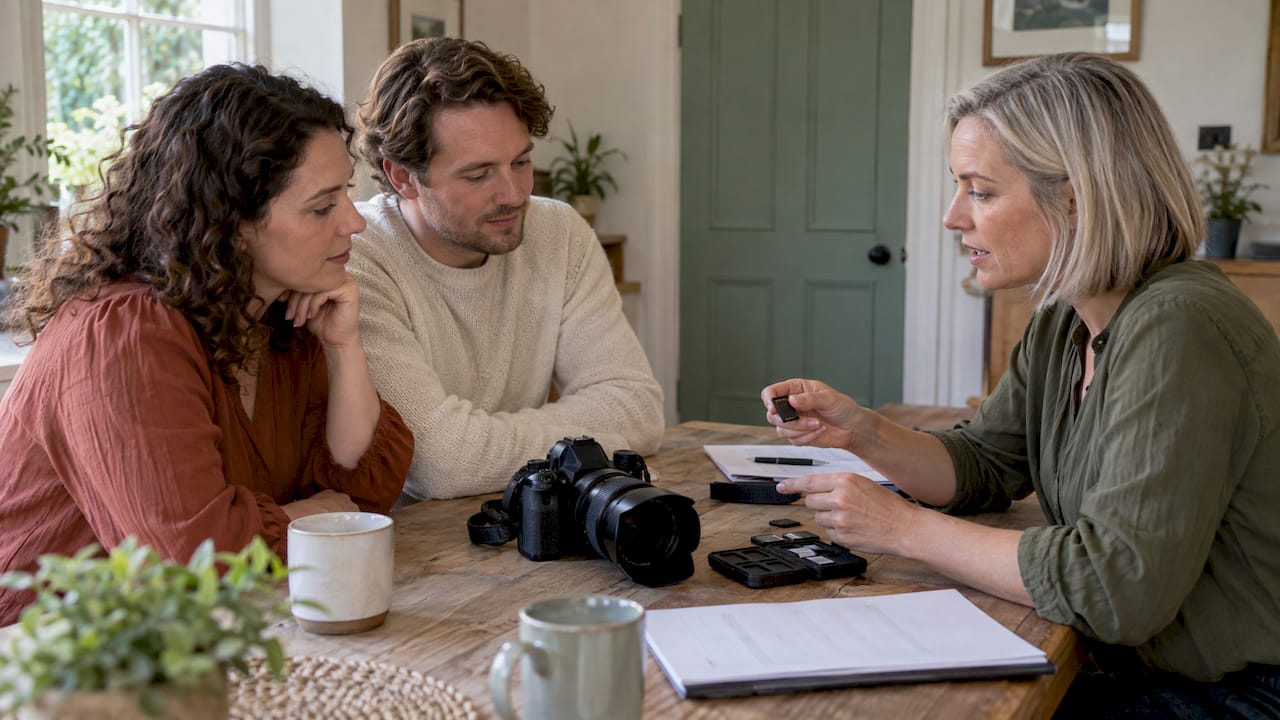
Raw wedding video files are the unedited clips straight from the camera: every take, in the order it was shot, with no colour grading, no sound mixing and no music. Most couples are better served by the finished film, because that is where the day becomes a story. Whether the raw material is also handed over depends on your videographer’s policy, and the time to settle that is before you book, in writing. This guide explains what raw footage is, what it looks like in practice, what it takes to store and watch it, and the terms to agree so nobody is surprised after the day.
Key Takeaways
Raw wedding footage is unedited, ungraded and often hours long. It is the material a film is built from, not a finished film.
Whether you receive it is a policy decision for each videographer. Some keep it, some sell it as an add-on, some include it with conditions. Ask at the enquiry stage, not after the wedding.
Raw files are large and often need specific software to play smoothly, so plan the drive and storage before delivery.
Agree in the contract what you get, in what format, on what media, for how long it is kept and what you may do with it afterwards.
The finished highlight film and longer edits are designed to be watched. For most couples that is what they will return to for decades.
Table of Contents
What raw wedding video files actually are
A wedding videographer records the day on one or more cameras, usually with separate microphones on the groom or officiant and sometimes a recorder on the lectern. Everything captured is stored as video and audio files on memory cards. Those original files are the “raw” footage.
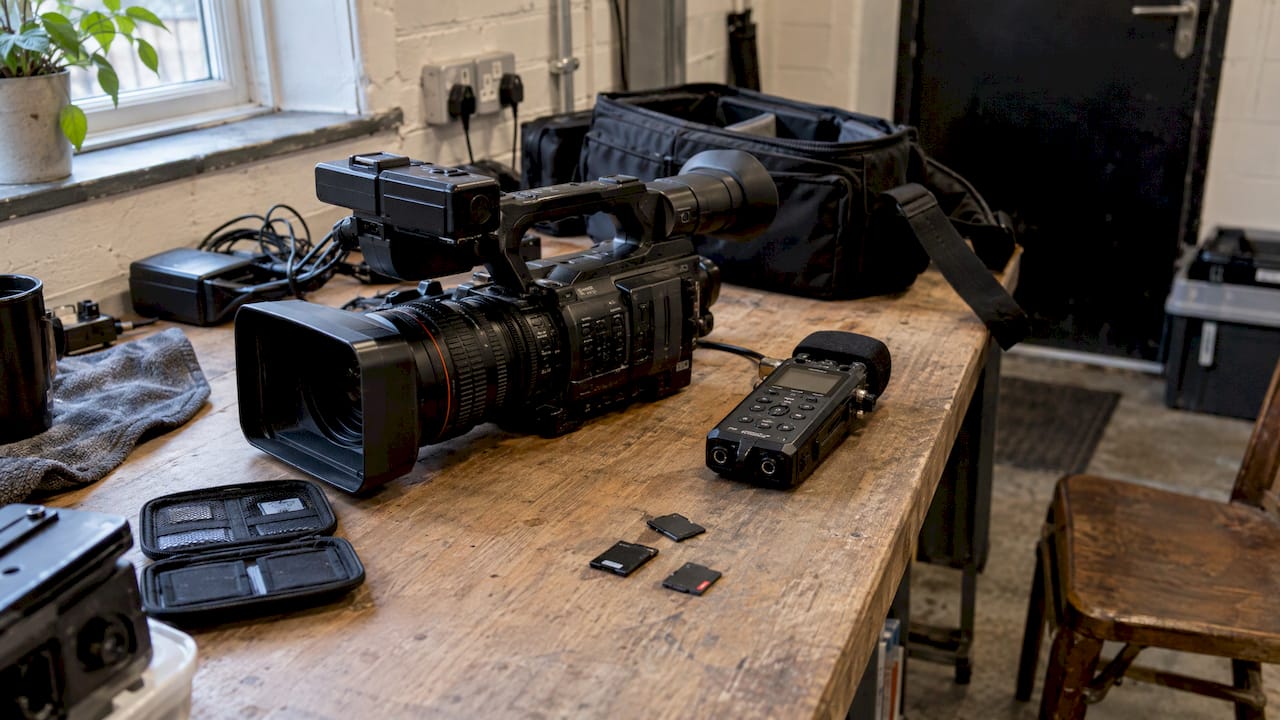
Raw in this sense does not always mean one particular technical format. In photography, a RAW file is a specific unprocessed sensor format. In video, people use “raw footage” more loosely for the camera originals, whether they were recorded in a heavily compressed everyday format or a high-quality editing format. For you as a couple, the practical meaning is the same: this is the footage before anybody has made creative decisions about it.
What that looks like when you open the folder:
Long, continuous clips. A ceremony might be a single clip of forty-five minutes or more, with camera moves, refocusing and pauses left in.
Flat or muted colour. Footage is often recorded in a flat profile to preserve detail in highlights and shadows. It looks washed out until it is graded.
Uneven sound. Speeches may be quiet or peaking, wind and room echo are still present, and the audio from different devices is not yet synced or balanced.
Duplicates and misses. Two cameras covering the same moment, a few seconds of lens cap, a clip that is soft because the subject moved.
No music, titles or structure. The emotional shape of a film comes from editing and sound design, and that only exists once the edit is done.
Raw footage versus the finished wedding film
A finished wedding film is the product of selection. The editor picks the strongest moments from many hours, cuts between angles, balances the sound, matches the colour from shot to shot, and chooses licensed music that suits the day. A highlight film of a few minutes might draw on a handful of the hours recorded, and longer edits of the ceremony and speeches keep the full moments but polish the picture and sound.
That is why the edit is where most of the craft sits, and why many videographers regard it as the thing you are buying. A documentary-style approach, where the aim is to record the day as it unfolds without directing it, makes this even clearer: the candid moments are caught on the day, then shaped into something you will want to watch rather than something you have to wade through.
If you want to understand what good coverage involves before you decide what to ask for, our piece on the art of wedding videography goes through the thinking behind the shooting and editing.
Do wedding videographers provide raw footage?
There is no single UK standard. Policies differ between videographers, and the sensible way to think about it is that there are three common positions. A workflow guide published in 2026 for wedding videographers describes them as raw footage not included because the edit is the product, raw footage as a paid add-on on a drive the couple supplies, or raw footage included with a clear caveat that it is ungraded, as-shot and unsupported. The same guide recommends that the policy is decided before anyone asks and written into the contract at booking, because improvising an answer after the wedding is what leads to disputes.
That last point is the useful one for you. Whichever position your videographer takes, the problems come from vagueness. So:
Raw not included. The deliverable is the finished film or films. The original files stay with the videographer, who usually keeps copyright in them. This is a common arrangement because the footage was recorded for the purpose of making an edit.
Raw as an add-on. You pay an agreed fee and supply a drive, or the videographer supplies one. The contract should state exactly what is covered: all cameras, all audio, or only selected clips.
Raw included with conditions. You receive the files, with the understanding that they are as shot, will not be colour graded or mixed, and come without technical support for playback or editing.
It is also worth knowing that copyright in the footage normally stays with the videographer unless the contract says otherwise. That affects what you may do with the files, which we come to below.
If you are weighing up how different providers package full-day coverage across countries, you can see another approach in full-day wedding photography in Stockholm, which shows how a full-day service is presented elsewhere.
On photography, the same question comes up with RAW image files, and the same principle holds: agree the terms first. Our guide to contract terms to agree before asking for RAW files covers the photographic side.
Why couples ask for the raw files
The reasons are usually reasonable, and understanding yours helps you ask for the right thing.
Fear of losing something. You want a second copy in case the edit leaves out a relative, a moment or a whole speech. Often the answer here is not raw footage at all but a fuller edit: a complete ceremony and complete speeches alongside the highlight film.
Wanting to edit it yourself. Some couples like the idea of making their own version, or giving a family member the job. This is realistic only with the software, the time and the patience for hours of material.
Curiosity. You want to see everything, including the bits between the moments.
Keeping everything for the future. A sense that the original is the most authentic record.
If you recognise yourself in the first or last of these, a conversation about deliverables will usually give you what you are really after. Ask for the ceremony in full, the speeches in full, and a highlight film, and ask how the finished files will be stored and delivered. Our article on why it is worth archiving wedding footage explains how to keep those films safe for the long term.
What raw footage is like to receive and use
File formats and sizes
Modern cameras record in several formats, and each makes different demands on your computer. Highly compressed formats keep file sizes smaller but can be heavy to play back and edit. Editing-friendly formats keep more picture information but produce much larger files. Resolution matters too: 4K footage takes far more space than HD.
As a rule of thumb, a full wedding day shot on more than one camera can run to hundreds of gigabytes of original files, and more if recorded in high-quality editing formats. That is not a download-by-email job. It normally arrives on a physical drive or through a large-transfer link that stays live for a limited time.
Before you agree to receive raw files, ask your videographer:
Which camera formats and resolutions will be used?
Roughly how much data does that make for a full day?
Will the files be delivered on a drive, and who supplies it?
Will the audio from separate recorders be included, and will it be synced?
Watching and storing it
Most laptops made in the last few years can play everyday compressed formats, though large 4K files may stutter without a reasonably modern processor and graphics. Editing is more demanding still. You will want a fast external drive, free space for copies and proxies (smaller working versions that make editing smoother), and editing software with a learning curve.
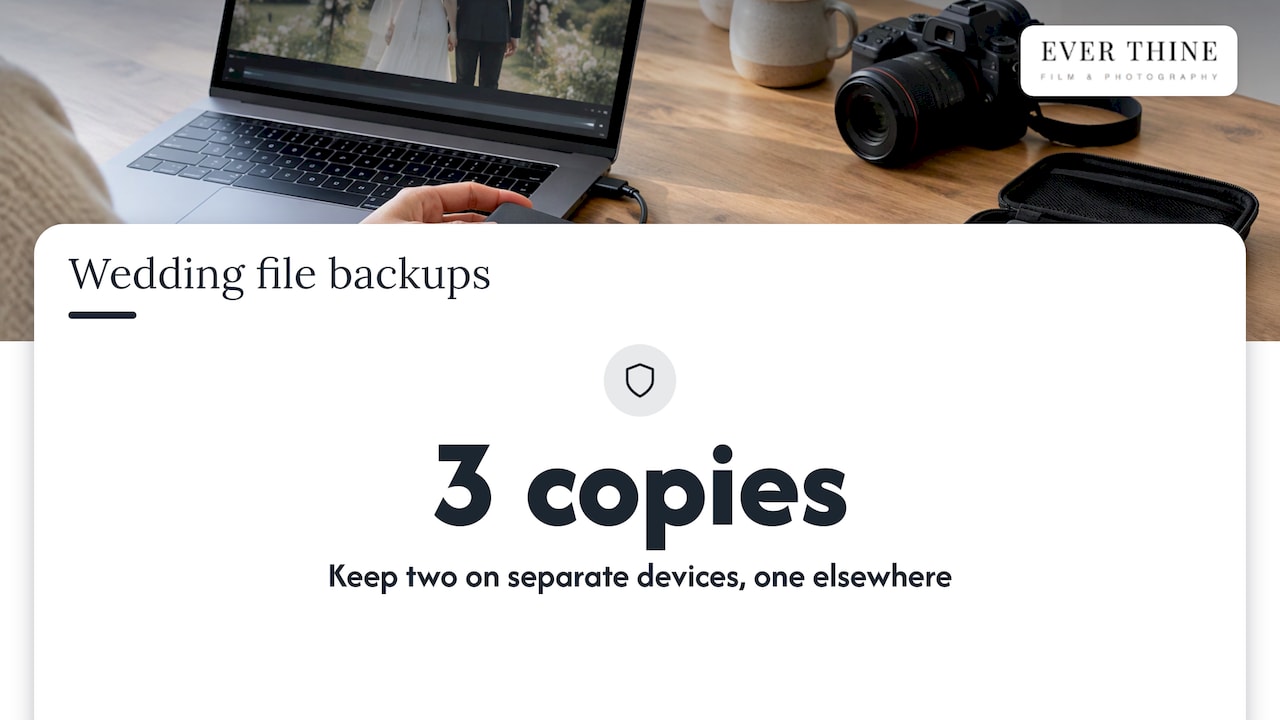
Storage is the part couples forget. A single copy on a single drive is not a backup. Keep at least two copies on separate devices and one somewhere else, such as a second drive at a relative’s home or a cloud service you pay for. Drives fail, get lost and get dropped. Our wedding memory preservation guide sets out a simple routine for protecting photos and films, and our shorter preservation tips are a quick checklist.
Making practical use of the footage
If you do receive raw clips, here is where they tend to be most useful:
Full-length keepsakes. A complete ceremony or a complete speech, trimmed only at each end, for family who could not attend.
Extra clips for relatives. A short cut of a grandparent’s dance, or a child’s moment, shared privately.
Personal projects. An anniversary film, built from clips plus later photos.
Archiving. A second record, kept as the original files.
Before posting anything publicly, think about the music. Film soundtracks use licensed tracks, and adding popular music yourself to a social post can lead to muted audio or removal. Our guide to wedding video music copyright in the UK explains how to avoid that.
Terms to agree before the wedding
Whatever your videographer’s policy, put the answers on paper. The contract is where raw footage is either handled cleanly or becomes a source of friction. Our guide on what a UK wedding photography contract should include is a good companion, and the following points apply to video too.
Term | What to agree | Why it matters |
Availability | Whether raw files are offered at all, and for which cameras and audio | Avoids assuming a right to something that is not part of the package |
Cost | A fixed fee, stated in pounds, and when it is due | No surprise invoice after the wedding |
Delivery | Drive or transfer link, who supplies the media, and the timescale | A large set of files needs a planned handover |
Format | Resolution, file type and whether audio is synced | Decides whether your computer can play it |
Ownership and use | Who holds copyright, and what you may do with the files | Governs sharing, editing and posting |
Retention | How long the videographer keeps the originals | Original files may not be kept indefinitely |
Retention deserves a special mention. Some videographers’ terms state that the producer holds the intellectual property in the recordings, including the original footage, and that project materials may be archived or deleted after a set period following final delivery, with retrieval potentially subject to a fee. Terms differ from business to business, so read yours, and make sure your finished films are saved by you as soon as they are delivered rather than relying on anyone else to keep them.
If you want a ready list of questions to take to a consultation, our guide to seven key questions for wedding videographers covers the topics in order.
Why the finished film is the better thing to ask for
Hours of unedited footage are a record. A film is an experience. The difference shows when you sit down on a quiet evening, a year later, to relive the day. A well-made highlight film opens on the moment you want to remember and carries you through the day in a few minutes, with the speeches’ best lines and your vows in clear sound. A folder of unedited clips asks you to do the work.
It also helps to know what a good edit contains, so you can ask for it. Full ceremony and speeches alongside a highlight film means nothing important is lost. Sound that has been cleaned and balanced means you can hear the vows. Colour that has been matched means the day looks consistent from the dark of the church to the brightness of the garden. None of that exists in raw files.
Cost is part of the picture as well. Our breakdown of what West Midlands wedding videography costs and what you get shows what a typical package covers, and it is worth reading before you decide where to spend.
Our view on raw footage
We shoot weddings as a husband-and-wife team, and we have spent over a decade learning that the footage you see in a film is a small part of what we record. The rest is the patient waiting: the quiet moment before the doors open, a father steadying himself before a speech, a child asleep on a chair at nine in the evening. That is why we think about a wedding film as a story first. Our approach is documentary-led, so we stay unobtrusive and let the day happen. The edit is where those candid moments become something you will want to watch again and again, and it is where our care goes. If you are curious about raw files, our advice is to start with the question underneath. Do you want to be sure nothing is missed? Do you want to share a moment with someone? Do you want to keep everything safe for the future? Each of those has a good answer, and the conversation is best had at the enquiry stage, so the answer is in your contract and not left to chance. What we would hope you take away from your wedding is not a hard drive but a film that makes you feel the day again. Dawn & Carl
Wedding films and content, handled by people who care about the day
We are a multi-award-winning husband-and-wife team based in Staffordshire, offering documentary-style wedding photography and cinematic videography for couples across the West Midlands and the wider UK, including destination weddings. If you are planning your film, you can see how we work on our wedding videography page.
[
If you also want your day shared quickly with friends and family, our wedding content creation service starts from £600 as a one-off, and is designed to deliver short social-media-ready content fast. Photography details are on our main wedding photography page, and if you are in the Midlands, our pages for Staffordshire and Warwickshire weddings cover local venues.
FAQ
Can I ask my wedding videographer for the raw footage?
Yes, you can ask, and the sooner the better. Policies vary: some videographers do not supply it, some offer it as a paid extra, and some include it with conditions. Raise it at the enquiry stage so the answer is written into your contract.
Is raw wedding footage the same as the wedding film?
No. Raw footage is the unedited material from the cameras and microphones, usually long, ungraded and without music. The wedding film is the edited result, with selected moments, balanced sound, matched colour and a soundtrack.
How big are raw wedding video files?
Very large. A full day recorded on more than one camera can run to hundreds of gigabytes, depending on resolution and format. That usually means delivery on a physical drive or a large-transfer link, so ask your videographer for an estimate before the wedding.
Can I post raw wedding footage on social media?
Only if your contract allows it, because the videographer normally holds copyright in the recordings unless it says otherwise. Be careful with music too, as adding popular tracks can get a post muted or removed. Ask what sharing is permitted before you post.
How long will my videographer keep the original files?
It depends on their terms, and some set a limit after final delivery. Check the retention clause in your contract, and save your finished films to at least two separate places as soon as you receive them.
Sources
Recommended
Comments