
Step by step videography planning for your wedding
- Jun 19
- 8 min read

TL;DR:
Thorough wedding videography planning ensures a film that authentically reflects your special day through clear briefs, realistic schedules, and structured reviews. Proper preparation, including defining emotional tone, organizing shot lists, and planning post-production, reduces errors and recent surprises. Investing time early in planning creates a smoother day and a memorable film that aligns with your vision.
Step by step videography planning is the process of organising every detail needed to create a wedding film that captures your unique story, from the first brief to the final delivered edit. Most couples underestimate how much preparation goes into a great wedding video. The difference between a film you watch once and one you return to every anniversary is almost always rooted in pre-production. This guide covers the full video production planning process, the tools you need, the pitfalls to avoid, and how to work with your videographer to get the result you actually want.
What are the prerequisites for wedding videography planning?
The first step in any videography planning guide is defining what you actually want before you book anyone or buy anything. That means setting a realistic budget, identifying your preferred style, and gathering the right tools.
Setting your budget correctly
Every production budget needs a 10–15% contingency fund built in from the start. That buffer covers unexpected costs such as overtime, additional equipment hire, or last-minute location changes. Without it, a single surprise can derail your entire plan.
Budget allocation across phases is where most couples go wrong. Pre-production, production, and post-production each carry their own costs. Treating the budget as one lump sum almost always leads to underfunding the editing stage, which is where your film is actually made.
Choosing your videography style
Your style choice shapes every decision that follows. The four main styles are documentary, cinematic narrative, fun and upbeat, and emotionally driven. Documentary captures events as they unfold with minimal direction. Cinematic narrative uses composed shots and a structured story arc. Knowing which you prefer before your first conversation with a videographer saves hours of back-and-forth.
Tools to have ready before you start
Tool | Purpose | Best for |
Google Docs or Notion | Shared brief and planning documents | Couples and videographers collaborating |
Shot list apps (e.g. Shot Lister) | Organising shots by setup | Videographers managing complex days |
Trello or Asana | Scheduling tasks and deadlines | Keeping the planning process on track |
Storyboard That | Visual storyboarding | Communicating mood and sequence ideas |
Review and feedback on edits | Streamlining the review cycle |
Pro Tip: Share your planning documents with your videographer from day one. A single shared folder in Google Drive prevents the fragmented planning that kills projects.
How do you create a detailed wedding videography plan?
A solid wedding video production plan follows a fixed sequence. Fragmented planning across unupdated documents is one of the leading causes of project failure. The steps below keep everything in order.
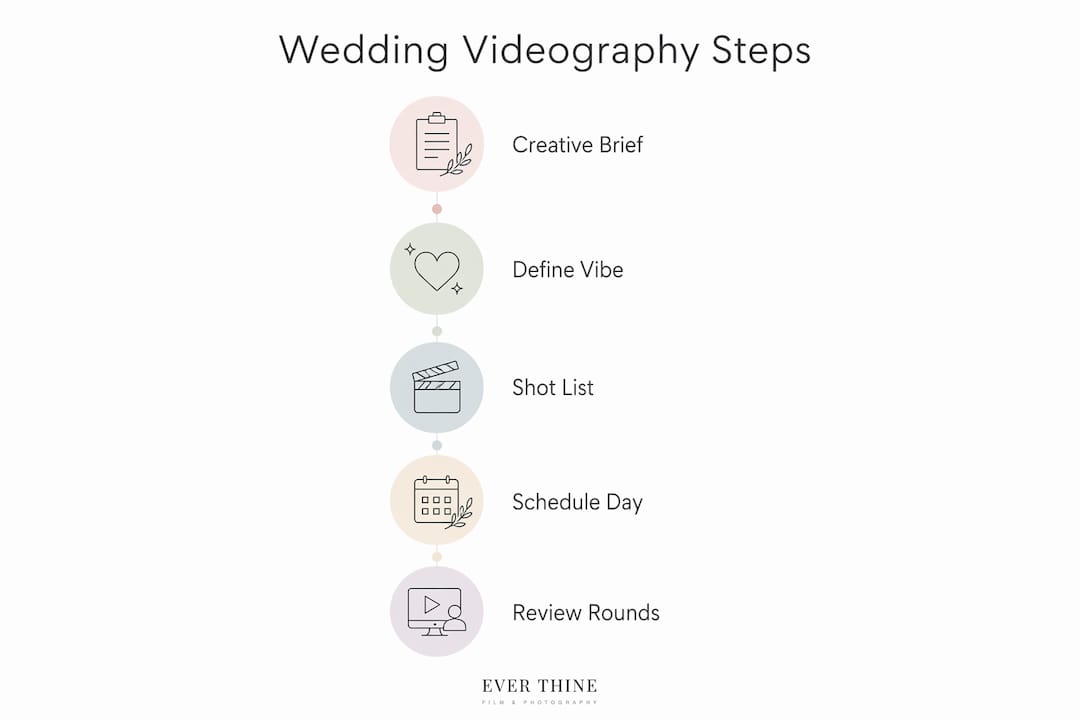
Step 1: Write your creative brief
The creative brief is the foundation of your entire plan. A strong brief focuses on what the viewer should feel after watching, not just technical requirements like resolution or length. For a wedding film, that means defining the emotional tone: joyful and light, deeply romantic, or quietly intimate.

Your brief should name the key moments you want captured, the people who matter most on the day, and any moments you absolutely cannot miss. Think first dance, the look on a parent’s face, the vows.
Step 2: Define the emotional vibe before scripting
Deciding on the emotional vibe before writing any script prevents the most common misalignment in wedding films. Couples who skip this step often receive a technically well-made video that simply does not feel like them. Spend time with your videographer discussing music references, films you love, and the atmosphere of your venue.
Step 3: Build your shot list by setup, not story order
Professional producers organise shot lists by technical setup rather than chronological story order. This minimises equipment reconfigurations and saves significant time on the day. For a wedding, that means grouping all ceremony shots together, all reception detail shots together, and all portrait shots together, regardless of where they appear in the final edit.
Step 4: Schedule the day realistically
Never estimate shoot time optimistically. Record actual setup times for each location and build in buffer time for travel between rooms or venues. A realistic schedule includes setup time, the shot itself, a brief review, and a move to the next location.
A typical wedding day schedule for videography looks like this:
Getting ready coverage: 60–90 minutes per location
Ceremony: full duration plus 15 minutes either side
Couple portraits: 30–45 minutes minimum
Reception details and speeches: 2–3 hours
First dance and evening: 45–60 minutes
Step 5: Lock down the plan with review rounds
Industry standard review cycles involve 2–3 rounds of feedback before filming begins. Each round should address a specific layer: first the brief and objectives, then the shot list and schedule, then the call sheet and final logistics. Changes made after filming begins cost significantly more in time and money.
Pro Tip: Set a hard deadline for the final review round at least two weeks before your wedding date. This gives your videographer time to prepare equipment, scout locations, and brief any second shooters.
What are the most common mistakes in wedding videography planning?
Even well-intentioned couples make predictable errors. Knowing them in advance is the fastest way to avoid them.
Underestimating post-production costs. Editing a one-hour wedding film to a polished 8-minute highlight reel takes far longer than most couples expect. Budget for it properly.
Optimistic scheduling. A 10-minute portrait session that takes 25 minutes to set up will throw off the rest of the day. Pad every transition.
No backup plan for weather. Outdoor ceremonies and portrait sessions need a clear indoor alternative. Agree on this with your videographer in advance.
Late script or brief changes. Changing the emotional tone or key moments list after the shot list is built forces a rebuild of the entire plan.
Single point of failure for equipment. Ask your videographer whether they carry backup cameras, audio recorders, and batteries. A professional always does.
The couples who enjoy their wedding day most are the ones who planned the video in advance and then let go. When the plan is solid, the day runs itself.
Pro Tip: Ask your venue coordinator for a printed floor plan and share it with your videographer at least a month before the wedding. Knowing the exact layout prevents wasted time on the day.
Modern digital pre-production workflows now compress what once took 2–3 weeks into as little as 2–5 working days. That speed is only possible when couples arrive prepared with a clear brief and style reference.
How does post-production planning affect your final wedding film?
Post-production is where your footage becomes a film. Planning this stage before the wedding day is just as important as planning the shoot itself.
Editing structure and timeline
The editing process for a wedding film typically covers assembly, colour grading, audio polish, and graphics or titles. Each stage requires time and clear direction from you. Providing your editor with a music shortlist, a list of must-include moments, and any specific requests before they begin saves multiple revision rounds.
Delivery formats and versioning
Your finished film will likely need to exist in several formats: a full-length version for family, a short highlight reel for social media, and a compressed version for easy sharing. Plan for these from the start. Agree on file formats, resolution, and delivery method with your videographer before the wedding.
Editing software | Strengths | Best for |
Adobe Premiere Pro | Industry standard, flexible | Professional videographers |
DaVinci Resolve | Excellent colour grading tools | Colour-focused edits |
Final Cut Pro | Fast rendering on Apple hardware | Mac-based editors |
Pro Tip: Ask your videographer for a step by step editing roadmap before the wedding. Knowing the post-production timeline removes the anxiety of waiting for your film.
Measuring whether the final film matches your original brief is straightforward. Watch it back against the emotional goals you set in your creative brief. Does it feel the way you described? Does it capture the people and moments you named? If yes, the planning worked.
Key takeaways
Thorough wedding videography planning, built around a clear brief, realistic scheduling, and structured review rounds, is the single most reliable way to get a film that genuinely reflects your day.
Point | Details |
Budget with a contingency | Always add 10–15% to your videography budget to cover unexpected costs. |
Brief before script | Define the emotional tone of your film before any shot list or script is written. |
Organise shots by setup | Group shots by technical requirements, not story order, to save time on the day. |
Lock the plan early | Complete all review rounds at least two weeks before the wedding date. |
Plan post-production too | Agree on delivery formats, editing timeline, and revision rounds before the wedding. |
Why I think most couples plan their wedding video backwards
Most couples I speak with start by looking at showreels and picking a style they like. That is not wrong, but it is the second step, not the first. The first step is deciding how you want to feel when you watch your wedding film in ten years. That answer shapes everything: the style, the music, the moments your videographer prioritises.
The couples who end up disappointed are almost always the ones who left the brief too vague. “We want it to feel natural” is not a brief. “We want it to feel like a quiet Sunday morning, not a music video” is a brief. Specificity is the most underrated part of how to plan wedding videography well.
I also think the review process gets rushed far too often. Two or three rounds of feedback sound like a lot until you realise each round takes 20 minutes and prevents weeks of reshoots or re-edits. The couples who invest time in the planning stage are the ones who genuinely enjoy their wedding day, because they are not worrying about whether the videographer knows what to do. The plan has already answered that.
— Ever
How Weddingfilmphotography can support your planning
[
Weddingfilmphotography is a multi-award-winning wedding film and photography service based in Staffordshire, covering Derbyshire, Worcestershire, and beyond. The team specialises in documentary-style and cinematic wedding films built around the kind of thorough pre-production planning this guide describes. Every couple receives a personalised planning process, from the initial brief through to delivery, so nothing is left to chance on the day.
If you are based in the Midlands or planning a destination wedding, explore the wedding videography services in Derbyshire or the Staffordshire wedding packages to find the right fit for your day. Get in touch to start your planning conversation.
FAQ
What is step by step videography planning for weddings?
Step by step videography planning is a structured approach to organising every element of your wedding film, from the initial brief and shot list through to editing and delivery. It reduces errors, keeps costs on track, and ensures no key moment is missed.
How far in advance should I start planning wedding videography?
Start your videography planning at least six months before your wedding date. This gives enough time to complete the brief, build the shot list, run review rounds, and finalise logistics without rushing.
How many review rounds are standard before filming?
Industry standard practice is 2–3 rounds of feedback before filming begins. Each round addresses a different layer of the plan, from objectives through to the final call sheet.
What should a wedding videography brief include?
A strong brief covers the emotional tone you want, the key moments to capture, the people who matter most, your preferred style, and any music references. It should focus on how the film should feel, not just what it should show.
Do I need a shot list if I hire a professional videographer?
A shot list is still worth creating even with a professional. It aligns your expectations with theirs, prevents missed moments, and gives the videographer a clear reference for organising the shoot day efficiently.
Recommended

Comments