
Wedding content creator: your complete 2026 hiring guide

TL;DR:
A wedding content creator captures behind-the-scenes moments with a smartphone for quick social media clips, usually within 24–48 hours. Their role complements traditional photography and videography, focusing on vertical videos and real-time storytelling. Proper planning, clear contracts, and guest consent are essential for effective and ethical content creation.
A wedding content creator is a professional who uses a smartphone to capture candid, behind-the-scenes moments and social media-ready videos of your wedding day, delivering shareable clips within 24–48 hours. This role is distinct from a wedding photographer or videographer. Where photographers produce heirloom portraits and videographers craft cinematic films, a content creator focuses on vertical video, real-time storytelling, and fast delivery for Instagram, TikTok, and similar platforms. Understanding the difference matters before you book anyone. Couples who confuse the two roles often end up with duplicated coverage in some areas and gaps in others.
What does a wedding content creator actually do?
A wedding content creator captures behind-the-scenes clips using lightweight smartphone setups, stabilisers, and portable audio tools rather than professional camera rigs. The output is social-first: vertical video, candid reaction shots, getting-ready footage, and short reels edited for immediate posting. Delivery is fast, often within 24–48 hours of the wedding day. That speed is the defining feature of the role.
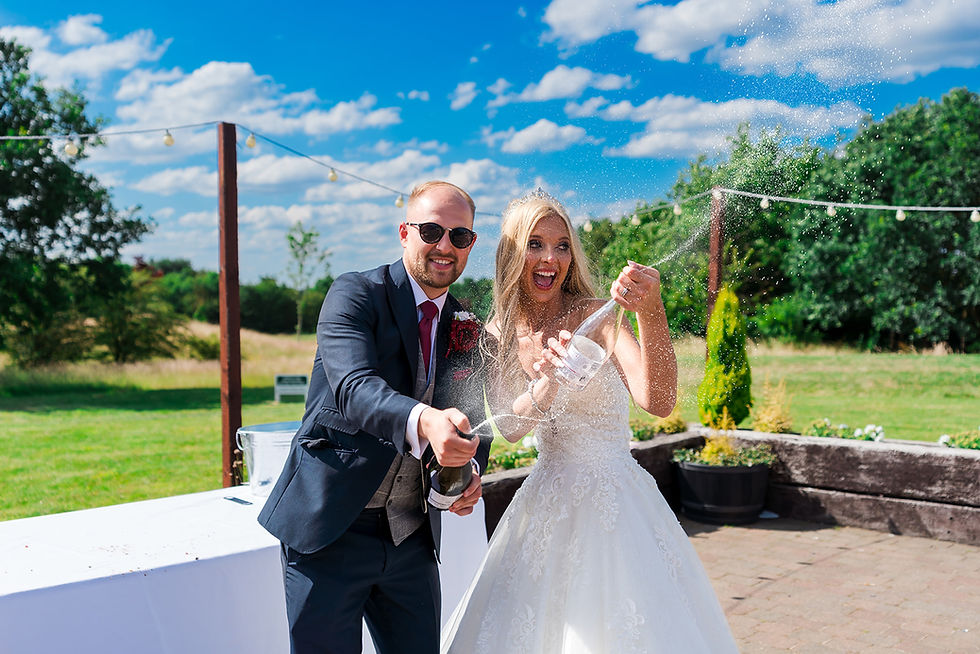
The content they produce fills a gap that traditional wedding media does not cover. Your wedding videographer will spend weeks crafting a cinematic film with colour grading and a carefully chosen soundtrack. Your content creator will hand you a polished Instagram reel before you even return from your honeymoon. These are two entirely different products serving two entirely different purposes.
Professional content creators also solve a practical problem. Guest phones cause inconsistency and distraction during key moments. A dedicated creator captures optimised, shareable vertical video without the chaos of fifty guests holding up their phones during your first kiss.
How does a wedding content creator differ from a photographer or videographer?
The clearest way to understand the difference is to look at what each professional delivers.
Role | Equipment | Output | Delivery time |
Wedding photographer | DSLR or mirrorless camera | Edited portrait gallery | 4–12 weeks |
Wedding videographer | Cinema camera, drone | Cinematic film, highlights reel | 6–16 weeks |
Wedding content creator | Smartphone, stabiliser | Vertical clips, reels, candid photos | 24–48 hours |
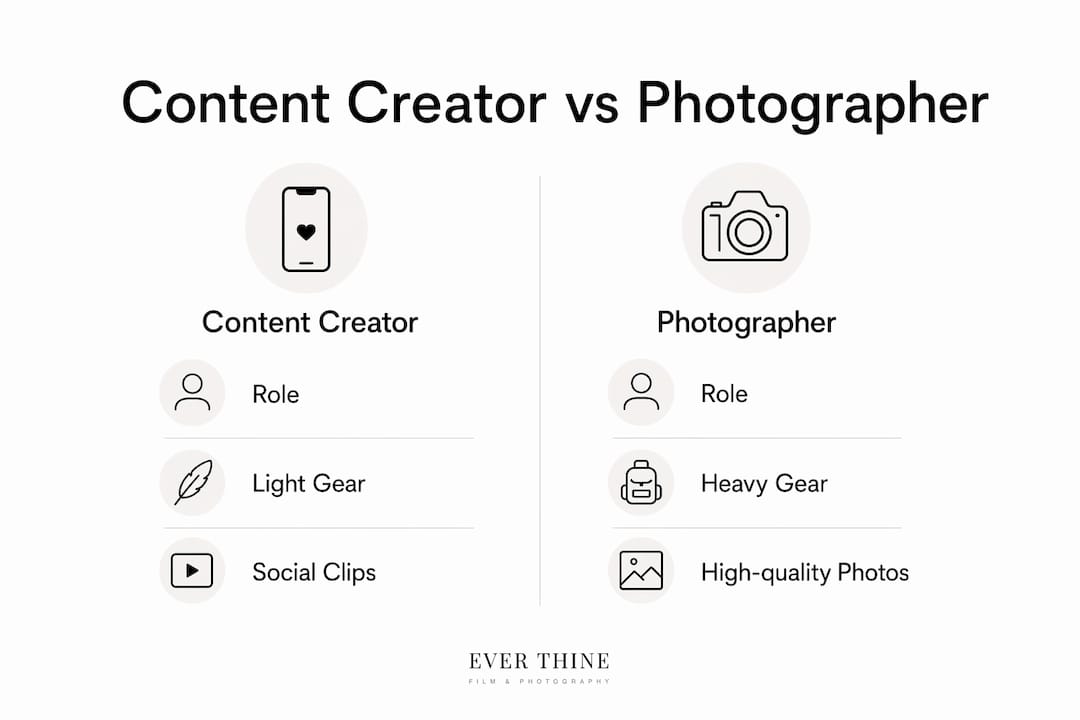
Content creation complements rather than replaces traditional photography and videography. The roles serve different storytelling purposes. A photographer captures the formal portrait of you and your partner at the altar. A content creator captures the moment your maid of honour ugly-cries during your vows, filmed vertically and ready for Stories.
Pro Tip: Book your content creator separately from your photographer and videographer. Bundling all three into one vendor rarely produces the best result in each category. Specialists outperform generalists when it comes to fast social media delivery.
The equipment difference is also significant. A content creator travels light. A wedding videographer arrives with cinema cameras, a drone, and a full audio rig. That difference in kit means a content creator can move through a crowd invisibly, capturing natural moments that a larger setup would disrupt.
What should couples consider when hiring a wedding content creator?
Hiring a content creator requires the same rigour as hiring any other wedding vendor. The biggest pitfall is contract clarity: confirming exactly what you receive, when you receive it, and who owns the rights to the footage.
Pricing and packages in 2026
Pricing for wedding content creation varies widely. Typical costs range from around £400 to £1,500 depending on hours of coverage, deliverables, and whether you receive raw clips or a fully edited reel. Half-day packages cost less than full-day coverage. Always confirm what “edited” means to your creator before signing anything.
Key contract elements to confirm
Before you sign, get clear answers on every point below.
Deliverables: Do you receive raw clips, an edited reel, or both? How many final clips are included?
Delivery timeline: Is the 24–48 hour turnaround guaranteed in writing, or is it an estimate?
Usage rights: Who owns the footage? Can the creator post it on their own social media channels?
Revisions: How many rounds of edits are included, and what is the cost for additional changes?
Payment terms: What deposit is required, and when is the balance due?
Cancellation policy: What happens if the creator cancels or you need to postpone?
Pro Tip: Ask creators to show you examples of their final deliverables, not just their highlight reel. You want to see the actual package a previous couple received, including how the clips were labelled and delivered.
Questions to ask before booking
Ask about backup plans and emergency coverage before committing. A content creator’s role is time-sensitive. Missing your first dance cannot be recreated. Confirm whether they have a network contact or second shooter who can step in if they fall ill. Also ask about their editing workflow. Many creators deliver large volumes of clips, so ask how they curate the final package so you receive a usable digital story rather than hundreds of unedited files.
For UK couples, also confirm the creator holds public liability insurance. You can read more about why insured wedding vendors matter for your peace of mind on the day.
How to coordinate a wedding content creator with your other vendors
Smooth coordination between your content creator, photographer, and videographer prevents overlap and coverage gaps. The key is role clarity before the wedding day, not on it.
Share a detailed timeline with all vendors. Send the same running order to your photographer, videographer, and content creator at least two weeks before the wedding. Each person should know when key moments happen and where they need to be.
Assign distinct coverage zones. Your videographer may own the ceremony aisle. Your content creator can focus on guest reactions and behind-the-scenes preparation. Defining zones prevents three people filming the same shot from different angles.
Build in buffer time for candid moments. Schedule buffer periods into your day specifically for unobtrusive behind-the-scenes filming. Transitions between the ceremony and drinks reception, or between the meal and speeches, are ideal windows for natural candid content.
Communicate your unplugged ceremony policy to all vendors. If you are having an unplugged ceremony, your content creator needs to know exactly which moments are phone-free zones and which are not. This avoids confusion on the day.
Introduce vendors to each other before the wedding. A brief group message or call between your photographer, videographer, and content creator builds rapport. Vendors who know each other collaborate better and are less likely to accidentally block each other’s shots.
For deeper guidance on working with multiple media professionals, Weddingfilmphotography has a practical resource on coordinating with your photographer that applies equally well to content creators.
What are the rules around privacy and guest consent?
Privacy is the area most couples overlook when planning wedding content creation. Documented guest consent is required before recording guests and before sharing footage publicly. This is not just good manners. It is a legal and ethical obligation, particularly under UK data protection law.
Here is how to handle consent practically:
Add a note to your invitations. Let guests know that a content creator will be filming on the day and that footage may be shared online. Give them a clear way to opt out.
Use signage at the venue. A small sign near the entrance stating that filming is taking place gives guests a visible reminder and an opportunity to speak to you or your coordinator.
Communicate your camera-phone policy clearly. Frame an unplugged ceremony as an invitation to be fully present, not a restriction. Positive framing reduces friction and maintains the atmosphere.
Respect on-site opt-outs. If a guest asks not to be filmed or photographed, that request must be honoured. Brief your content creator on any known opt-outs before the day begins.
Treat repurposing as a separate consent event. Repurposing footage for new purposes requires fresh consent from guests. If your content creator wants to use clips in their own marketing, that is a separate agreement from the original recording consent.
Pro Tip: Include a short privacy note in your wedding website FAQ. Couples who communicate their filming policy in advance receive far fewer objections on the day itself.
Minors require particular care. Confirm with your content creator that any footage featuring children will not be posted publicly without explicit parental consent.
Key takeaways
A wedding content creator delivers fast, social-ready footage that complements traditional photography and videography, but only when hired with clear contracts, coordinated timelines, and documented guest consent.
Point | Details |
Define the role clearly | A content creator delivers vertical clips within 24–48 hours, not heirloom portraits or cinematic films. |
Confirm contract details | Agree deliverables, usage rights, revisions, and backup plans in writing before signing. |
Coordinate all vendors | Share a detailed timeline and assign coverage zones to prevent overlap between your creator, photographer, and videographer. |
Manage guest privacy | Obtain documented consent before filming and treat repurposing footage as a separate consent requirement. |
Budget realistically | Expect to pay between £400 and £1,500 depending on coverage hours and whether clips are edited or raw. |
Why I think most couples hire content creators too late
Couples typically add a wedding content creator to their booking list as an afterthought, often within a few weeks of the wedding. That timing creates problems. The best creators book up months in advance, just like photographers and videographers. Leaving it late means you end up with whoever is available rather than whoever is right for your style.
The other thing I see repeatedly is couples underestimating the contract conversation. They focus on the exciting part, the reels and the fast delivery, and skip the boring part, which is nailing down exactly what they will receive and when. The contract clarity issue is the single most common source of post-wedding disappointment in this category. A creator who delivers 200 unedited clips when you expected a polished reel has not failed you. They have delivered exactly what was agreed, just not what you imagined.
The couples who get the most from their content creator are the ones who treat the briefing conversation as seriously as the booking itself. They share a shot list, introduce the creator to their photographer, and communicate the day’s timeline in detail. The result is footage that genuinely tells the story of the day rather than a collection of random clips.
Content creation is a genuinely exciting addition to wedding coverage in 2026. Used well, it gives you something your parents never had: a real-time digital record of your wedding day that you can share with people who could not be there. Used carelessly, it adds cost and confusion. The difference is preparation.
— Ever
Wedding photography and content creation with Weddingfilmphotography
Weddingfilmphotography is an award-winning wedding photography and videography team based in Staffordshire, covering Derbyshire, Worcestershire, and beyond. Their documentary-style approach captures candid, natural moments that complement fast social media content perfectly.
[
Whether you are looking for a wedding photographer in Staffordshire or a full media package that includes cinematic film and social-ready coverage, Weddingfilmphotography builds packages around your day rather than a fixed template. Couples in Derbyshire can explore their Derbyshire photography services for tailored options. Contact the team directly to discuss how content creation fits into your wedding media plan and to request a personalised quote.
FAQ
What is a wedding content creator?
A wedding content creator is a professional who uses a smartphone to capture candid, behind-the-scenes moments and social media-ready vertical video on your wedding day, typically delivering edited clips within 24–48 hours.
Do I still need a photographer if I hire a content creator?
Yes. A content creator produces fast, social-ready clips for Instagram and TikTok. A photographer produces a full edited gallery of heirloom images. The two roles serve entirely different purposes and are not interchangeable.
How much does a wedding content creator cost in the UK?
Pricing typically ranges from around £400 to £1,500 depending on hours of coverage and whether deliverables are raw clips or fully edited reels. Always confirm exactly what is included before booking.
What should a wedding content creator contract include?
A contract should confirm deliverables, delivery timeline, usage rights, revision rounds, payment terms, and a backup plan for emergencies. Contract clarity is the most common source of post-wedding disputes in this category.
Do I need guest consent for wedding content shared online?
Yes. Documented consent is required before recording guests and before sharing footage publicly. Repurposing footage for new purposes, such as a vendor’s marketing, requires separate consent from the original recording agreement.
Recommended

Comments