
How to work with shy couples: a guide for wedding photographers
- 1 day ago
- 11 min read
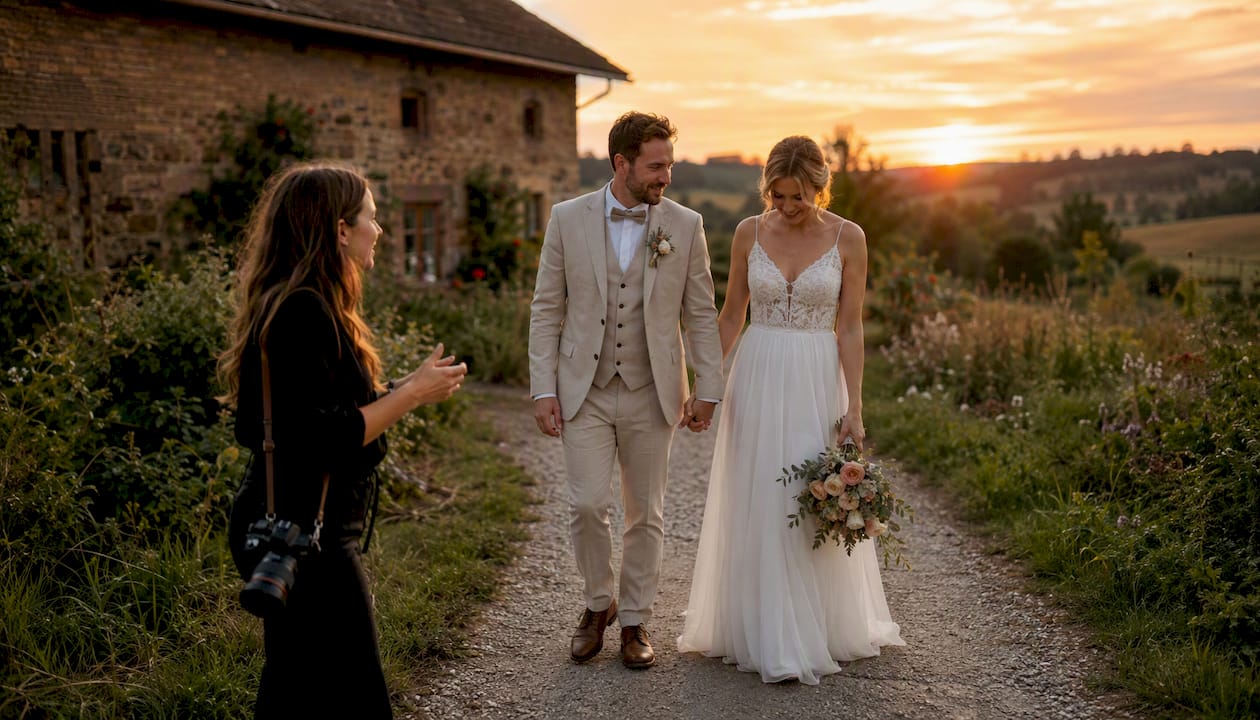
The most effective approach for working with introverted couples is a documentary-first method: stay unobtrusive, give movement-led micro-direction, and run a short private warm-up before you lift the camera. That combination consistently produces natural expressions without asking anyone to perform.
Before you read further, here are three things you can apply in the next ten minutes:
Send a pre-shoot brief covering session flow, clothing tips, and an open invite to suggest comfortable locations.
Run a 5–10 minute warm-up on arrival: chat, walk, and give one easy prompt before shooting anything.
Use movement-led prompts (“walk slowly towards the gate, hold hands”) rather than static pose instructions.
Documentary-style photography reduces pressure for introverted couples precisely because it removes the expectation of performance. Pair that with a visible portfolio of shy-couple shoots and a friendly pre-shoot check-in, and most couples arrive calmer than they expected.
Key takeaways
Working with shy couples consistently produces better results when the photographer leads with documentary observation, movement-led direction, and a structured pre-shoot brief that sets expectations before anyone picks up a camera.
Point | Details |
Pre-shoot brief | Send session flow, clothing tips, and a consent checklist at least a week before the shoot. |
Short warm-up | Spend 5–10 minutes chatting and walking before raising the camera; a 20-minute warm-up reduces visible tension. |
Movement-led direction | Use walk-and-talk, slow turns, and whisper prompts rather than static pose instructions. |
Unobtrusive kit | A longer focal length (85mm–135mm) and available light let you work quietly without crowding the couple. |
Sensitive follow-up | Deliver a private sneak-peek gallery first and request social-sharing consent without pressure. |
Weddingfilmphotography | Documentary-first workflow with optional engagement shoots, designed specifically for shy and introverted couples across Staffordshire and the West Midlands. |
Table of Contents
What should you cover before the shoot?
Preparation is where most of the anxiety is actually resolved. A short intake questionnaire sent a week before the session does more for a nervous couple than any in-session trick.
Essential intake questions to ask:
How comfortable are you on a scale of 1–5 with being photographed?
Do you prefer documentary coverage, some gentle direction, or a mix?
Are there any physical comfort zones to be aware of (touch, proximity, specific poses)?
Any sensory or clinical needs the photographer should know about?
Are you happy for images to be shared on social media, or do you prefer a private gallery?
Confirm format preference explicitly. Some couples say “natural” but mean “no posing at all”; others mean “no stiff studio poses.” Clarify which. Explicit consent for specific shot types (dips, lifts, close face shots) prevents awkward moments mid-session.
On timeline: build in padding. A 90-minute engagement session should have a genuine 15-minute buffer at each end. Short calm breaks between location changes let introverted clients recharge. For stress-free wedding days, schedule portrait windows away from the main guest flow wherever possible.
What to include in your pre-shoot brief:
A simple session flow (arrival, warm-up, first location, second location, wrap)
Clothing tips: layers, comfortable shoes, avoid busy patterns
Transport and parking details so they arrive without rushing
A short note inviting them to suggest a favourite local spot
Pro Tip: Offer an optional low-stakes meet-up before the session, whether a quick phone call, a coffee near the venue, or a short engagement shoot. This builds trust faster than any amount of email reassurance.
How do you build rapport and warm up camera-shy couples?
The goal of the first few minutes is not to take photos. It is to make the camera irrelevant.
A simple warm-up sequence:
Arrive, introduce yourself, and spend two minutes chatting about something unrelated to photography (the venue, the weather, a recent trip).
Suggest a short walk with no camera raised. Let them settle into moving together.
Ask a low-stakes memory question: “What’s the last thing that made you both properly laugh?”
Only then raise the camera, and keep it low at first.
Matching your energy to introverted clients matters more than most photographers realise. Slow your pace, lower your vocal volume, and pause longer between prompts. A quiet, unhurried presence signals safety. Blending in and quiet observation are the core documentary techniques here: move like a guest, not an operator.
Know when to disappear. Once a couple is absorbed in a moment, step back and observe silently. Step in only when energy drops or direction is needed.
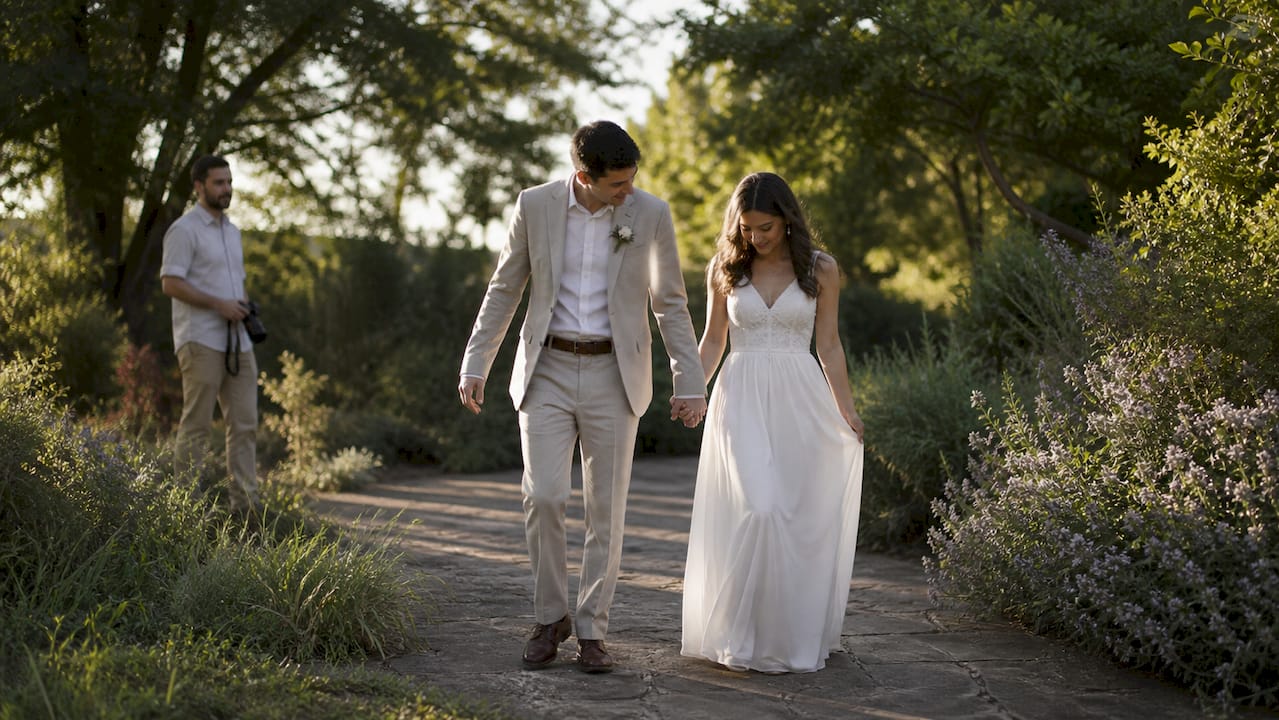
Pro Tip: Build one consistent calming ritual across all your shoots, such as a single breathing cue (“take a slow breath together”) or one reliable opening prompt. Couples who book you twice will recognise it immediately, and new clients pick up the calm it signals.
Micro-direction and posing for couples who hate posing
Give one clear action at a time. “Walk slowly towards the bench, holding hands” is a complete instruction. “Be natural” is not. Movement-led prompts reliably produce more genuine expressions than static poses because the couple’s attention shifts to the action, not the lens.
Prompts that work:
Walk-and-talk: “Walk towards me slowly, tell each other something you’re looking forward to.”
Slow turn: “Face each other, then one of you slowly turn away while the other watches.”
Forehead touch: “Rest your foreheads together and close your eyes for a moment.”
Shoulder rest: “Lean your head on their shoulder and just breathe.”
Guided laughter: “Whisper the most ridiculous thing you can think of right now.”
Simple rules for hands and posture: Hands are a visible anxiety indicator; give them a purposeful task such as holding a marriage certificate holder or arranging a boutonnière. Give them a purposeful task: holding a jacket, arranging a boutonnière, or holding a small prop such as a blanket or a keepsake. A slight torso turn towards the partner softens the jaw and reduces tension in the shoulders. For natural couple portraits, position yourself so the couple faces each other rather than the lens.
Prompt | Expected body language | Camera framing |
Walk-and-talk | Relaxed arms, natural gait, eye contact | Medium shot, slight angle, follow movement |
Forehead touch | Closed eyes, soft jaw, still posture | Tight crop, shallow depth of field |
Whisper prompt | Lean-in, suppressed smile, turned heads | Three-quarter profile, wide aperture |
Shoulder rest | Relaxed neck, natural hand drape | Side-on or slightly elevated angle |
When should you schedule portraits for shy couples?
An engagement session acts as a rehearsal: couples learn your rhythm, understand your direction, and arrive on the wedding day already comfortable. For notably shy clients, it is the single most effective investment of time.
On the wedding day itself, the least pressured portrait windows are:
Private first look before the ceremony, when the couple is calm and guests are not watching.
Short post-ceremony window of 20–30 minutes while guests move to drinks.
Sunset or golden-hour slot later in the evening, when the couple has relaxed into the day.
For location, choose secluded nooks, quiet back corridors, small walled gardens, and low-footfall backdrops. Introverted couples respond better to private, quiet locations than open lawns with guests watching.
If group shots are required, keep the list short, assign one person to gather people, and pre-check the shot list with the couple so there are no surprises.
Low-pressure portrait sequence:
Arrive at location, brief walk to settle in.
Two movement-led prompts (walk, slow turn).
One quiet, still moment (forehead touch or shoulder rest).
One playful prompt (whisper or laugh cue).
Wrap and move on before energy drops.
What technical setup keeps you unobtrusive?
A longer focal length lets you work at a comfortable distance without crowding the couple. An 85mm or 135mm lens on a full-frame body is a reliable choice for portraits; a 70–200mm range gives flexibility for candid moments from further back. For candid wedding shots, a wider aperture (f/1.8–f/2.8) keeps backgrounds soft and reduces the visual weight of the environment.
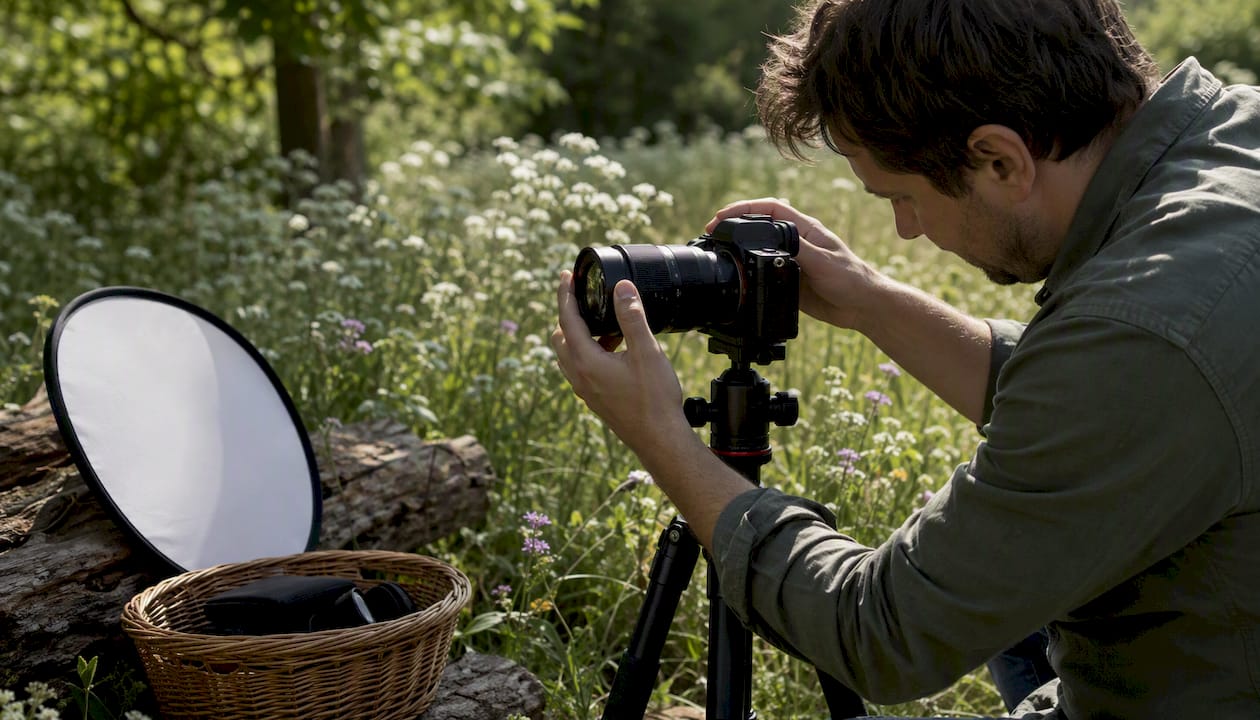
Use continuous/burst mode for movement-led prompts to catch micro-expressions between the obvious frames. Switch to single-shot for composed quiet moments where you want precision.
For lighting, available light is your quietest tool. A portable diffuser for harsh midday sun and a small reflector for fill are all most shy-couple sessions need. Off-camera flash should be a last resort; the pop and repositioning disrupt the calm you have built.
Pro Tip: Prepare a default kit list for shy-couple sessions: one body, one portrait lens, one wide lens, a small reflector, and a spare battery. Less gear means less fiddling, and less fiddling means more presence.
How do you handle the difficult moments?
One shy partner: Give the more anxious partner a brief solo warm-up task (“hold this jacket, I’ll just grab a frame of the venue”) while you chat quietly with the other. Reunite them with a movement prompt so neither feels watched.
Visible anxiety: Stop shooting. Move to a private space, suggest a short breathing exercise, and offer water. Say plainly: “We have plenty of time. There’s no pressure to continue until you’re ready.” Most couples reset within three minutes.
Avoidance of physical affection: Shared activities generate intimacy without forced touch. Walking side by side, making tea in a cottage kitchen, or reading a handwritten note together all produce genuine connection on camera.
Time constraints: Prioritise your top three shots, use movement to create multiple looks in one location quickly, and shoot wide open for speed. If the window is genuinely too short, say so calmly and agree a brief extension rather than rushing.
When to stop: Watch for shallow breathing, fixed smiles, or a partner going very quiet. These are signs of overwhelm. Offer an opt-out with no embarrassment: “Shall we take five and come back to this?” Forcing the session past that point produces nothing worth keeping.
Scripts and prompts you can use word for word
Exact phrasing removes the guesswork when you are under pressure. Deliver these lines softly, slowly, and conversationally. Silence after a prompt is not failure; it is often where the best frame lives.
Warm-up:Movement direction:Recovery after a missed cue:Playful exercise: Ask the couple to whisper a shared memory to each other, then count to three and look up at the same time. The anticipation and the moment of eye contact produce a genuine expression almost every time.
Awkward moment neutraliser:Purposeful hand prompts and short game-like exercises shift attention from the camera to the partner, which is exactly where it belongs.
A UK-friendly example timeline you can adapt
Engagement session (90 minutes)
Arrival and chat (0–10 min): no camera, introductions, walk the location together.
First movement sequence (10–35 min): walk-and-talk, slow turns, two or three locations.
Quiet portrait window (35–50 min): still prompts, forehead touch, shoulder rest.
Playful sequence (50–65 min): whisper exercise, laugh prompt, props if available.
Wrap and debrief (65–75 min): show a few frames on the back of the camera, confirm delivery timeline.
Wedding-day portrait window (25–30 minutes)
Private first look or post-ceremony slot: move couple to a secluded spot away from guests.
Two movement prompts (8–10 min): walk, slow turn.
Two still moments (8–10 min): forehead touch, quiet close-up.
Buffer (5 min): allow for delays, a quick clothing adjustment, or a spontaneous moment.
UK daylight note: In winter, golden hour can arrive before 3:30 PM. Build your portrait window around available light rather than the schedule. In summer, a late evening slot after 7 PM often gives the softest, most flattering conditions.
Before the window starts, confirm:
Exact location and access route with the venue coordinator.
Whether any guests will be in the area.
That the couple has eaten and is not rushed.
Your top three priority shots.
Editing and delivery that respect shy couples
Culling is where authenticity is either preserved or lost. Favour genuine expressions, including slightly imperfect ones, over technically perfect frames with forced smiles. A slightly soft image of a real laugh is worth more than a sharp frame of a fixed grin.
Editing choices:
Reduce heavy retouching that erases character (skin texture, natural colour).
Preserve in-between moments: the glance before the kiss, the exhale after the laugh.
Deliver a short sneak-peek selection (10–15 images) privately before the full gallery goes live.
Gallery delivery: Use a private, password-protected gallery. Offer a small unwatermarked preview set so the couple can share a few images without watermarks before the full delivery.
Follow-up message template: For social sharing, ask explicitly and without pressure: “I’d love to share a couple of frames if you’re happy with that. Completely fine if you’d prefer to keep them private.” Never post without consent.
Pro Tip: Offer a private viewing call to walk through favourite images together. Shy couples often find it easier to give honest feedback in a conversation than in a written form, and it gives you the insight to improve future sessions.
Why the documentary-first method is the only one that actually works
The conventional wisdom says you need a posing system. Learn the poses, memorise the angles, and the images will follow. For most couples, that is fine. For shy or introverted couples, it is the wrong tool entirely.
A posing system asks people to perform. Documentary observation asks them to exist. The difference sounds small, but it shows in every frame. When a couple is focused on executing a pose correctly, their body language is tense, their eyes are slightly unfocused, and their hands look like they belong to someone else. When they are absorbed in a shared moment, everything relaxes.
The documentary approach is not passive. It requires more skill, not less: reading the room, knowing when to prompt and when to disappear, and building enough trust that the couple forgets the camera is there. That trust starts before the session, in the intake questions and the pre-shoot brief, and it is reinforced by every calm, unhurried interaction on the day.
Small rituals help. A consistent opening prompt, a familiar breathing cue, the same gentle tone of voice. These are not tricks; they are the structure that lets anxious people relax into something predictable. Predictability is underrated in creative work.
The images that shy couples treasure most are never the ones where they were told to look at the camera and smile. They are the ones where they forgot you were there.
Weddingfilmphotography is built for couples who hate being photographed
Shy couples do not need a photographer who will push them through a posing checklist. They need someone whose entire workflow is designed around the opposite. At Weddingfilmphotography, the documentary-first approach, optional engagement shoots, and quiet portrait windows are not add-ons; they are the default.
[
Based in Staffordshire and covering the West Midlands and beyond, Weddingfilmphotography offers a no-pressure initial chat before any commitment. The portfolio and client testimonials show real shy-couple sessions, not curated highlight reels, so you can see exactly what the experience looks like. Package information and FAQs are clear and upfront, because reserved clients should never have to chase answers.
If your couple dreads being photographed, that is precisely the situation Weddingfilmphotography is set up for. Check availability for your date and start with a short, no-obligation conversation.
Sources
FAQ
How do you work with shy couples on a wedding day?
Use a documentary approach: stay unobtrusive, give one movement-led prompt at a time, and schedule portraits in a private window away from guests. A short warm-up before shooting significantly reduces visible tension.
Does an engagement session really help camera-shy couples?
Yes. An engagement session functions as a rehearsal, helping couples learn the photographer’s rhythm and direction so they arrive on the wedding day already comfortable with the process.
What prompts work best for introverted couples?
Walk-and-talk, forehead touches, whisper exercises, and shoulder rests consistently produce natural expressions because they direct attention to the partner rather than the lens.
How do you handle one shy partner and one confident partner?
Give the anxious partner a brief solo task to settle them, then reunite the couple with a movement prompt. Avoid drawing attention to the difference in comfort levels during the session.
How should you deliver photos to a shy couple?
Send a small private sneak-peek gallery first, use password-protected delivery, and ask for social-sharing consent without pressure. A short viewing call helps shy clients engage with their images at their own pace.
Recommended


Comments