
Save Golden Hour in 10 Minutes: Evening Wedding Portraits for Couples
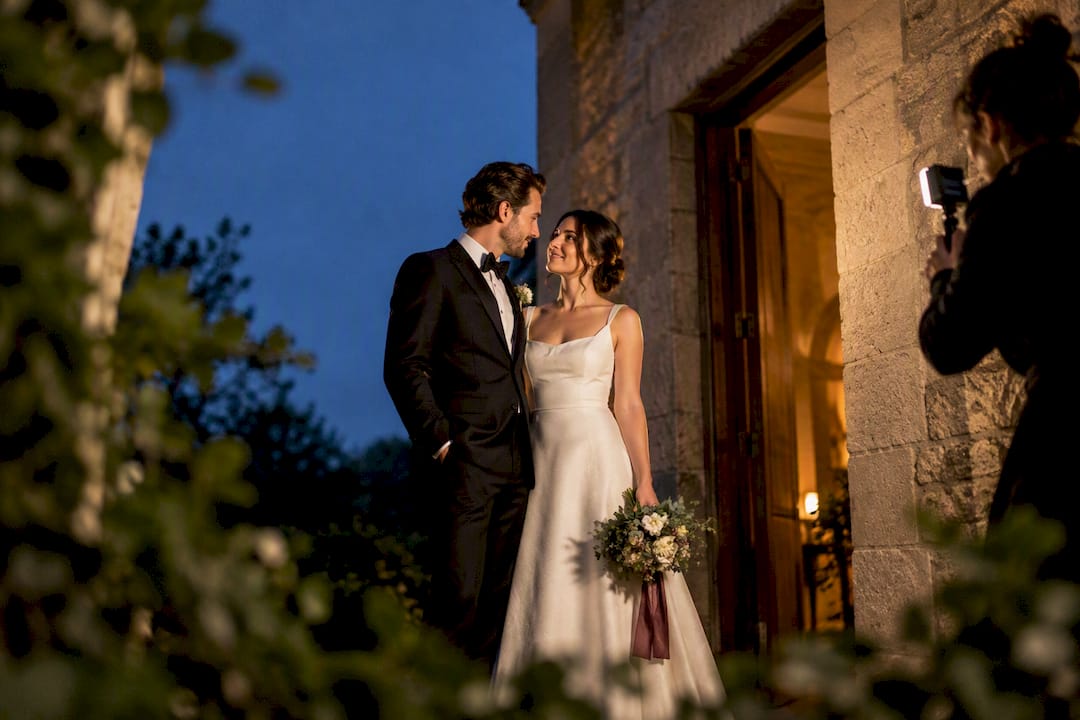
Getting striking evening wedding portraits comes down to one decision made weeks before the big day: block out a specific window around sunset, and confirm your photographer has a low-light backup ready if that window slips. Pair natural light with a simple flash or LED for depth, not just a dim glow. If you want a photographer who already builds this into the schedule, check availability before your date books out.
TL;DR:
Securing a 15 to 30-minute golden-hour portrait window is essential, with timing dependent on the actual sunset, not a fixed schedule.
Using off-camera flash and hybrid lighting techniques enhances low-light portraits by adding depth and control, especially after dark.
Confirming venue rules on lighting and open flames early prevents last-minute disruptions to planned night photography.
A fixed ten-minute blue-hour slot can salvage evening shots if the schedule slips, ensuring at least one dramatic portrait.
Planning and prioritizing key shots beforehand streamlines the process, minimizing delays and maximizing quality in limited light conditions.
Table of Contents
Why evening portraits are worth planning for
Golden hour, the stretch of soft, low sun before sunset, throws warm directional light across skin tones that flatters almost everyone. Blue hour follows it: the twenty to thirty minutes after the sun drops, when the sky turns a deep, editorial blue and city lights or venue string lights start to glow against it. Photographers chase both windows because they consistently produce the images couples end up loving most, the ones that get printed, framed, and shared long after the reception is forgotten.
Golden hour gives warm, flattering, directional light with long soft shadows.
Blue hour gives moody, cinematic tones that read as far more dramatic than daytime shots.
These images tend to become the standout shots from the whole day.
Season and cloud cover shift how long each window lasts, sometimes by twenty minutes or more.
When to schedule sunset, golden-hour and blue-hour portraits
Build the timeline backwards from sunset, not forwards from the ceremony. Guides that specialise in evening weddings consistently recommend finishing the ceremony 60 to 90 minutes before sunset if golden-hour couple portraits matter to you, because that buffer absorbs the inevitable late start without eating into your light.
Decide on a First Look or not. A First Look, seeing each other privately before the ceremony, frees up most of your portrait time earlier in the day and takes pressure off cocktail hour.
Without a First Look, guard the post-ceremony block fiercely. This is usually your only real shot at golden hour, so keep speeches, receiving lines, and photo requests from relatives out of it.
Book 15 to 30 minutes for golden-hour portraits. Wider timeline templates confirm this is enough for couple shots plus a handful of wider scenics, not a full family session.
Reserve a separate 5 to 10 minute blue-hour slot. It cannot replace golden hour, but it delivers the moodier, more dramatic frame most couples put on their wall.
A detailed evening timeline built around your actual sunset time, not a generic “photos at 5pm” slot, is the single biggest lever you control.
Getting the shots you want without losing the light
Speed on the day comes from decisions made in advance, not from rushing people around once the sun starts dropping.
Write a short priority shot list, five or six images maximum, and hand it to your photographer and planner beforehand.
Put one or two trusted people in charge of gathering family and the bridal party quickly. A wandering hunt for Uncle Dave costs you real minutes of usable light.
Pick portrait locations within a two-minute walk of your reception, and keep spare shoes and a jacket nearby so nobody stalls the group for comfort.
Lighting techniques that actually work after dark
Once natural light fades, the choice of lighting technique shapes the whole look of your evening portraits, and it is worth discussing with your photographer well before the day rather than leaving it to guesswork on the night.
Ambient-only setups using fairy lights, candles or a lit marquee keep the atmosphere intact but demand a proper venue walk-through beforehand to check the light is actually strong enough.
On-camera flash and bounce flash are fast, dependable, and forgiving when time is tight, though the result can look flatter and more direct than other methods.
Off-camera flash adds real depth and shadow control, separating a couple from the background instead of flattening them against it.
Continuous LEDs, coloured gels and light painting open up creative colour effects, worth a conversation with your photographer if you want something more editorial than documentary.
Tripod and long-exposure work can capture star trails or deliberate motion blur, but only when the venue and timeline allow a few unhurried minutes.
Combining ambient light with a simple hybrid flash setup is standard practice among photographers who shoot regularly after dark, and it keeps faces clear without stripping out the mood.
Pro Tip: Ask your photographer to show you full galleries from real evening weddings, not just the highlight reel. Consistent quality across an entire gallery tells you far more about their low-light skill than three cherry-picked hero shots ever will.
Checking venue rules before they cost you the shot
A gorgeous plan for evening portraits falls apart fast if the venue will not allow off-camera lights or open flame, so confirm these details while you still have time to adapt.
Ask directly about power points and permission to bring stands or off-camera flash units.
Confirm the venue’s actual policy on sparklers, cold-spark machines and any open flame, and have a venue-friendly backup ready if the answer is no.
Check access after dark and whether local noise curfews could shift your evening timing without warning.
Confirming power availability and flame restrictions in writing, not a casual verbal assurance, saves a scramble on the day itself.
Creative ideas for nighttime wedding photography
Some of the most requested night-portrait concepts are also the fastest to execute, which is exactly why they show up in nearly every gallery of standout evening shots.
Sparkler exits, silhouettes against the sky, reflections in puddles or glass, and neon-sign backdrops all read strongly in photographs and take only a minute or two to set up.
A backlit rim-light portrait, or a single light-painted frame, can produce one genuinely dramatic image without needing an extended session.
Keep poses simple: a close hold, foreheads touching, or walking slowly towards the camera. Low light forgives almost nothing complicated, so simplicity wins every time.
Capturing the dance floor and candid night moments
Party lighting is unpredictable, and the best dance-floor photographs come from photographers who plan around it rather than fight it.
Ask your DJ for a lighting plan, or simple uplighting, so there are usable pools of ambient light rather than one harsh strobe washing everything out.
Dragging the shutter and rear-curtain flash sync let photographers blend movement with sharp detail, giving dance shots real energy instead of a frozen, flat look.
Encourage a lively floor with well-timed floor-fill songs and a few guest cues. No staging required, just good timing from your DJ.
Questions to ask your photographer before you book
A short, pointed conversation now avoids disappointment later, particularly around low light, where skill genuinely varies between photographers.
Ask how much low-light experience they have and to see complete evening galleries, start to finish, not just standout frames.
Ask what backup kit they carry if a flash or light fails mid-session.
Confirm exact time allocations for each portrait block: golden hour, blue hour, and any dedicated night portrait.
Build a compact priority list together: golden-hour couple portrait, blue-hour editorial shot, one dramatic night portrait, the sparkler or send-off moment, and a handful of dance highlights.
Couples researching must-have wedding shots consistently name these five as the ones they regret missing most.
Our ten-minute plan for dark venues
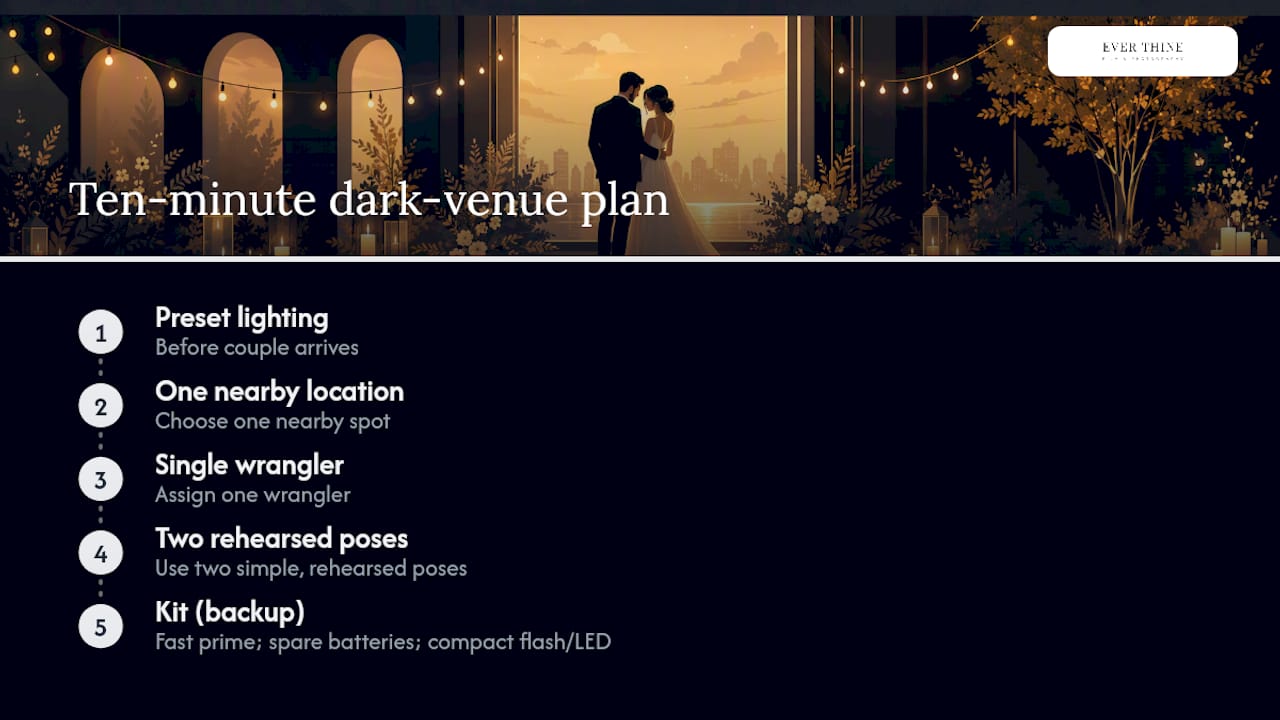
Weddingfilmphotography’s own workflow for dark venues runs on four moves: preset the lighting before the couple arrives, pick one nearby location, assign a single wrangler, and use two simple, rehearsed poses. Kit-wise, that means a fast prime lens, spare batteries, and a compact off-camera flash or LED as backup, tested on real dark-venue weddings.
What actually goes wrong on the night
The most common failure is not bad light. It is running late and watching golden hour disappear while the schedule catches up. The fix is almost embarrassingly simple: agree a fixed ten-minute blue-hour slot in advance, so even a delayed day still delivers one properly lit, intentional portrait. Couples using a 15 to 20 minute photographer plan built around their actual sunset time rarely lose this fight.
— Dawn & Carl
How we can help with evening and night portraits
Photographers who specialize in weddings often build the evening portrait window into the timeline from the first planning conversation, rather than hoping golden hour survives a busy day. As a multi award-winning husband-and-wife team covering Staffordshire, the West Midlands, and destination weddings across the UK. Documentary-style coverage sits at the centre of how packages are built, with same-day social deliverables available through Wedding Content Creation from £600 one-off for couples who want highlights online before the reception ends.
[
Wedding photography packages are detailed on the main services page, and couples wanting cinematic evening footage alongside stills can explore wedding videography too. If your venue sits in Derbyshire, Worcestershire, or Warwickshire, dedicated coverage pages outline local experience in more detail. The next step is simple: check your date’s availability and start the conversation about your evening timeline before the good slots on your wedding date fill up.
Sources
FAQ
Are sunset wedding photos worth the extra planning?
Yes. Couples who protect a specific golden-hour or blue-hour slot consistently get the images they end up printing and sharing, and the planning cost is a fixed 15 to 30 minute block rather than open-ended time.
What are the trends in wedding photography for 2026?
Documentary-style storytelling paired with a dedicated blue-hour portrait session continues to dominate, alongside same-day social content such as Weddingfilmphotography’s content creation service. Couples are also asking photographers for creative low-light techniques like light painting rather than relying purely on flash.
What are some creative ideas for evening wedding photos?
Sparkler exits, silhouettes against the sky, neon-sign backdrops, and a single backlit rim-light portrait all deliver strong results with minimal setup time. Simple poses, close holds, foreheads touching, or walking towards the camera, tend to read best once the light drops.
How far in advance should we plan our bridal portrait timing?
Confirm your sunset-based timeline with your photographer as soon as the ceremony time is set, ideally months before the wedding, not the week of. That gives you time to adjust the schedule, check venue lighting rules, and agree a low-light backup plan if the day runs late.
Recommended


Comments