
Wedding lighting tips guide for your big day
TL;DR:
Wedding lighting uses layered sources to shape mood, flatter skin tones, and create a personal atmosphere. Proper planning and coordination with your décor team produce visually stunning and memorable scenes, especially when using warm light temperatures between 2700K and 3000K.
Wedding lighting is the deliberate use of layered light sources to shape mood, flatter skin tones, and define the visual story of your day. The right setup transforms an ordinary venue into something that feels cinematic and deeply personal. Warm colour temperatures between 2700K and 3000K deliver the most flattering glow on skin and florals. This wedding lighting tips guide covers every category of light, practical budgeting, step-by-step execution, and outdoor-specific advice so you can plan with confidence.
What types of wedding lighting exist and how do they work?
Layering different lighting categories simultaneously builds depth and dimensionality that transforms venue ambiance. No single light source does everything. The five broad categories each serve a distinct purpose, and combining them is what creates that magazine-worthy result.
Ambient lighting provides the base illumination for the entire space. Think ceiling-mounted fixtures, chandeliers, and soft overall glow that lets guests see and move safely.
Accent lighting draws the eye to specific features. Uplighting, pinspots on centrepieces, and wall washes all fall here. Uplighting with 15–20 wireless LED fixtures is the standard recommendation for dramatically transforming a venue’s atmosphere.
Decorative lighting functions as visual décor in its own right. Candles, fairy lights, and statement chandeliers add texture and warmth without requiring a lighting rig.
Functional lighting covers safety and practicality. Pathway markers, bar lighting, and restroom signage keep guests comfortable and oriented throughout the evening.
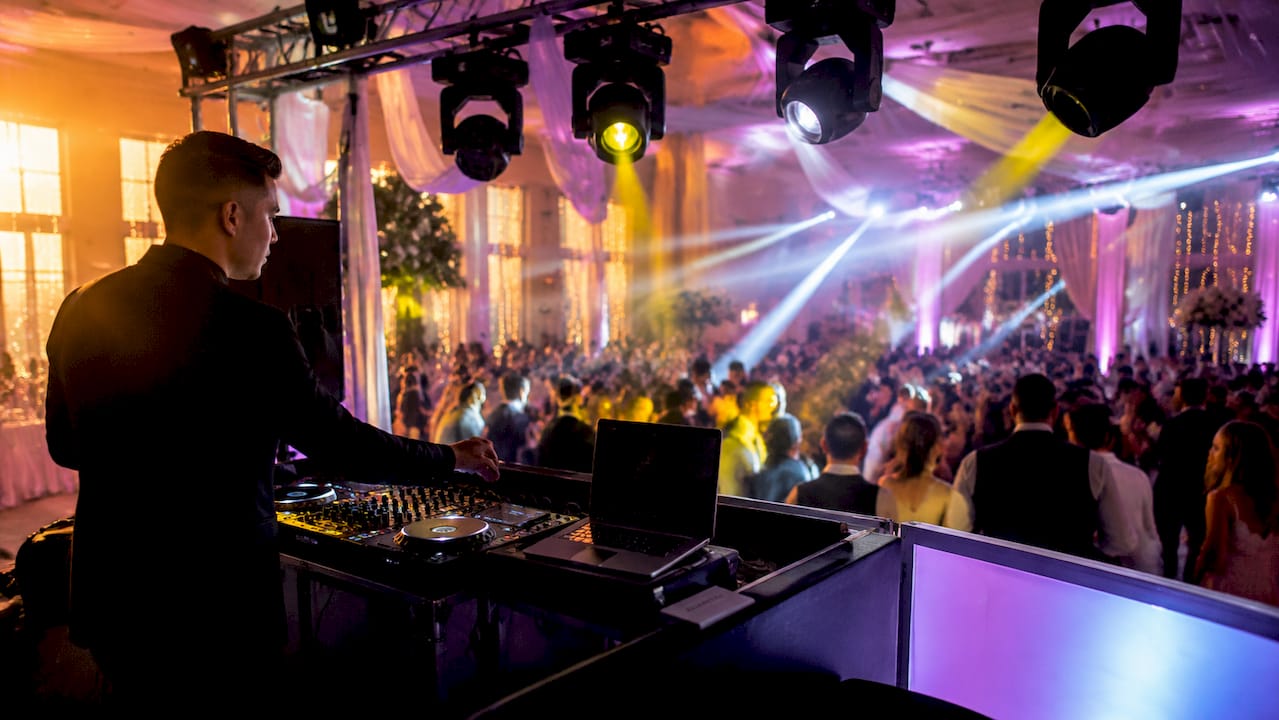
Entertainment lighting energises the dance floor. Moving heads, colour washes, and gobos programmed to sync with music shift the mood from dinner to party in seconds.
Intelligent lighting systems with moving heads and gobos can be programmed to create dynamic dance floor effects synced to music. That capability means your DJ and lighting technician need to communicate well before the day.
Pro Tip: Ask your venue coordinator which lighting rigs are already installed. Many venues include basic ambient fixtures in their hire fee, which means you can redirect budget toward accent and entertainment lighting where the visual impact is greatest.
How can you plan and budget for wedding lighting?
Professional wedding lighting packages typically range from £400 to £2,000, with DIY setups achievable for under £250 using string lights and LED candles. The gap between those two figures reflects not just equipment but expertise, installation time, and contingency planning. Knowing where you sit on that spectrum shapes every decision that follows.
The table below outlines the main cost tiers and what each typically includes.
Budget tier | Typical spend | What you get |
DIY | Under £250 | String lights, LED candles, battery-operated uplighters |
Entry-level professional | £400–£800 | Basic uplighting, fairy light canopy, dimmer control |
Mid-range professional | £800–£1,500 | Full uplighting rig, pinspots, dance floor wash |
Full production | £1,500–£2,000+ | Moving heads, gobos, colour programming, technician on-site |
A few practical ways to keep costs down without sacrificing atmosphere:
Buy string lights and LED candles outright, then resell them after the wedding. Resale value on quality Edison bulb strings is strong.
Assign a trusted friend or family member to manage battery-operated candles and pathway lights on the day.
Hire a professional only for the high-impact elements, such as uplighting and dance floor rigs, and handle decorative lighting yourself.
Always walk the venue with your lighting supplier before signing a contract. Power outlet locations, ceiling height, and venue restrictions all affect what is possible and what it costs.
When comparing professional versus DIY options, the DIY versus professional trade-off applies equally to lighting as it does to entertainment: professionals bring reliability and experience, while DIY gives you control over budget and personalisation.
Pro Tip: Book your lighting supplier at the same time as your photographer. The two disciplines are deeply connected. Lighting design shapes photography quality directly, and a photographer who knows your lighting plan can position themselves to capture the best results.
What are the best techniques for executing wedding lighting?
Execution is where plans either succeed or fall apart. Follow a clear sequence and you avoid the most common mistakes couples make on the day.
Assess the venue. Visit at the same time of day as your ceremony and reception. Note natural light levels, existing fixtures, power outlet positions, and any restrictions on open flames or drilling.
Select your lighting categories. Decide which of the five types you need based on your venue size, budget, and aesthetic. A barn venue needs different choices than a Georgian manor.
Plan the layout. Map out where each light source sits. Uplighters work best placed evenly around the perimeter. Pinspots need to be positioned directly above centrepieces to avoid casting shadows.
Coordinate with your florist and décor team. Coordination between lighting and floral designers is non-negotiable. A purple uplight wash over pink peonies produces a muddy, unappealing result. Share your colour palette with everyone involved.
Install before guests arrive. Lighting rigs need time to set up and test. Schedule installation at least three hours before your reception begins.
Use dimmers throughout. Dimmer switches allow precise atmospheric control across the different phases of your wedding. Bright and welcoming for the drinks reception, softer and more intimate for dinner, energetic for dancing.
Allow time for eyes to adjust. Human eyes take about 10 minutes to adapt from bright daylight to a lower-light reception ambiance. Factor that into your timeline so guests feel comfortable rather than disoriented when they enter the reception space.
Plan for safety. Use battery-operated LED candles in venues that prohibit open flames. They provide realistic candlelight without fire risk and require no wax management during the event.
Pro Tip: Always have a backup power source for battery-operated elements. A spare set of charged batteries stored with your venue coordinator costs almost nothing and prevents a decorative lighting failure mid-reception.
How should you approach outdoor wedding lighting?
Outdoor venues present unique challenges that indoor spaces do not. Weather, power access, and the absence of reflective walls and ceilings all change how light behaves and how much of it you need.
Outdoor wedding lighting should include waterproof fixtures, backup power, and precise zoning to keep guests safe and the atmosphere beautiful. That means specifying IP65-rated or higher fixtures for any light that may be exposed to rain or dew.
Key considerations for outdoor setups:
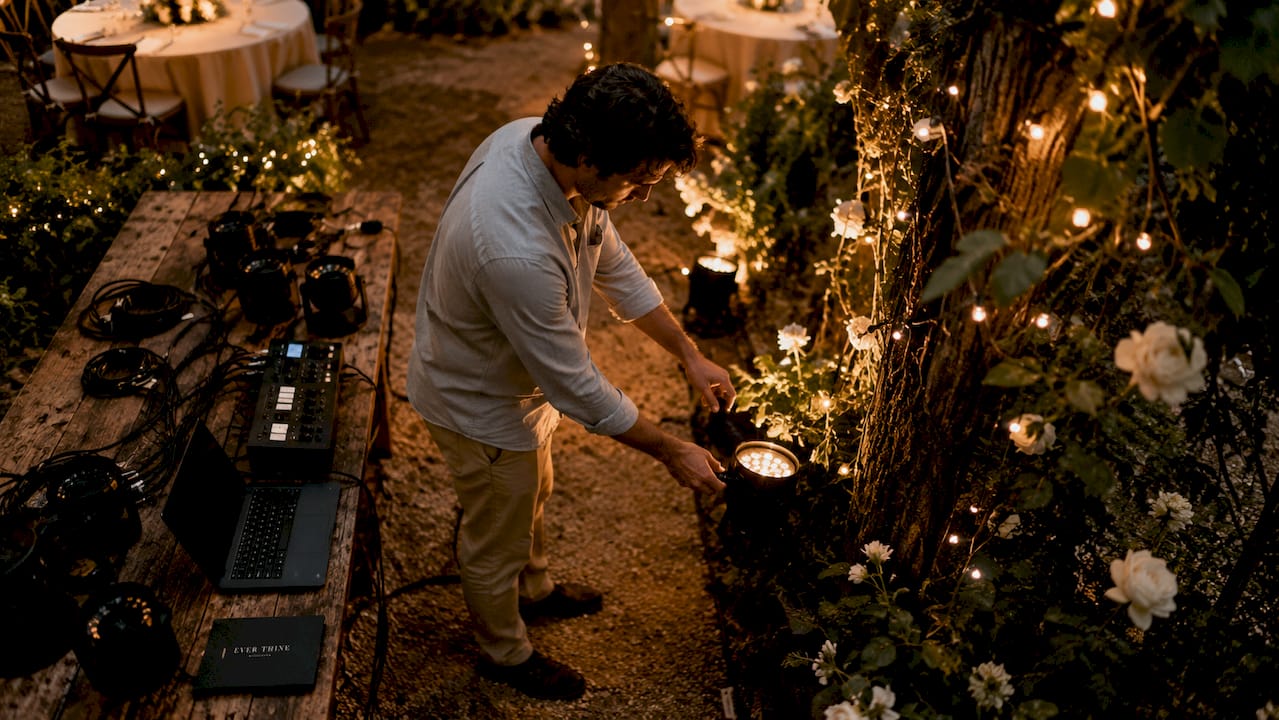
String light canopies create an instant ceiling and define the dining or dancing zone. Edison bulb string lights are the most popular choice for warmth and a whimsical, starry-night effect.
LED pathway lighting guides guests safely between the ceremony, dining, and dancing areas after dark. Solar-powered stake lights work well for garden venues with limited power access.
Lanterns and pillar candles add decorative warmth at ground level. Use battery-operated versions for wind-prone locations.
Trees, pergolas, and tent frames serve as natural anchors for string lights and hanging lanterns. Wrapping fairy lights around mature trees creates depth that no indoor venue can replicate.
Zone your lighting deliberately. The ceremony space benefits from soft, directional light that focuses attention on the couple. The dining area needs warm, even illumination. The dance floor needs energy and movement.
Confirm power supply with your venue well in advance. Many outdoor spaces have limited outdoor sockets, and running extension cables across guest pathways creates a trip hazard. A generator hire is often the most reliable solution for large outdoor receptions.
Pro Tip: For outdoor evening receptions, test your full lighting setup at dusk during your venue walkthrough. Lighting that looks adequate in daylight often proves insufficient once the sun drops below the treeline.
Key takeaways
Effective wedding lighting combines layered categories, warm colour temperatures, and careful coordination with your décor team to create an atmosphere that photographs beautifully and feels genuinely memorable.
Point | Details |
Use warm colour temperatures | Bulbs at 2700K–3000K flatter skin tones and florals better than cooler alternatives. |
Layer all five lighting categories | Ambient, accent, decorative, functional, and entertainment lighting work together for depth. |
Coordinate with your florist | Share colour palettes early to prevent clashing uplights and floral tones. |
Budget realistically | DIY setups cost under £250; professional packages range from £400 to £2,000 or more. |
Plan outdoor lighting for safety | Use waterproof fixtures, backup power, and clear zoning for any outdoor venue. |
Why lighting is the detail most couples underestimate
Most couples spend months choosing florals and weeks choosing a cake. Lighting gets a conversation two weeks before the wedding. That order of priorities is backwards, and I say that having seen the difference it makes in person.
The venues where everything looks extraordinary in photographs share one quality: the lighting was planned early and coordinated with every other supplier. The relationship between lighting and photography is not incidental. Light is literally what a camera records. A beautiful centrepiece under a harsh overhead spotlight looks flat and uninviting in photographs. The same centrepiece under a warm pinspot and soft ambient fill looks like it belongs in a magazine.
The other thing couples consistently underestimate is the psychological effect of lighting transitions. Moving from a bright drinks reception into a softly lit dinner space signals to guests that the evening has shifted. It changes behaviour, lowers voices, and creates intimacy. That transition does not happen by accident. It requires dimmers, a plan, and someone responsible for executing it.
My honest advice: if your budget is tight, spend it on uplighting and dimmers before anything else. Those two elements deliver the greatest visible transformation per pound spent. Fairy lights and candles are beautiful, but they are finishing touches. Uplighting is the foundation.
— Ever
How Weddingfilmphotography captures your lighting at its best
Lighting design and photography are inseparable. The atmosphere you create with your lighting choices directly shapes how your wedding photographs and film will look and feel for decades to come.
[
Weddingfilmphotography works with engaged couples across Derbyshire, Staffordshire, and Worcestershire, bringing a documentary approach that works with your lighting rather than against it. Whether you have a candlelit barn or a fully rigged marquee, the team reads the light and positions accordingly. If you are planning your wedding in the Midlands and want photography that honours the atmosphere you have worked hard to create, explore wedding photography in Staffordshire or wedding photography in Derbyshire to find out more about packages and availability.
FAQ
What colour temperature is best for wedding lighting?
Warm white bulbs rated between 2700K and 3000K are the best choice for weddings. They flatter skin tones, complement floral arrangements, and create a romantic, intimate atmosphere.
How many uplighters do I need for my venue?
The standard recommendation is 15–20 wireless LED uplighters to effectively transform a typical reception venue. Larger spaces or venues with high ceilings may require additional units.
Can I do my own wedding lighting on a tight budget?
Yes. A DIY setup using string lights and LED candles can cost under £250 and still create a warm, atmospheric result. Reserve professional hire for high-impact elements like uplighting and dance floor rigs.
How does lighting affect wedding photographs?
Lighting design shapes photography quality directly, as cameras record light rather than scenes. Poor lighting produces flat, unflattering images, while warm, layered light creates depth and mood that photographs beautifully.
When should I book a wedding lighting supplier?
Book your lighting supplier at the same time as your photographer and florist, ideally 9–12 months before the wedding. Early booking allows proper coordination between all creative suppliers and secures availability at popular venues.
Recommended


Comments