
What is venue scouting: a guide for UK couples

TL;DR:
Venue scouting involves visiting and evaluating wedding locations to ensure they meet your budget, guest capacity, and style before booking. It requires defining non-negotiables, researching options, scheduling site visits, and asking targeted questions to make informed choices and avoid costly mistakes. Early and thorough visits help couples secure ideal dates, plan logistics, and understand their venue’s character from a photography perspective.
Venue scouting is the purposeful process of visiting and evaluating shortlisted wedding locations to confirm they meet your budget, guest capacity, aesthetic vision, and logistical needs before signing any contract. The industry term used by professional planners is “venue site visit” or “venue viewing,” and the two terms sit alongside “venue scouting” throughout the planning process. The average UK couple in 2026 spends between £4,000 and £7,000 on their venue, representing 40–50% of the total wedding budget. That single line item makes the venue the most consequential decision in the entire planning process. Getting it wrong costs far more than money.
What does the venue selection process entail from start to finish?
The venue selection process follows a clear sequence. Skipping steps creates confusion and wasted visits.
Step 1: Define your non-negotiables
Write down your hard limits before you look at a single venue. Budget ceiling, guest count, preferred date range, and location radius are the four filters that cut your longlist from hundreds to a workable shortlist. Expert advice recommends shortlisting 4–5 venues and booking site visits promptly after defining these priorities. Visiting more than five venues in quick succession leads to decision fatigue, where every space starts to blur into the last.
Step 2: Research and shortlist
Use venue directories, wedding blogs, and social media to gather images and reviews. Cross-reference each venue against your non-negotiables and remove any that fail on more than one criterion. At this stage, you are filtering on paper, not in person.
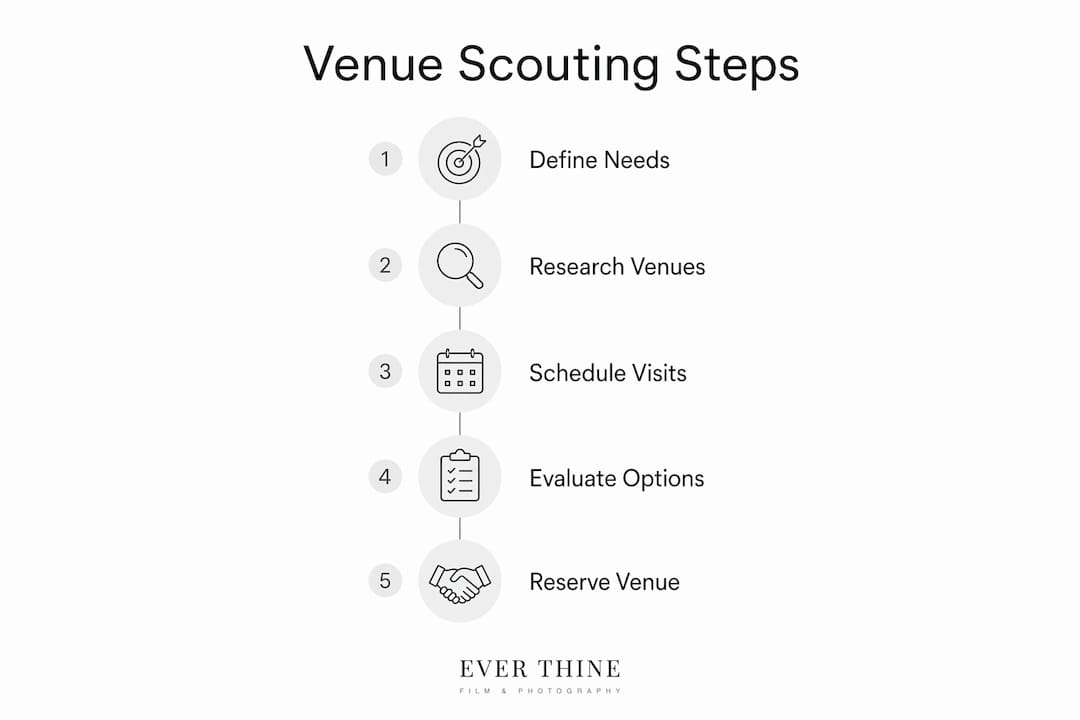
Step 3: Schedule site visits
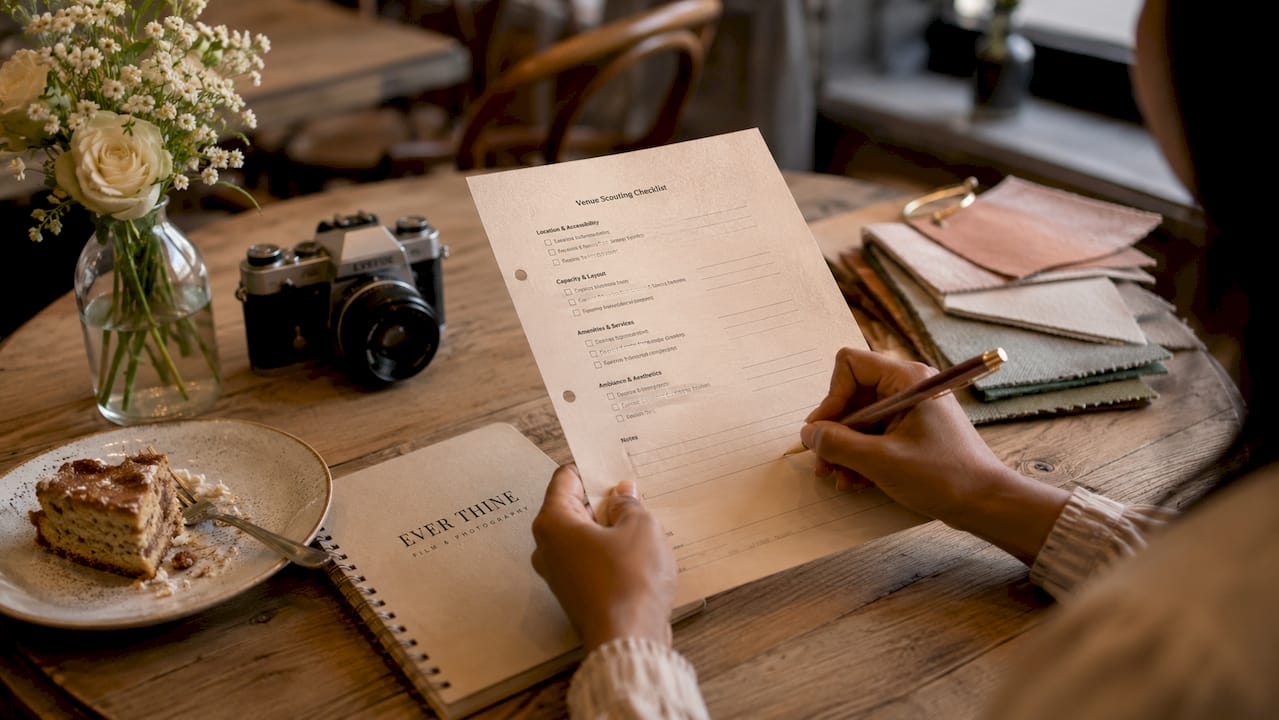
Contact each venue directly and request a viewing at the same time of day as your planned ceremony. Lighting, atmosphere, and noise levels change dramatically between morning and evening. Bring a printed checklist and a phone for photos. A structured comparison checklist with side-by-side columns for each venue prevents details from blurring after multiple visits.
Step 4: Evaluate and compare
After each visit, complete your notes while the experience is fresh. Score each venue against the same criteria so your comparison stays objective. Gut feeling matters, but it should sit alongside facts, not replace them.
Step 5: Provisionally reserve your preferred venue
Most UK venues allow a short provisional hold, typically 7–14 days, while you complete remaining viewings. Use this window to visit your second and third choices before committing.
Pro Tip: Take a short video walkthrough on your phone during every visit. Reviewing footage later reveals details you missed in the moment, particularly room proportions and natural light quality.
How to balance logistics with aesthetics when scouting venues
Aesthetics draw you in. Logistics keep the day running. The best venues deliver both, and you need a method for assessing each without letting one override the other.
Start with the guest experience lens. Viewing a venue through your guests’ perspective ensures accessibility, transport ease, and onsite accommodation are factored into your decision. A stunning barn with no disabled access or a two-hour drive from the nearest hotel creates real problems for guests, regardless of how beautiful the photographs will look.
Assess the following during every visit:
Flow between spaces. Walk the route guests will take from arrival to ceremony to reception. Awkward transitions, narrow corridors, or confusing layouts create bottlenecks.
Natural light. Identify where light falls at your planned ceremony time. North-facing rooms can feel flat in winter months. South-facing spaces with large windows photograph beautifully but may need blackout options for summer afternoon ceremonies.
Weather contingency. Ask explicitly what happens if it rains. A marquee with no hard flooring or a courtyard ceremony space with no covered alternative is a genuine risk in the UK.
Noise restrictions. Many licensed venues, particularly those near residential areas, impose a hard finish time for amplified music. Confirm the exact cut-off and whether it applies to the whole site or just specific rooms.
Ambience alignment. Stand in the main reception space and ask honestly whether it matches your wedding style. A minimalist couple in a heavily ornate ballroom will spend significant budget on styling to counteract the existing décor.
Pro Tip: Visit the venue on a day when another event is set up, even briefly. Seeing the space dressed gives you a far more accurate sense of scale and atmosphere than an empty room.
The role your venue plays in wedding photography is also worth considering early. Backdrops, textures, and spatial flow all influence how your images and film will look. Discussing this with your photographer before you finalise a venue can prevent regret later.
What critical questions should you ask during a venue visit?
A thorough venue site visit covers 25–30 targeted questions. That number sounds daunting, but grouping them by category makes the conversation manageable.
Costs and contracts
What is the full cost breakdown, including VAT?
Are there corkage fees, cake-cutting charges, or overtime rates?
What is the deposit amount, and when is the balance due?
What are the cancellation and postponement terms, and under what conditions is a refund issued?
Logistics and access
What time can suppliers access the venue for setup?
Is there dedicated parking for guests and delivery vehicles?
What is the latest finish time for the event, and what are the penalties for overrunning?
Are there restrictions on external caterers, florists, or entertainment?
Policies and protections
Is the venue currently under the same management, and are there any planned ownership changes?
Venues undergoing management changes carry real booking risks. Ask explicitly about administration status and what protections exist for your deposit.
What is the wet-weather plan for outdoor elements?
Is the venue licensed for civil ceremonies, and does that licence cover your preferred date?
Question category | Why it matters |
Total cost breakdown | Reveals hidden charges that inflate the final invoice |
Noise and finish times | Prevents disputes and sets realistic entertainment expectations |
Supplier access times | Affects florist, caterer, and photographer setup schedules |
Cancellation policy | Protects your deposit if circumstances change |
Management stability | Safeguards your booking against venue closure or sale |
When is early venue scouting critical in the UK wedding timeline?
Timing is the single most underestimated factor in the venue selection process. Acting too late removes your best options before you have even begun.
Book site visits within two weeks of shortlisting. Popular venues fill their diary quickly. Delaying a viewing by a month can mean your preferred Saturday is already gone.
Expect a 12–18 month lead time for peak dates. UK wedding venues typically book 12–18 months ahead for peak-season Saturdays, particularly between may and september. If you want a summer Saturday at a sought-after country house, you need to be scouting venues the moment you get engaged.
Secure a provisional hold immediately after your preferred visit. Most venues offer a short hold at no cost. Use it. Continuing to scout while your top choice is held gives you genuine comparison without the pressure of losing it.
Align your venue decision with your wedding timeline planning. The venue dictates your ceremony time, which dictates your photography schedule, which dictates your supplier call times. Every other vendor decision flows from the venue.
Factor in vendor availability. Your preferred photographer, band, or caterer may already be booked for your chosen date at another venue. Confirming key vendors alongside the venue avoids discovering conflicts after you have paid a deposit.
The importance of venue scouting early is that it reduces stress and wasted effort by clarifying priorities upfront. Couples who scout venues within the first month of engagement consistently report fewer last-minute compromises.
What are the common pitfalls in venue scouting?
Most venue scouting mistakes are avoidable. They share a common root: couples move too fast or rely on incomplete information.
Trusting online photos alone. Professional venue photography uses wide-angle lenses, perfect lighting, and empty rooms. The space you visit will look different. Always see it in person before forming a strong opinion.
Skipping the written confirmation step. Verbal agreements carry no weight once you have paid a deposit. Your negotiating position drops the moment money changes hands. Get every agreed term, including access times, staff provisions, and supplier policies, confirmed in writing before signing.
Ignoring guest accessibility. A venue that is difficult to reach by public transport, has no step-free access, or lacks nearby accommodation creates a poor experience for a significant portion of your guest list. Check these details during the visit, not after booking.
Venue-shopping fatigue. Luxury planners identify “venue-shopping fatigue” as one of the most common reasons couples make poor venue decisions. Visiting too many venues without a clear brief causes priorities to shift with each viewing. Fix your non-negotiables before you start and do not revise them mid-search.
Overlooking hidden costs. Corkage fees, mandatory catering minimums, and overtime charges can add thousands to a venue’s headline price. Always request a full cost breakdown in writing, including VAT.
Pro Tip: Bring the same two or three people to every venue visit. Consistent company means consistent feedback, and you avoid the confusion of conflicting opinions from different groups.
Personalising your wedding to the venue’s strengths is also worth planning early. Meaningful personalisation ideas work best when they are designed around what the space naturally offers, rather than fighting against its character.
Key takeaways
Venue scouting is the most time-sensitive decision in wedding planning, and getting it right requires a structured process, the right questions, and written confirmation of every agreed term.
Point | Details |
Define non-negotiables first | Set budget, guest count, and date range before visiting a single venue. |
Visit in person, always | Online photos misrepresent scale, light, and atmosphere consistently. |
Ask 25–30 targeted questions | Cover costs, noise restrictions, access times, and cancellation policies at every visit. |
Act within 12–18 months | Peak UK venues book this far ahead; delay costs you preferred dates. |
Get everything in writing | Verbal agreements become unenforceable the moment you pay a deposit. |
Why venue scouting shaped how I think about wedding days
The couples I have worked with who struggled most on their wedding day shared one thing in common: they chose their venue based on photographs. Not visits. Not conversations with the coordinator. Just images on a screen.
A venue that looks ethereal in a styled shoot can feel cavernous and cold when filled with 120 guests on a grey october afternoon. Conversely, a modest barn with low ceilings and warm wood tones can feel genuinely magical when the light drops and the candles come on. You cannot know which you have until you stand in it.
What I find consistently true is that the couples who scout venues with a clear written brief, who ask hard questions about noise curfews and supplier access, and who get every agreement documented, arrive on their wedding day with far less anxiety. They know what to expect because they did the work to find out.
The other thing I have noticed is how rarely couples think about their venue from a photography and film perspective during the scouting process. A venue walkthrough before the wedding day is something Weddingfilmphotography always recommends, because knowing where the light falls, where the quiet corners are, and how the spaces connect changes everything about how a day is captured. The venue is not just a backdrop. It is a character in your story.
My honest advice: visit fewer venues, but visit them more thoroughly. Two hours at three venues beats twenty minutes at ten.
— Ever
How Weddingfilmphotography works with your chosen venue
Once you have found your venue, the next step is making sure every moment within it is captured with care.
[
Weddingfilmphotography specialises in documentary-style wedding photography and cinematic film across Derbyshire, Staffordshire, and Worcestershire. The team works closely with couples to understand their venue’s unique atmosphere before the wedding day, using pre-shoot walkthroughs to plan timing, identify the best light, and anticipate the moments that matter most. Whether your venue is a grand country house or a relaxed converted barn, Weddingfilmphotography brings the same attentive, unobtrusive approach to every space.
FAQ
What is venue scouting in simple terms?
Venue scouting is the process of visiting shortlisted wedding locations in person to assess whether they meet your practical and aesthetic requirements before booking. It goes beyond browsing photos online to include evaluating capacity, logistics, costs, and atmosphere firsthand.
How many venues should you visit when scouting?
Expert planners recommend visiting 4–5 venues. Visiting more than five increases decision fatigue and makes objective comparison harder without a structured checklist.
How far in advance should you scout UK wedding venues?
Start scouting as soon as you are engaged if you want a peak-season date. Popular UK venues book 12–18 months ahead, particularly for Saturdays between may and september.
What should a venue scouting checklist include?
A thorough checklist covers capacity, total cost breakdown including VAT, noise and finish time restrictions, supplier access times, wet-weather contingencies, cancellation policies, and the venue’s current management status.
Do photographers need to visit the venue before the wedding?
A pre-wedding venue walkthrough is strongly recommended. It allows photographers and videographers to understand the space, plan for available light, and identify key locations for portraits and ceremony coverage.
Recommended
Comments