
What is vintage wedding style? A complete guide
- Jun 6
- 9 min read

TL;DR:
Vintage wedding style draws inspiration from specific historical eras from the 1920s to the 1980s, creating cohesive atmospheres through décor, attire, and venues. Choosing one era, sourcing authentic pieces, and respecting original garments ensure a genuine, timeless aesthetic. The style outlasts trends by emphasizing restraint, meaningful details, and personal connection over superficial accuracy.
Vintage wedding style is defined as a celebration inspired by a specific past era, typically spanning from the 1920s to the 1980s, built around distinctive aesthetics in attire, décor, colour palette, and venue. Unlike antique items, which are over 100 years old, vintage spans 1920 to 1980, making it a living, accessible aesthetic rather than a museum exercise. The style works because it borrows meaning from the past rather than simply copying it. Every element, from a birdcage veil to a Georgian manor, serves the same purpose: creating a cohesive atmosphere that feels timeless rather than dated. Understanding how to choose a wedding style is the first real decision that shapes everything else.
What is vintage wedding style and how do you define it?
Vintage wedding style is the practice of drawing all major design decisions from one chosen historical period, so that attire, florals, venue, stationery, and décor speak the same visual language. The word “vintage” is sometimes used loosely, but in wedding planning it carries a specific meaning. The definition now extends to include inspirations from the 1980s and even the early 2000s, reflecting celebrations reminiscent of a grandparent’s or parent’s era.

What separates vintage style from simply “old-fashioned” is intentionality. A couple choosing Art Deco does not just add a few gold candelabras. They select geometric stationery, black and gold colour schemes, a 1920s-era venue such as a city hotel ballroom, and bias-cut gowns with beaded detail. Every choice reinforces the period. That coherence is what gives vintage weddings their distinctive, transportive quality.
The style also differs from retro, which tends to be playful and self-aware, often nodding to pop culture. Vintage wedding style is sincere. It treats the chosen era with genuine respect, aiming for atmosphere rather than costume party. That distinction matters when you are planning a day you want to look back on with pride in twenty years.
How to choose the right vintage era for your wedding
Era selection drives every subsequent planning decision, from the shape of the wedding cake to the font on the order of service. Choosing one primary period before booking a venue or buying a dress saves significant time and prevents the visual confusion that comes from mixing incompatible aesthetics.
The most popular eras for vintage wedding themes each carry a distinct personality:
Victorian (1837 to 1901): Rich jewel tones such as deep burgundy, emerald, and sapphire. Ornate lace, high necklines, and Gothic or manor house venues. Florals lean towards roses, dahlias, and trailing ivy.
Edwardian (1901 to 1910): Softer and more romantic than Victorian. Pastel palettes, estate gardens, broderie anglaise fabric, and delicate floral crowns.
Art Deco (1920s): The most searched vintage wedding aesthetic alongside Victorian. Black, gold, and ivory with geometric patterns, feather accents, and city hotel or art gallery venues.
Old Hollywood (1930s to 1950s): Bias-cut satin gowns, red lips, candlelit glamour, and grand ballroom settings.
Mid-century (1950s to 1960s): Tea-length dresses, pastel colour blocking, retro typography, and village hall or countryside pub venues.
1970s boho: Earth tones, wildflowers, folk-inspired embroidery, and farm estates or woodland clearings. Growing interest in 1970s boho reflects a broader shift towards natural, unstructured celebrations.
The practical benefit of committing to one era is that it simplifies every supplier conversation. When you tell a florist “Edwardian garden party,” they immediately understand the mood, scale, and palette. When you tell a venue “Art Deco glamour,” they know whether their space fits. Mixing periods can work, but it requires a confident editorial eye and a very clear brief for every supplier involved.
Pro Tip: Choose your era based on the venue first, not the dress. The building’s architecture will either support or undermine your chosen period more powerfully than any other single element.
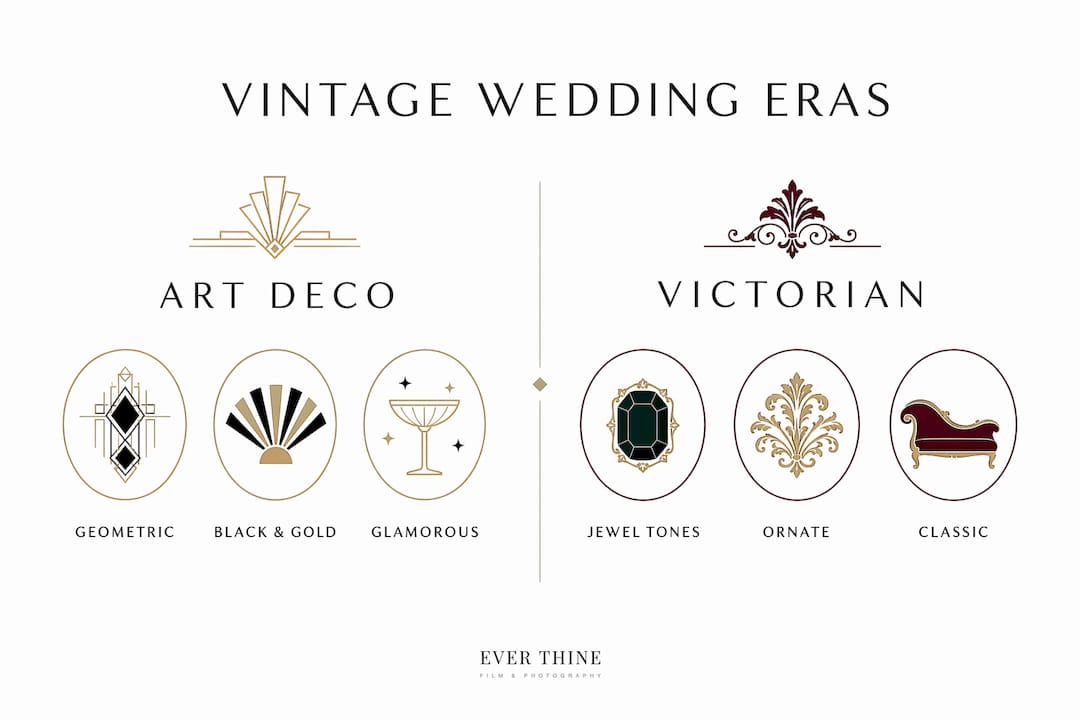
Comparing popular vintage wedding themes
Major vintage periods feature distinct colour palettes, venue types, and styles that range from Victorian jewel tones in Gothic mansions to 1970s wildflowers on farm estates. The table below summarises the key differences to help you identify which theme aligns with your vision.
Era | Colour palette | Typical venue | Signature décor |
Victorian | Jewel tones: burgundy, emerald, navy | Gothic manor, country house | Ornate lace, candelabras, dark florals |
Edwardian | Soft pastels: blush, sage, ivory | Estate garden, orangery | Floral crowns, linen tablecloths, teacups |
Art Deco | Black, gold, ivory | City hotel, art gallery | Geometric patterns, feathers, mirrored surfaces |
Old Hollywood | Ivory, champagne, deep red | Grand ballroom, theatre | Candelabras, satin draping, vintage glassware |
1970s boho | Earth tones: rust, terracotta, ochre | Farm estate, woodland | Macramé, wildflowers, folk embroidery |
Art Deco and Victorian remain the two most searched vintage wedding aesthetics, and it is easy to understand why. Both offer strong visual contrast and photograph exceptionally well. Art Deco’s geometric boldness reads clearly in wide-angle shots of reception rooms, while Victorian’s layered textures reward close-up photography of details like lace and candlelight.
The 1970s boho revival deserves particular attention for couples who want vintage warmth without formality. Earth tones and organic textures create an atmosphere that feels genuinely personal rather than theatrical. It also tends to be the most budget-friendly vintage theme, since wildflowers, wooden crates, and handmade macramé cost considerably less than gilded Art Deco centrepieces.
How to source and style authentic vintage wedding décor
Genuine vintage décor sourced from estate sales, charity shops, and antique markets provides character-rich decorations that reproductions simply cannot replicate. A mismatched collection of 1940s teacups found across three different charity shops tells a more convincing story than a uniform set ordered from a wedding supplier catalogue.
Here is a practical approach to building your vintage décor collection:
Start with estate sales and house clearances. These are the best sources for genuine period pieces at low prices. Furniture, glassware, framed prints, and textiles often appear together, making it easier to build a cohesive collection quickly.
Visit antique markets regularly in the months before your wedding. Markets like Newark Antiques Fair or Portobello Road in London stock items across all major vintage periods. Regular visits mean you can buy pieces gradually rather than in a costly last-minute rush.
Use a tea bath to age new textiles. Soaking linen napkins, table runners, or fabric bunting in a strong tea solution produces an authentic aged tone that looks as though the fabric has been stored in a drawer for decades. This technique costs almost nothing and is highly effective.
Blend genuine pieces with a small number of modern reproductions. Mixing authentic vintage with reproductions creates a more lived-in, believable aesthetic than striving for total historical accuracy. A few reproduction Art Deco candle holders alongside genuine 1920s glassware will look more natural than either alone.
Conceal modern necessities. Speakers, extension leads, and digital displays break the vintage atmosphere immediately. Hiding modern features behind fabric draping, inside vintage suitcases, or behind floral arrangements preserves the immersion you have worked to create.
Pro Tip: Avoid over-decorating. Vintage style gains its power from restraint. A single genuinely beautiful piece, such as an original 1930s drinks trolley or a Victorian birdcage, creates more atmosphere than a table covered in twenty small reproductions.
Vintage wedding attire and photography tips
Vintage bridal attire works best when it respects the original garment rather than trying to modernise it. Retaining original necklines and sleeve shapes while accepting minor imperfections in an heirloom dress strengthens the vintage feel far more than rebuilding the silhouette to suit current trends. A slightly yellowed lace collar or a hand-stitched hem is not a flaw. It is evidence of age, and that evidence is precisely what makes the dress compelling.
Key attire choices that define each vintage era include:
1920s Art Deco: Drop-waist silhouettes, beaded detail, T-bar shoes, and feathered headbands.
1950s mid-century: Full-skirted tea-length dresses, kitten heels, pearl jewellery, and short white gloves.
1970s boho: Flowing chiffon, lace bell sleeves, floral crowns, and strappy sandals.
Across all eras: Birdcage veils remain one of the most popular vintage accessories, adding immediate period character without requiring a full vintage gown.
Photography is where vintage style either succeeds or falls apart. Materials that age gracefully create timeless photographs, while synthetic reproductions and over-bright colours tend to look cheap in print. A photographer who understands vintage aesthetics will use natural light, film-inspired tones, and careful framing to reinforce the period atmosphere rather than work against it. The role of wedding aesthetic in lasting photos is significant: the styling choices you make directly determine how the images feel in ten or twenty years. Classic wedding photography approaches this by prioritising timeless composition over trend-driven editing, which suits vintage weddings particularly well.
Experienced photographers understand vintage eras and know how to capture the moments and details that reflect the authenticity couples have worked to create. Discuss your chosen era with your photographer before the wedding day, share reference images, and agree on an editing style that complements rather than contradicts your décor.
Key takeaways
Vintage wedding style succeeds when one chosen era drives every decision, from venue and colour palette to attire and photography style.
Point | Details |
Define your era first | Selecting one period before booking venues or buying attire prevents visual inconsistency. |
Source genuine pieces | Estate sales and charity shops provide authentic décor that reproductions cannot match. |
Respect original garments | Preserving necklines and accepting minor imperfections strengthens vintage attire authenticity. |
Blend real and reproduction | Mixing genuine vintage with a few modern reproductions creates a more believable aesthetic. |
Match photographer to style | Choose a photographer who understands your chosen era and can edit to complement it. |
Why vintage style outlasts every other wedding trend
The best vintage weddings I have photographed share one quality: restraint. The couples who plan them are not trying to recreate a film set. They are borrowing meaning from a specific moment in history and using it to say something true about themselves. That is a fundamentally different project from following a trend, and it shows in the photographs.
Vintage weddings counter disposable wedding culture by emphasising durability, character, and personal expression. When I look back at images from a well-executed Art Deco wedding or an Edwardian garden celebration, they do not look dated. They look considered. The couples in those photographs made choices that reflected genuine taste rather than whatever was popular on social media that year.
My honest advice is this: do not treat historical accuracy as the goal. Treat it as a tool. A 1920s-inspired wedding does not need to be a documentary reconstruction of the Jazz Age. It needs to feel like a celebration that could only belong to you, informed by a period you genuinely love. The couples who get this right are the ones who spend time understanding their chosen era rather than simply collecting its props. Read about it, watch films from it, look at photographs of real people who lived through it. That research produces instinctive, confident choices that no amount of Pinterest browsing can replicate.
Wedding photography trends in 2025 and beyond show a clear movement towards authenticity and away from heavily staged imagery. Vintage style sits perfectly within that shift. It rewards genuine detail, natural light, and candid moments far more than it rewards perfection.
— Ever
Capture your vintage wedding with Weddingfilmphotography
Planning a vintage wedding in the Midlands or beyond means investing significant care in every detail. Those details deserve a photographer who recognises them.
[
Weddingfilmphotography works with couples planning vintage-themed celebrations across Derbyshire, Staffordshire, and Worcestershire, bringing a documentary approach that captures the atmosphere, texture, and emotion of your chosen era without interrupting it. Whether your vision is Art Deco glamour in a city hotel or 1970s boho on a Shropshire farm estate, get in touch to discuss how we can preserve those memories in photographs and film that will look as beautiful in thirty years as they do today.
FAQ
What defines vintage wedding style?
Vintage wedding style is defined by drawing all major design decisions from one historical era, typically between the 1920s and 1980s. The key elements are a cohesive colour palette, period-appropriate attire, era-specific décor, and a venue that supports the chosen aesthetic.
Which vintage era is most popular for weddings?
Art Deco from the 1920s and Victorian from the 1837 to 1901 period are the most searched vintage wedding aesthetics. Interest in 1970s boho is growing rapidly, particularly among couples seeking a less formal vintage atmosphere.
How do you make vintage wedding décor look authentic?
Source genuine pieces from estate sales, antique markets, and charity shops rather than relying entirely on reproductions. Use a tea bath to age new textiles, blend a few modern reproductions with authentic items, and conceal any modern necessities such as speakers or cables.
Can you wear a modern dress to a vintage wedding?
A modern dress can work for a vintage wedding if it is designed with period-appropriate details such as a 1950s full skirt or 1920s beaded bodice. Accessories like birdcage veils, long gloves, or T-bar shoes add vintage character without requiring a fully authentic garment.
Does vintage wedding style photograph well?
Vintage weddings photograph exceptionally well when the styling uses materials that age gracefully, such as linen, lace, and natural florals, rather than synthetic reproductions. A photographer familiar with the chosen era and using natural light and film-inspired editing will produce images that remain timeless for decades.
Recommended