
What is creative portraiture? a photographer's guide

TL;DR:
Creative portraiture uses deliberate artistic choices in lighting, styling, and composition to evoke mood or ideas beyond likeness. It distinguishes itself from traditional portraiture by focusing on emotional resonance or conceptual themes, often employing experimental techniques. Success relies on clear intent, methodical planning, and purposeful execution aligned with the desired emotional or narrative impact.
Creative portraiture is portrait photography approached with strong artistic intention, using deliberate choices in lighting, styling, composition, posing, and post-processing to communicate mood, emotion, or ideas beyond mere likeness. Where a standard portrait records how someone looks, creative portrait photography asks a deeper question: what should this image feel like? Two recognised subtypes sit at the heart of this discipline. Fine art portraiture aims for timeless, emotionally resonant images where every element is controlled. Conceptual portraiture builds an entire series around a single, clearly defined idea or constraint. Both demand that the photographer think like a director, not just a technician.
What is creative portraiture and how does it differ from traditional photography?
Traditional portrait photography prioritises accurate likeness. The goal is a clean, flattering record of the subject’s appearance, typically using neutral lighting, natural posing, and minimal post-processing. Creative portraiture shifts that goal entirely. The photographer uses the subject as a starting point, then layers artistic decisions on top to produce an image that carries mood, narrative, or conceptual weight.
Creative portraiture intentionally extends or breaks traditional conventions, using effects like distorted reflections, extreme shadows, or unconventional textures to evoke fine art qualities. This is not rule-breaking for its own sake. Each departure from convention serves the image’s emotional or conceptual purpose.
The two main subtypes behave quite differently in practice. Fine art portraiture treats every element — wardrobe, background, colour palette, retouching — as a core creative tool to shape an intentional and timeless image. Conceptual portraiture, by contrast, is built around a clear project structure or defined constraint forming the entire series, distinguishable by being explainable in a single short sentence.
Approach | Lighting | Posing | Editing Style | Primary Goal |
Traditional portraiture | Flattering, neutral | Natural, relaxed | Minimal, clean | Accurate likeness |
Fine art portraiture | Sculpted, deliberate | Composed, controlled | Refined, tonal control | Timeless emotional resonance |
Conceptual portraiture | Concept-led | Serves the idea | Consistent across series | Communicate a defined concept |
Avant-garde portraiture | Experimental | Unconventional | Bold, distorted | Challenge visual norms |
Pro Tip: If you can describe your portrait project in one sentence, you are probably working in conceptual territory. If you cannot, you may be making mood-based fine art work. Neither is wrong, but knowing which you are doing keeps your creative decisions consistent.
What techniques shape a successful creative portrait?
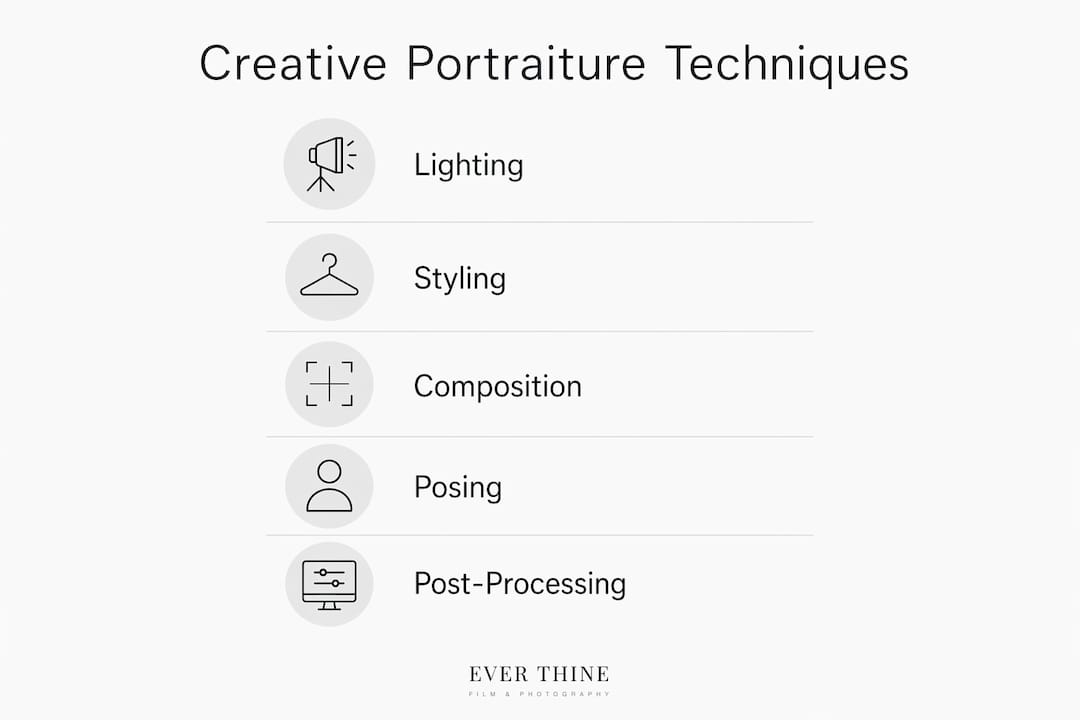
Lighting is the single most powerful variable in creative portrait photography. Direction, quality, and colour each carry emotional weight. Hard side lighting carves dramatic shadows. Coloured gels shift the mood from clinical to cinematic. A single bare bulb placed below the subject’s face reads as unsettling. These are not accidents. They are choices.

Styling carries equal importance in fine art portraiture. Wardrobe, colour palettes, and textures function as core creative tools rather than afterthoughts. A muted, desaturated wardrobe against a textured stone wall tells a completely different story than the same subject in vivid colour against white. The photographer who leaves styling to chance surrenders a major creative lever.
Composition in creative portraiture goes beyond the rule of thirds. Negative space can dwarf the subject to suggest isolation. Tight cropping can create claustrophobia or intimacy. Body language, eye contact, and the relationship between subject and frame all carry meaning. These choices should be made before the shutter fires, not fixed in post-processing.
Post-processing in fine art portraiture follows a specific philosophy. Skin refinement preserves texture rather than erasing it, tones are controlled with precision, and editing avoids obvious filter effects to maintain artistic integrity. The goal is craftsmanship, not transformation.
Common creative techniques worth exploring include:
Coloured gels on studio lights to shift mood and create cinematic colour casts
Prism filters held in front of the lens to introduce light flares and reflections in camera
Long exposure with subject movement to create intentional motion blur as an artistic statement
Distorted reflections using mirrors, water, or glass to fragment the subject’s image
Extreme shadow play using hard light sources to sculpt dramatic, graphic compositions
Double exposure combining two frames in camera or in post to layer meaning
Pro Tip: Shoot one creative technique per session until you understand exactly what it does to an image. Stacking multiple experimental methods at once makes it impossible to learn what is actually working.
How to plan and execute a creative portrait session
A creative portrait session that produces strong results is planned like a small production. The photographer defines the emotional intent first, then builds a visual system around it. That system covers lighting style, colour palette, wardrobe direction, posing language, and backdrop. Every decision feeds back to the central emotional or conceptual goal.
Technical mastery of lighting, composition, posing, and rapport-building is the foundation for successful creative portraiture that tells a compelling visual story. Without that foundation, creative experiments become guesswork. With it, every deliberate choice lands with precision.
Collaboration with your subject is non-negotiable. The subject needs to understand the concept, feel comfortable in the space, and trust the photographer’s direction. A brief mood board shared before the session closes the gap between what the photographer imagines and what the subject expects.
For conceptual portrait projects, project constraints provide clarity and consistency for viewers across a series. A fixed camera position, a repeated framing rule, or a single recurring prop can hold an entire body of work together. Constraints are not limitations. They are the structure that makes the concept legible.
A typical creative portrait session follows this workflow:
Define the concept. Write one sentence describing what the series communicates. If you cannot write it, the concept is not clear enough yet.
Build the visual system. Decide on lighting setup, colour palette, wardrobe, and backdrop before the shoot day.
Share a mood board with your subject. Align expectations and build rapport before you are standing in front of a camera together.
Set up and test your lighting. Shoot test frames and adjust before the subject arrives on set.
Direct with intention. Give specific posing and expression directions tied to the emotional goal, not generic instructions.
Shoot more than you think you need. Creative sessions often yield their best frames in the final third, once the subject relaxes.
Edit with consistency. Apply the same tonal approach across every image in the series. Inconsistent editing breaks the visual system.
For practical guidance on how post-production choices shape the final image, the Weddingfilmphotography guide on post-production in photography covers the workflow in useful detail.
What are some inspiring creative portrait ideas to explore?
Creative portraiture ideas include avant-garde themes, abstraction, distortion, and mixing classic with contemporary fine art styles to create effects that feel genuinely original. The most memorable creative portraits tend to emerge from a specific idea rather than a general desire to “be creative.” Starting with a theme gives every other decision a clear direction.
Themes worth exploring include digital overload (subjects surrounded by or consumed by screens and cables), identity fragmentation (using mirrors or multiple exposures to show conflicting selves), and stillness versus motion (long exposures that blur the subject against a sharp environment). Each of these themes generates a visual language that holds a series together.
Mixing fine art portraiture conventions with contemporary styling produces a productive tension. A classically lit Rembrandt-style portrait with a subject in modern streetwear creates an immediate visual conversation between past and present. That contrast is itself the concept.
Creativity in portrait photography works best when experimentation serves an intentional visual narrative rather than novelty for its own sake. Equipment and techniques are tools. The idea is always the starting point.
Creative portrait ideas to try in your next session:
Silhouette against coloured light for graphic, mood-driven compositions
Environmental abstraction placing subjects in unusual locations that comment on the theme
Repeated subject, shifting context for a conceptual series exploring identity or change
In-camera prism effects for light distortion without post-processing
Monochrome with a single colour accent to direct the viewer’s eye and reinforce mood
Reflective surfaces including water, foil, and glass for fragmented, layered portraits
For more creative portrait ideas applied to real sessions, Weddingfilmphotography has documented several approaches that translate directly from artistic portraiture into professional photography work.
Key takeaways
Creative portraiture succeeds when every technical and stylistic decision, from lighting to retouching, serves a single, clearly defined emotional or conceptual intent.
Point | Details |
Definition of creative portraiture | Portrait photography using deliberate artistic choices to communicate mood, emotion, or ideas beyond likeness. |
Fine art vs conceptual | Fine art aims for timeless resonance; conceptual portraiture is built around one clearly definable idea or constraint. |
Technique hierarchy | Lighting, styling, and composition shape the image first; post-processing refines without erasing artistic integrity. |
Planning is production | Define emotional intent and build a full visual system before the shoot day begins. |
Creativity needs purpose | Experimental techniques only strengthen a portrait when they serve the concept, not when they replace it. |
Why intention matters more than technique
After years of working with couples and subjects in front of a camera, the single most common mistake I see from photographers moving into creative portraiture is confusing complexity with creativity. They add a gel, a prism filter, and a dramatic backdrop, then wonder why the image feels busy rather than powerful.
The photographers whose creative portraits genuinely stop you mid-scroll share one habit. They start with an emotion or an idea, then ask what the simplest possible visual expression of that idea looks like. Sometimes it is a single hard light source and nothing else. Sometimes it is a completely bare set with one specific wardrobe choice doing all the work.
Technology is a genuine asset in this discipline. Lightroom, Capture One, and modern retouching tools give photographers extraordinary control over tone and colour. But that control only matters if you know what emotional target you are aiming for before you open the editing software. The tool does not create the intention. You bring that.
My honest advice to photographers developing their artistic portrait style: study the work of photographers whose images make you feel something, then reverse-engineer the decisions they made. Do not copy the aesthetic. Understand the logic behind it. That understanding is what builds a genuinely personal creative voice.
— Ever
Bring creative portraiture into your wedding story
[
Creative portraiture is not reserved for studio projects and editorial shoots. The same principles, intentional lighting, considered composition, and emotional storytelling, shape the very best wedding photography. At Weddingfilmphotography, every session is approached with that same artistic rigour. Whether you are planning a relaxed engagement shoot or a full wedding day in Staffordshire or Derbyshire, the team brings a fine art sensibility to every frame. If you want portraits that feel like they belong in a gallery as much as a wedding album, get in touch to discuss a bespoke session. Explore the wedding photography services and see how creative portraiture translates into images you will keep for a lifetime.
FAQ
What is creative portraiture in simple terms?
Creative portraiture is portrait photography where the photographer makes deliberate artistic choices in lighting, styling, composition, and editing to convey mood or ideas, rather than simply recording how someone looks.
How does fine art portraiture differ from conceptual portraiture?
Fine art portraiture aims for timeless, emotionally resonant images with controlled, refined aesthetics. Conceptual portraiture is built around a single defined idea or constraint that can be described in one sentence and holds an entire series together.
What makes a great creative portrait?
A great creative portrait communicates a clear emotion or idea through deliberate choices in every element, from lighting direction to retouching style. Technical skill matters, but intention is what separates a memorable portrait from a technically correct one.
Do i need expensive equipment for creative portrait photography?
Equipment is secondary to concept and intention in creative portraiture. A single affordable light source, a clear idea, and considered styling will produce stronger results than expensive gear used without artistic purpose.
How do i start developing my own creative portrait style?
Study photographers whose work produces a strong emotional response in you, then analyse the specific decisions behind those images. Practise one technique at a time, define a clear concept before each session, and edit with consistency across a series to build a recognisable personal style.
Recommended


Comments