
400–800 Photos for UK Weddings: What to Expect and Ask
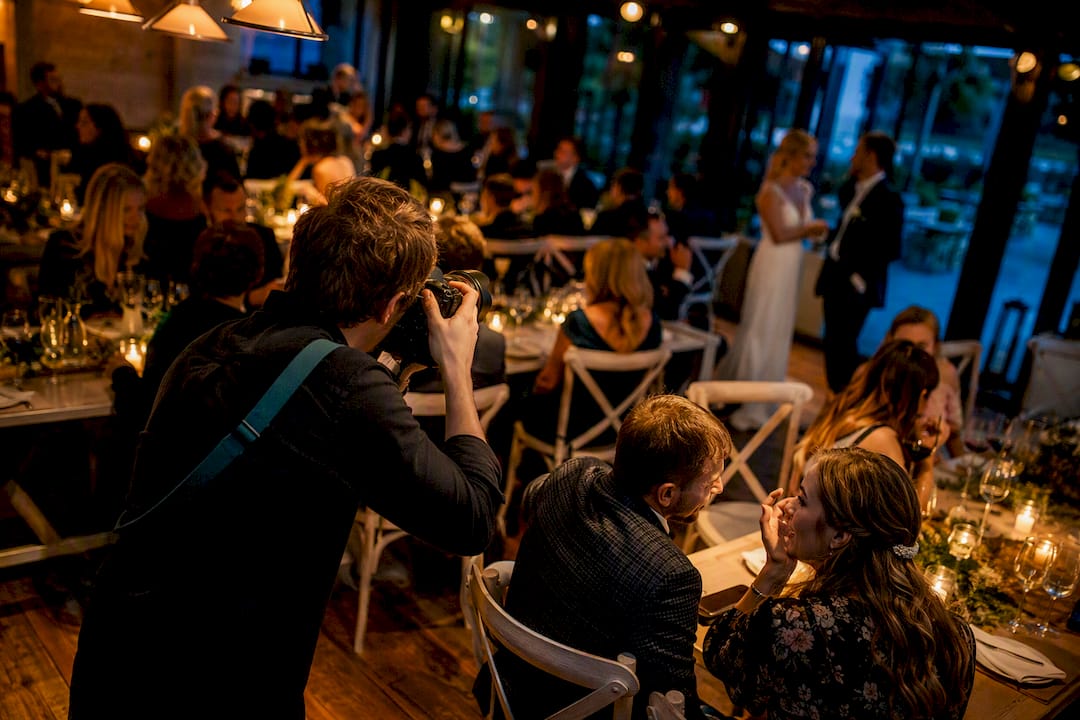
Most couples receive between 400 and 800 edited images from a full day of coverage, rising to 600–1,000 with a second shooter, based on a rough industry rule of thumb of 50 to 100 final edited images per hour. A three-hour elopement typically lands at 150–300 images. Whatever the number, get the range confirmed in writing before you book.
TL;DR:
Most couples receive between 400 and 800 edited images for a full day of wedding coverage, with the total scaling proportionally to the hours booked.
Adding a second photographer typically increases the total to 600–1,000 images, especially if coverage extends into late-night celebrations or multiple days.
The number of photos varies greatly depending on the photography style, guest numbers, presence of additional videographers, and editing workflow.
Expect a complete gallery to include color-corrected JPEGs, online hosting for one to two years, and a turnaround time of four to eight weeks in most cases.
Confirm in writing a minimum delivery range of 50–100 images per hour and clarify file formats, hosting duration, and whether images include RAW files or just edited JPEGs.
Table of Contents
How many wedding photos do you get for each length of coverage?
The maths is simpler than most couples expect. Multiply your booked hours by roughly 50 to 100 final images, and you land close to what most professional photographers actually deliver. That per-hour benchmark comes from wedding industry pricing guides and holds fairly steady whether the photographer favours a documentary style or a more curated, fine-art approach.
Here’s how that plays out across common coverage lengths:
3 hours (elopements, small ceremonies): Usually a moderate number of images. This tends to cover the ceremony, a short couple’s portrait session, and perhaps a toast or two. There isn’t much room for reception coverage at this length.
4–6 hours (ceremony plus part of the reception): Expect a moderate to substantial number of images. This range typically captures getting-ready moments, the ceremony, formal portraits, and the start of the reception, including speeches or the first dance if timed well.
8–10 hours (full-day coverage, the most booked package): Roughly 400 to 800 edited images is the common market range in the UK. This is the sweet spot most couples choose, and it usually covers everything from bridal prep through to the evening reception.
10+ hours or multi-day weddings: Counts scale upward from the full-day range, though not always in strict proportion. Coverage that stretches into late-night dancing or spans multiple days (a Sikh or Hindu wedding with separate ceremonies, for instance) often pushes totals well past 800, depending on how many distinct events the photographer documents.
Full day with a second shooter: Adding a second photographer commonly lifts the total to 600 to 1,000 images, since two people are shooting simultaneously from different angles rather than one person moving between vantage points.
Sample packages that spell out these hour-to-image relationships can help you sanity-check any quote you’re given; comparing package structures side by side often reveals more about what you’re actually paying for than the headline price does.
Why do two photographers quote such different photo counts?
Two photographers covering identical hours can hand over galleries that differ by hundreds of images, and the gap almost never comes down to skill alone. It comes down to five things happening behind the scenes.
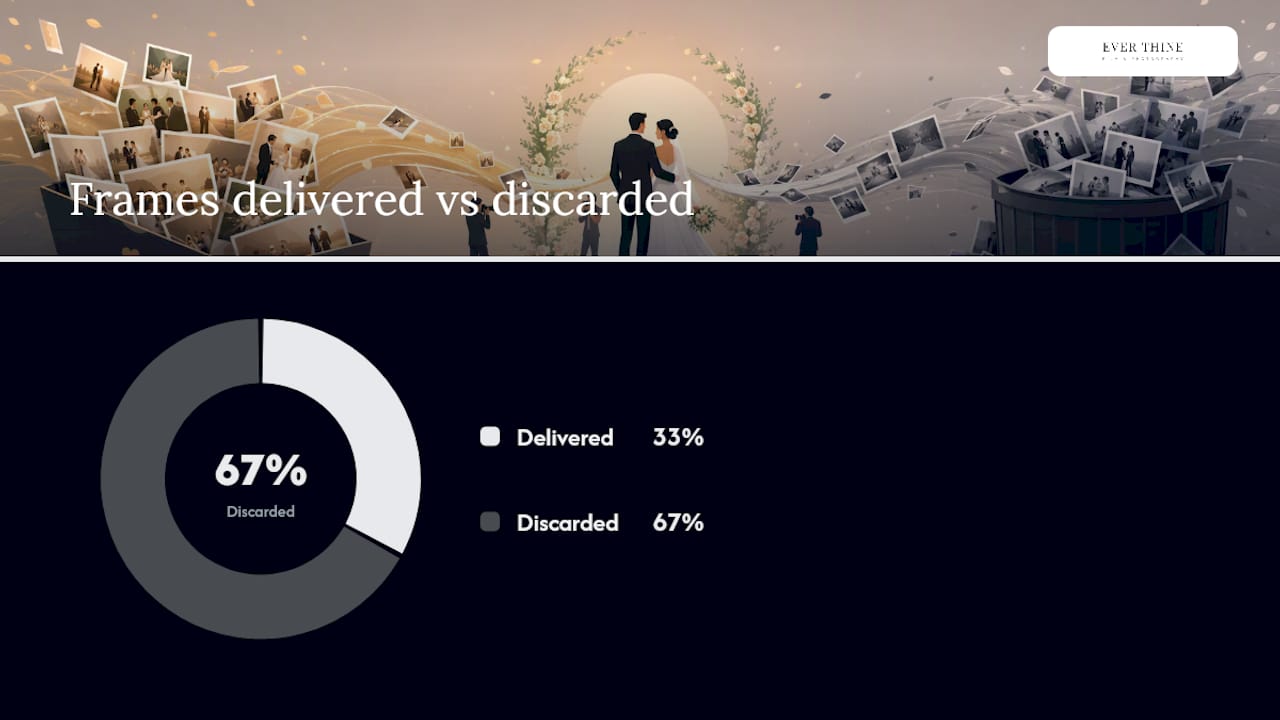
Shooting style is the biggest lever. A documentary photographer fires off far more frames chasing candid, unposed moments, while a fine-art specialist works more deliberately, composing fewer but more polished shots. Practitioner estimates suggest photographers often shoot 2,000 to 6,000 frames in a day but deliver only a fraction of that after editing.
Beyond style, several practical factors shift the final number:
Guest numbers and event density. A 200-guest wedding with a receiving line, multiple speeches, and cultural traditions like a tea ceremony generates more distinct moments than an intimate 40-guest affair.
Number of shooters and video crew. A second photographer, or a videographer working alongside the photo team, changes both the volume of frames captured and how the day is choreographed.
Start and finish times. Coverage that runs into late-night dancing adds a chunk of images that a photographer leaving at 8pm simply won’t capture.
Editing workflow. Some photographers cull aggressively, removing near-duplicates and blinks; others leave in several near-identical frames from the same sequence, inflating the count without adding value.
Pro Tip: Ask any photographer you’re considering how many frames they typically shoot versus how many they deliver. A tight ratio (say, delivering a third of what they shoot) usually signals a disciplined edit, not a lazy one.
What does a typical wedding photo delivery actually include?
“You’ll get the full gallery” means different things to different photographers, so it’s worth knowing what to expect before you sign anything.
Edited JPEGs, not RAW files. Almost every UK photographer delivers colour-corrected, retouched JPEGs. RAW files are the unedited camera originals and are rarely handed over, since they represent hours of unfinished editing work.
“Full-resolution” usually means print-ready. This typically translates to images large enough for a decent-sized print, not the absolute maximum file size the camera produced.
Online gallery access with a set hosting period. Most studios host your gallery for a defined window, commonly a year or two, with download options and sometimes the choice to order physical USB drives or prints.
A personal use licence, not full copyright. You can typically print, share, and post your images, but the photographer usually retains copyright and commercial usage rights. Confirm this explicitly.
Turnaround measured in weeks, not days. UK delivery timelines commonly run four to eight weeks from the wedding date, sometimes longer during peak season.
Guest-contributed photos sit outside your professional count. If you use a QR-code sharing app, those images land in a separate pool and shouldn’t be confused with your photographer’s edited delivery.
Understanding the full delivery process before booking avoids the most common source of post-wedding disappointment: assuming “photos” meant something the contract never actually promised.
What should you ask your photographer before signing?
The single most useful thing you can do during a photographer meeting is ask to see a complete, unedited-from-highlights wedding gallery, not just the polished portfolio on their website. A highlights reel shows you their best ten shots from fifty weddings; a full gallery shows you consistency across an entire day, including the ordinary in-between moments.
Beyond that, work through this checklist:
Ask for a stated delivery range or minimum guarantee, and get it written into the contract rather than promised verbally.
Clarify exactly who covers which parts of the day if there’s a second shooter, and whether their files count toward the total or arrive as a separate set.
Confirm what counts as a “delivered image” and what editing steps are applied to every single one.
Agree file formats, gallery hosting duration, and turnaround time in advance.
Check the contract itself names these terms specifically rather than using vague language like “a generous selection.”
Event photography guides consistently recommend committing to a contractual baseline, usually that same 50 to 100 images per hour figure, precisely because vague promises are the root of most delivery disputes.
What to confirm | Why it matters |
Delivery range or minimum guarantee | Protects you if the day runs short or the photographer under delivers |
Second shooter’s file allocation | Avoids confusion over whose images count toward the total |
Editing definition | Stops “delivered” meaning unedited or barely adjusted files |
Gallery hosting length | Determines how long you can access and download images |
Turnaround timeframe | Sets a clear expectation for when the wedding actually feels “finished” |
Meeting a photographer armed with specific questions rather than general ones tends to produce far more useful answers.
Should you want more photos or better photos?
Chasing a bigger number is the wrong goal for most couples, and it’s worth working out which camp you fall into before you compare quotes on image count alone.
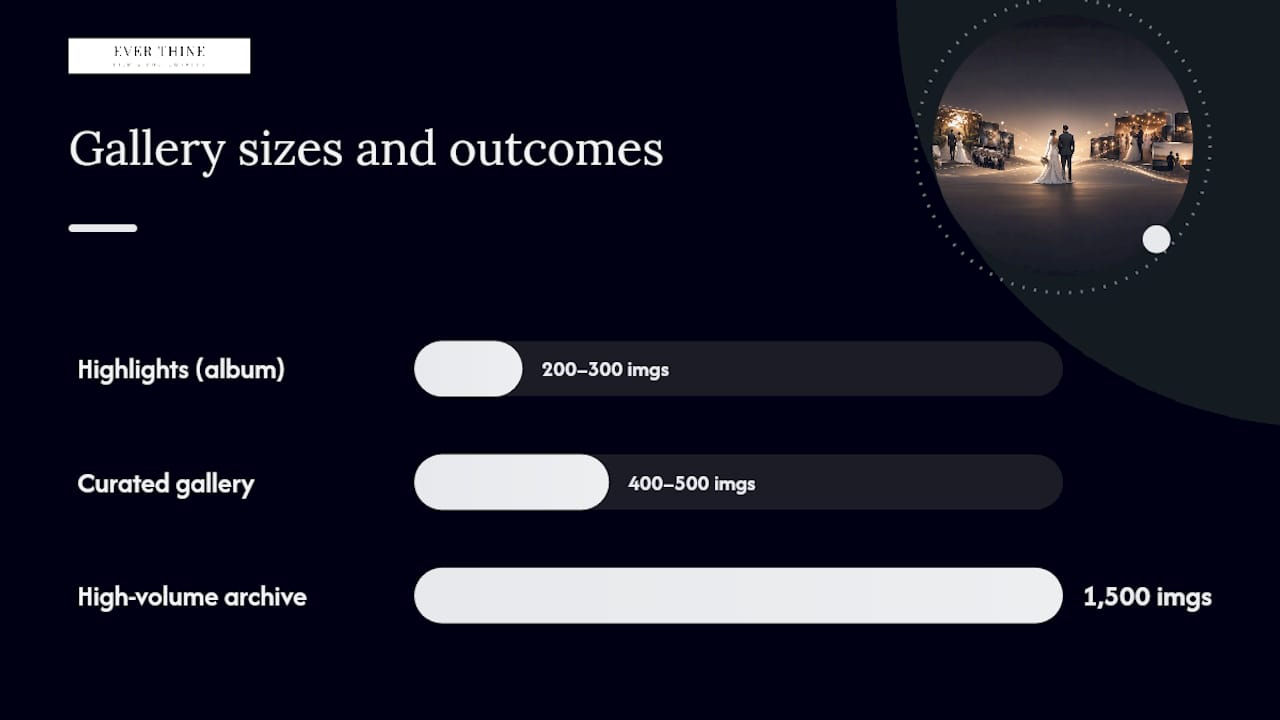
A curated, smaller gallery makes the story easier to tell. When a photographer culls hard, editing down to the strongest 400 or 500 frames rather than dumping 1,500 near-duplicates on you, the album-building process becomes far less overwhelming. You’re not scrolling through six nearly identical shots of the cake-cutting trying to spot the one where nobody’s blinking.
A high-volume documentary set has its own case, though. More frames mean a better chance of capturing every guest, every candid laugh, every fleeting expression across a 150-person wedding. If your priority is making sure Great-Aunt Susan appears somewhere in the gallery, volume matters more than polish.
The smartest approach for most couples combines both:
A tightly edited highlights set for the album and prints, built from the strongest 200 to 300 images.
An extended archive of the full edited gallery for anyone who wants to browse everything.
A guest photo-collection system running alongside, so candid phone shots from the dance floor supplement rather than replace the professional set.
Industry commentary consistently warns that quantity doesn’t equal quality. An intentional, thoughtful cull tends to produce a gallery couples actually love looking through years later, rather than one they scroll past out of sheer volume fatigue. The creative editing choices a photographer makes matter more than the raw number on the delivery email.
What do real sample timelines and photo counts look like?
Mapping hours to numbers gets easier once you see it laid out against real coverage scenarios rather than abstract ranges.
Coverage scenario | Typical delivered images |
Short elopement (2–3 hours) | 150–300 |
Half-day (4–6 hours) | 150–300 |
Full day, one photographer (8–10 hours) | 400–800 |
Full day with second shooter | 600–1,000 |
Full day + guest QR photo system | combined pool can climb toward 2,000 |
That last row deserves a closer look. When couples add a guest-contributed photo system on top of professional coverage, the combined pool of professional and guest images can climb toward 2,000, though the vast majority of that increase comes from guests’ phones, not the photographer’s camera.
The number to remember: a full day of one-photographer coverage in the UK typically lands between 400 and 800 edited images, the range most contracts should reflect in writing.
What Dawn & Carl actually think about photo counts
We’d rather hand you 500 images you’ll want to look at twenty years from now than 1,500 you’ll scroll past once. That’s not a sales line, it’s how we approach every gallery: documentary-first, candid, unobtrusive coverage that tells your actual story rather than a highlight reel performed for the camera.
If a couple wants more coverage of a specific part of the day, extra family formals, a longer reception window, we can usually adjust hours or add a second shooter, which does shift both the count and the price. Ask us directly and we’ll talk through what that means for your gallery before you book anything.
— Dawn & Carl
Ready to see a full wedding gallery for yourself?
Weddingfilmphotography is the option that lets you judge consistency before you commit, not just a highlights reel. We publish full sample galleries so you can see exactly what an ordinary hour of coverage looks like, not just the ten best frames from someone’s best day.
[
Our packages set out delivery ranges and turnaround timelines in writing, so you know roughly what you’re getting before the day even arrives. Whether you’re marrying in Staffordshire or looking further afield, our Staffordshire wedding photography packages and Derbyshire coverage options both include full-gallery access so you can check our editing style matches what you want on your own wedding day. Book a planning call, browse a complete gallery from a recent wedding, and get your delivery range confirmed before you put down a deposit.
Sources
FAQ
How many photos do you normally get for a wedding?
Most couples receive 400 to 800 edited images for a full day of coverage (8 to 10 hours), based on the common 50 to 100 images per hour industry benchmark.
How many photos for a 3-hour wedding?
A three-hour booking, typical for elopements or small ceremonies, usually yields a moderate number of edited images, since there’s limited time to cover a reception alongside the ceremony.
How many wedding photos should I get back?
It depends on your coverage length, but a good baseline is 50 to 100 images per hour of booked coverage, which you should confirm as a written range or minimum guarantee in your contract.
Is 500 photos enough for a wedding?
Yes, 500 images comfortably covers a half-day to full-day wedding and sits well within the typical 400 to 800 range most UK photographers deliver for a single day of coverage.
Recommended


Comments